Suresh Chand Rai - Böcker
Visar alla böcker från författaren Suresh Chand Rai. Handla med fri frakt och snabb leverans.
9 produkter
9 produkter
1 473 kr
Skickas inom 10-15 vardagar
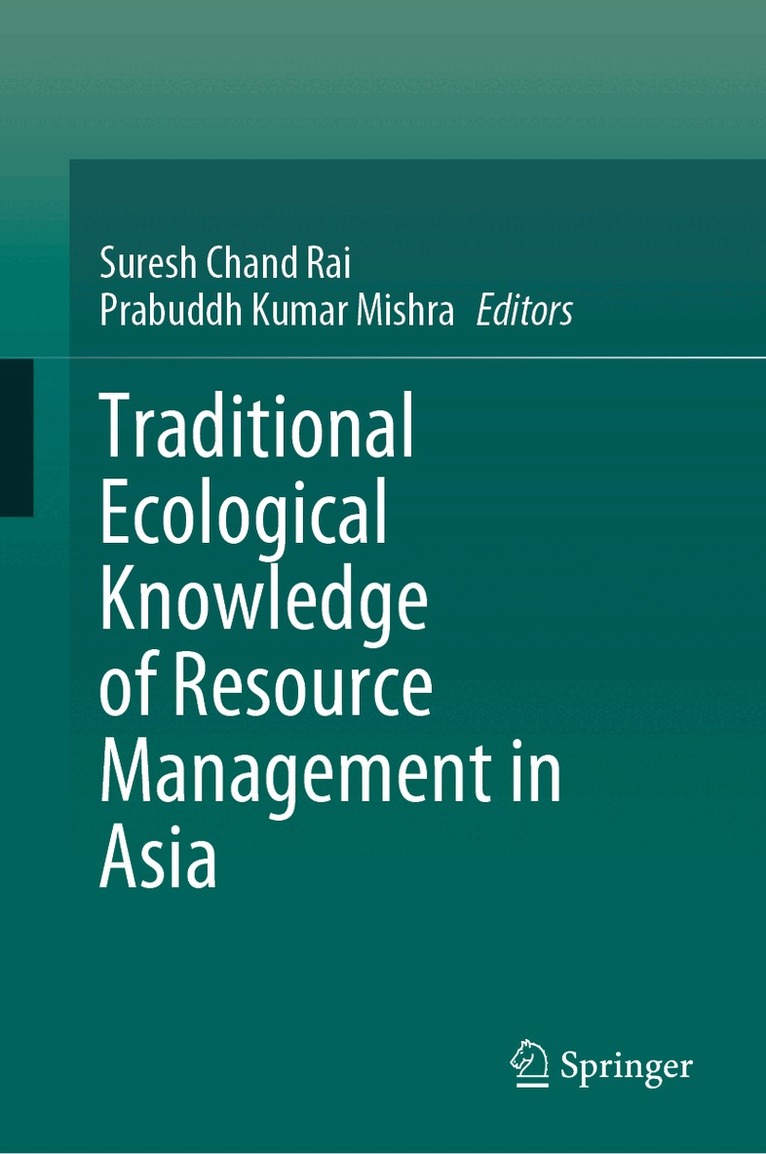
This book highlights the different ways of traditional ecological knowledge (TEK) practices that conserve natural resources sustainably.
634 kr
Skickas inom 5-8 vardagar
1 473 kr
Skickas inom 10-15 vardagar
This book highlights the different ways of traditional ecological knowledge (TEK) practices that conserve natural resources sustainably.
1 381 kr
Skickas inom 10-15 vardagar
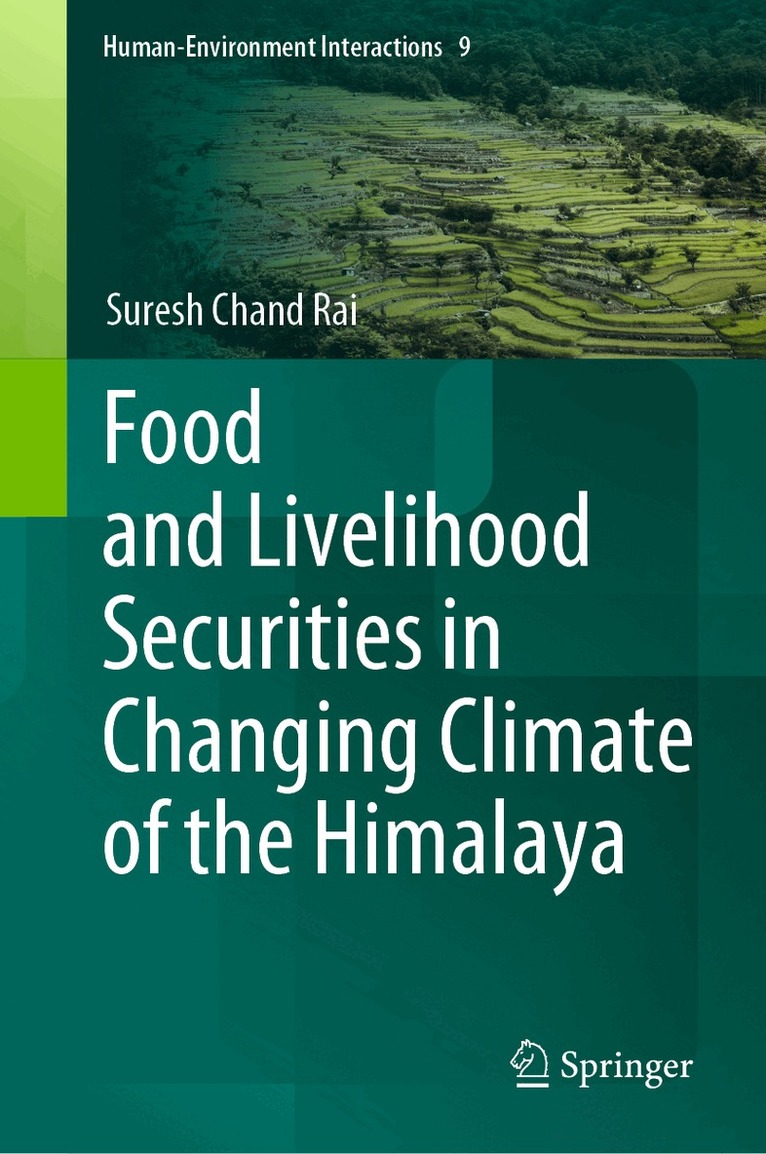
The agricultural diversities and livelihood security in the Himalayan region will be sustainable only if farmers applied suggested mitigation measures correctly. This title is appropriate for postgraduates and research scholars of social sciences, environmental sciences, and agricultural sciences.
634 kr
Skickas inom 5-8 vardagar
1 381 kr
Skickas inom 10-15 vardagar
The agricultural diversities and livelihood security in the Himalayan region will be sustainable only if farmers applied suggested mitigation measures correctly. This title is appropriate for postgraduates and research scholars of social sciences, environmental sciences, and agricultural sciences.
1 682 kr
Skickas inom 10-15 vardagar
This book highlights the different ways of seeing and engaging with the natural world and underscores the need to acknowledge and honour the ways that indigenous peoples have done for generations. Mountain regions occupy about one-fourth of the Earth's terrestrial surface and they are home to almost one-tenth of the global population and offer goods and services to more than half of humanity. Consequently, they received attention at the highest level during the 1992 United Nations Conference on Environment and Development (UNCED) in Rio de Janeiro's “Earth Summit”. Mountain environments are crucial to the survival of global ecosystems, many of them are experiencing degradation in terms of accelerated soil erosion, landslides, and rapid loss of habitat and genetic diversity, etc. Hence, proper management of mountain resources and the socio-economic development of the people deserves immediate action. Unfortunately, the capacity of mountain ecosystems to provide continued resources is threatened due to the increasing stress of human impact at the global level in general and the Himalayan region in particular. The Himalaya, a highly complex and diversified mountain system in terms of bio-physical attributes, is considered a life support system for millions of people in the uplands and many more in lowland areas of India. It acts as a climate regulator for much of Asia and is globally recognized for its sacred, spiritual, and philosophical values. The richness and uniqueness of bio-physical and socio-cultural diversity and the rich heritage of Indigenous Knowledge and Practices (IKP) have earned the Himalaya global recognition. Being young and geotectonically active, this system remains inherently unstable, fragile, and prone to natural disasters. Also, the vulnerability of this mountain chain to human-induced disturbances is now well established. Therefore, being a special and sensitive system, and more importantly due to its life support values, the Himalaya deserve special attention. It requires conservation and development interventions in a sustainable manner, which do not ignore the imperatives of mountain specificities. Thus, calls for evolving new paradigms of long-term conservation and sustainable development that help restore a complex balance between economic interests and ecological imperatives in the region and country in general. Understanding that the Himalaya are important for the Ecological Security of the region, there is a need for its conservation in the 21st century. The present book proposal has been decided to document the Himalayan priorities to achieve sustainable development goals. The book is consisting of four sections, which will deal with the different dimensions of the Himalaya. The present book is conceptualized with an idea to collect case studies on various aspects and applications of conservation measures to value their knowledge, and wisdom and to achieve sustainable development goals (SDGs).
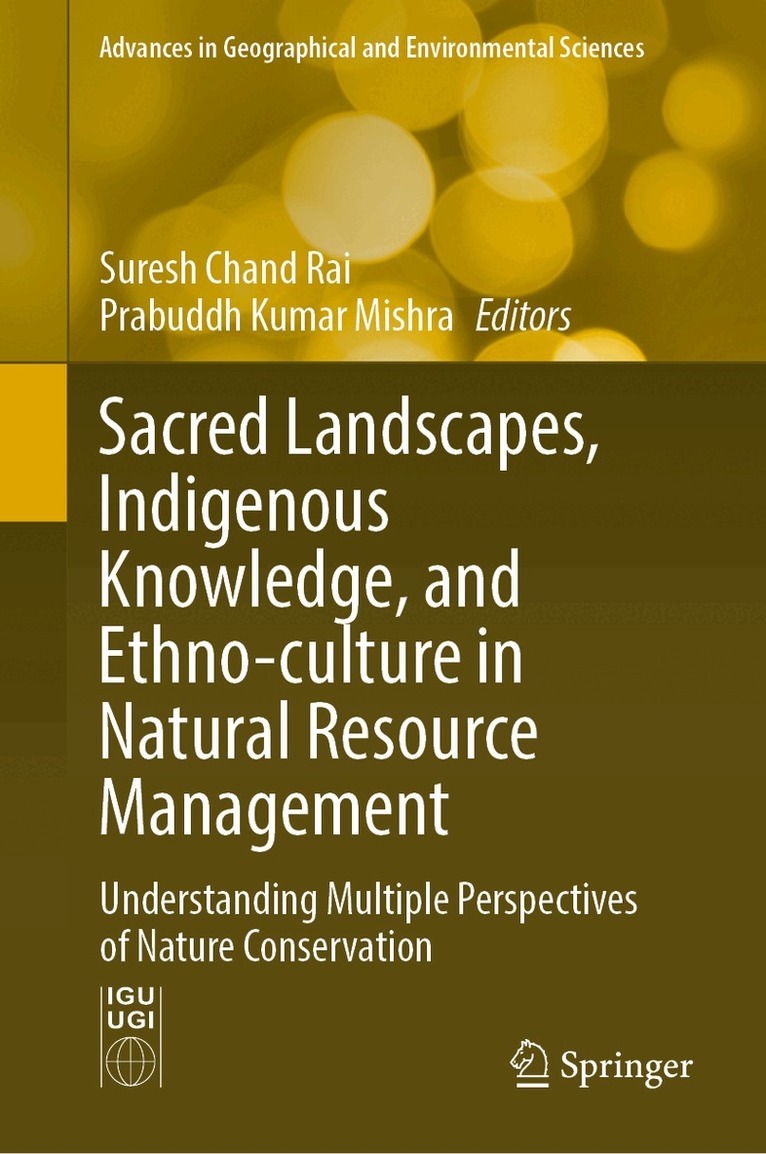
Sacred Landscapes, Indigenous Knowledge, and Ethno-culture in Natural Resource Management
Understanding Multiple Perspectives of Nature Conservation
Inbunden, Engelska, 2024
1 804 kr
Skickas inom 10-15 vardagar
This book examines the relationship between sacred landscapes, indigenous knowledge, ethno-culture, and natural resource management. The volume contributes to the existing literature on landscape studies and cultural geography by examining local perceptions toward multiple aspects of sacred landscape and ethno-culture under changing social and economic contexts, with case studies from diverse cultural and geographical areas worldwide.The book is useful for undergraduate and graduate students, policymakers, planners, park managers, and government officials to understand the needs for and natural resources of an area as well as the effect of park policies on people to establish their mutually beneficial relationships. Readers learn how to integrate the concept of sacred landscapes, indigenous knowledge, ethno-culture, and natural resources management to improve human resilience to global environmental change, and to assess the proper development program in resource-deprived areas.
Sacred Landscapes, Indigenous Knowledge, and Ethno-culture in Natural Resource Management
Understanding Multiple Perspectives of Nature Conservation
Häftad, Engelska, 2025
1 804 kr
Skickas inom 10-15 vardagar
This book examines the relationship between sacred landscapes, indigenous knowledge, ethno-culture, and natural resource management. The volume contributes to the existing literature on landscape studies and cultural geography by examining local perceptions toward multiple aspects of sacred landscape and ethno-culture under changing social and economic contexts, with case studies from diverse cultural and geographical areas worldwide.The book is useful for undergraduate and graduate students, policymakers, planners, park managers, and government officials to understand the needs for and natural resources of an area as well as the effect of park policies on people to establish their mutually beneficial relationships. Readers learn how to integrate the concept of sacred landscapes, indigenous knowledge, ethno-culture, and natural resources management to improve human resilience to global environmental change, and to assess the proper development program in resource-deprived areas.