Susan Dwyer Amussen – författare
Visar alla böcker från författaren Susan Dwyer Amussen. Handla med fri frakt och snabb leverans.
6 produkter
What's in a name?
How historians know Shakespeare was Shakespeare
Inbunden, 2026
226 kr
Lägg i varukorg
This book offers a vivid journey through Shakespeare’s England and provides a compelling contribution to the authorship question. It asks how we know Shakespeare was truly Shakespeare, and whether the glover’s son who left school at fifteen could have written Hamlet, King Lear, and The Tempest. …
An Ordered Society
Gender and Class in Early Modern England
Häftad, 1994
632 kr
Lägg i varukorg
Himalayan Households is a comprehensive study of the cultural ecology, demography, and domestic organization of the Tamang, the largest Tibeto-Burman speaking population of Nepal. A people on the cusp of a major socio-economic transformation. The overall intent of this ethnography is to show how …
Caribbean Exchanges
Slavery and the Transformation of English Society, 1640-1700
Häftad, 2007
458 kr
Lägg i varukorg
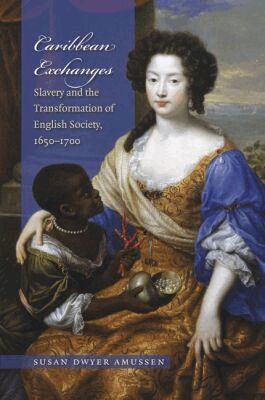
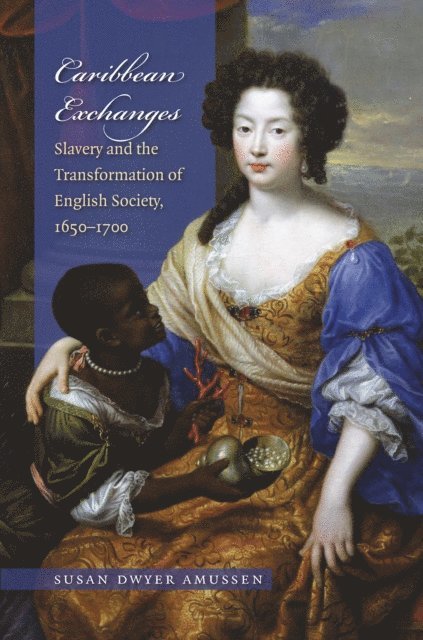
English colonial expansion in the Caribbean was more than a matter of migration and trade. It was also a source of social and cultural change within England. Finding evidence of cultural exchange between England and the Caribbean as early as the seventeenth century, Susan Dwyer Amussen uncovers the …
Caribbean Exchanges
Slavery and the Transformation of English Society, 1640-1700
E-bok, 2009
500 kr
Lägg i varukorg
English colonial expansion in the Caribbean was more than a matter of migration and trade. It was also a source of social and cultural change within England. Finding evidence of cultural exchange between England and the Caribbean as early as the seventeenth century, Susan Dwyer Amussen uncovers the …
Caribbean Exchanges
Slavery and the Transformation of English Society, 1640-1700
E-bok, 2009
1966 kr
Lägg i varukorg
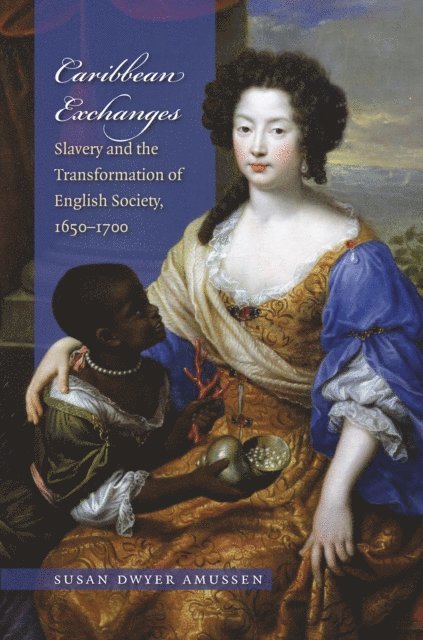
English colonial expansion in the Caribbean was more than a matter of migration and trade. It was also a source of social and cultural change within England. Finding evidence of cultural exchange between England and the Caribbean as early as the seventeenth century, Susan Dwyer Amussen uncovers the …
Caribbean Exchanges
Slavery and the Transformation of English Society, 1640-1700
E-bok, 2009
500 kr
Lägg i varukorg
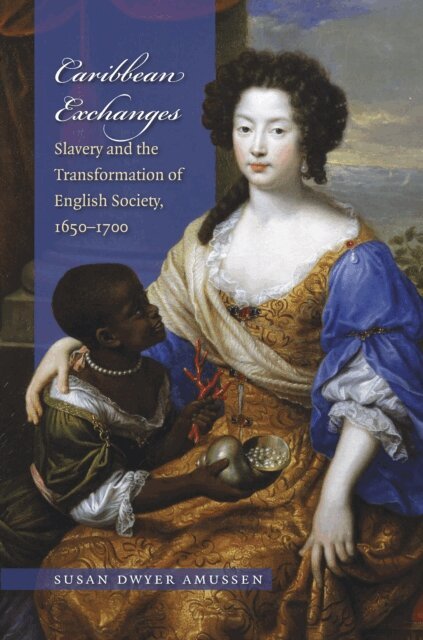
English colonial expansion in the Caribbean was more than a matter of migration and trade. It was also a source of social and cultural change within England. Finding evidence of cultural exchange between England and the Caribbean as early as the seventeenth century, Susan Dwyer Amussen uncovers the …