Susan J. Wolfson - Böcker
Visar alla böcker från författaren Susan J. Wolfson. Handla med fri frakt och snabb leverans.
18 produkter
18 produkter
On Mary Wollstonecraft's A Vindication of the Rights of Woman
The First of a New Genus
Inbunden, Engelska, 2023
560 kr
Skickas inom 7-10 vardagar
Mary Wollstonecraft’s A Vindication of the Rights of Woman (1792) made a pioneering and durably influential argument for women’s equality. Emerging from the turbulent decade of the French Revolution, her vindication delivered a systematic critique of the treatment of women across time and place. Drawing on extensive experience teaching and writing about Wollstonecraft, Susan J. Wolfson offers new insight into how Wollstonecraft’s particular methods, style, and energy make this case for her readers.Wolfson places this polemic in its political and literary contexts and in relation to Wollstonecraft’s other works about political rights. She considers how Wollstonecraft balanced advocacy for the seemingly universal ideals of the French Revolution with analysis of the gendered exclusions in the vaunted rights of “man.” This book pays particular attention to Wollstonecraft’s literary craft, highlighting the force of her close reading. Wollstonecraft pinpointed the role of gendered phrases and concepts in political discourse, both in her opponents’ metaphors and received ideas and in her own efforts to craft a new political language with which to defend women’s capabilities. Wolfson reveals her as a pioneer in decoupling sex from gender and shows how she provided an enduring model of how to be a female intellectual. Sharing the excitement of reading Wollstonecraft’s work with care for her literary as well as political genius, this book provides fresh perspectives both for first-time readers and those seeking a nuanced appreciation of her achievements.
On Mary Wollstonecraft's A Vindication of the Rights of Woman
The First of a New Genus
Häftad, Engelska, 2023
146 kr
Skickas inom 7-10 vardagar
Mary Wollstonecraft’s A Vindication of the Rights of Woman (1792) made a pioneering and durably influential argument for women’s equality. Emerging from the turbulent decade of the French Revolution, her vindication delivered a systematic critique of the treatment of women across time and place. Drawing on extensive experience teaching and writing about Wollstonecraft, Susan J. Wolfson offers new insight into how Wollstonecraft’s particular methods, style, and energy make this case for her readers.Wolfson places this polemic in its political and literary contexts and in relation to Wollstonecraft’s other works about political rights. She considers how Wollstonecraft balanced advocacy for the seemingly universal ideals of the French Revolution with analysis of the gendered exclusions in the vaunted rights of “man.” This book pays particular attention to Wollstonecraft’s literary craft, highlighting the force of her close reading. Wollstonecraft pinpointed the role of gendered phrases and concepts in political discourse, both in her opponents’ metaphors and received ideas and in her own efforts to craft a new political language with which to defend women’s capabilities. Wolfson reveals her as a pioneer in decoupling sex from gender and shows how she provided an enduring model of how to be a female intellectual. Sharing the excitement of reading Wollstonecraft’s work with care for her literary as well as political genius, this book provides fresh perspectives both for first-time readers and those seeking a nuanced appreciation of her achievements.
604 kr
Skickas inom 3-6 vardagar
Reflecting varieties of theory and practice in both verse and prose from the Middle Ages to the twenty-first century, these essays by many of America's leading literary scholars call for a reinvigorated formalism that can enrich literary studies, open productive routes of commerce with cultural studies, and propel cultural theory out of its thematic ruts.This book reprints Modern Language Quarterly's highly acclaimed special issue Reading for Form, along with new essays by Marjorie Perloff, D. Vance Smith, and Susan Stewart, and a revised introduction by Susan Wolfson. With historical case studies and insightful explorations, Reading for Form offers invaluable material for literary critics in all specializations.
765 kr
Skickas inom 7-10 vardagar
John Keats (1795-1821), one of the best-loved poets of the Romantic period, is ever alive to words, discovering his purposes as he reads - not only books but also the world around him. Leading Keats scholar Susan J. Wolfson explores the breadth of his works, including his longest ever poem Endymion; subsequent romances, Isabella (a Boccaccio tale with a proto-Marxian edge admired by George Bernard Shaw), the passionate Eve of St Agnes and knotty Lamia; intricate sonnets and innovative odes; the unfinished Hyperion project (Keats's existential rethinking of epic agony); and late lyrics involved with Fanny Brawne, the bright (sometimes dark) star of his last years. Illustrated with manuscript pages, title-pages, and two portraits, Reading John Keats investigates the brilliant complexities of Keats's imagination and his genius in wordplay, uncovering surprises and new delights, and encouraging renewed respect for the power of Keats's thinking and the subtle turns of his writing.
1 235 kr
Skickas inom 7-10 vardagar
In The Cambridge Companion to Keats, leading scholars discuss Keats's work in several fascinating contexts: literary history and key predecessors; Keats's life in London's intellectual, aesthetic and literary culture; the relation of his poetry to the visual arts; the critical traditions and theoretical contexts within which Keats's life and achievements have been assessed. These specially commissioned essays examine Keats's specific poetic endeavours, his striking way with language, and his lively letters as well as his engagement with contemporary cultures and literary traditions, his place in criticism, from his day to ours, including the challenge he poses to gender criticism. The contributions are sophisticated but accessible, challenging but lucid, and are complemented by an introduction to Keats's life, a chronology, a descriptive list of contemporary people and periodicals, a source-reference for famous phrases and ideas articulated in Keats's letters, a glossary of literary terms and a guide to further reading.
399 kr
Skickas inom 7-10 vardagar
In The Cambridge Companion to Keats, leading scholars discuss Keats's work in several fascinating contexts: literary history and key predecessors; Keats's life in London's intellectual, aesthetic and literary culture; the relation of his poetry to the visual arts; the critical traditions and theoretical contexts within which Keats's life and achievements have been assessed. These specially commissioned essays examine Keats's specific poetic endeavours, his striking way with language, and his lively letters as well as his engagement with contemporary cultures and literary traditions, his place in criticism, from his day to ours, including the challenge he poses to gender criticism. The contributions are sophisticated but accessible, challenging but lucid, and are complemented by an introduction to Keats's life, a chronology, a descriptive list of contemporary people and periodicals, a source-reference for famous phrases and ideas articulated in Keats's letters, a glossary of literary terms and a guide to further reading.
254 kr
Skickas inom 7-10 vardagar
John Keats (1795-1821), one of the best-loved poets of the Romantic period, is ever alive to words, discovering his purposes as he reads - not only books but also the world around him. Leading Keats scholar Susan J. Wolfson explores the breadth of his works, including his longest ever poem Endymion; subsequent romances, Isabella (a Boccaccio tale with a proto-Marxian edge admired by George Bernard Shaw), the passionate Eve of St Agnes and knotty Lamia; intricate sonnets and innovative odes; the unfinished Hyperion project (Keats's existential rethinking of epic agony); and late lyrics involved with Fanny Brawne, the bright (sometimes dark) star of his last years. Illustrated with manuscript pages, title-pages, and two portraits, Reading John Keats investigates the brilliant complexities of Keats's imagination and his genius in wordplay, uncovering surprises and new delights, and encouraging renewed respect for the power of Keats's thinking and the subtle turns of his writing.
283 kr
Skickas inom 7-10 vardagar
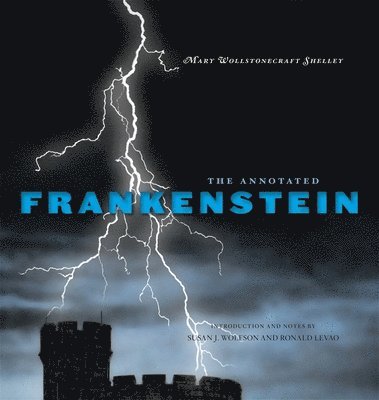
An annotated and illustrated edition of Mary Shelley's classic work, celebrating its 200th anniversary in 2018.First published in 1818, Frankenstein has spellbound, disturbed, and fascinated readers for generations. One of the most haunting and enduring works ever written in English, it has inspired numerous retellings and sequels in virtually every medium, making the Frankenstein myth familiar even to those who have never read a word of Mary Shelley’s remarkable novel. Now, this freshly annotated, illustrated edition illuminates the novel and its electrifying afterlife with unmatched detail and vitality.From the first decade after publication, “Frankenstein” became a byword for any new, disturbing developments in science, technology, and human imagination. The editors’ Introduction explores the fable’s continuing presence in popular culture and intellectual life as well as the novel’s genesis and composition. Mary Shelley’s awareness of European politics and history, her interest in the poets and philosophical debates of the day, and especially her genius in distilling her personal traumas come alive in this engaging essay.The editors’ commentary, placed conveniently alongside the text, provides stimulating company. Their often surprising observations are drawn from a lifetime of reading and teaching the novel. A wealth of illustrations, many in color, immerses the reader in Shelley’s literary and social world, in the range of artwork inspired by her novel, as well as in Frankenstein’s provocative cinematic career. The fresh light that The Annotated Frankenstein casts on a story everyone thinks is familiar will delight readers while deepening their understanding of Mary Shelley’s novel and the Romantic era in which it was created.
330 kr
Skickas inom 7-10 vardagar
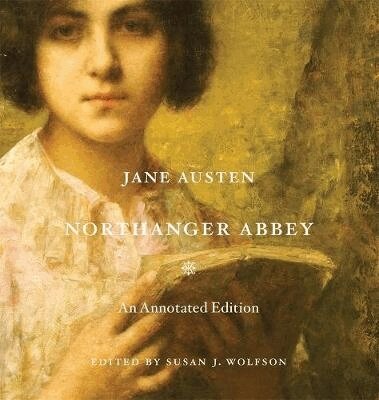
The star of Northanger Abbey is seventeen-year-old Catherine Morland, Jane Austen’s youngest and most impressionable heroine. Away from home for the first time, on a visit to Bath with family friends, Catherine, a passionate consumer of novels (especially of the gothic variety), encounters a world in which everything beckons as a readable text: not only books, but also conversations and behaviors, clothes, carriages, estates, and vistas. In her lively introduction to this newest volume in Harvard’s celebrated annotated Austen series, Susan Wolfson proposes that Austen’s most underappreciated, most playful novel is about fiction itself and how it can take possession of everyday understandings.The first of Austen’s major works to be completed (it was revised in 1803 and again in 1816–17), Northanger Abbey was published months after Austen’s death in July 1817, together with Persuasion. The 1818 text, whose singularly frustrating course to publication Wolfson recounts, is the basis for this freshly edited and annotated edition.Wolfson’s running commentary will engage new readers while offering delights for scholars and devoted Janeites. A wealth of color images bring to life Bath society in Austen’s era—the parade of female fashions, the carriages running over open roads and through the city’s streets, circulating libraries, and nouveau-riche country estates—as well as the larger cultural milieu of Northanger Abbey. This unique edition holds appeal not just for “Friends of Jane” but for all readers looking for a fuller engagement with Austen’s extraordinary first novel.
330 kr
Skickas inom 7-10 vardagar
A Times Literary Supplement Book of the YearA renowned Keats scholar illuminates the poet’s extraordinary career, in a new edition featuring seventy-eight verse selections with commentary.John Keats’s career as a published poet spanned scarcely more than four years, cut short by his death early in 1821 at age twenty-five. Yet in this time, he produced a remarkable—and remarkably wide-ranging—body of work that has secured his place as one of the most influential poets in the British literary tradition. Celebrated Keats scholar Susan J. Wolfson presents seventy-eight selections from his work, each accompanied by a commentary on its form, style, meanings, and relevant contexts.In this edition, readers will rediscover a virtuoso poet, by turns lively, experimental, self-ironizing, outrageous, and philosophical. Wolfson includes such well-known favorites as Ode to a Nightingale, Ode on a Grecian Urn, To Autumn, La Belle Dame sans Merci, and The Eve of St. Agnes, as well as less familiar poems, several in letters to family and friends never meant for publication. Her selections redefine the breadth and depth of Keats’s poetic imagination, from intellectual jests and satires to erotic bandying, passionate confessions, and reflections on mortality.The selections, presented in their order of composition, convey a chronicle of Keats’s artistic and personal evolution. Wolfson’s revealing commentaries unfold the lively complexities of his verbal arts and stylistic experiments, his earnest goals and nervous apprehensions, and the pressures of politics and literary criticism in his day. In critically attentive and conversational prose, Wolfson encourages us to experience Keats in the way that he himself imagined the language of poetry: as a living event, a cooperative experience shared between author and reader.
695 kr
Skickas inom 7-10 vardagar
The first standard edition of the writings of Felicia Hemans (1793-1835), this volume marks a revival of interest in, and a new critical appreciation of, one of the most important literary figures of the early nineteenth century. A best-selling poet in England and America, Felicia Hemans was regarded as leading female poet in her day, celebrated as the epitome of national "feminine" values. However, this same narrow perception of her work eventually relegated Hemans to an obscurity lightened occasionally by parody and a sentimental enthusiasm for poems such as "The Landing of the Pilgrim Fathers" and "Casabianca." Only now is Hemans's work being rediscovered and reconsidered--for the complexity of its social and political vision, but also for its sounding of dissonances in nineteenth-century cultural ideals, and for its recasting of the traditional canon of male "Romantics." Offering readers a firsthand acquaintance with the remarkable range of Hemans's writing, this volume includes five major works in their entirety, along with a much-admired aggregate, Records of Woman.Hemans's letters, many published here for the first time, reflect her views of her contemporaries, her work, her negotiations with publishers, and her emerging celebrity, while reviews and letters from others--including Lord Byron, Walter Scott, and the Wordsworths--tell the story of Hemans's reception in her time. An introduction by editor Susan Wolfson puts these writings, as well as Hemans's life and work, into much-needed perspective for the contemporary reader.
429 kr
Kommande
An exploration of the generative energy of literary texts, from Frankenstein’s origin stories and Jane Austen’s loose ends to the genius of William EmpsonIn Romanticism’s Generative Reading, Susan Wolfson convenes an innovative array of subjects, texts, and cultural situations: lightning, Frankenstein, textual editing, Shakespeare read by girls, and William Empson’s revelatory influence. Wolfson reads with close attention to the strange densities of literary language and the multiplicities of literary imagination. Great writers are generative writers, she argues, transforming readers through the energies of reading. Exploring texts and contexts, Wolfson traces literary formations and historical dynamics generating and regenerating one another.Wolfson puts Mary Wollstonecraft into the surprising company of Thomas De Quincey, and casts lightning as the “Spirit of the Age,” forking into promise and peril. She probes the multiple origin stories of Mary Shelley’s durably fascinating genesis novel, Frankenstein, and investigates her editing of her husband Percy Bysshe Shelley’s works after his death, an ongoing textual marriage. She renders counterintuitive readings of three novels by Jane Austen, working from the overabundance of problematic plots; and describes two efforts to present Shakespeare for girls—Bowdler’s Family Shakespeare (hence “bowdlerize”) and Charles and Mary Lamb’s rather more liberal Tales from Shakespeare (or, as Wolfson put it, “Lambsplaining”). Finally, Wolfson turns to the influence of the nineteenth century on the twentieth-century critic William Empson and his generative work with texts and keywords of consequences for Romantic studies. All these formations are magnetized for generative engagement. Romanticism as a school of reading keeps the antennae braced.
1 186 kr
Kommande
An exploration of the generative energy of literary texts, from Frankenstein’s origin stories and Jane Austen’s loose ends to the genius of William EmpsonIn Romanticism’s Generative Reading, Susan Wolfson convenes an innovative array of subjects, texts, and cultural situations: lightning, Frankenstein, textual editing, Shakespeare read by girls, and William Empson’s revelatory influence. Wolfson reads with close attention to the strange densities of literary language and the multiplicities of literary imagination. Great writers are generative writers, she argues, transforming readers through the energies of reading. Exploring texts and contexts, Wolfson traces literary formations and historical dynamics generating and regenerating one another.Wolfson puts Mary Wollstonecraft into the surprising company of Thomas De Quincey, and casts lightning as the “Spirit of the Age,” forking into promise and peril. She probes the multiple origin stories of Mary Shelley’s durably fascinating genesis novel, Frankenstein, and investigates her editing of her husband Percy Bysshe Shelley’s works after his death, an ongoing textual marriage. She renders counterintuitive readings of three novels by Jane Austen, working from the overabundance of problematic plots; and describes two efforts to present Shakespeare for girls—Bowdler’s Family Shakespeare (hence “bowdlerize”) and Charles and Mary Lamb’s rather more liberal Tales from Shakespeare (or, as Wolfson put it, “Lambsplaining”). Finally, Wolfson turns to the influence of the nineteenth century on the twentieth-century critic William Empson and his generative work with texts and keywords of consequences for Romantic studies. All these formations are magnetized for generative engagement. Romanticism as a school of reading keeps the antennae braced.
903 kr
Skickas inom 7-10 vardagar
In Romantic Interactions, Susan J. Wolfson examines how interaction with other authors-whether on the bookshelf, in the embodied company of someone else writing, or in relation to literary celebrity-shaped the work of some of the best-known (and less well-known) writers in the English language. Working across the arc of Long Romanticism, from the 1780s to the 1840s, this lively study involves writing by women and men, in poetry and prose. Combining careful readings with sophisticated literary, historical, and cultural criticism, Wolfson reveals how various writers came to define themselves as "author." The story unfolds not only in deft textual analyses but also by provocatively placing writers in dialogue with what they were reading, with one another, and with the community of readers (and writers) their writings helped bring into being: Mary Wollstonecraft and Charlotte Smith in the Revolution-roiled 1790s; William Wordsworth and Dorothy Wordsworth in the society of the Lake District; Lord Byron, a magnet for writers everywhere, inspired, troubled, but always arrested by what he (and his scandal-ridden celebrity) represented.This fresh, informative account of key writers, important texts, and complex cultural currents promises keen interest for students and scholars, literary critics, and cultural historians.
507 kr
Skickas inom 5-8 vardagar
In Romantic Interactions, Susan J. Wolfson examines how interaction with other authors-whether on the bookshelf, in the embodied company of someone else writing, or in relation to literary celebrity-shaped the work of some of the best-known (and less well-known) writers in the English language. Working across the arc of Long Romanticism, from the 1780s to the 1840s, this lively study involves writing by women and men, in poetry and prose. Combining careful readings with sophisticated literary, historical, and cultural criticism, Wolfson reveals how various writers came to define themselves as "author." The story unfolds not only in deft textual analyses but also by provocatively placing writers in dialogue with what they were reading, with one another, and with the community of readers (and writers) their writings helped bring into being: Mary Wollstonecraft and Charlotte Smith in the Revolution-roiled 1790s; William Wordsworth and Dorothy Wordsworth in the society of the Lake District; Lord Byron, a magnet for writers everywhere, inspired, troubled, but always arrested by what he (and his scandal-ridden celebrity) represented.This fresh, informative account of key writers, important texts, and complex cultural currents promises keen interest for students and scholars, literary critics, and cultural historians.
373 kr
Skickas inom 7-10 vardagar
Why care about poetic form and its intricacies, other than in nostalgia for a bygone era of criticism? The purpose of this book is to refresh today this care for criticism, applying a historically aware formalist reading to poetic form in Romanticism and showing how in theory and practice Romantic writers addressed, debated, tested, and contested fundamental questions about what is at stake in the poetic forming of language. In the process, it suggests the importance of these conflicted inquiries for contemporary critical discussion and demonstrates the pleasures of attending to the complex changes of form in poetic writing.After an introductory chapter on the controversies about poetic form and formalism from the Romantic era to our own, succeeding chapters consider particular instances in Romantic poetry in which experimental agendas or unsettled traditions promote an awareness of new textual possibilities. The author shows how Blake's Poetical Sketches predicts many of the key issues of Romantic theory and practice, and how Coleridge's ambivalent engagement with simile impels him to address the very foundations of poetic form. A chapter on Wordsworth's revision of an episode in The Prelude demonstrates how a repeated reworking of form virtually characterizes the work of autobiography, and the dilemma of self-formation is also the focus of a chapter on Byron's seemingly perverse choice of the heroic couplet in The Corsair. Keats, too, is shown to wrestle with the issue of self and form at the end of his career in his personal lyrics to Fanny Browne, which subverted the formalism of the "Great Odes" of 1819, the celebrated icons of New Criticism. A final chapter describes Shelley's investment of poetic performance with social agency in two seemingly opposite but related modes—the political exhortation of The Mask of Anarchy and the intimate addresses to Jane and Edward Williams. In an afterword, the author reviews recent attacks on formalist criticism and argues for the specific value of shaped language as one of the texts in which culture is written and revised.
332 kr
Skickas inom 10-15 vardagar
Opening with the revolution-era debates of the 1790s, Borderlines reads Romantic genders across a mobile syntax, tuned to such figures as the stylized "feminine" poetess, the aberrant "masculine" woman, male poets deemed "feminine" or "unmanly," the campy male "effeminate," and hapless or strategic cross-dressers of both sexes. With fresh readings of the works, careers, and volatile receptions of Mary Wollstonecraft, Felicia Hemans, M. J. Jewsbury, Lord Byron, and John Keats, Susan Wolfson shows how senses (and sensations) of gender shape and get shaped by sign systems that prove arbitrary, fluid, and susceptible of lively transformation.
841 kr
Skickas inom 7-10 vardagar
Haunting’s consequences for the literary imagination.Reading is a weirdly phantasmic trade: animating words to revive absent voices, rehearing the past, fantasizing a future. In Romantic Shades and Shadows, Susan J. Wolfson explores spectral language, formations, and sensations, defining an apparitional poetics in the finely grained textures of writing and their effects on present reading. Framed by an introductory chapter on writing and apparition and an afterword on haunted reading, the book includes chapters of sustained, revelatory close attention to the particular, often peculiar, literary imaginations of William Wordsworth, William Hazlitt, Percy Bysshe Shelley, Lord Byron, W. B. Yeats, and John Keats. Wolfson also explores the work of Samuel Taylor Coleridge (a self-confessed Ghost-Theorist), Mary Shelley, and other writers of the Long Romantic era, canonical as well as less familiar. All are encountered in freshly pointed ways on an arc of investigation that builds with generative force.Romantic Shades and Shadows is written with a lucidity, wit, and accessibility that will appeal to general readers, and with a critical sophistication and scholarly expertise that will engage advanced students, critics, and professional peers.