Susan L. Smith – författare
Visar alla böcker från författaren Susan L. Smith. Handla med fri frakt och snabb leverans.
10 produkter
Japanese American Midwives
Culture, Community, and Health Politics, 1880-1950
Häftad, 2005
368 kr
Lägg i varukorg
In the late nineteenth century, Japan's modernizing quest for empire transformed midwifery into a new woman's profession. With the rise of Japanese immigration to the United States, Japanese midwives (sanba) served as cultural brokers as well as birth attendants for Issei women. They actively …
Japanese American Midwives
Culture, Community, and Health Politics, 1880-1950
E-bok, 2010
585 kr
Lägg i varukorg
In the late nineteenth century, Japan''s modernizing quest for empire transformed midwifery into a new woman''s profession. With the rise of Japanese immigration to the United States, Japanese midwives (sanba) served as cultural brokers as well as birth attendants for Issei women. They actively …
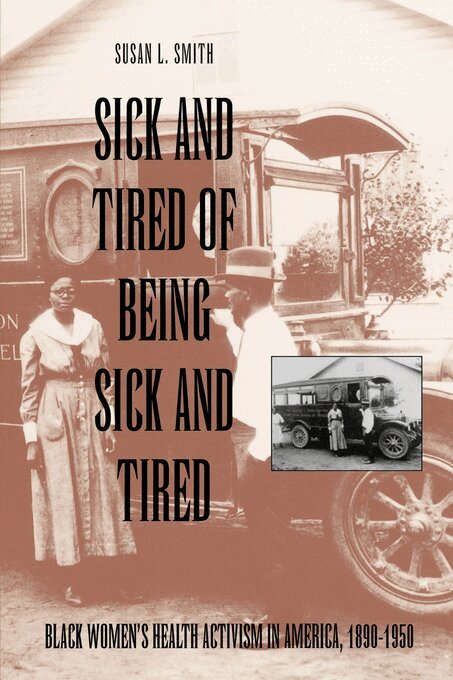
Sick and Tired of Being Sick and Tired
Black Women's Health Activism in America, 1890-1950
E-bok, 2010
493 kr
Lägg i varukorg
Sick and Tired of Being Sick and Tired moves beyond the depiction of African Americans as mere recipients of aid or as victims of neglect and highlights the ways black health activists created public health programs and influenced public policy at every opportunity. Smith also sheds new light on …
Sick and Tired of Being Sick and Tired
Black Women's Health Activism in America, 1890-1950
Häftad, 1995
557 kr
Lägg i varukorg
Sick and Tired of Being Sick and Tired moves beyond the depiction of African Americans as mere recipients of aid or as victims of neglect and highlights the ways black health activists created public health programs and influenced public policy at every opportunity. Smith also sheds new light on …
Power of Women
A "Topos" in Medieval Art and Literature
Inbunden, 1995
999 kr
Lägg i varukorg
Eve tempting Adam with the apple, Delilah shearing Samson's hair, Phyllis riding the philosopher Aristotle like a horse-from the patristic period through the sixteenth century, examples of disorderly women such as these from the Bible, antiquity, and romance were cited to prove beyond any doubt …
Toxic Exposures
Mustard Gas and the Health Consequences of World War II in the United States
Inbunden, 2017
497 kr
Lägg i varukorg
Mustard gas is typically associated with the horrors of World War I battlefields and trenches, where chemical weapons were responsible for tens of thousands of deaths. Few realize, however, that mustard gas had a resurgence during the Second World War, when its uses and effects were widespread and …
Toxic Exposures
Mustard Gas and the Health Consequences of World War II in the United States
Häftad, 2019
280 kr
Lägg i varukorg
Mustard gas is typically associated with the horrors of World War I battlefields and trenches, where chemical weapons were responsible for tens of thousands of deaths. Few realize, however, that mustard gas had a resurgence during the Second World War, when its uses and effects were widespread and …
Research Handbook on Environmental Crimes and Criminal Enforcement
Av Susan L. Smith, Iina Sahramäki
Inbunden, 2024
3653 kr
Lägg i varukorg
This Research Handbook thoroughly examines the difficult and rapidly expanding problem of national, transnational, and international environmental crimes, including air and water pollution, unlawful mining and timber harvesting, and trafficking of endangered species. It provides an understanding of …
Research Handbook on Environmental Crimes and Criminal Enforcement
Av Iina Sahramaki, Susan L. Smith
E-bok, 2024
793 kr
Lägg i varukorg
This Research Handbook thoroughly examines the difficult and rapidly expanding problem of national, transnational, and international environmental crimes, including air and water pollution, unlawful mining and timber harvesting, and trafficking of endangered species. It provides an understanding of …
Power of Women
A "Topos" in Medieval Art and Literature
E-bok, 2016
1192 kr
Lägg i varukorg
Eve tempting Adam with the apple, Delilah shearing Samson''s hair, Phyllis riding the philosopher Aristotle like a horse—from the patristic period through the sixteenth century, examples of disorderly women such as these from the Bible, antiquity, and romance were cited to prove beyond any doubt …