Susan M. Ryan - Böcker
Visar alla böcker från författaren Susan M. Ryan. Handla med fri frakt och snabb leverans.
6 produkter
6 produkter
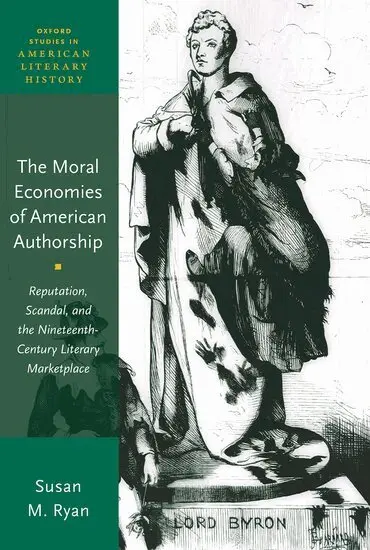
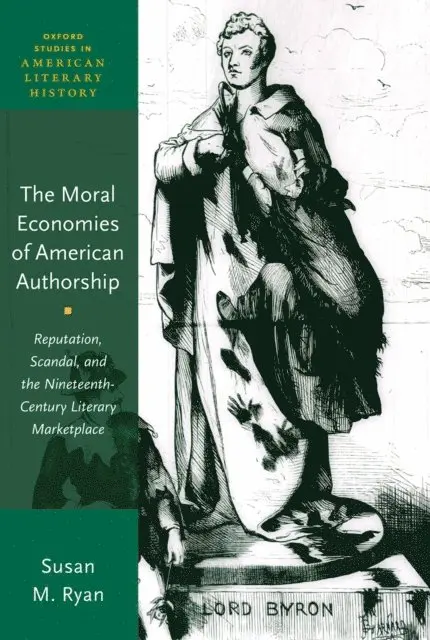
The Moral Economies of American Authorship
Reputation, Scandal, and the Nineteenth-Century Literary Marketplace
Häftad, Engelska, 2019
476 kr
Skickas inom 5-8 vardagar
The Moral Economies of American Authorship argues that the moral character of authors became a kind of literary property within mid-nineteenth-century America's expanding print marketplace, shaping the construction, promotion, and reception of texts as well as of literary reputations. Using a wide range of printed materials--prefaces, dedications, and other paratexts as well as book reviews, advertisements, and editorials that appeared in the era's magazines and newspapers--The Moral Economies of American Authorship recovers and analyzes the circulation of authors' moral currency, attending not only to the marketing of apparently ironclad status but also to the period's not-infrequent author scandals and ensuing attempts at recuperation. These preoccupations prove to be more than a historical curiosity--they prefigure the complex (if often disavowed) interdependence of authorial character and literary value in contemporary scholarship and pedagogy. Combining broad investigations into the marketing and reception of books with case studies that analyze the construction and repair of particular authors' reputations (e.g., James Fenimore Cooper, Mary Prince, Elizabeth Keckley, Frederick Douglass, Harriet Beecher Stowe, and E.D.E.N. Southworth), the book constructs a genealogy of the field's investments in and uses of authorial character. In the nineteenth century's deployment of moral character as a signal element in the marketing, reception, and canonization of books and authors, we see how biography both vexed and created literary status, adumbrating our own preoccupations while demonstrating how malleable--and how recuperable--moral authority could be.
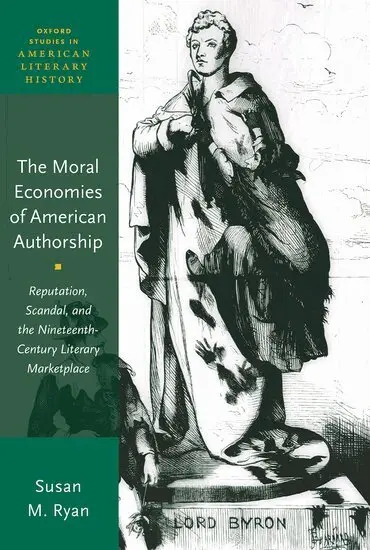
The Moral Economies of American Authorship
Reputation, Scandal, and the Nineteenth-Century Literary Marketplace
Inbunden, Engelska, 2016
1 119 kr
Skickas inom 5-8 vardagar
The Moral Economies of American Authorship argues that the moral character of authors became a kind of literary property within mid-nineteenth-century America's expanding print marketplace, shaping the construction, promotion, and reception of texts as well as of literary reputations. Using a wide range of printed materials--prefaces, dedications, and other paratexts as well as book reviews, advertisements, and editorials that appeared in the era's magazines and newspapers--The Moral Economies of American Authorship recovers and analyzes the circulation of authors' moral currency, attending not only to the marketing of apparently ironclad status but also to the period's not-infrequent author scandals and ensuing attempts at recuperation. These preoccupations prove to be more than a historical curiosity-they prefigure the complex (if often disavowed) interdependence of authorial character and literary value in contemporary scholarship and pedagogy. Combining broad investigations into the marketing and reception of books with case studies that analyze the construction and repair of particular authors' reputations (e.g., James Fenimore Cooper, Mary Prince, Elizabeth Keckley, Frederick Douglass, Harriet Beecher Stowe, and E.D.E.N. Southworth), the book constructs a genealogy of the field's investments in and uses of authorial character. In the nineteenth century's deployment of moral character as a signal element in the marketing, reception, and canonization of books and authors, we see how biography both vexed and created literary status, adumbrating our own preoccupations while demonstrating how malleable-and how recuperable-moral authority could be.
129 kr
Skickas inom 7-10 vardagar
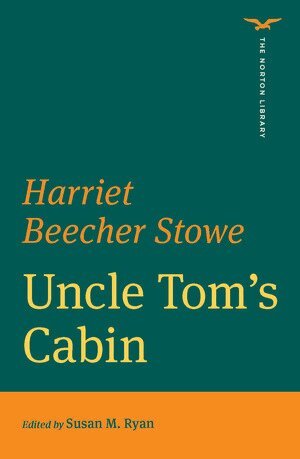
Part of the Norton Library seriesThe Norton Library edition of Uncle Tom’s Cabin features the text of the 1852 edition, including original woodcut illustrations. An introduction by Susan M. Ryan takes a lively and incisive look at the novel’s historical and religious contexts, its political influence as well as its limits, and why Uncle Tom’s Cabin—with all its controversies—endures as an American classic.The Norton Library is a growing collection of high-quality texts and translations—influential works of literature and philosophy—introduced and edited by leading scholars. Norton Library editions prepare readers for their first encounter with the works that they’ll re-read over a lifetime.Inviting introductions highlight the work’s significance and influence, providing the historical and literary context students need to dive in with confidence.Endnotes and an easy-to-read design deliver an uninterrupted reading experience, encouraging students to read the text first and refer to endnotes for more information as needed.An affordable price (most $10 or less) encourages students to buy the book and to come to class with the assigned edition.About the Editor: Susan M. Ryan is Professor of English and Associate Dean for Faculty Affairs at the University of Louisville. She is the author of The Grammar of Good Intentions: Race and the Antebellum Culture of Benevolence (2003) and The Moral Economies of American Authorship: Reputation, Scandal, and the Nineteenth-Century Literary Marketplace (2016).
773 kr
Skickas inom 10-15 vardagar
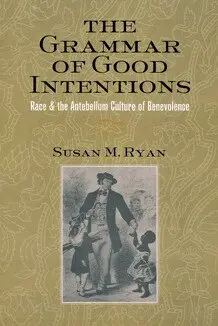
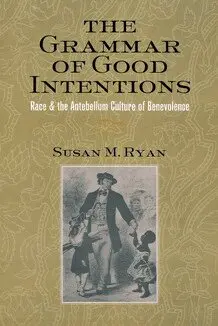
Susan M. Ryan explores antebellum Americans' preoccupation with the language and practice of benevolence. Drawing on a variety of cultural and literary texts, she traces how people working and writing within social reform movements—and their outspoken opponents—helped solidify racial and class ideologies that ultimately marginalized even the most "deserving" poor. "The links between race and the relations of benevolence occasioned much soul-searching among antebellum Americans," Ryan explains. "In a period of heated public debate over issues such as slavery, Indian removal, and non-Protestant immigration, the categories of blackness, Indianness, and a generic 'foreignness' came to signify, for many whites, need itself." Ryan puts familiar literary works such as Herman Melville's The Confidence-Man, Frederick Douglass's My Bondage and My Freedom, and Harriet Beecher Stowe's Uncle Tom's Cabin back into dialogue with a broad range of print materials: the reports of charity societies, African American and Native American newspapers, juvenile fiction, travel writing, cartoons, sermons, and tract literature. In the process, she dispels the myth that authors usually classified as literary were responding to a simple and unquestioned cult of benevolence. Rather, she contends, they were participating in the complex and often rancorous debates occurring within the broader culture over how good intentions should be expressed and enacted.Ryan's inquiry into the antebellum culture of benevolence has implications for contemporary U.S. society, resonating especially with recent debates over welfare reform, the politics of compassionate conservatism, and representations of "welfare queens" and violent urban youth. As Ryan writes, "The conversations that this book reconstructs remind us of our ongoing participation in the national ritual of laying claim to good intentions."
406 kr
Skickas inom 10-15 vardagar
Susan M. Ryan explores antebellum Americans' preoccupation with the language and practice of benevolence. Drawing on a variety of cultural and literary texts, she traces how people working and writing within social reform movements—and their outspoken opponents—helped solidify racial and class ideologies that ultimately marginalized even the most "deserving" poor. "The links between race and the relations of benevolence occasioned much soul-searching among antebellum Americans," Ryan explains. "In a period of heated public debate over issues such as slavery, Indian removal, and non-Protestant immigration, the categories of blackness, Indianness, and a generic 'foreignness' came to signify, for many whites, need itself." Ryan puts familiar literary works such as Herman Melville's The Confidence-Man, Frederick Douglass's My Bondage and My Freedom, and Harriet Beecher Stowe's Uncle Tom's Cabin back into dialogue with a broad range of print materials: the reports of charity societies, African American and Native American newspapers, juvenile fiction, travel writing, cartoons, sermons, and tract literature. In the process, she dispels the myth that authors usually classified as literary were responding to a simple and unquestioned cult of benevolence. Rather, she contends, they were participating in the complex and often rancorous debates occurring within the broader culture over how good intentions should be expressed and enacted.Ryan's inquiry into the antebellum culture of benevolence has implications for contemporary U.S. society, resonating especially with recent debates over welfare reform, the politics of compassionate conservatism, and representations of "welfare queens" and violent urban youth. As Ryan writes, "The conversations that this book reconstructs remind us of our ongoing participation in the national ritual of laying claim to good intentions."
372 kr
Skickas inom 5-8 vardagar