Susan Martin-Márquez - Böcker
Visar alla böcker från författaren Susan Martin-Márquez. Handla med fri frakt och snabb leverans.
2 produkter
2 produkter
2 977 kr
Skickas inom 5-8 vardagar
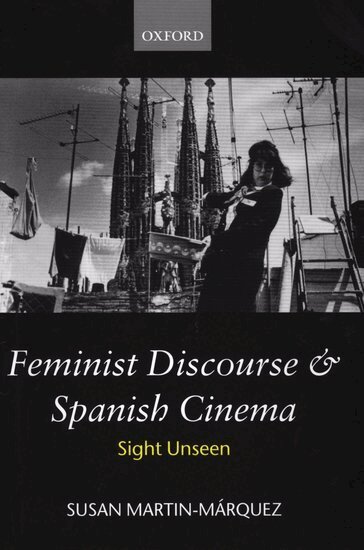
Feminist Discourse and Spanish Cinema provides the first detailed consideration of women directors working before the Civil War and during Franco's dictatorship, and is the first to explore the impact of feminism on filmmaking in Spain. Part I focuses on three directors, Rosario Pi, Ana Mariscal, and Pilar Miró, whose careers span the history of sound cinema in Spain. The book highlights their struggle to achieve agency within the male-dominated film industry, and draws upon extensive archival research as well as in-depth textual analysis to reveal their negotiation with questions of authorship, female subjectivity and national cinema. Part II explores six films by women and men directors–three each from the Francoist and post-Franco periods–that foreground a number of issues of fundamental importance to feminism, from the indoctrination and 'performance' of gender, to the fraught effort to reconcile power with sexual pleasure. The Afterword treats the remarkable recent boom in women directors and traces the shift in their work towards the exploration of multiple forms of difference.
Disorientations
Spanish Colonialism in Africa and the Performance of Identity
Inbunden, Engelska, 2008
1 074 kr
Skickas inom 5-8 vardagar
This book explores from a new perspective the fraught processes of Spaniards' efforts to formulate a national identity, from the Enlightenment to the present day. Focusing on the nation’s Islamic-African legacy, Susan Martin-Márquez disputes received wisdom that Spain has consistently rejected its historical relationship to Muslims and Africans. Instead, she argues, Spaniards have sometimes denied and sometimes embraced this legacy, and that vacillation has served to destabilize presumably fixed borders between Europe and the Muslim world and between Europe and Africa. Martin-Márquez analyzes a wealth of texts produced by Spaniards as well as by Africans and Afro-Spaniards from the early nineteenth century forward. She illuminates the complexities and disorientations of Spanish identity and shows how its evolution has important implications for current debates not only in Spanish culture but also in other countries involved in negotiating a modern identity.