Susan Power Bratton - Böcker
Visar alla böcker från författaren Susan Power Bratton. Handla med fri frakt och snabb leverans.
7 produkter
7 produkter
420 kr
Skickas inom 3-6 vardagar
Susan Power Bratton draws on information from demographers, economists, ecologists, and sociologists to argue that individuals should use Christian values when dealing with the regulation of human population. In this easy-to-read analysis, the author reviews a number of issues and provides case studies and discussion questions at the end of each chapter.
987 kr
Skickas inom 11-20 vardagar
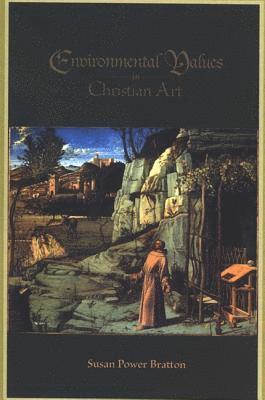
Discusses the expression of environmental values in Christian art as it displaced pagan aesthetics from the third century to the Reformation.This book looks at what art reveals about the environmental values of Christianity. As western Europe transitioned to Christianity, pagan religious aesthetics changed or were displaced. Focusing on Christian art and architecture from early third-century Rome to seventeenth-century Netherlands, Susan Power Bratton examines this transition. She explores the relationship between Christ and nature in emergent Christian art, the role nonhumans play in this art, and how Christian art represents the ownership and management of natural resources.The first section of the book discusses Christian art in imperial Rome and monastic Ireland's contribution-from high crosses to the Book of Kells-and evaluates the claim that Christianity suppressed the positive portrayal of nature in pre-Christian art. The second section investigates changes in cosmology from the early Middle Ages through the Gothic era and examines their implications for environmental economics. The final section analyzes the paintings of the Italian Renaissance and Dutch Golden Age and the impact of an emerging scientific worldview on the spiritual meaning of the landscape.
3 420 kr
Skickas inom 7-10 vardagar
This interdisciplinary Handbook examines the relationship between environmental problem solving and religion, addressing how environmental planning often neglects the cultural influences and organizational resources of the world’s religions. It explores global faiths such as Islam and Buddhism, as well as Indigenous and emerging religions.Expert contributors from a breadth of disciplines including anthropology, ecology, education and theology use the Sustainable Development Goals (SDGs) as a unifying framework to examine multiple facets of religious practice and expression. The Handbook explores key topics including conservation, education, leadership, ecojustice, social ethics, religion’s functions in civil society, and faith-based participation in resolving environmental conflicts. They advocate for future action and research in this field, emphasizing the importance of incorporating religion as a crucial component of environmental management and problem solving.The Handbook on Religion and the Environment is an essential reference for students and academics in the fields of environmental studies, environmental science, religious studies, and political science. It is also an enlightening read for policymakers, religious leaders, ecologists, and professionals working in international development, and urban and environmental planning.
2 088 kr
Skickas inom 10-15 vardagar
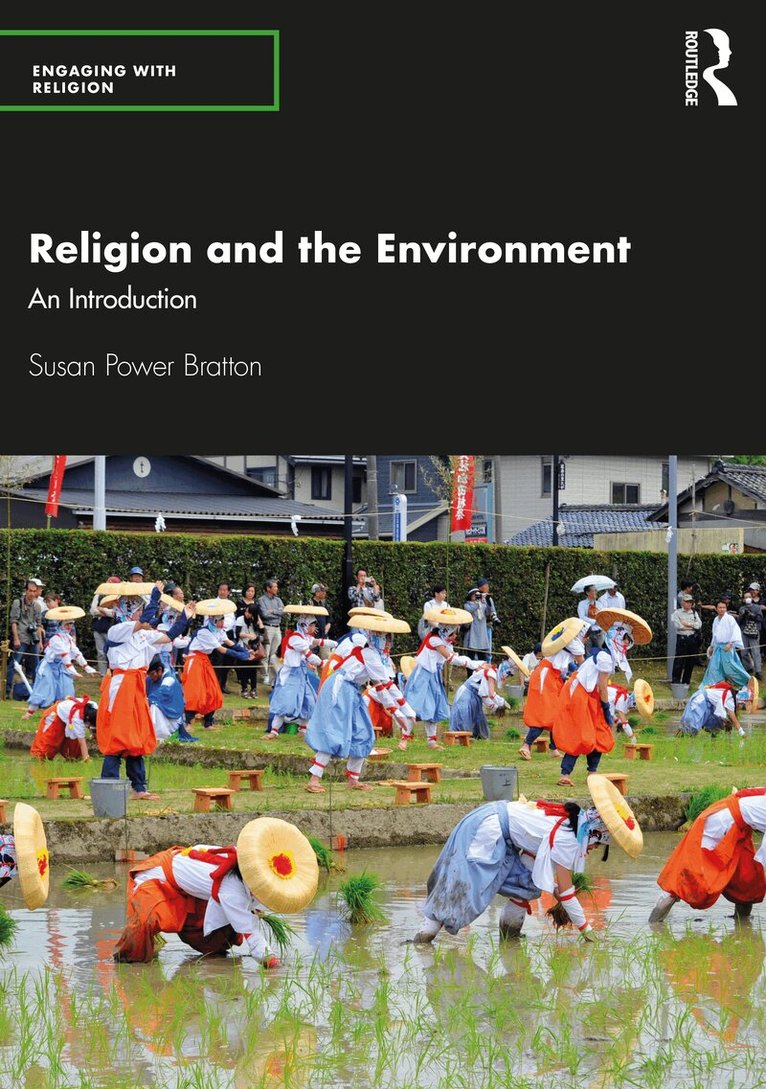
How does religion relate to our global environment? Religion and the Environment provides a comprehensive and accessible introduction to this controversial question by covering the following important themes: the religion-environment interface pre- and post-industrial religious practices related to resource extraction and the rise of the Anthropocene an analysis of religious response to the impacts of contemporary industrialization, globalization, and urbanization religious thought, leadership, policy formation, and grassroots activism relative to the environment. Religion and the Environment will offer students and general readers a sophisticated yet accessible exploration of the relationship between religion and the environment, through case studies ranging from climate change to the impacts of warfare. This engaging book will be an excellent addition to introductory courses and those approaching the topic for the first time.
549 kr
Skickas inom 10-15 vardagar
How does religion relate to our global environment? Religion and the Environment provides a comprehensive and accessible introduction to this controversial question by covering the following important themes: the religion-environment interface pre- and post-industrial religious practices related to resource extraction and the rise of the Anthropocene an analysis of religious response to the impacts of contemporary industrialization, globalization, and urbanization religious thought, leadership, policy formation, and grassroots activism relative to the environment. Religion and the Environment will offer students and general readers a sophisticated yet accessible exploration of the relationship between religion and the environment, through case studies ranging from climate change to the impacts of warfare. This engaging book will be an excellent addition to introductory courses and those approaching the topic for the first time.
604 kr
Skickas inom 11-20 vardagar
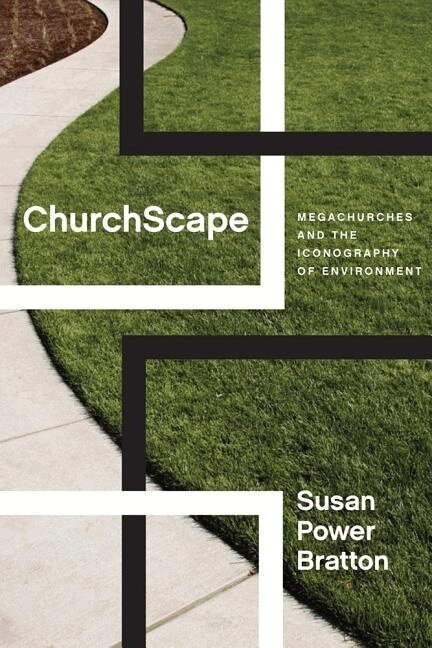
Buildings and landscapes are as much a part of the Christian church as its creeds - reflecting the faith and proclaiming God. The architecture of the church's structures and the curating of its grounds are unique windows into the church's history and the shape of its theological commitments. Birthed in the iconoclastic spirit of the Reformation, the scapes of Protestant churches have experienced massive shifts in design and scope. From humble beginnings - small buildings and cemeteries - churches today can occupy thousands of square feet across hundreds of acres. The modern megachurch, with its extensive campuses, parking lots, and sprawling lawns, has changed how we think about the church and its spaces. Form follows function, and theology is in both. The shifts in scale, style, and symbol within the church's common spaces reflect changes in ecclesial priorities, even as they form the theological imagination in new ways. In ChurchScape, Susan Bratton chronicles the story of the Protestant church's transformation of landscape and building. Citing the influence of college campuses on megachurch architecture, Bratton examines the features that are a part of many megachurch complexes, including waterscapes, iconography, and outdoor art. Taking readers on a cross-country journey to over two hundred churches, Bratton traces the movement from the small parish building of the nineteenth century to the extensive complexes that form today's churchscapes. As she moves from church to church, Bratton describes how all the church's spaces - buildings, greens, gardens, and gateways - together shape its practices, name its beliefs, and form its life together. Bratton's work offers the first historical and theological analysis for the megachurch and its physical planners and planters. She demands that all of us look with new eyes at the ways the church may be an innovator without being disruptive, a place of community without becoming exclusive, and a site of abundance without decadence. The church-in-place must consider how its scapes and spaces reflect its sacred life.
314 kr
Skickas inom 10-15 vardagar
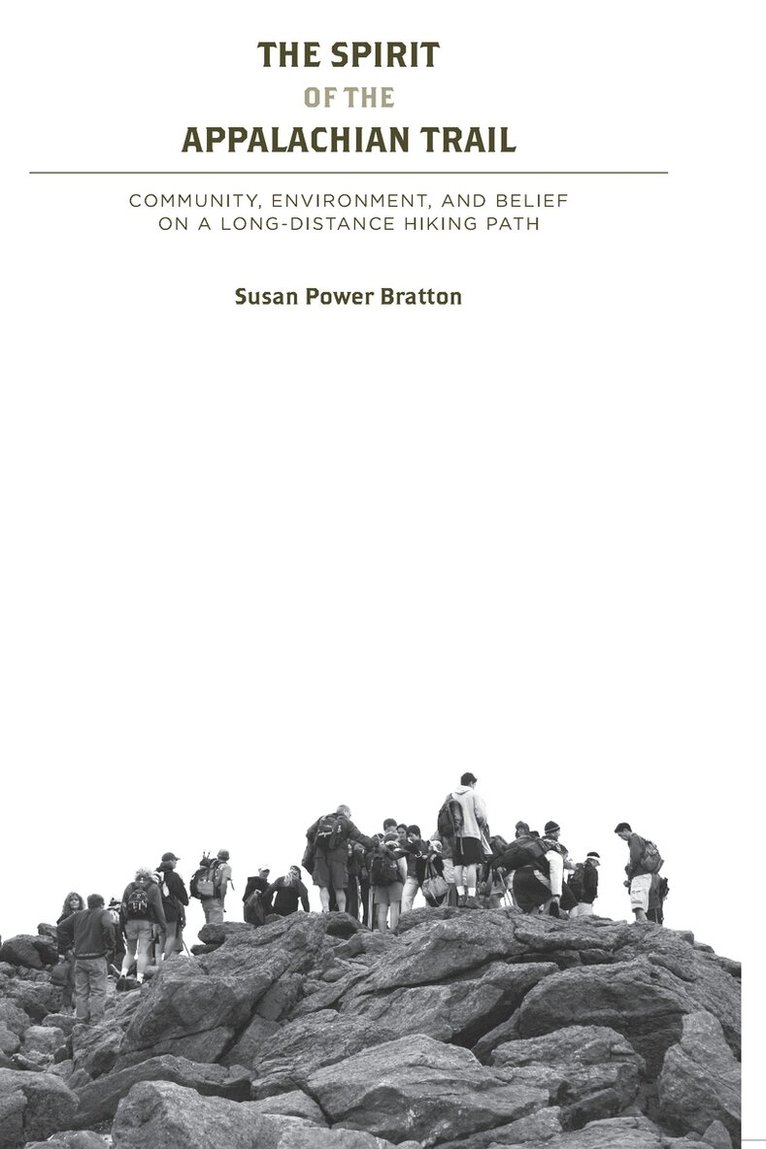
The Appalachian Trail covers 2,180 miles, passing through fourteen states from Georgia to Maine. Each year, an estimated 2–3 million people visit the trail, and almost two thousand attempt a “thru-hike,” walking the entire distance of the path. For many, the journey transcends a mere walk in the woods and becomes a modern-day pilgrimage.In The Spirit of the Appalachian Trail: Community, Environment, and Belief, Susan Power Bratton addresses the spiritual dimensions of hiking the Appalachian Trail (AT). Hikers often comment on how their experience as thru-hikers changes them spiritually forever, but this is the first study to evaluate these religious or quasi-religious claims critically. Rather than ask if wilderness and outdoor recreation have benefits for the soul, this volume investigates specifically how long-distance walking might enhance both body and mind.Most who are familiar with the AT sense intuitively that a trek along its length kindles spiritual awakening. Using both a quantitative and qualitative approach, this book provides the hard data to support this notion. Bratton bases her work on five sources: an exhaustive survey of long-distance AT hikers, published trail diaries and memoirs, hikers' own logs and postings, her own personal observations from many years on the trail, and conversations with numerous members of the AT community, including the “trail angels,” residents of small towns along the path who attend to hikers? need for food, shelter, or medical attention.The abundant photographs reinforce the text and enable visualization of the cultural and natural context. This volume is fully indexed with extensive reference and notes sections and detailed appendixes. Written in an engaging and accessible style, The Spirit of the Appalachian Trail presents a full picture of the spirituality of the AT.