Susan Reynolds Whyte - Böcker
Visar alla böcker från författaren Susan Reynolds Whyte. Handla med fri frakt och snabb leverans.
11 produkter
11 produkter
548 kr
Skickas inom 3-6 vardagar
Spurred by the United Nation's International Decade for Disabled Persons and medical anthropology's coming of age, anthropologists have recently begun to explore the effects of culture on the lives of the mentally and physically impaired. This major collection of essays both reframes disability in terms of social processes and offers for the first time a global, multicultural perspective on the subject. Using research undertaken in a wide variety of settings--from a longhouse in central Borneo to a community of Turkish immigrants in Stockholm--contributors explore the significance of mental, sensory, and motor impairments in light of fundamental, culturally determined assumptions about humanity and personhood.
282 kr
Skickas inom 7-10 vardagar
The lives of many disabled people in Europe and North America have improved over the past two decades through innovative technologies and the efforts of the disability rights movement. These changes have been spreading to other societies around the globe-albeit unevenly. In this collection of essays, leading scholars explore global changes in disability awareness, technology, and policy from the viewpoint of disabled people and their families in a wide range of local contexts. The authors report on ethnographic research in Brazil, Uganda, Botswana, Somalia, Britain, Israel, China, Egypt, India, and Japan. They address the definition of disability, the new eugenics, human rights in local contexts, domestic and state citizenship of disabled people, and issues of identity and belonging.
Del 4 - Cambridge Studies in Medical Anthropology
Questioning Misfortune
The Pragmatics of Uncertainty in Eastern Uganda
Inbunden, Engelska, 1998
995 kr
Skickas inom 7-10 vardagar
Some of the most interesting ethnographies of experience are concerned to highlight the indeterminate nature of life. Questioning Misfortune is very much within this tradition. Based on a long-term study of adversity and its social causes in Bunyole, eastern Uganda, it considers the way in which people deal with uncertainties of life, such as sickness, suffering, marital problems, failure, and death. Divination may identify causes of misfortune, ranging from ancestors and spirits to sorcerers. Sufferers and their families will then try out a variety of remedial measures, including pharmaceuticals, sorcery antidotes, and sacrifices. But remedies often fail, and doubt and uncertainty persist. Even the commercialisation of biomedicine, and the peril of AIDS can be understood in terms of a pragmatics of uncertainty.
Del 4 - Cambridge Studies in Medical Anthropology
Questioning Misfortune
The Pragmatics of Uncertainty in Eastern Uganda
Häftad, Engelska, 1998
485 kr
Skickas inom 7-10 vardagar
Some of the most interesting ethnographies of experience are concerned to highlight the indeterminate nature of life. Questioning Misfortune is very much within this tradition. Based on a long-term study of adversity and its social causes in Bunyole, eastern Uganda, it considers the way in which people deal with uncertainties of life, such as sickness, suffering, marital problems, failure, and death. Divination may identify causes of misfortune, ranging from ancestors and spirits to sorcerers. Sufferers and their families will then try out a variety of remedial measures, including pharmaceuticals, sorcery antidotes, and sacrifices. But remedies often fail, and doubt and uncertainty persist. Even the commercialisation of biomedicine, and the peril of AIDS can be understood in terms of a pragmatics of uncertainty.
305 kr
Skickas inom 7-10 vardagar
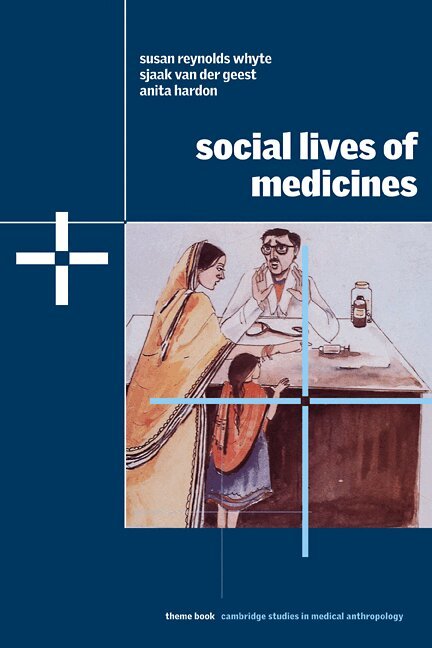
Medicines are the core of treatment in biomedicine, as in many other medical traditions. As material things, they have social as well as pharmacological lives, with people and between people. They are tokens of healing and hope, as well as valuable commodities. Each chapter of this book shows drugs in the hands of particular actors: mothers in Manila, villagers in Burkina Faso, women in the Netherlands, consumers in London, market traders in Cameroon, pharmacists in Mexico, injectionists in Uganda, doctors in Sri Lanka, industrialists in India, and policymakers in Geneva. Each example is used to explore a different problem in the study of medicines, such as social efficacy, experiences of control, skepticism and cultural politics, commodification of health, the attraction of technology and the marketing of images and values. The book shows how anthropologists deal with the sociality of medicines, through their ethnography, their theorizing, and their uses of knowledge.
1 280 kr
Skickas inom 7-10 vardagar
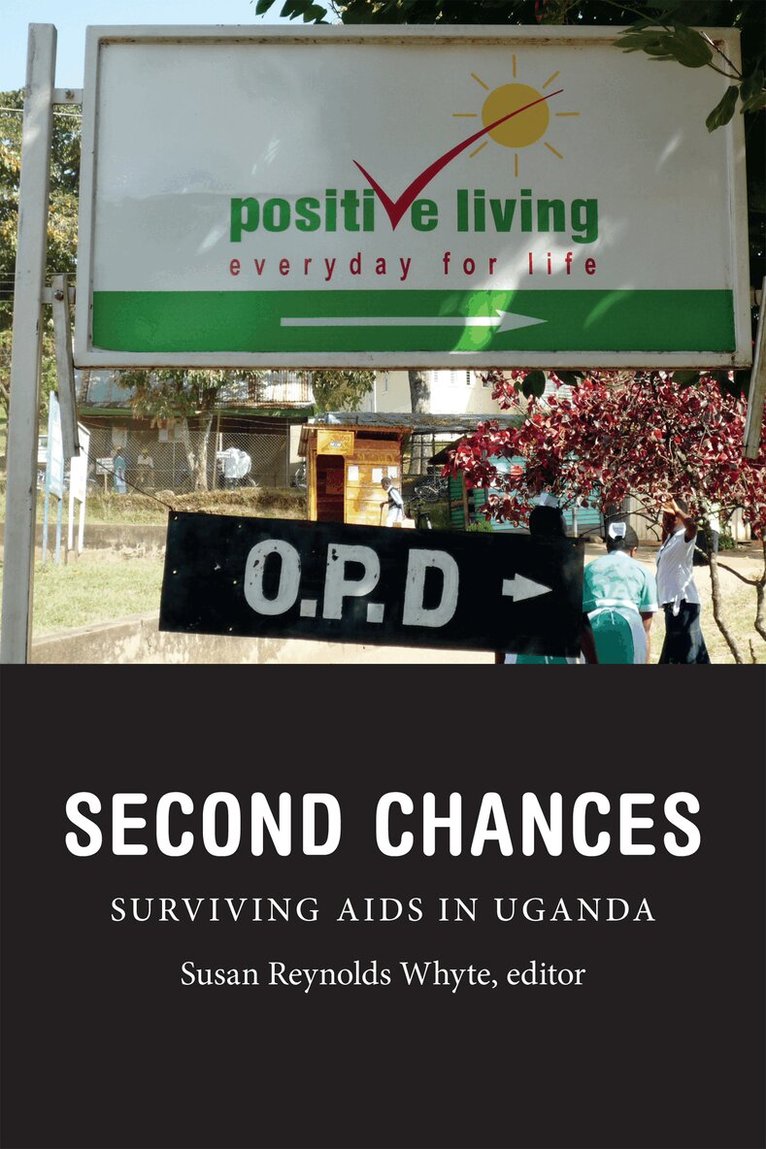
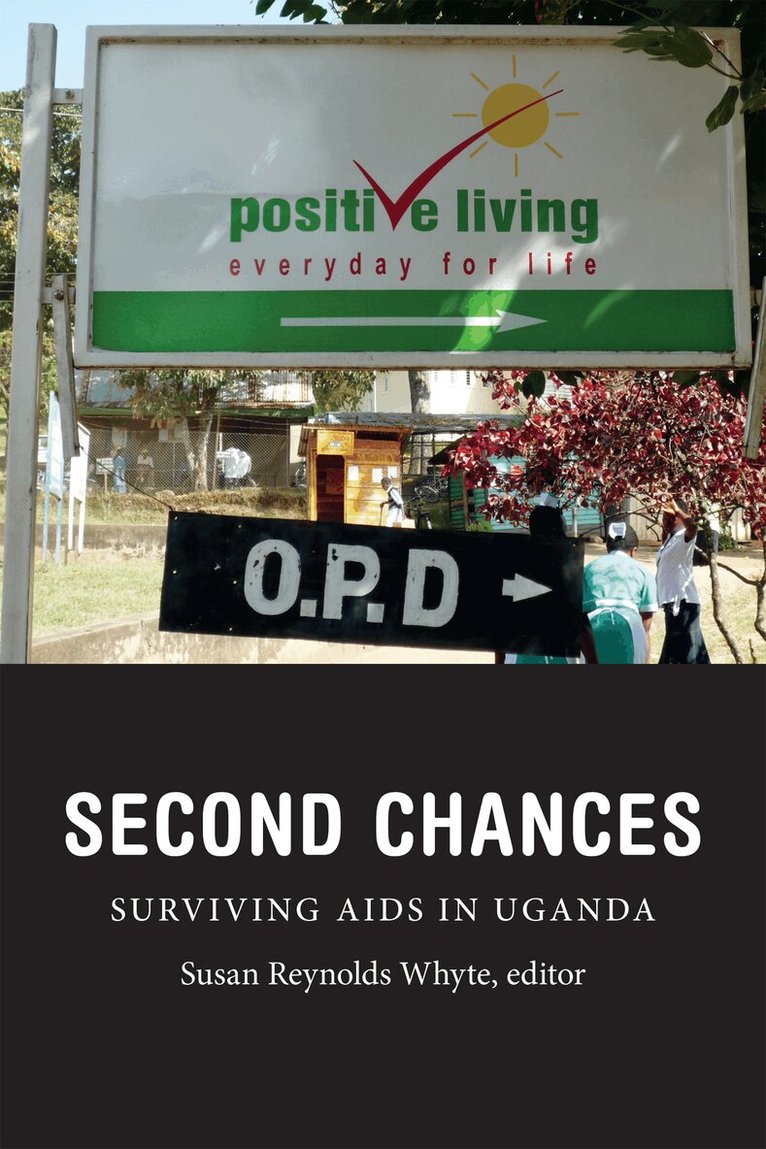
During the first decade of this millennium, many thousands of people in Uganda who otherwise would have died from AIDS got second chances at life. A massive global health intervention, the scaling up of antiretroviral therapy (ART), saved them and created a generation of people who learned to live with treatment. As clients they joined programs that offered free antiretroviral medicine and encouraged "positive living." Because ART is not a cure but a lifelong treatment regime, its consequences are far-reaching for society, families, and individuals. Drawing on personal accounts and a broad knowledge of Ugandan culture and history, the essays in this collection explore ART from the perspective of those who received second chances. Their concerns about treatment, partners, children, work, food, and bodies reveal the essential sociality of Ugandan life. The collection is based on research undertaken by a team of social scientists including both Western and African scholars.Contributors. Phoebe Kajubi, David Kyaddondo, Lotte Meinert, Hanne O. Mogensen, Godfrey Etyang Siu, Jenipher Twebaze, Michael A. Whyte, Susan Reynolds Whyte
373 kr
Skickas inom 7-10 vardagar
During the first decade of this millennium, many thousands of people in Uganda who otherwise would have died from AIDS got second chances at life. A massive global health intervention, the scaling up of antiretroviral therapy (ART), saved them and created a generation of people who learned to live with treatment. As clients they joined programs that offered free antiretroviral medicine and encouraged "positive living." Because ART is not a cure but a lifelong treatment regime, its consequences are far-reaching for society, families, and individuals. Drawing on personal accounts and a broad knowledge of Ugandan culture and history, the essays in this collection explore ART from the perspective of those who received second chances. Their concerns about treatment, partners, children, work, food, and bodies reveal the essential sociality of Ugandan life. The collection is based on research undertaken by a team of social scientists including both Western and African scholars.Contributors. Phoebe Kajubi, David Kyaddondo, Lotte Meinert, Hanne O. Mogensen, Godfrey Etyang Siu, Jenipher Twebaze, Michael A. Whyte, Susan Reynolds Whyte
Context of Medicines in Developing Countries
Studies in Pharmaceutical Anthropology
Inbunden, Engelska, 1988
2 488 kr
Skickas inom 10-15 vardagar
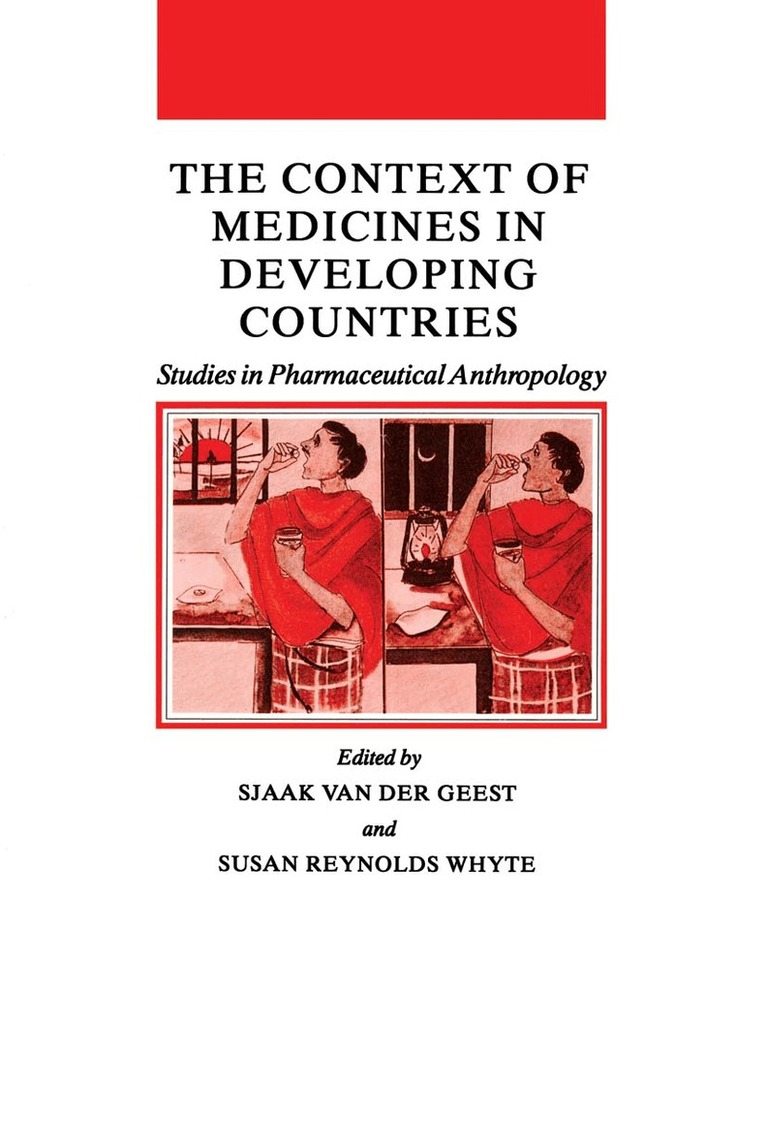
Western pharmaceuticals are flooding the Third World. Injections, capsules and tablets are available in city markets and village shops, from 'traditional' practitioners and street vendors, as well as from more orthodox sources like hospitals. Although many are aware of this 'pharmaceutical invasion', little has been written about how local people perceive and use these products. This book is a first attempt to remedy that situation. It presents studies of the ways Western medicines are circulated and understood in the cities and rural areas of Africa, Asia and Latin America. We feel that such a collection is long overdue for two reasons. The first is a practical one: people dealing with health problems in developing countries need information about local situations and they need examples of methods they can use to examine the particular contexts in which they are working. We hope that this book will be useful for pharmacists, doctors, nurses, health planners, policy makers and concerned citizens, who are interested in the realities of drug use. Why do people want various kinds of medicine? How do they evaluate and choose them and how do they obtain them? The second reason for these studies of medicines is to fill a need in medical anthropology as a field of study. Here we address our colleagues in anthropol ogy, medical sociology and related disciplines.
1 956 kr
Skickas inom 3-6 vardagar
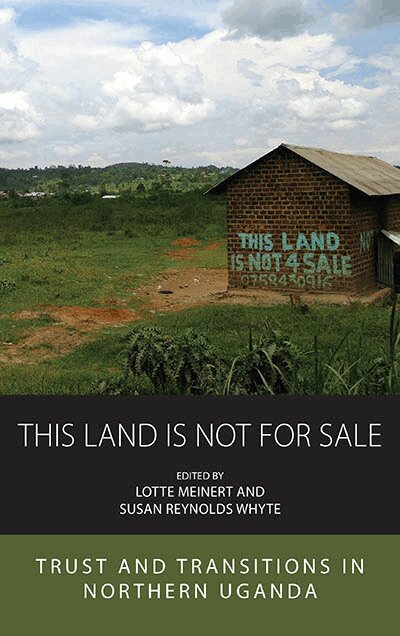
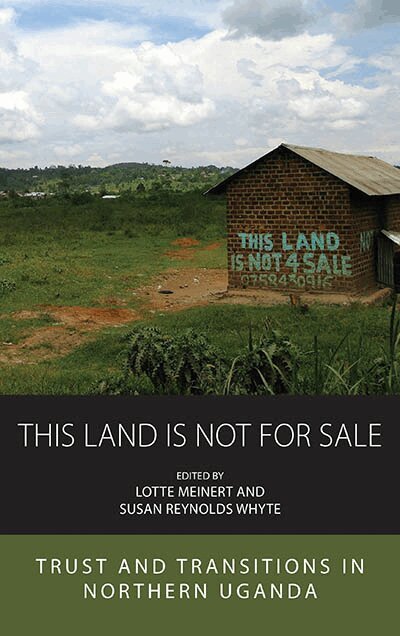
Although violent conflict has declined in northern Uganda, tensions and mistrust concerning land have increased. Residents try to deal with acquisitions by investors and exclusions from forests and wildlife reserves. Land wrangles among neighbours and relatives are widespread. The growing commodification of land challenges ideals of entrustment for future generations. Using extended case studies, collaborating researchers analyze the principles and practices that shape access to land. Contributors examine the multiplicity of land claims, the nature of transactions and the management of conflicts. They show how access to land is governed through intimate relations of gender, generation and belonging.
358 kr
Skickas inom 3-6 vardagar
Although violent conflict has declined in northern Uganda, tensions and mistrust concerning land have increased. Residents try to deal with acquisitions by investors and exclusions from forests and wildlife reserves. Land wrangles among neighbours and relatives are widespread. The growing commodification of land challenges ideals of entrustment for future generations. Using extended case studies, collaborating researchers analyze the principles and practices that shape access to land. Contributors examine the multiplicity of land claims, the nature of transactions and the management of conflicts. They show how access to land is governed through intimate relations of gender, generation and belonging.
Context of Medicines in Developing Countries
Studies in Pharmaceutical Anthropology
Häftad, Engelska, 2013
2 416 kr
Skickas inom 10-15 vardagar
Western pharmaceuticals are flooding the Third World. Injections, capsules and tablets are available in city markets and village shops, from 'traditional' practitioners and street vendors, as well as from more orthodox sources like hospitals. Although many are aware of this 'pharmaceutical invasion', little has been written about how local people perceive and use these products. This book is a first attempt to remedy that situation. It presents studies of the ways Western medicines are circulated and understood in the cities and rural areas of Africa, Asia and Latin America. We feel that such a collection is long overdue for two reasons. The first is a practical one: people dealing with health problems in developing countries need information about local situations and they need examples of methods they can use to examine the particular contexts in which they are working. We hope that this book will be useful for pharmacists, doctors, nurses, health planners, policy makers and concerned citizens, who are interested in the realities of drug use. Why do people want various kinds of medicine? How do they evaluate and choose them and how do they obtain them? The second reason for these studies of medicines is to fill a need in medical anthropology as a field of study. Here we address our colleagues in anthropol ogy, medical sociology and related disciplines.