Susan Roaf - Böcker
Visar alla böcker från författaren Susan Roaf. Handla med fri frakt och snabb leverans.
9 produkter
9 produkter
1 805 kr
Skickas inom 10-15 vardagar
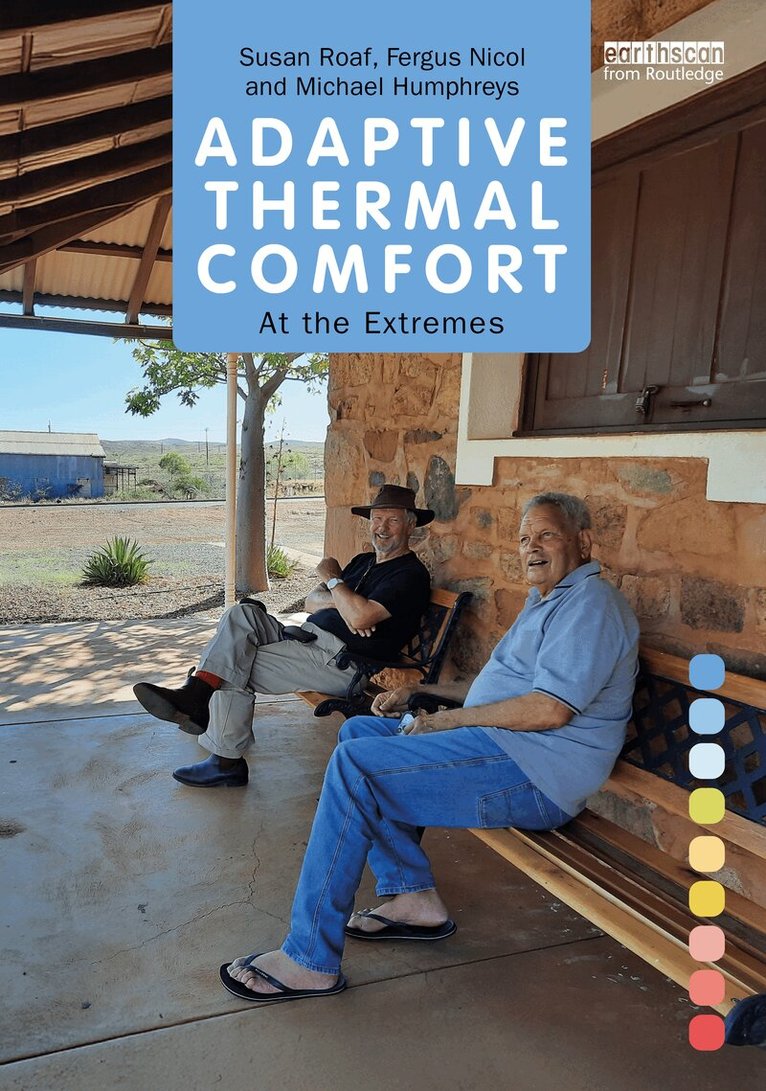
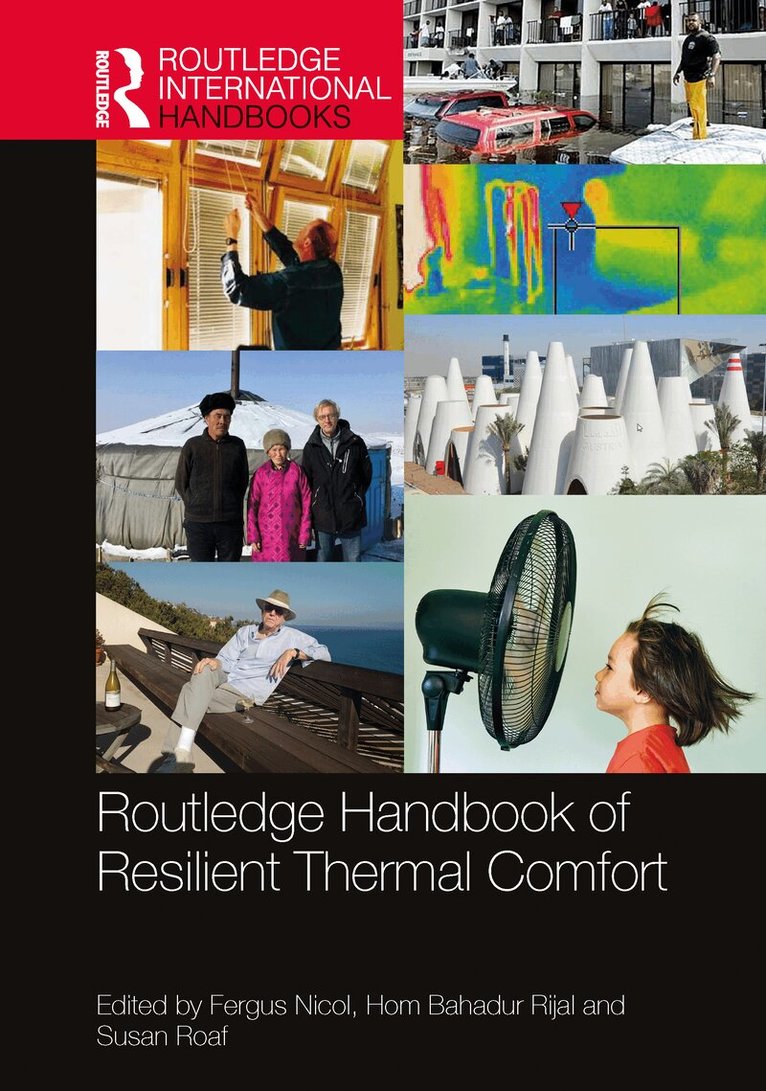
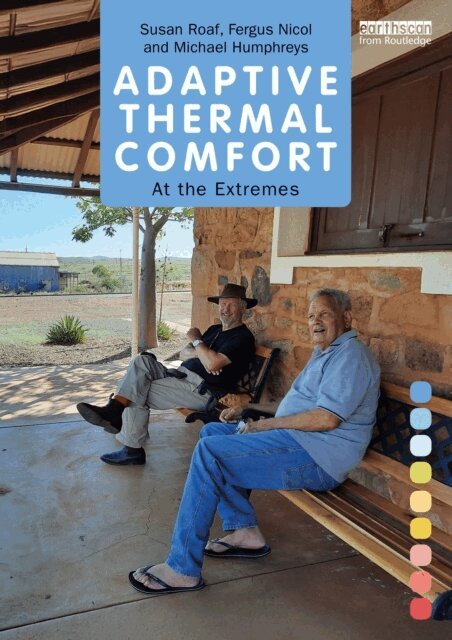
To remain comfortable in a world of ever more extreme weather events and climate trends, we need a building revolution. Building designers, owners, managers, and occupants must prepare now for future climates with new ways to stay comfortable indoors. This book is a compendium of information on comfort that provides an overview of the complexity of the many ways that comfort is achieved in buildings. It outlines the impacts and implications of current design practices on greenhouse gas emissions from buildings and the health and well-being of people in them. In reality, many modern buildings, and particularly homes, are already failing in various ways. During extreme weather events, they overheat. During power outages, many buildings do not even remain habitable. During the COVID pandemic, cross-infections between occupants were rife in buildings like hospitals and hotels without opening windows. As energy prices soared and globally economies flatlined, many found themselves unable to pay for high-cost comfort solutions and so either had to change their lifestyles and expectations or learn to live with discomfort. Underlying many of the growing global problems is the trend towards an overdependence on mechanical systems to produce comfort, coupled with a decrease in the passive climatic performance of the buildings themselves. Both factors are resulting in a generation of increasingly un-resilient buildings.The theory of adaptive thermal comfort states that people adapt to those temperatures they normally occupy, and if they become uncomfortable, they tend to change themselves or their surroundings to return to comfort, if they are able or can afford to. This is the third of three volumes, which builds on the practical and theoretical foundations of the subject laid out in the first two volumes. It builds on their premises to shape a new and better roadmap going forward for imagining, designing, and constructing adaptable buildings, and for the behavioural lifestyle changes needed to prepare humanity to survive and thrive comfortably in the very different weather and climates ahead.
831 kr
Skickas inom 10-15 vardagar
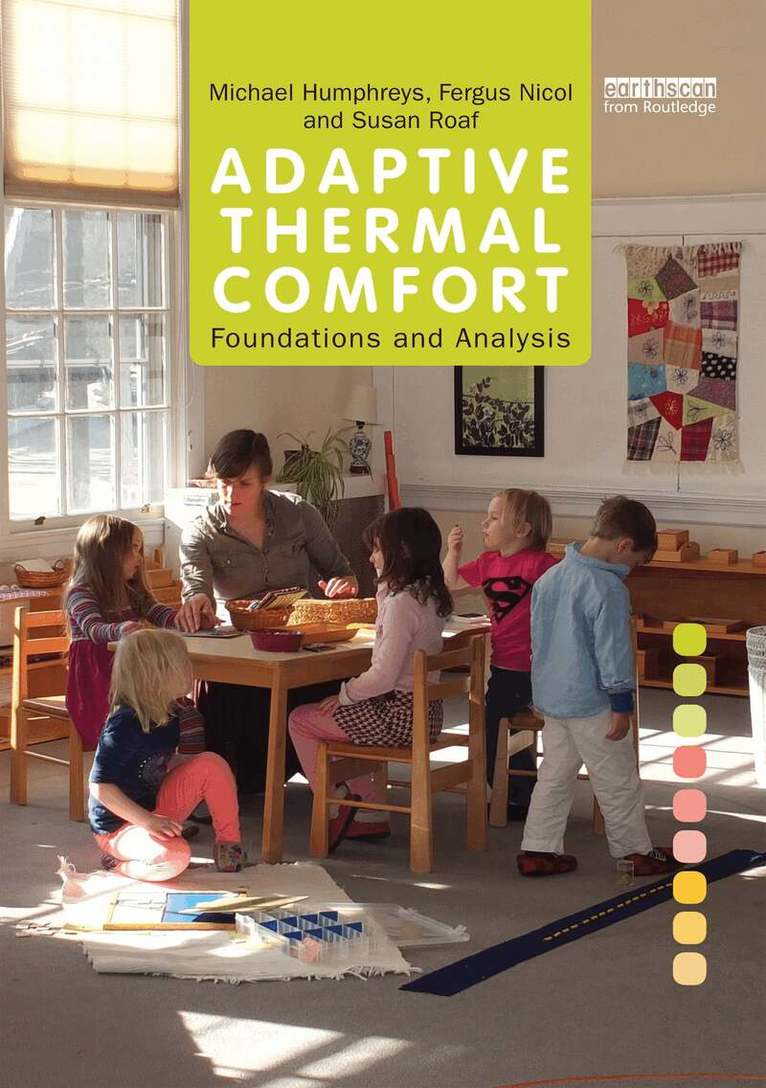
There has been widespread dissatisfaction with accepted models for predicting the conditions that people will find thermally comfortable in buildings. These models require knowledge about clothing and activity, but can give little guidance on how to quantify them in any future situation. This has forced designers to make assumptions about people’s future behaviour based on very little information and, as a result, encouraged static design indoor temperatures. This book is the second in a three volume set covering all aspects of Adaptive Thermal Comfort. The first part narrates the development of the adaptive approach to thermal comfort from its early beginnings in the 1960s. It discusses recent work in the field and suggests ways in which it can be developed and modelled. Such models can be used to set dynamic, interactive standards for thermal comfort which will help overcome the problems inherited from the past. The second part of the volume engages with the practical and theoretical problems encountered in field studies and in their statistical analysis, providing guidance towards their resolution, so that valid conclusions may be drawn from such studies.
698 kr
Skickas inom 10-15 vardagar
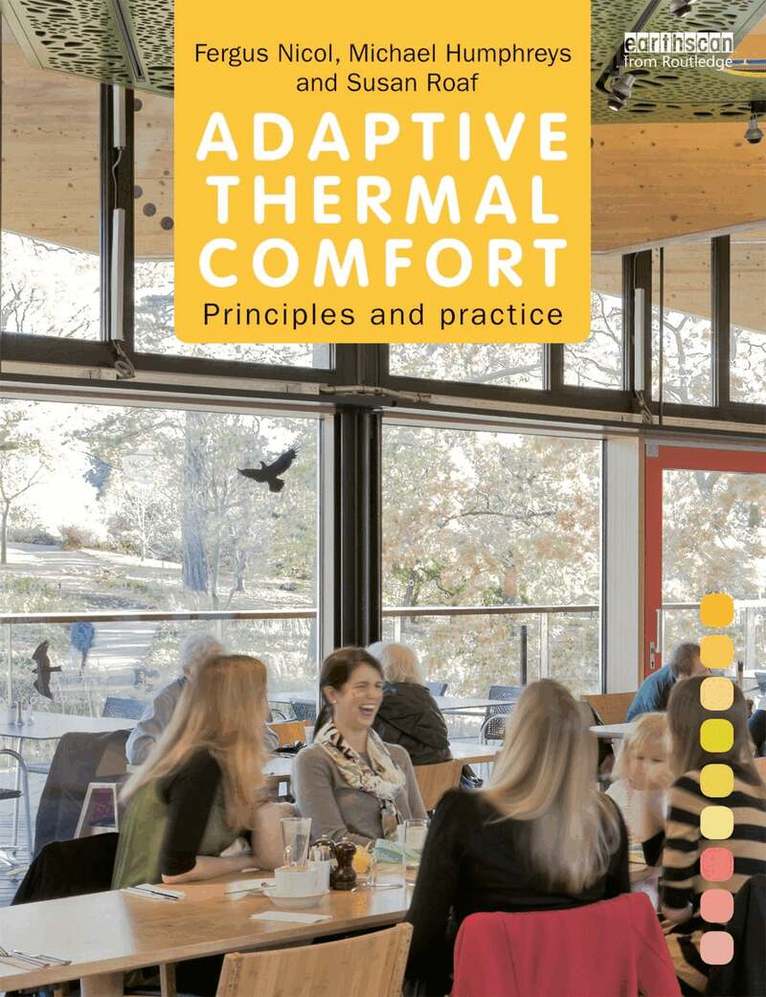
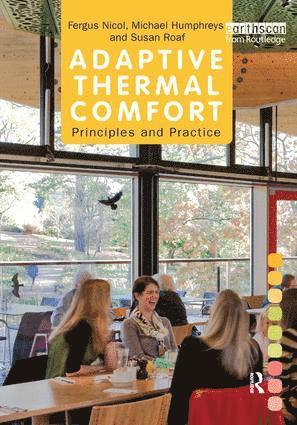
The fundamental function of buildings is to provide safe and healthy shelter. For the fortunate they also provide comfort and delight. In the twentieth century comfort became a 'product' produced by machines and run on cheap energy. In a world where fossil fuels are becoming ever scarcer and more expensive, and the climate more extreme, the challenge of designing comfortable buildings today requires a new approach. This timely book is the first in a trilogy from leaders in the field which will provide just that. It explains, in a clear and comprehensible manner, how we stay comfortable by using our bodies, minds, buildings and their systems to adapt to indoor and outdoor conditions which change with the weather and the climate. The book is in two sections. The first introduces the principles on which the theory of adaptive thermal comfort is based. The second explains how to use field studies to measure thermal comfort in practice and to analyze the data gathered.Architects have gradually passed responsibility for building performance to service engineers who are largely trained to see comfort as the ‘product’, designed using simplistic comfort models. The result has contributed to a shift to buildings that use ever more energy. A growing international consensus now calls for low-energy buildings. This means designers must first produce robust, passive structures that provide occupants with many opportunities to make changes to suit their environmental needs. Ventilation using free, natural energy should be preferred and mechanical conditioning only used when the climate demands it.This book outlines the theory of adaptive thermal comfort that is essential to understand and inform such building designs. This book should be required reading for all students, teachers and practitioners of architecture, building engineering and management – for all who have a role in producing, and occupying, twenty-first century adaptive, low-carbon, comfortable buildings.
2 358 kr
Skickas inom 10-15 vardagar
There has been widespread dissatisfaction with accepted models for predicting the conditions that people will find thermally comfortable in buildings. These models require knowledge about clothing and activity, but can give little guidance on how to quantify them in any future situation. This has forced designers to make assumptions about people’s future behaviour based on very little information and, as a result, encouraged static design indoor temperatures. This book is the second in a three volume set covering all aspects of Adaptive Thermal Comfort. The first part narrates the development of the adaptive approach to thermal comfort from its early beginnings in the 1960s. It discusses recent work in the field and suggests ways in which it can be developed and modelled. Such models can be used to set dynamic, interactive standards for thermal comfort which will help overcome the problems inherited from the past. The second part of the volume engages with the practical and theoretical problems encountered in field studies and in their statistical analysis, providing guidance towards their resolution, so that valid conclusions may be drawn from such studies.
744 kr
Skickas inom 7-10 vardagar
To remain comfortable in a world of ever more extreme weather events and climate trends, we need a building revolution. Building designers, owners, managers, and occupants must prepare now for future climates with new ways to stay comfortable indoors. This book is a compendium of information on comfort that provides an overview of the complexity of the many ways that comfort is achieved in buildings. It outlines the impacts and implications of current design practices on greenhouse gas emissions from buildings and the health and well-being of people in them. In reality, many modern buildings, and particularly homes, are already failing in various ways. During extreme weather events, they overheat. During power outages, many buildings do not even remain habitable. During the COVID pandemic, cross-infections between occupants were rife in buildings like hospitals and hotels without opening windows. As energy prices soared and globally economies flatlined, many found themselves unable to pay for high-cost comfort solutions and so either had to change their lifestyles and expectations or learn to live with discomfort. Underlying many of the growing global problems is the trend towards an overdependence on mechanical systems to produce comfort, coupled with a decrease in the passive climatic performance of the buildings themselves. Both factors are resulting in a generation of increasingly un-resilient buildings.The theory of adaptive thermal comfort states that people adapt to those temperatures they normally occupy, and if they become uncomfortable, they tend to change themselves or their surroundings to return to comfort, if they are able or can afford to. This is the third of three volumes, which builds on the practical and theoretical foundations of the subject laid out in the first two volumes. It builds on their premises to shape a new and better roadmap going forward for imagining, designing, and constructing adaptable buildings, and for the behavioural lifestyle changes needed to prepare humanity to survive and thrive comfortably in the very different weather and climates ahead.
3 272 kr
Skickas inom 10-15 vardagar
This book brings together some of the finest academics in the field to address important questions around the way in which people experience their physical environments, including temperature, light, air-quality, acoustics and so forth. It is of importance not only to the comfort people feel indoors, but also the success of any building as an environment for its stated purpose. The way in which comfort is produced and perceived has a profound effect on the energy use of a building and its resilience to the increasing dangers posed by extreme weather events, and power outages caused by climate change. Research on thermal comfort is particularly important not only for the health and well-being of occupants but because energy used for temperature control is responsible for a large part of the total energy budget of the built environment. In recent years there has been an increasing focus on the vulnerabilities of the thermal comfort system; how and why are buildings failing to provide safe and agreeable thermal environments at an affordable price? Achieving comfort in buildings is a complex subject that involves physics, behaviour, physiology, energy conservation, climate change, and of course architecture and urban design. Bringing together the related disciplines in one volume lays strong, multi-disciplinary foundations for new research and design directions for resilient 21st century architecture. This book heralds workable solutions and emerging directions for key fields in building the resilience of households, organisations and populations in a heating world.
666 kr
Skickas inom 10-15 vardagar
This book brings together some of the finest academics in the field to address important questions around the way in which people experience their physical environments, including temperature, light, air-quality, acoustics and so forth. It is of importance not only to the comfort people feel indoors, but also the success of any building as an environment for its stated purpose. The way in which comfort is produced and perceived has a profound effect on the energy use of a building and its resilience to the increasing dangers posed by extreme weather events, and power outages caused by climate change. Research on thermal comfort is particularly important not only for the health and well-being of occupants but because energy used for temperature control is responsible for a large part of the total energy budget of the built environment. In recent years there has been an increasing focus on the vulnerabilities of the thermal comfort system; how and why are buildings failing to provide safe and agreeable thermal environments at an affordable price? Achieving comfort in buildings is a complex subject that involves physics, behaviour, physiology, energy conservation, climate change, and of course architecture and urban design. Bringing together the related disciplines in one volume lays strong, multi-disciplinary foundations for new research and design directions for resilient 21st century architecture. This book heralds workable solutions and emerging directions for key fields in building the resilience of households, organisations and populations in a heating world.
456 kr
Skickas inom 10-15 vardagar
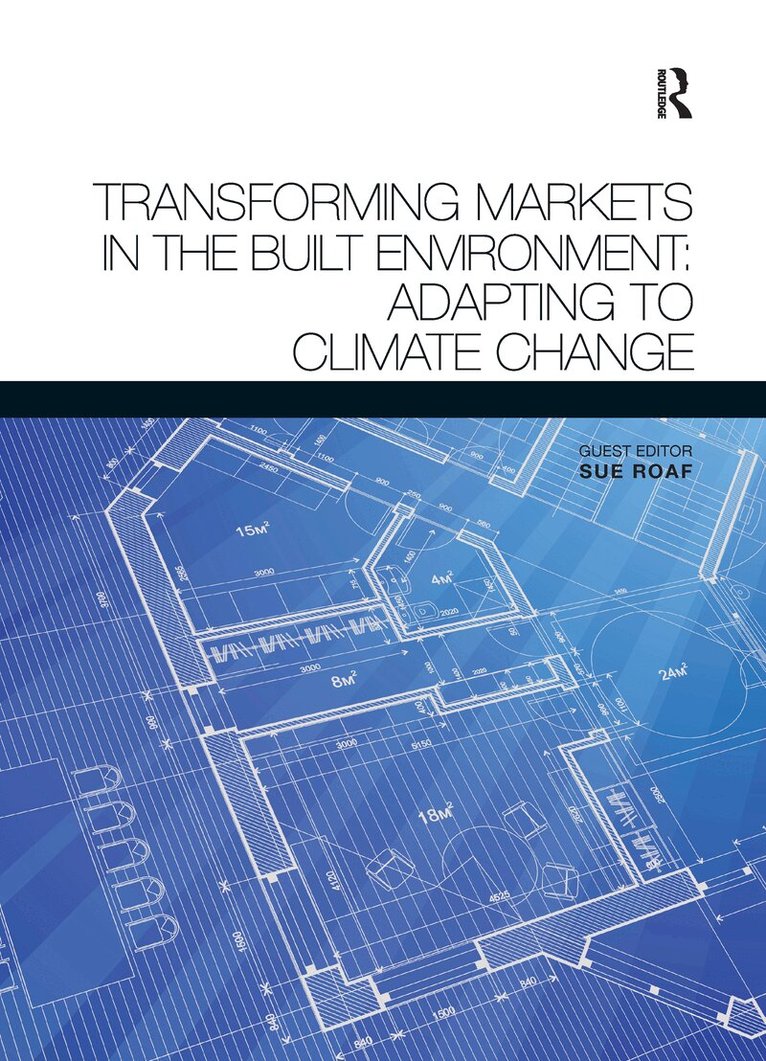
There is an urgent need to build human capacity to make the often vulnerable and exposed buildings and communities we live and work in more resilient to the changing social, economic and physical environments around us. Extensive research has been done over the last decades on both mitigation and adaptation to climate change in the built environment, but the outputs of much of this research have failed to result in the wider uptake of effective greenhouse gas emission reduction solutions. This volume introduces credible 'fresh thinking' on how this may be done. For the first time an emerging generation of research is brought together that is directly concerned with understanding, influencing and leading the transformation of markets and thinking in the built environment. Chapters cover: defining valuessetting targetsconsumer motivationselling existing ideas betterdeveloping new design principles, paradigms and programmesoptimizing solutions to ensure that when change does happen, it does so in the right direction. Papers are contributed by leading experts in fields ranging from philosophy, the social, political and physical sciences, engineering, architecture, mathematics and complexity science. The resulting volume will be essential reading for all those involved with changing the mindsets of a generation on the need to, and ways to, build resilience to rapid change and transforming markets in the built environment.
1 339 kr
Skickas inom 10-15 vardagar
There is an urgent need to build human capacity to make the often vulnerable and exposed buildings and communities we live and work in more resilient to the changing social, economic and physical environments around us. Extensive research has been done over the last decades on both mitigation and adaptation to climate change in the built environment, but the outputs of much of this research have failed to result in the wider uptake of effective greenhouse gas emission reduction solutions. This volume introduces credible 'fresh thinking' on how this may be done. For the first time an emerging generation of research is brought together that is directly concerned with understanding, influencing and leading the transformation of markets and thinking in the built environment. Chapters cover: defining valuessetting targetsconsumer motivationselling existing ideas betterdeveloping new design principles, paradigms and programmesoptimizing solutions to ensure that when change does happen, it does so in the right direction. Papers are contributed by leading experts in fields ranging from philosophy, the social, political and physical sciences, engineering, architecture, mathematics and complexity science. The resulting volume will be essential reading for all those involved with changing the mindsets of a generation on the need to, and ways to, build resilience to rapid change and transforming markets in the built environment.