• Fri frakt över 249 kr
  • •
  • Snabba leveranser
  • •
  • Billiga böcker
Kundservice

Du är på sajten för privatpersoner.

Företag, bibliotek eller offentlig verksamhet?

Du handlar på classic.bokus.com, där alla dina funktioner finns intakta.
Till classic.bokus.com
Bokus logotyp. Gå till startsidan.
  • Erbjudanden
  • Nyheter
  • Student
  • Topplistor
  • Barn & ungdom
  • Bokus Play
  • E-böcker
  • Pocketböcker
  • Spel & pussel

10% rabatt på allt med kod: NYSTART10 →

Sidfot

Mina sidor

    Hjälp

    • Kundservice
    • Vanliga frågor och svar
    • Frakt och leverans
    • Retur vid ångerrätt
    • Reklamera vara
    • Betalning
    • Köpvillkor
    • Allmänna villkor
    • Information om webbplatsens tillgänglighet

    Om Bokus

    • Om oss
    • Pressrum
    • För studenter
    • För företag
    • För bibliotek och offentlig verksamhet
    • För leverantörer
    • Hållbarhet

    Populärt

    • Aktuella erbjudanden
    • Presentkort
    • Studentlitteratur
    • Nya böcker
    • Topplistor
    • Signerade böcker
    • Engelska böcker

    Inspiration

    • Boktips
    • BookTok
    • Populära bokserier
    • Barnbokskaraktärer
    • Populära författare
    Logotyp för Bokus
    Följ oss på Facebook (extern länk)Följ oss på Instagram (extern länk)Följ oss på YouTube (extern länk)Följ oss på TikTok (extern länk)
    bokus @ CookiesAnpassa cookiesIntegritetspolicyKöpvillkor
    Till Citymail hemsida (extern länk)Till Budbee hemsida (extern länk)Till Postnord hemsida (extern länk)Till Schenker hemsida (extern länk)Till Early Bird hemsida (extern länk)Till Walleys hemsida (extern länk)
    1. Kultur
    2. Arkitektur

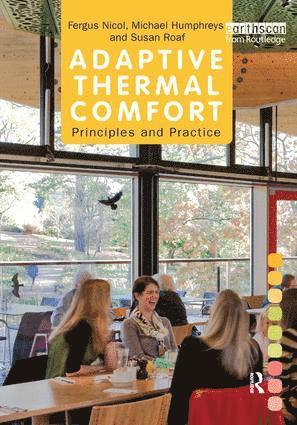
    Adaptive Thermal Comfort: Principles and Practice

    AvFergus Nicol,Michael Humphreys

    Inbunden, Engelska, 2017

    3 042 kr

    Beställningsvara. Skickas inom 10-15 vardagar. Fri frakt över 249 kr.

    Fler format och utgåvor

    Häftad

    765 kr

    E-bok

    933 kr

    E-bok

    933 kr

    Beskrivning

    The fundamental function of buildings is to provide safe and healthy shelter. For the fortunate they also provide comfort and delight. In the twentieth century comfort became a 'product' produced by machines and run on cheap energy. In a world where fossil fuels are becoming ever scarcer and more expensive, and the climate more extreme, the challenge of designing comfortable buildings today requires a new approach. This timely book is the first in a trilogy from leaders in the field which will provide just that. It explains, in a clear and comprehensible manner, how we stay comfortable by using our bodies, minds, buildings and their systems to adapt to indoor and outdoor conditions which change with the weather and the climate. The book is in two sections. The first introduces the principles on which the theory of adaptive thermal comfort is based. The second explains how to use field studies to measure thermal comfort in practice and to analyze the data gathered. Architects have gradually passed responsibility for building performance to service engineers who are largely trained to see comfort as the �product�, designed using simplistic comfort models. The result has contributed to a shift to buildings that use ever more energy. A growing international consensus now calls for low-energy buildings. This means designers must first produce robust, passive structures that provide occupants with many opportunities to make changes to suit their environmental needs. Ventilation using free, natural energy should be preferred and mechanical conditioning only used when the climate demands it. This book outlines the theory of adaptive thermal comfort that is essential to understand and inform such building designs. This book should be required reading for all students, teachers and practitioners of architecture, building engineering and management � for all who have a role in producing, and occupying, twenty-first century adaptive, low-car

    Produktinformation

    • Utgivningsdatum:2017-06-28
    • Mått:174 x 246 x undefined mm
    • Vikt:453 g
    • Format:Inbunden
    • Språk:Engelska
    • Antal sidor:186
    • Förlag:Taylor & Francis Ltd
    • ISBN:9781138430808

    Utforska kategorier

    • Arkitektur inom Kultur

    Mer om författaren

    Fergus Nicol has led a number of important research projects on comfort which have influenced thinking internationally. He has authored numerous journal articles and other publications including guidance on comfort and overheating. Fergus convenes the Network for Comfort and Energy use in Buildings and organises their regular international Windsor Conferences.Michael Humphreys is known for his pioneering work on the adaptive approach to comfort. He has been Head of Human Factors at the Building Research Establishment, and a Research Professor at Oxford Brookes University. His current interests are the structure and modelling of human adaptive behaviour, the interactions between aspects of the environment, and their expression in standards.Susan Roaf did her PhD on comfort and the windcatchers of Yazd, and after a decade working with Nicol and Humphreys at the Oxford Thermal Comfort Unit she is now Professor of Architectural Engineering at Heriot Watt University in Edinburgh. She is a teacher, researcher, designer and author and editor of 13 books including Ecohouse: A Design Guide and Adapting Buildings and Cities for Climate Change..

    Recensioner i media

    “In a world where fossil fuels are becoming ever scarcer, the challenge of designing buildings requires a new approach. This is the first in a trilogy that aims to explain how we stay comfortable by using our bodies, minds, buildings and their systems to adapt to indoor and outdoor conditions” – Building Design

    Innehållsförteckning

    • Part 1: Theory – Building an Adaptive Model 1. Thermal Comfort – Why it is Important 2. Thermal Comfort: The Underlying Processes 3. Field Studies and the Adaptive Approach 4. The Heat Balance Approach to Defining Thermal Comfort 5. Standards, Guidelines and Legislation for the Indoor Environment 6. Low Energy Adaptive Buildings Part 2: Practice – Conducting a Survey in the Field and Analysing the Results 7. What Sort of Survey? 8. Instruments and Questionnaires 9. Experimental Method 10. Analysis and Reporting of Field Study Data