Susanne Hojlund – författare
Visar alla böcker från författaren Susanne Hojlund. Handla med fri frakt och snabb leverans.
2 produkter
2 produkter
930 kr
Skickas inom 7-10 vardagar
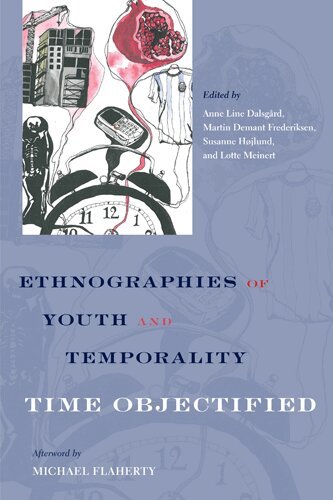
As we experience and manipulate time-be it as boredom or impatience-it becomes an object: something materialized and social, something that affects perception, or something that may motivate reconsideration and change. The editors and contributors to this important new book, Ethnographies of Youth and Temporality, have provided a diverse collection of ethnographic studies and theoretical explorations of youth experiencing time in a variety of contemporary socio-cultural settings. The essays in this volume focus on time as an external and often troubling factor in young people’s lives, and shows how emotional unrest and violence but also creativity and hope are responses to troubling times. The chapters discuss notions of time and its and its “objectification” in diverse locales including the Georgian Republic, Brazil, Denmark and Uganda. Based on long-term ethnographic fieldwork, the essays in Ethnographies of Youth and Temporality use youth as a prism to understand time and its subjective experience. In the series Global Youth, edited by Craig Jeffrey and Jane Dyson
455 kr
Skickas inom 3-6 vardagar
Type 2 diabetes, obesity, and other diseases related to modern lifestyles have spread with frightening speed all over the globe, a development that is often correlated with an increase in the consumption of sugar. Latin America -- the cradle of the world's sugar production -- is no exception; it has witnessed an explosion of cases of diabetes, especially in Brazil and Mexico. Taking an interdisciplinary approach to the problem, this book asks two questions. First, what are the relationships between diabetes, sugar intake, and `dangerous' modern lifestyles? And second, how can research into the material, symbolic, and historical functions of sugar redefine the concept of modernity? Experts in medical science, agriculture, sociology, food science and anthropology, as well as in Latin American, Brazilian, and literary studies use sugar as a prism for understanding the complicated relations between disease and cultural and social habits, between past and present, and between symbolic meanings and material effect. Through this truly interdisciplinary perspective, both traditional approaches to lifestyle diseases and current understandings of modernity are questioned. This book serves as an example of and a call for interdisciplinary dialogue in response to the grand challenges of modern society.