Sven Beckert - Böcker
Visar alla böcker från författaren Sven Beckert. Handla med fri frakt och snabb leverans.
16 produkter
16 produkter
490 kr
Skickas
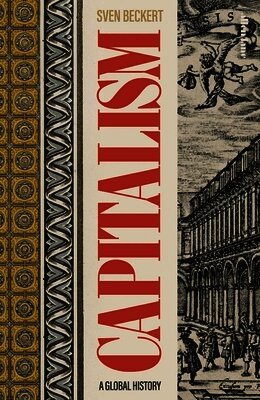
*A New York Times Notable Book * A Financial Times Best Book of the Year'A learned, formidable and vivid story… Readers around the world will study and ponder this monumental work of history, agreeing and arguing with it, all the while affirming its generational importance, for decades to come' The New York Times'Epic… Read this book and you will learn innumerable things you did not previously know culled from places you have never been' Financial TimesA brilliant global narrative that unravels the defining story of the past thousand years No other phenomenon has shaped human history as decisively as capitalism. It structures how we live and work, how we think about ourselves and others, how we organise our politics. Sven Beckert situates the story of capitalism within the largest conceivable geographical and historical framework in this fascinating new book.Capitalism, argues Beckert, was born global. Emerging from merchant communities across Asia, Africa and Europe, capitalism’s radical recasting of economic life rooted itself only gradually. Then it burst onto the world scene, as European states and merchants built a powerful alliance that would propel them across the oceans. This epic drama corresponded at no point to an idealised dream of free markets. All along, state-backed institutions and imperial expansions shaped its dynamics.Capitalism decentres the European perspective, highlighting agency, resistance, innovation and ruthless coercion around the world through to the present with the rise of Asian economies, particularly China. Sven Beckert doesn’t merely add up capitalism’s debits and credits in this monumental book, but allows us to think afresh about the past to help us re-imagine the future.
489 kr
Skickas inom 3-6 vardagar
160 kr
Skickas
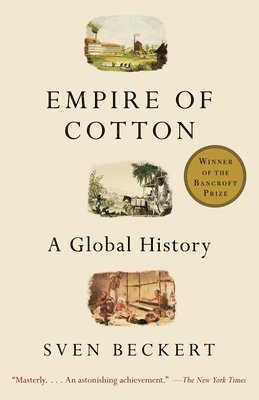
WINNER OF THE 2015 BANCROFT PRIZE WINNER OF THE 2015 PHILIP TAFT PRIZEFINALIST FOR THE 2015 PULITZER PRIZE FOR HISTORYSHORTLISTED FOR THE 2015 CUNDHILL PRIZE IN HISTORICAL LITERATUREEconomist BOOKS OF THE YEAR 2015'Knowledgeable and stunning' Orhan Pamuk 'A masterpiece of the historian's craft' The NationFor about 900 years, from 1000 to 1900, cotton was the world's most important manufacturing industry. It remains a vast business - if all the cotton bales produced in 2013 had been stacked on top of each other they would have made a somewhat unstable tower 40,000 miles high. Sven Beckert's superb new book is a history of the overwhelming role played by cotton in dictating the shape of our world. It is both a gripping narrative and a brilliant case history of how the world works.
1 315 kr
Skickas inom 7-10 vardagar
The United States has long epitomized capitalism. From its enterprising shopkeepers, wildcat banks, violent slave plantations, and raucous commodities trade to its world-spanning multinationals, its massive factories, and the centripetal power of New York in the world of finance, America has shaped political economy for two centuries and more. But an understanding of "capitalism" is as elusive as it is urgent. What does it mean to make capitalism a subject of historical inquiry? What is its potential across multiple disciplines, alongside different methodologies, and in a range of geographic and chronological settings? And how does a focus on capitalism change our understanding of American history? American Capitalism collects cutting-edge research from prominent scholars, sampling the latest work in the field. Rather than a monolithic perspective, these broad-minded and rigorous essays venture new angles on finance and debt, women's rights, slavery and political economy, labor, and regulation, among other topics.Together, the essays suggest emerging themes in the field: a fascination with capitalism as it is made by public authority, how it is experienced in the detail of daily life, how it spreads across the globe, and how it can be reconceptualized as a discrete and quantified object. A major statement for a wide-open field, this book demonstrates the breadth and scope of the work the history of capitalism can provoke.
334 kr
Skickas inom 7-10 vardagar
The United States has long epitomized capitalism. From its enterprising shopkeepers, wildcat banks, violent slave plantations, huge industrial working class, and raucous commodities trade to its world-spanning multinationals, its massive factories, and the centripetal power of New York in the world of finance, America has come to symbolize capitalism for two centuries and more. But an understanding of the history of American capitalism is as elusive as it is urgent. What does it mean to make capitalism a subject of historical inquiry? What is its potential across multiple disciplines, alongside different methodologies, and in a range of geographic and chronological settings? And how does a focus on capitalism change our understanding of American history?American Capitalism presents a sampling of cutting-edge research from prominent scholars. These broad-minded and rigorous essays venture new angles on finance, debt, and credit; women’s rights; slavery and political economy; the racialization of capitalism; labor beyond industrial wage workers; and the production of knowledge, including the idea of the economy, among other topics. Together, the essays suggest emerging themes in the field: a fascination with capitalism as it is made by political authority, how it is claimed and contested by participants, how it spreads across the globe, and how it can be reconceptualized without being universalized. A major statement for a wide-open field, this book demonstrates the breadth and scope of the work that the history of capitalism can provoke.
258 kr
Skickas inom 3-6 vardagar
The Monied Metropolis
New York City and the Consolidation of the American Bourgeoisie, 1850-1896
Häftad, Engelska, 2003
409 kr
Skickas inom 7-10 vardagar
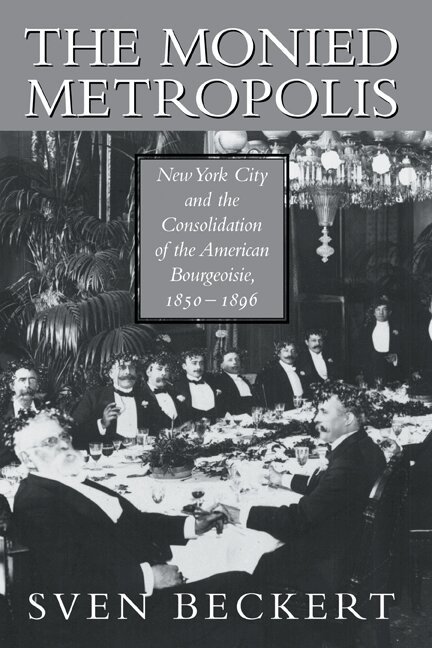
This book, first published in 2001, is a comprehensive history of the most powerful group in the nineteenth-century United States: New York City's economic elite. This small and diverse group of Americans accumulated unprecedented economic, social, and political power, and decisively put their mark on the age. Professor Beckert explores how capital-owning New Yorkers overcame their distinct antebellum identities to forge dense social networks, create powerful social institutions, and articulate an increasingly coherent view of the world and their place within it. Actively engaging in a rapidly changing economic, social, and political environment, these merchants, industrialists, bankers, and professionals metamorphosed into a social class. In the process, these upper-class New Yorkers put their stamp on the major political conflicts of the day - ranging from the Civil War to municipal elections. Employing the methods of social history, The Monied Metropolis explores the big issues of nineteenth-century social change.
The Monied Metropolis
New York City and the Consolidation of the American Bourgeoisie, 1850-1896
Inbunden, Engelska, 2001
1 342 kr
Skickas inom 7-10 vardagar
This book, first published in 2001, is a comprehensive history of the most powerful group in the nineteenth-century United States: New York City's economic elite. This small and diverse group of Americans accumulated unprecedented economic, social, and political power, and decisively put their mark on the age. Professor Beckert explores how capital-owning New Yorkers overcame their distinct antebellum identities to forge dense social networks, create powerful social institutions, and articulate an increasingly coherent view of the world and their place within it. Actively engaging in a rapidly changing economic, social, and political environment, these merchants, industrialists, bankers, and professionals metamorphosed into a social class. In the process, these upper-class New Yorkers put their stamp on the major political conflicts of the day - ranging from the Civil War to municipal elections. Employing the methods of social history, The Monied Metropolis explores the big issues of nineteenth-century social change.
428 kr
Skickas inom 7-10 vardagar
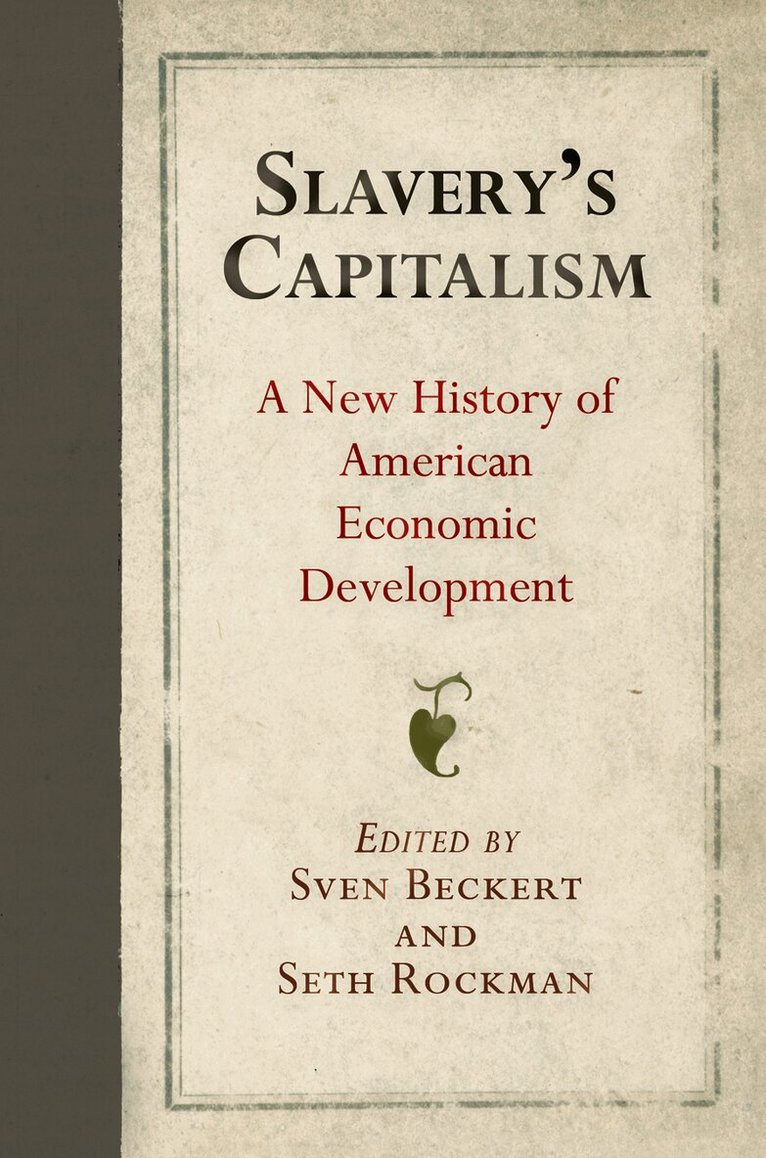
During the nineteenth century, the United States entered the ranks of the world's most advanced and dynamic economies. At the same time, the nation sustained an expansive and brutal system of human bondage. This was no mere coincidence. Slavery's Capitalism argues for slavery's centrality to the emergence of American capitalism in the decades between the Revolution and the Civil War. According to editors Sven Beckert and Seth Rockman, the issue is not whether slavery itself was or was not capitalist but, rather, the impossibility of understanding the nation's spectacular pattern of economic development without situating slavery front and center. American capitalism-renowned for its celebration of market competition, private property, and the self-made man-has its origins in an American slavery predicated on the abhorrent notion that human beings could be legally owned and compelled to work under force of violence.Drawing on the expertise of sixteen scholars who are at the forefront of rewriting the history of American economic development, Slavery's Capitalism identifies slavery as the primary force driving key innovations in entrepreneurship, finance, accounting, management, and political economy that are too often attributed to the so-called free market. Approaching the study of slavery as the originating catalyst for the Industrial Revolution and modern capitalism casts new light on American credit markets, practices of offshore investment, and understandings of human capital. Rather than seeing slavery as outside the institutional structures of capitalism, the essayists recover slavery's importance to the American economic past and prompt enduring questions about the relationship of market freedom to human freedom.Contributors: Edward E. Baptist, Sven Beckert, Daina Ramey Berry, Kathryn Boodry, Alfred L. Brophy, Stephen Chambers, Eric Kimball, John Majewski, Bonnie Martin, Seth Rockman, Daniel B. Rood, Caitlin Rosenthal, Joshua D. Rothman, Calvin Schermerhorn, Andrew Shankman, Craig Steven Wilder.
1 218 kr
Skickas inom 10-15 vardagar
During the nineteenth century, the United States entered the ranks of the world's most advanced and dynamic economies. At the same time, the nation sustained an expansive and brutal system of human bondage. This was no mere coincidence. Slavery's Capitalism argues for slavery's centrality to the emergence of American capitalism in the decades between the Revolution and the Civil War. According to editors Sven Beckert and Seth Rockman, the issue is not whether slavery itself was or was not capitalist but, rather, the impossibility of understanding the nation's spectacular pattern of economic development without situating slavery front and center. American capitalism-renowned for its celebration of market competition, private property, and the self-made man-has its origins in an American slavery predicated on the abhorrent notion that human beings could be legally owned and compelled to work under force of violence.Drawing on the expertise of sixteen scholars who are at the forefront of rewriting the history of American economic development, Slavery's Capitalism identifies slavery as the primary force driving key innovations in entrepreneurship, finance, accounting, management, and political economy that are too often attributed to the so-called free market. Approaching the study of slavery as the originating catalyst for the Industrial Revolution and modern capitalism casts new light on American credit markets, practices of offshore investment, and understandings of human capital. Rather than seeing slavery as outside the institutional structures of capitalism, the essayists recover slavery's importance to the American economic past and prompt enduring questions about the relationship of market freedom to human freedom.Contributors: Edward E. Baptist, Sven Beckert, Daina Ramey Berry, Kathryn Boodry, Alfred L. Brophy, Stephen Chambers, Eric Kimball, John Majewski, Bonnie Martin, Seth Rockman, Daniel B. Rood, Caitlin Rosenthal, Joshua D. Rothman, Calvin Schermerhorn, Andrew Shankman, Craig Steven Wilder.
183 kr
Tillfälligt slut
392 kr
Skickas inom 10-15 vardagar
In recent years historians in many different parts of the world have sought to transnationalize and globalize their perspectives on the past. Despite all these efforts to gain new global historical visions, however, the debates surrounding this movement have remained rather provincial in scope. Global History, Globally addresses this lacuna by surveying the state of global history in different world regions. Divided into three distinct but tightly interweaved sections, the book’s chapters provide regional surveys of the practice of global history on all continents, review some of the research in four core fields of global history and consider a number of problems that global historians have contended with in their work. The authors hail from various world regions and are themselves leading global historians. Collectively, they provide an unprecedented survey of what today is the most dynamic field in the discipline of history. As one of the first books to systematically discuss the international dimensions of global historical scholarship and address a wealth of questions emanating from them, Global History, Globally is a must-read book for all students and scholars of global history.
1 314 kr
Skickas inom 10-15 vardagar
In recent years historians in many different parts of the world have sought to transnationalize and globalize their perspectives on the past. Despite all these efforts to gain new global historical visions, however, the debates surrounding this movement have remained rather provincial in scope. Global History, Globally addresses this lacuna by surveying the state of global history in different world regions. Divided into three distinct but tightly interweaved sections, the book’s chapters provide regional surveys of the practice of global history on all continents, review some of the research in four core fields of global history and consider a number of problems that global historians have contended with in their work. The authors hail from various world regions and are themselves leading global historians. Collectively, they provide an unprecedented survey of what today is the most dynamic field in the discipline of history. As one of the first books to systematically discuss the international dimensions of global historical scholarship and address a wealth of questions emanating from them, Global History, Globally is a must-read book for all students and scholars of global history.
580 kr
Skickas inom 11-20 vardagar
In 1850, America's plantation economy reigned supreme. U.S. cotton dominated world markets, and American rice, sugarcane, and tobacco grew throughout a vast farming empire that stretched from Maryland to Texas. Four million enslaved African Americans toiled the fields, producing global commodities that enriched the most powerful class of slaveholders the world had ever known. But fifty years later-after emancipation demolished the plantation-labor system, Asian competition flooded world markets with cheap raw materials, and free trade eliminated protected markets-America's plantations lay in ruins. Plantation Kingdom traces the rise and fall of America's plantation economy. Written by four renowned historians, the book demonstrates how an international capitalist system rose out of slave labor, indentured servitude, and the mass production of agricultural commodities for world markets. Vast estates continued to exist after emancipation, but tenancy and sharecropping replaced slavery's work gangs across most of the plantation world. Poverty and forced labor haunted the region well into the twentieth century.The book explores the importance of slavery to the Old South, the astounding profitability of plantation agriculture, and the legacy of emancipation. It also examines the place of American producers in world markets and considers the impact of globalization and international competition 150 years ago. Written for scholars and students alike, Plantation Kingdom is an accessible and fascinating study.
208 kr
Tillfälligt slut
In 1850, America's plantation economy reigned supreme. U.S. cotton dominated world markets, and American rice, sugarcane, and tobacco grew throughout a vast farming empire that stretched from Maryland to Texas. Four million enslaved African Americans toiled the fields, producing global commodities that enriched the most powerful class of slaveholders the world had ever known. But fifty years later-after emancipation demolished the plantation-labor system, Asian competition flooded world markets with cheap raw materials, and free trade eliminated protected markets-America's plantations lay in ruins. Plantation Kingdom traces the rise and fall of America's plantation economy. Written by four renowned historians, the book demonstrates how an international capitalist system rose out of slave labor, indentured servitude, and the mass production of agricultural commodities for world markets. Vast estates continued to exist after emancipation, but tenancy and sharecropping replaced slavery's work gangs across most of the plantation world. Poverty and forced labor haunted the region well into the twentieth century.The book explores the importance of slavery to the Old South, the astounding profitability of plantation agriculture, and the legacy of emancipation. It also examines the place of American producers in world markets and considers the impact of globalization and international competition 150 years ago. Written for scholars and students alike, Plantation Kingdom is an accessible and fascinating study.
240 kr
Skickas inom 3-6 vardagar