Seth Rockman - Böcker
Visar alla böcker från författaren Seth Rockman. Handla med fri frakt och snabb leverans.
7 produkter
7 produkter
296 kr
Skickas inom 7-10 vardagar
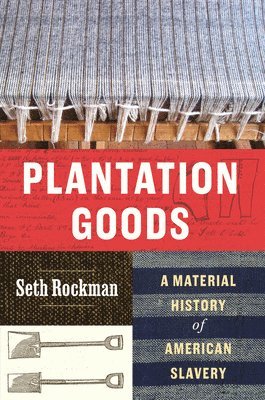
A Pulitzer Prize finalist in History, this eye-opening rethinking of nineteenth-century American history reveals the interdependence of the Northern industrial economy and Southern slave labor.The industrializing North and the agricultural South—that’s how we have been taught to think about the United States in the early nineteenth century. But in doing so, we overlook the economic ties that held the nation together before the Civil War. We miss slavery’s long reach into small New England communities, just as we fail to see the role of Northern manufacturing in shaping the terrain of human bondage in the South. Using plantation goods—the shirts, hats, hoes, shovels, shoes, axes, and whips made in the North for use in the South—historian Seth Rockman locates the biggest stories in American history in the everyday objects that stitched together the lives and livelihoods of Americans—white and Black, male and female, enslaved and free—across an expanding nation. By following the stories of material objects, such as shoes made by Massachusetts farm women that found their way to the feet of a Mississippi slave, Rockman reveals a national economy organized by slavery—a slavery that outsourced the production of its supplies to the North, and a North that outsourced its slavery to the South. Melding business and labor history through powerful storytelling, Plantation Goods brings northern industrialists, southern slaveholders, enslaved field hands, and paid factory laborers into the same picture. In one part of the country, entrepreneurs envisioned fortunes to be made from “planter’s hoes” and rural women spent their days weaving “negro cloth” and assembling “slave brogans.” In another, enslaved people actively consumed textiles and tools imported from the North to contest their bondage. In between, merchants, marketers, storekeepers, and debt collectors laid claim to the profits of a thriving interregional trade. Examining producers and consumers linked in economic and moral relationships across great geographic and political distances, Plantation Goods explores how people in the nineteenth century thought about complicity with slavery while showing how slavery structured life nationwide and established a modern world of entrepreneurship and exploitation. Rockman brings together lines of American history that have for too long been told separately, as slavery and capitalism converge in something as deceptively ordinary as a humble pair of shoes.
287 kr
Kommande
A Pulitzer Prize finalist in History, this eye-opening rethinking of nineteenth-century American history reveals the interdependence of the Northern industrial economy and Southern slave labor.The industrializing North and the agricultural South—that’s how we have been taught to think about the United States in the early nineteenth century. But in doing so, we overlook the economic ties that held the nation together before the Civil War. We miss slavery’s long reach into small New England communities, just as we fail to see the role of Northern manufacturing in shaping the terrain of human bondage in the South. Using plantation goods—the shirts, hats, hoes, shovels, shoes, axes, and whips made in the North for use in the South—historian Seth Rockman locates the biggest stories in American history in the everyday objects that stitched together the lives and livelihoods of Americans—white and Black, male and female, enslaved and free—across an expanding nation. By following the stories of material objects, such as shoes made by Massachusetts farm women that found their way to the feet of a Mississippi slave, Rockman reveals a national economy organized by slavery—a slavery that outsourced the production of its supplies to the North, and a North that outsourced its slavery to the South. Melding business and labor history through powerful storytelling, Plantation Goods brings northern industrialists, southern slaveholders, enslaved field hands, and paid factory laborers into the same picture. In one part of the country, entrepreneurs envisioned fortunes to be made from “planter’s hoes” and rural women spent their days weaving “negro cloth” and assembling “slave brogans.” In another, enslaved people actively consumed textiles and tools imported from the North to contest their bondage. In between, merchants, marketers, storekeepers, and debt collectors laid claim to the profits of a thriving interregional trade. Examining producers and consumers linked in economic and moral relationships across great geographic and political distances, Plantation Goods explores how people in the nineteenth century thought about complicity with slavery while showing how slavery structured life nationwide and established a modern world of entrepreneurship and exploitation. Rockman brings together lines of American history that have for too long been told separately, as slavery and capitalism converge in something as deceptively ordinary as a humble pair of shoes.
422 kr
Skickas inom 5-8 vardagar
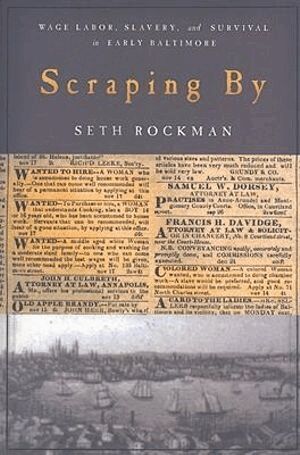
Enslaved mariners, white seamstresses, Irish dockhands, free black domestic servants, and native-born street sweepers all navigated the low-end labor market in post-Revolutionary Baltimore. Seth Rockman considers this diverse workforce, exploring how race, sex, nativity, and legal status determined the economic opportunities and vulnerabilities of working families in the early republic. In the era of Frederick Douglass, Baltimore's distinctive economy featured many slaves who earned wages and white workers who performed backbreaking labor. By focusing his study on this boomtown, Rockman reassesses the roles of race and region and rewrites the history of class and capitalism in the United States during this time. Rockman describes the material experiences of low-wage workers-how they found work, translated labor into food, fuel, and rent, and navigated underground economies and social welfare systems. He also explores what happened if they failed to find work or lost their jobs. Rockman argues that the American working class emerged from the everyday struggles of these low-wage workers.Their labor was indispensable to the early republic's market revolution, and it was central to the transformation of the United States into the wealthiest society in the Western world. Rockman's research includes construction site payrolls, employment advertisements, almshouse records, court petitions, and the nation's first "living wage" campaign. These rich accounts of day laborers and domestic servants illuminate the history of early republic capitalism and its consequences for working families.
428 kr
Skickas inom 7-10 vardagar
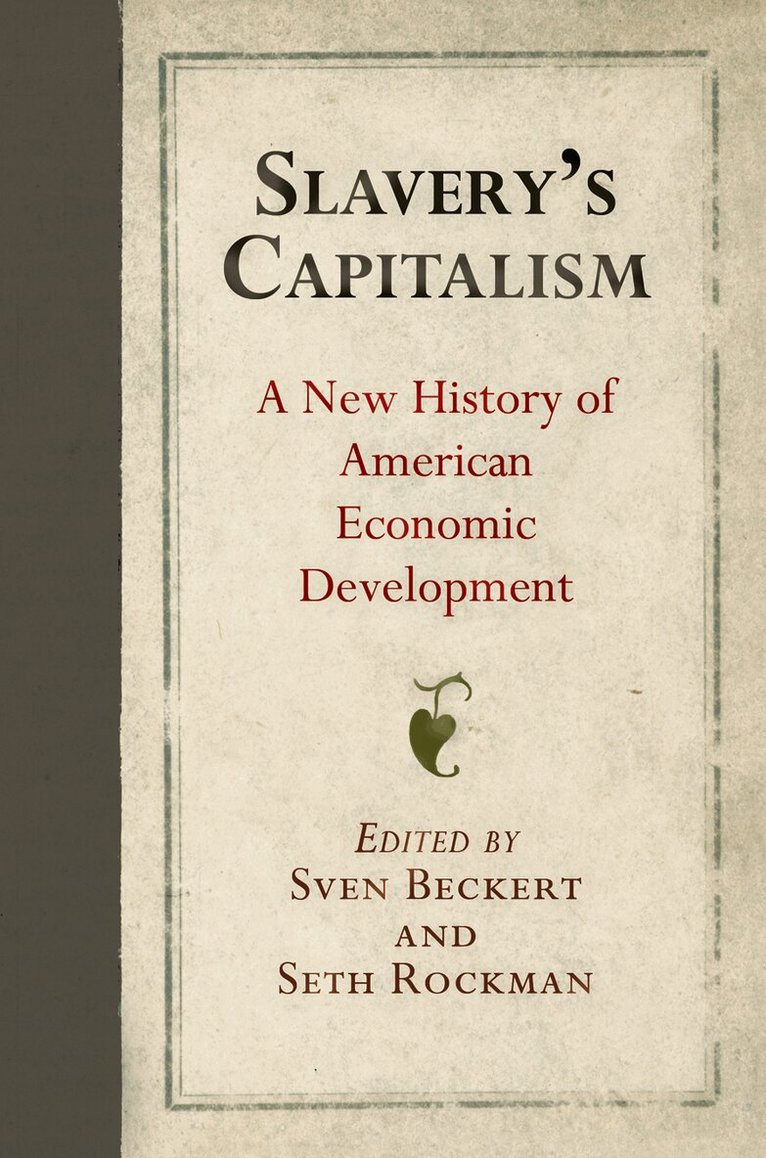
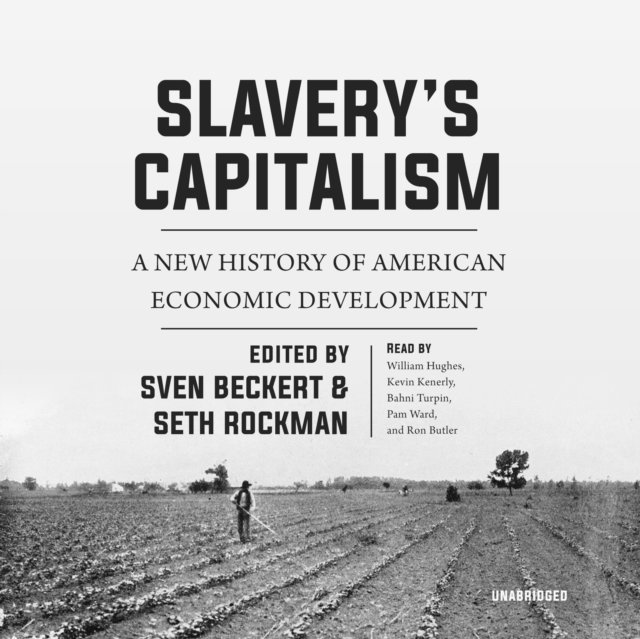
During the nineteenth century, the United States entered the ranks of the world's most advanced and dynamic economies. At the same time, the nation sustained an expansive and brutal system of human bondage. This was no mere coincidence. Slavery's Capitalism argues for slavery's centrality to the emergence of American capitalism in the decades between the Revolution and the Civil War. According to editors Sven Beckert and Seth Rockman, the issue is not whether slavery itself was or was not capitalist but, rather, the impossibility of understanding the nation's spectacular pattern of economic development without situating slavery front and center. American capitalism-renowned for its celebration of market competition, private property, and the self-made man-has its origins in an American slavery predicated on the abhorrent notion that human beings could be legally owned and compelled to work under force of violence.Drawing on the expertise of sixteen scholars who are at the forefront of rewriting the history of American economic development, Slavery's Capitalism identifies slavery as the primary force driving key innovations in entrepreneurship, finance, accounting, management, and political economy that are too often attributed to the so-called free market. Approaching the study of slavery as the originating catalyst for the Industrial Revolution and modern capitalism casts new light on American credit markets, practices of offshore investment, and understandings of human capital. Rather than seeing slavery as outside the institutional structures of capitalism, the essayists recover slavery's importance to the American economic past and prompt enduring questions about the relationship of market freedom to human freedom.Contributors: Edward E. Baptist, Sven Beckert, Daina Ramey Berry, Kathryn Boodry, Alfred L. Brophy, Stephen Chambers, Eric Kimball, John Majewski, Bonnie Martin, Seth Rockman, Daniel B. Rood, Caitlin Rosenthal, Joshua D. Rothman, Calvin Schermerhorn, Andrew Shankman, Craig Steven Wilder.
1 218 kr
Skickas inom 10-15 vardagar
During the nineteenth century, the United States entered the ranks of the world's most advanced and dynamic economies. At the same time, the nation sustained an expansive and brutal system of human bondage. This was no mere coincidence. Slavery's Capitalism argues for slavery's centrality to the emergence of American capitalism in the decades between the Revolution and the Civil War. According to editors Sven Beckert and Seth Rockman, the issue is not whether slavery itself was or was not capitalist but, rather, the impossibility of understanding the nation's spectacular pattern of economic development without situating slavery front and center. American capitalism-renowned for its celebration of market competition, private property, and the self-made man-has its origins in an American slavery predicated on the abhorrent notion that human beings could be legally owned and compelled to work under force of violence.Drawing on the expertise of sixteen scholars who are at the forefront of rewriting the history of American economic development, Slavery's Capitalism identifies slavery as the primary force driving key innovations in entrepreneurship, finance, accounting, management, and political economy that are too often attributed to the so-called free market. Approaching the study of slavery as the originating catalyst for the Industrial Revolution and modern capitalism casts new light on American credit markets, practices of offshore investment, and understandings of human capital. Rather than seeing slavery as outside the institutional structures of capitalism, the essayists recover slavery's importance to the American economic past and prompt enduring questions about the relationship of market freedom to human freedom.Contributors: Edward E. Baptist, Sven Beckert, Daina Ramey Berry, Kathryn Boodry, Alfred L. Brophy, Stephen Chambers, Eric Kimball, John Majewski, Bonnie Martin, Seth Rockman, Daniel B. Rood, Caitlin Rosenthal, Joshua D. Rothman, Calvin Schermerhorn, Andrew Shankman, Craig Steven Wilder.
157 kr
Skickas inom 7-10 vardagar
Del 5 - Re:work Lectures
alte und der neue Materialismus in der Geschichte der Sklaverei
Häftad, Engelska, 2021
392 kr
Skickas inom 5-8 vardagar
Ever since W.E.B. du Bois conceptualized slaves’ self-emancipation during the U.S. Civil War as a "general strike," the language of labor history has informed scholarly understandings of slavery. While the analogy of the plantation to the factory has its obvious limitations, historians have understood slaves and slaveholders as engaged in recognizable struggles over the speed of work, the ownership of time and expertise, and the informal rights and privileges that governed the labor process. However, an older materialist history rooted in marxist categories has not always succeeded in capturing the dynamics of racial dominance and human commodification at the heart of the American slave system. A "new history of capitalism" has offered one remedy, namely to embed slavery firmly within a capitalist mode of production whose investment in "free" labor was always more rhetorical than real. A different response may now be emerging through what scholars call "the new materialism"—an approach organized around human/non-human entanglements and drawing on recent theoretical work on things, networks, and assemblages. This talk considers the implications of this "new materialism" for the history of slavery, and by extension, for the field of labor history more generally.