• Fri frakt över 249 kr
  • •
  • Snabba leveranser
  • •
  • Billiga böcker
Kundservice

Du är på sajten för privatpersoner.

Företag, bibliotek eller offentlig verksamhet?

Du handlar på classic.bokus.com, där alla dina funktioner finns intakta.
Till classic.bokus.com
Bokus logotyp. Gå till startsidan.
  • Erbjudanden
  • Nyheter
  • Student
  • Topplistor
  • Barn & ungdom
  • Bokus Play
  • E-böcker
  • Pocketböcker
  • Spel & pussel

10% studentrabatt med kod TERM26

Sidfot

Mina sidor

    Hjälp

    • Kundservice
    • Vanliga frågor och svar
    • Frakt och leverans
    • Retur vid ångerrätt
    • Reklamera vara
    • Betalning
    • Köpvillkor
    • Allmänna villkor
    • Information om webbplatsens tillgänglighet

    Om Bokus

    • Om oss
    • Pressrum
    • För studenter
    • För företag
    • För bibliotek och offentlig verksamhet
    • För leverantörer
    • Hållbarhet

    Populärt

    • Aktuella erbjudanden
    • Presentkort
    • Studentlitteratur
    • Nya böcker
    • Topplistor
    • Signerade böcker
    • Engelska böcker

    Inspiration

    • Boktips
    • BookTok
    • Populära bokserier
    • Barnbokskaraktärer
    • Populära författare
    Logotyp för Bokus
    Följ oss på Facebook (extern länk)Följ oss på Instagram (extern länk)Följ oss på YouTube (extern länk)Följ oss på TikTok (extern länk)
    bokus @ CookiesAnpassa cookiesIntegritetspolicyKöpvillkor
    Till Citymail hemsida (extern länk)Till Budbee hemsida (extern länk)Till Postnord hemsida (extern länk)Till Schenker hemsida (extern länk)Till Early Bird hemsida (extern länk)Till Walleys hemsida (extern länk)
    1. Ekonomi och Ledarskap
    2. Nationalekonomi
    3. Ekonomisk historia

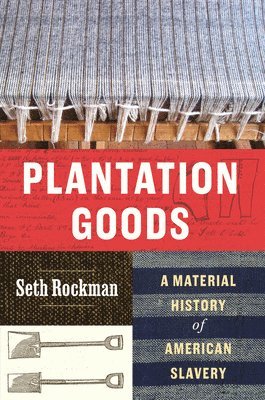
    Plantation Goods

    A Material History of American Slavery

    AvSeth Rockman

    Inbunden, Engelska, 2024

    302 kr

    Beställningsvara. Skickas inom 5-8 vardagar. Fri frakt över 249 kr.

    Fler format och utgåvor

    Häftad

    218 kr

    Beskrivning

    A Pulitzer Prize finalist in History, this eye-opening rethinking of nineteenth-century American history reveals the interdependence of the Northern industrial economy and Southern slave labor.The industrializing North and the agricultural South—that’s how we have been taught to think about the United States in the early nineteenth century. But in doing so, we overlook the economic ties that held the nation together before the Civil War. We miss slavery’s long reach into small New England communities, just as we fail to see the role of Northern manufacturing in shaping the terrain of human bondage in the South. Using plantation goods—the shirts, hats, hoes, shovels, shoes, axes, and whips made in the North for use in the South—historian Seth Rockman locates the biggest stories in American history in the everyday objects that stitched together the lives and livelihoods of Americans—white and Black, male and female, enslaved and free—across an expanding nation.  By following the stories of material objects, such as shoes made by Massachusetts farm women that found their way to the feet of a Mississippi slave, Rockman reveals a national economy organized by slavery—a slavery that outsourced the production of its supplies to the North, and a North that outsourced its slavery to the South. Melding business and labor history through powerful storytelling, Plantation Goods brings northern industrialists, southern slaveholders, enslaved field hands, and paid factory laborers into the same picture. In one part of the country, entrepreneurs envisioned fortunes to be made from “planter’s hoes” and rural women spent their days weaving “negro cloth” and assembling “slave brogans.” In another, enslaved people actively consumed textiles and tools imported from the North to contest their bondage. In between, merchants, marketers, storekeepers, and debt collectors laid claim to the profits of a thriving interregional trade.  Examining producers and consumers linked in economic and moral relationships across great geographic and political distances, Plantation Goods explores how people in the nineteenth century thought about complicity with slavery while showing how slavery structured life nationwide and established a modern world of entrepreneurship and exploitation. Rockman brings together lines of American history that have for too long been told separately, as slavery and capitalism converge in something as deceptively ordinary as a humble pair of shoes.

    Produktinformation

    • Utgivningsdatum:2024-11-29
    • Mått:152 x 229 x 36 mm
    • Vikt:853 g
    • Format:Inbunden
    • Språk:Engelska
    • Antal sidor:496
    • Förlag:The University of Chicago Press
    • ISBN:9780226723457
    • Utmärkelser:Commended for Pulitzer Prize (History) 2025

    Utforska kategorier

    • Ekonomisk historia inom Ekonomi och Ledarskap
    • Amerikas historia inom Historia och arkeologi
    • Slaveri inom Historia och arkeologi

    Mer om författaren

    Seth Rockman is the George L. Littlefield Professor of American History at Brown University. He is the author of Scraping By: Wage Labor, Slavery, and Survival in Early Baltimore and coeditor of Slavery’s Capitalism: A New History of American Economic Development. Rockman serves on the faculty advisory board of Brown University’s Ruth J. Simmons Center for the Study of Slavery and Justice. He lives in Providence.

    Recensioner i media

    Finalist for the 2025 Pulitzer Prize in History

    Innehållsförteckning

    • Note on LanguageIntroduction: A Captive MarketPart One: ProductionChapter 1: Plantation EntrepreneursChapter 2: Masters of Negro ClothInterlude 1: The Russet BroganChapter 3: Plantation Labor OutsourcedChapter 4: Wage SlavesPart Two: DistributionChapter 5: The MiddlemenInterlude 2: The Negro Cloth SampleChapter 6: Racial Knowledge for SalePart Three: ConsumptionChapter 7: The Fantasies of ProvisioningChapter 8: Commercial EmancipationInterlude 3: The Newark WhipChapter 9: Complaints and ComplianceChapter 10: Coerced ConsumersConclusion: Four Million Liberated ConsumersAcknowledgmentsNotesIndex