Svetlana Stephenson - Böcker
Visar alla böcker från författaren Svetlana Stephenson. Handla med fri frakt och snabb leverans.
7 produkter
7 produkter
2 103 kr
Skickas inom 10-15 vardagar
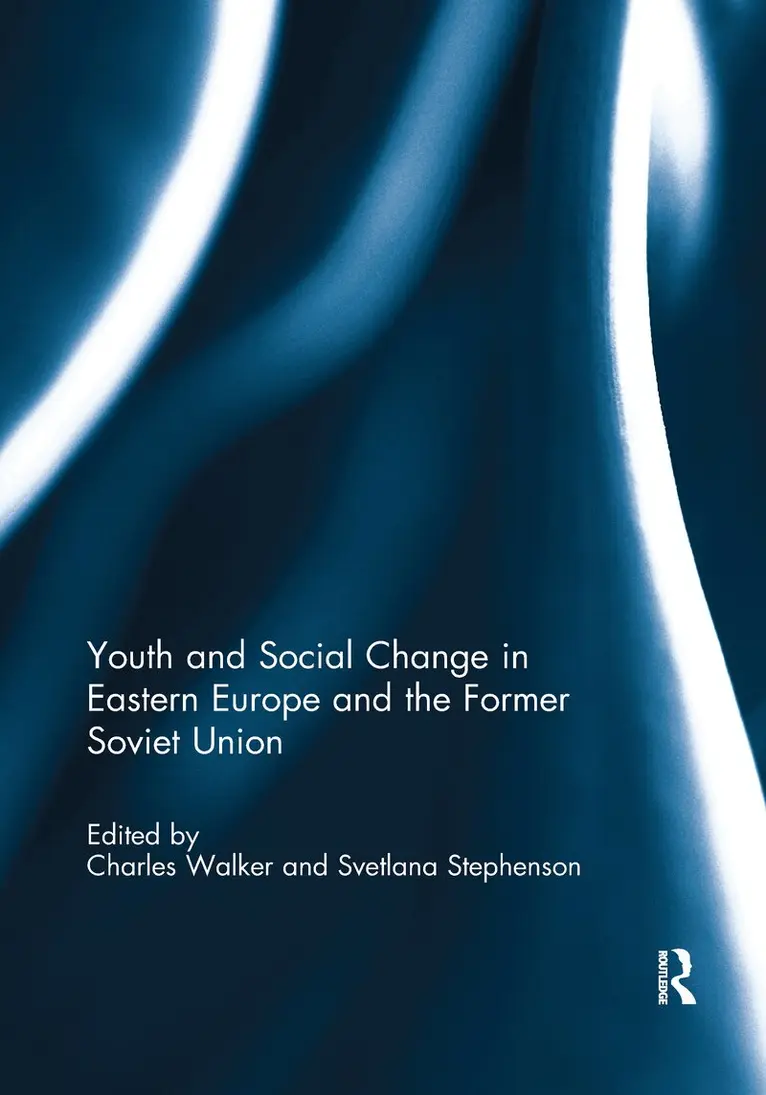
Two decades have now passed since the revolutions of 1989 swept through Eastern Europe and precipitated the collapse of state socialism across the region, engendering a period of massive social, economic and political transformation. This book explores the ways in which young people growing up in post-socialist Eastern Europe and the former Soviet Union negotiate a range of identities and transitions in their personal lives against a backdrop of thoroughgoing transformation in their societies. Drawing upon original empirical research in a range of countries, the book's contributors explore the various freedoms and insecurities that have accompanied neo-liberal transformation in post-socialist countries - in spheres as diverse as consumption, migration, political participation, volunteering, employment and family formation - and examine the ways in which they have begun to re-shape different aspects of young people's lives. In addition, while 'social change' is a central theme of the issue, all of the chapters in the collection indicate that the new opportunities and risks faced by young people continue both to underpin and to be shaped by familiar social and spatial divisions, not only within and between the countries addressed, but also between 'East' and 'West'.This book was originally published as a special issue of Journal of Youth Studies.
2 103 kr
Skickas inom 10-15 vardagar
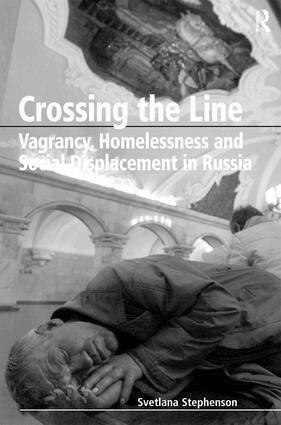
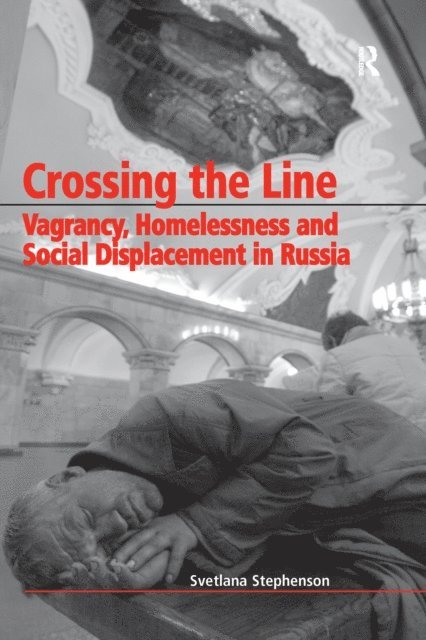
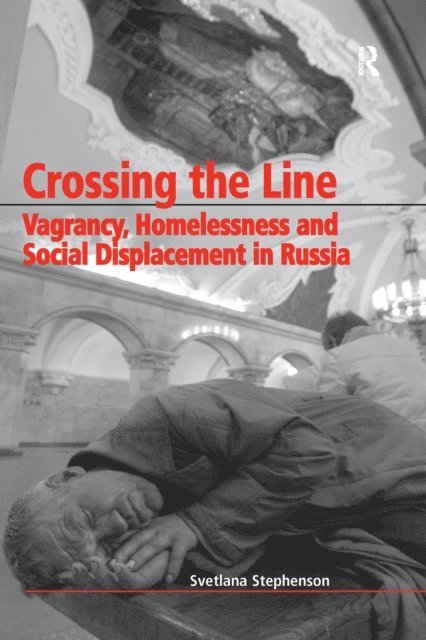
This pioneering book is the first to explore the experiences of homeless people in Russia in the late Soviet period and during post-socialist transition. Through their own stories, it introduces us to the hidden world of vagrants, itinerant workers and the street homeless - roofless people living on the streets, in cellars, in the lofts of apartment blocks, in train stations, in rubbish dumps or in holes underground. Using in-depth biographical interviews, Svetlana Stephenson documents the processes of their displacement; the strategies they adopt for survival and building social bonds; and the barriers which block their escape from homelessness. These narratives are placed within a framework of theoretical perspectives on social and spatial exclusion; interaction between space and social identity, and the regimes of settlement and social control. The structural causes of homelessness are discussed, together with the criminological, legal and expert discourses that constructed vagrants and the homeless as 'social waste' in the Soviet and post-Soviet periods. Stephenson advances our understanding of homelessness as an extreme case of social-territorial displacement, and sets out its causes and its individual consequences within the larger social and political context. She suggests that by using the concept of displacement, particularly in a historical perspective, it is possible to better understand the ways in which social systems produce marginality and homelessness.
1 551 kr
Skickas inom 10-15 vardagar
Since their spectacular rise in the 1990s, Russian gangs have remained entrenched in many parts of the country. Some gang members have perished in gang wars or ended up behind prison bars, while others have made spectacular careers off the streets and joined the Russian elite. But the rank and file of gangs remain substantially incorporated into their communities and society as a whole, with bonds and identities that bridge the worlds of illegal enterprise and legal respectability. In Gangs of Russia, Svetlana Stephenson explores the secretive world of the gangs. Using in-depth interviews with gang members, law enforcers, and residents in the city of Kazan, together with analyses of historical and sociological accounts from across Russia, she presents the history of gangs both before and after the arrival of market capitalism.Contrary to predominant notions of gangs as collections of maladjusted delinquents or illegal enterprises, Stephenson argues, Russian gangs should be seen as traditional, close-knit male groups with deep links to their communities. Stephenson shows that gangs have long been intricately involved with the police and other state structures in configurations that are both personal and economic. She also explains how the cultural orientations typical of gangs—emphasis on loyalty to one's own, showing toughness to outsiders, exacting revenge for perceived affronts and challenges—are not only found on the streets but are also present in the top echelons of today's Russian state.
670 kr
Skickas inom 10-15 vardagar
Two decades have now passed since the revolutions of 1989 swept through Eastern Europe and precipitated the collapse of state socialism across the region, engendering a period of massive social, economic and political transformation. This book explores the ways in which young people growing up in post-socialist Eastern Europe and the former Soviet Union negotiate a range of identities and transitions in their personal lives against a backdrop of thoroughgoing transformation in their societies. Drawing upon original empirical research in a range of countries, the book's contributors explore the various freedoms and insecurities that have accompanied neo-liberal transformation in post-socialist countries - in spheres as diverse as consumption, migration, political participation, volunteering, employment and family formation - and examine the ways in which they have begun to re-shape different aspects of young people's lives. In addition, while 'social change' is a central theme of the issue, all of the chapters in the collection indicate that the new opportunities and risks faced by young people continue both to underpin and to be shaped by familiar social and spatial divisions, not only within and between the countries addressed, but also between 'East' and 'West'.This book was originally published as a special issue of Journal of Youth Studies.
724 kr
Skickas inom 10-15 vardagar
This pioneering book is the first to explore the experiences of homeless people in Russia in the late Soviet period and during post-socialist transition. Through their own stories, it introduces us to the hidden world of vagrants, itinerant workers and the street homeless - roofless people living on the streets, in cellars, in the lofts of apartment blocks, in train stations, in rubbish dumps or in holes underground. Using in-depth biographical interviews, Svetlana Stephenson documents the processes of their displacement; the strategies they adopt for survival and building social bonds; and the barriers which block their escape from homelessness. These narratives are placed within a framework of theoretical perspectives on social and spatial exclusion; interaction between space and social identity, and the regimes of settlement and social control. The structural causes of homelessness are discussed, together with the criminological, legal and expert discourses that constructed vagrants and the homeless as 'social waste' in the Soviet and post-Soviet periods. Stephenson advances our understanding of homelessness as an extreme case of social-territorial displacement, and sets out its causes and its individual consequences within the larger social and political context. She suggests that by using the concept of displacement, particularly in a historical perspective, it is possible to better understand the ways in which social systems produce marginality and homelessness.
577 kr
Skickas inom 3-6 vardagar
Since their spectacular rise in the 1990s, Russian gangs have remained entrenched in many parts of the country. Some gang members have perished in gang wars or ended up behind prison bars, while others have made spectacular careers off the streets and joined the Russian elite. But the rank and file of gangs remain substantially incorporated into their communities and society as a whole, with bonds and identities that bridge the worlds of illegal enterprise and legal respectability. In Gangs of Russia, Svetlana Stephenson explores the secretive world of the gangs. Using in-depth interviews with gang members, law enforcers, and residents in the city of Kazan, together with analyses of historical and sociological accounts from across Russia, she presents the history of gangs both before and after the arrival of market capitalism.Contrary to predominant notions of gangs as collections of maladjusted delinquents or illegal enterprises, Stephenson argues, Russian gangs should be seen as traditional, close-knit male groups with deep links to their communities. Stephenson shows that gangs have long been intricately involved with the police and other state structures in configurations that are both personal and economic. She also explains how the cultural orientations typical of gangs—emphasis on loyalty to one's own, showing toughness to outsiders, exacting revenge for perceived affronts and challenges—are not only found on the streets but are also present in the top echelons of today's Russian state.
Responding to Systemic Human Rights Violations
An Analysis of 'pilot Judgments' of the European Court of Human Rights and Their Impact at National Level
Häftad, Engelska, 2010
726 kr
Skickas inom 5-8 vardagar