Sybil Oldfield - Böcker
Visar alla böcker från författaren Sybil Oldfield. Handla med fri frakt och snabb leverans.
9 produkter
9 produkter
10 305 kr
Tillfälligt slut
An indispensable reference and research resource, International Woman Suffrage (originally Ius Suffragii) was the monthly periodical of the early twentieth-century worldwide women's movement. Its function was to inform women working for equal citizenship in one part of the world about the oppression and/or struggle against that oppression and the achievements of women elsewhere. The periodical was read by all the leading figures of the suffrage movement in more than thirty countries, who would then disseminate the most relevant information in their own national and regional journals.This four-volume collection reprints eight years of the journal and contains source material found nowhere else that is invaluable for researchers in women's history and feminism. With a thorough introduction by the editor, the collection sets the material in its social and historical context.
640 kr
Tillfälligt slut
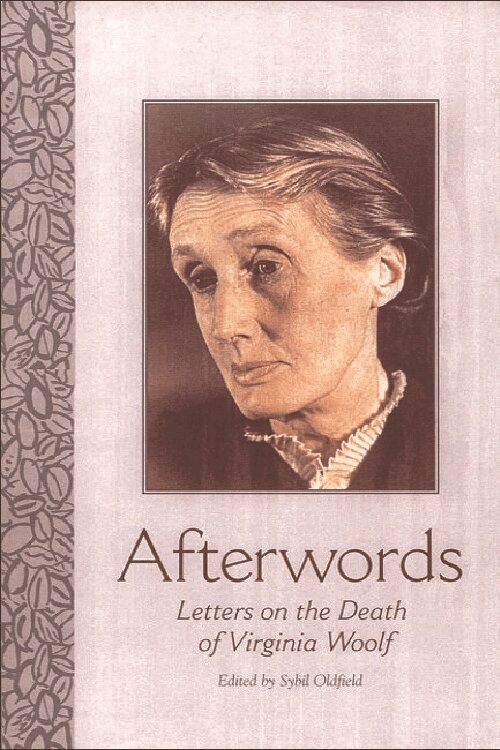
On March 28, 1941, at the height of Hitler’s victories during the Second World War, Virginia Woolf filled her pockets with stones and drowned herself in the River Ouse near her home in Sussex. Since that time, Woolf’s suicide has been the subject of controversy for the media, for literary scholars, and for her biographers. At the time of her death some voices in the press attacked her for showing cowardice in the face of the enemy and for setting a bad example to the general population.Just when it may seem that nothing else could be said about Virginia Woolf and the ambiguous details of her suicide, this unique volume provides an entirely fresh perspective by making available to a wide readership for the first time the letters sent to Leonard Woolf and Vanessa Bell (Virginia Woolf's sister) in the aftermath of the event. The volume brings together over two hundred letters from T. S. Eliot, H.G. Wells, May Sarton, Vita Sackville-West, Edith Sitwell, E. M. Forster, Radclyffe Hall, and many others, including political figures and religious leaders. In addition, informative annotations reveal the identities of many unexpected condolence-letter writers from among the general public.In her introduction, editor Sybil Oldfield confronts the contemporary controversy over Woolf's suicide note, arguing that no one who knew Woolf or her work believed that she had deserted Britain. The ensuing collection of letters supports Oldfield’s assertion. In elegant prose that rises to the stature of the occasion, these writers share remembrances of Virginia Woolf in life, comment on the quality of her work and her anti-fascist values, and occasionally reveal previously unknown facets of her capacity for friendship.A richly deserved tribute to the life of an extraordinary woman as well as a testimony to the human capacity for sympathy, Afterwords is essential reading for anyone interested in the life, death, and enduring impact of Virginia Woolf.
1 666 kr
Skickas inom 10-15 vardagar
Originally published in 1994, This Working-Day World is lively collection of essays presenting a social, political and cultural view of British women’s lives in the period 1914–45. The volume describes women’s activities in many different areas, ranging from the weekly wash to the rescue of child refugees. Each essay, from an international list of contributors, is based on new research which will complement existing studies in a range of disciplines by adding information on, among other topics, women’s teacher training colleges, and women in the BBC, in medical laboratories and in Art schools. The book does not, however, idealise women: the militarism and racism of the period infected women too, and this is revealed in the account of women in the British Union of Fascists, and the analysis of the Pankhursts’ merging of patriotism and gender issues.Through studies and personal accounts, This Working-Day World reveals past issues that are still pertinent to debates in today’s society. As we read the chapter on the recently discovered Diary of Doreen Bates which outlines possibly the first female civil servant campaign for rights as a single mother, we hear echoes of issues being discussed today. Indeed, as we approach the end of the century it is a good moment to look back and re-evaluate areas and degrees of progress – or the reverse – in society, and in British women’s lives in particular. With its unusual photographs, this accessible and informative collection provides a rich resource for students in twentieth century social and cultural history, and women’s studies courses, and an enlightening volume for general readers.
454 kr
Skickas inom 10-15 vardagar
Originally published in 1994, This Working-Day World is lively collection of essays presenting a social, political and cultural view of British women’s lives in the period 1914–45. The volume describes women’s activities in many different areas, ranging from the weekly wash to the rescue of child refugees. Each essay, from an international list of contributors, is based on new research which will complement existing studies in a range of disciplines by adding information on, among other topics, women’s teacher training colleges, and women in the BBC, in medical laboratories and in Art schools. The book does not, however, idealise women: the militarism and racism of the period infected women too, and this is revealed in the account of women in the British Union of Fascists, and the analysis of the Pankhursts’ merging of patriotism and gender issues.Through studies and personal accounts, This Working-Day World reveals past issues that are still pertinent to debates in today’s society. As we read the chapter on the recently discovered Diary of Doreen Bates which outlines possibly the first female civil servant campaign for rights as a single mother, we hear echoes of issues being discussed today. Indeed, as we approach the end of the century it is a good moment to look back and re-evaluate areas and degrees of progress – or the reverse – in society, and in British women’s lives in particular. With its unusual photographs, this accessible and informative collection provides a rich resource for students in twentieth century social and cultural history, and women’s studies courses, and an enlightening volume for general readers.
231 kr
Skickas inom 3-6 vardagar
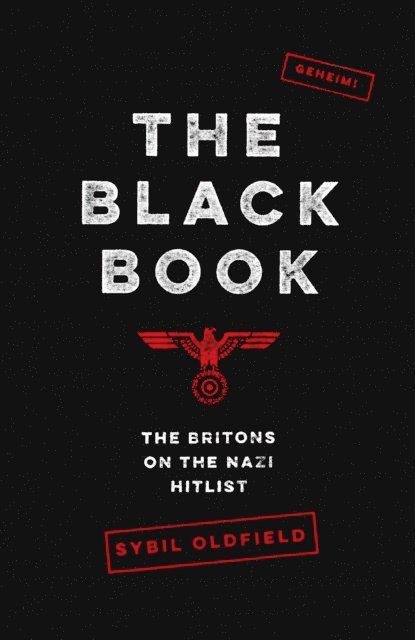
For the first time, discover the stories of the heroic men and women the Nazis singled out for death in their plan to invade Britain.
121 kr
Skickas
'Oldfield's thoroughly researched and fascinating historical biography explores the lives of many of the 2,600 citizens who attracted Hitler's ire, ranging from high-profile entertainers and writers to those naturalised refugees who doggedly resisted the Nazis from afar' - ObserverIn 1939, the Gestapo created a list of names: the Britons whose removal would be the Nazis' priority in the event of a successful invasion. Who were they? What had they done to provoke Germany? For the first time, the historian Sybil Oldfield uncovers their stories and reveals why the Nazis feared their influence.Those on the hitlist - many of them naturalised refugees - were some of Britain's most gifted and humane inhabitants. They included writers, humanitarians, religious leaders, scientists, artists, and social reformers. By examining these targets of Nazi hatred, Oldfield not only sheds light on the Gestapo worldview but also movingly reveals a network of truly exemplary Britons: mavericks, moral visionaries and unsung heroes.
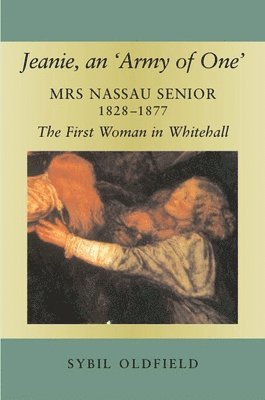
Jeanie, an 'Army of One': Mrs Nassau Senior, 1828-1877, the First Woman in Whitehall
Häftad, Engelska
443 kr
Skickas inom 7-10 vardagar
1 943 kr
Skickas inom 7-10 vardagar
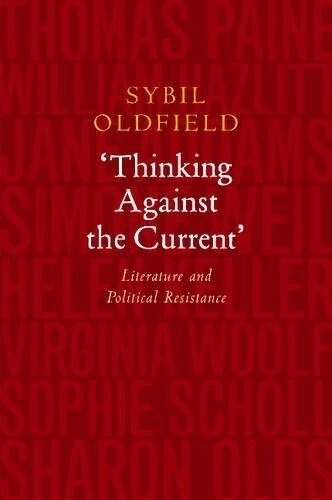
This collection of literary/historical essays, written 1970-2010, covers political subjects as diverse as 17th Century Quaker persecution history, the social impact of Malthus, the self-emancipation of English women, Eleanor Rathbone on the human rights of girls and German women's resistance to Hitler. The more literary subjects include the social thinking of the English Romantics, Dickens' Great Expectations, Simone Weil's great essays attacking militarism and Virginia Woolf's opposition to the State -- as well as contemporary American women poets on the problem of war. But despite all its diversity, this collection has one unifying theme -- the necessity for resistance, for thinking against the current', as Virginia Woolf wrote in Thoughts on Peace in an Air-raid'. The torch of resistance to oppression and militarism is shown to have been continuously handed on through the generations from the seventeenth century to our own day by men and women who had the courage, at whatever personal cost, to 'fight with the mind'. This book of passionate, lively essays is not merely a treasure trove for biographical researchers; it is also strengthening medicine, introducing us to unfamiliar forebears who can help us in our current struggle for a better world. As Simone Weil said: "We can find something better than ourselves in the past".
545 kr
Skickas inom 7-10 vardagar
This collection of literary/historical essays, written 1970-2010, covers political subjects as diverse as 17th Century Quaker persecution history, the social impact of Malthus, the self-emancipation of English women, Eleanor Rathbone on the human rights of girls and German women's resistance to Hitler. The more literary subjects include the social thinking of the English Romantics, Dickens' Great Expectations, Simone Weil's great essays attacking militarism and Virginia Woolf's opposition to the State -- as well as contemporary American women poets on the problem of war. But despite all its diversity, this collection has one unifying theme -- the necessity for resistance, for thinking against the current', as Virginia Woolf wrote in Thoughts on Peace in an Air-raid'. The torch of resistance to oppression and militarism is shown to have been continuously handed on through the generations from the seventeenth century to our own day by men and women who had the courage, at whatever personal cost, to 'fight with the mind'. This book of passionate, lively essays is not merely a treasure trove for biographical researchers; it is also strengthening medicine, introducing us to unfamiliar forebears who can help us in our current struggle for a better world. As Simone Weil said: "We can find something better than ourselves in the past".