Sylvia Legris - Böcker
Visar alla böcker från författaren Sylvia Legris. Handla med fri frakt och snabb leverans.
6 produkter
6 produkter
184 kr
Skickas inom 7-10 vardagar
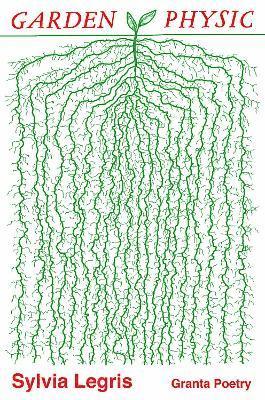
Sylvia Legris’s Garden Physic is a paean to the pleasures and delights of one of the world’s most cherished pastimes: Gardening!“At the center of the garden the heart,” she writes, “Red as any rose. Pulsing / balloon vine. Love in a puff.” As if composed out of a botanical glossolalia of her own invention, Legris’s poems map the garden as body and the body as garden—her words at home in the phytological and anatomical—like birds in a nest. From an imagined love-letter exchange on plants between garden designer Vita Sackville-West and Harold Nicolson to a painting by Agnes Martin to the medicinal discourse of the first-century Greek pharmacologist Pedanius Dioscorides, Garden Physic engages with the anaphrodisiacs of language with a compressed vitality reminiscent of Louis Zukofsky’s “80 Flowers.” In muskeg and yard, her study of nature bursts forth with rainworm, whorl of horsetail, and fern radiation—spring beauty in the lines, a healing potion in verse.
258 kr
Skickas inom 3-6 vardagar
Self-seeding windis a wind of ever-replenishing breath.—from “The Walk, or The Principle of Rapid Peering” The title of Sylvia Legris’ melopoeic collection The Principle of Rapid Peering comes from a phrase the nineteenth-century ornithologist and field biologist Joseph Grinnell used to describe the feeding behavior of certain birds. Rather than waiting passively for food to approach them, these birds live in a continuous mode of “rapid peering.” Legris explores this rich theme of active observation through a spray of poems that together form a kind of almanac or naturalist’s notebook in verse. Here is “where nature converges with words,” as the poet walks through prairie habitats near her home in Saskatchewan, through lawless chronologies and mellifluous strophes of strobili and solstice. Moths appear frequently, as do birds and plants and larvae, all meticulously observed and documented with an oblique sense of the pandemic marking the seasons. Elements of weather, ornithology, entomology, and anatomy feed her condensed, inflective lines, making the heart bloom and the intellect dance.
136 kr
Skickas inom 7-10 vardagar
Self-seeding windis a wind of ever-replenishing breath.-from 'The Walk, or The Principle of Rapid Peering'The title of Sylvia Legris' melopoeic collection The Principle of Rapid Peering comes from a phrase the nineteenth-century ornithologist and field biologist Joseph Grinnell used to describe the feeding behaviour of certain birds. Rather than waiting passively for food to approach them, these birds live in a continuous mode of 'rapid peering'. Legris explores this rich theme of active observation through a spray of poems that together form a kind of almanac or naturalist's notebook in verse. Here is 'where nature converges with words,' as the poet walks through prairie habitats near her home in Saskatchewan, through lawless chronologies and mellifluous strophes of strobili and solstice. Moths appear frequently, as do birds and plants and larvae, all meticulously observed and documented with an oblique sense of the pandemic marking the seasons. Elements of weather, ornithology, entomology, and anatomy feed her condensed, inflective lines, making the heart bloom and the intellect dance.Features drawings by the poet.
139 kr
Tillfälligt slut
Nerve Squall is a field guide like no other, a surreal handbook to a landscape at the crossroads of meteorology and neurology, where the electrical storms without and the electrical impulses within converge. Legris's fascination with weather, ghosts and brain disorders is the starting point for a collection of poetry that ensures you'll never look at nature the same way again. You'll find snow golems and ghost cats, and a sky filled with fish swimming the winds of a storm. And you'll find a haunted terrain where the natural world becomes an allegory for our most intimate fears. Despite their dark and often cinematic approach, these poems are also tinged with a sly, apocalyptic wit that can't help but laugh as the sky falls. Nerve Squall is a vital exploration of the symbiosis of storm, nerve and language, a sure-handed guide to the end of the world.
144 kr
Skickas inom 5-8 vardagar
how to write about flowers without the nauseating sentimental phraseology? No quaint, no dainty, no winsome. This smells good, that smells bad, my hands rank with manure. This at least is pure.What is a plant in language? Something like a 'morose root', 'cream cinquefoil', or 'bohemian and sozzled with nostalgia'?In Garden Physic, Sylvia Legris's glinting studies on flora - mariner's root, throatwort, wild rocket, cuckoo point - create an abundant and fluorescent vegetal mesh.Combining the histories of botanical manuscripts and pharmacopeias with imagined letters between garden designers Vita Sackville-West and Harold Nicolson and playful illustrations throughout, Legris creates an idiosyncratic botanical glossolalia for her meanderings through the physical space of the garden.These luscious poems are a testament to the imbricated human relationship to plants; a radical defence of how we can utilize our ancient symbiosis with living greenery in order to live, heal, and nourish.
219 kr
Kommande
Moving through somnambulant states, Sleep Gate evokes Inger Christensen's description of the necessity for us to 'dream our way inward'. The poems in Sleep Gate push Christensen’s 'dream inward' further, into biological dreaming itself. Fully absorbed in the fabric of sleep, enfolded into the 'inventory of dreams', these poems become part of the process of sleep respiration, so that we might consider the world around us from another perspective. Moving through the changing states of peoples’ 'dreamscapes' and what might affect them, like nightmares, insomnia and other sleep disorders, Sleep Gate captures the disjunctive, jump-cutting quality of dreams: within the unspoken context of 'deep-sleep tectonic logic', these poems jump from a time before 'the clouds are inventoried' to the present, from 'Winter’s gnashing bruxism' to a 'garden anointed with gluey residue.' A collection that, as on waking, assembles the world through distortion and towards clarity.