Sylvia Molloy - Böcker
Visar alla böcker från författaren Sylvia Molloy. Handla med fri frakt och snabb leverans.
9 produkter
9 produkter
Del 4 - Cambridge Studies in Latin American and Iberian Literature
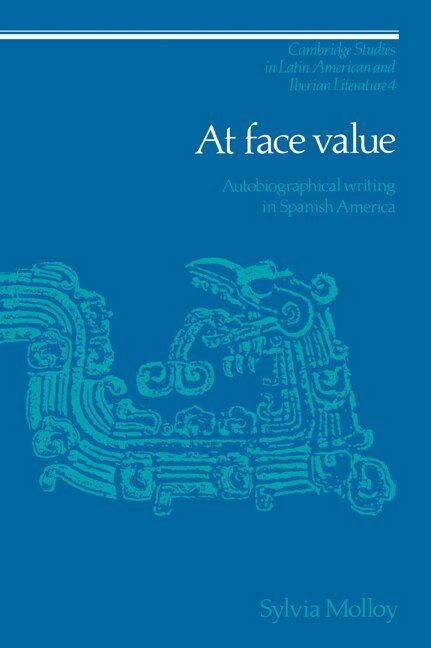
At Face Value
Autobiographical Writing in Spanish America
Häftad, Engelska, 2005
567 kr
Skickas inom 7-10 vardagar
This study of Spanish American autobiography from its beginnings in the post-colonial nineteenth century to the present day concentrates mainly on cultural and historical issues. Spanish American autobiographies are fascinating hybrids, often wielding several discourses at once. They aspire to documentary status while unabashedly exalting the self, and dwell on personal experience while purporting to be exercises in historiography, the founding texts of a national archive. Professor Molloy examines a wide range of texts, from Sarmiento's Recuerdos de provincia to Victoria Ocampo's Autobiografia. She analyses their textual strategies, the generic affiliations they claim, their relationship to the European canon and their dialogue with precursor texts, as well as their problematic use of memory and the ideological implications of their repressive tactics. This method enables her to identify perceptions of self and tensions between self and other, thus shedding light on the fluctuating place of the subject within a community.
Del 4 - Cambridge Studies in Latin American and Iberian Literature
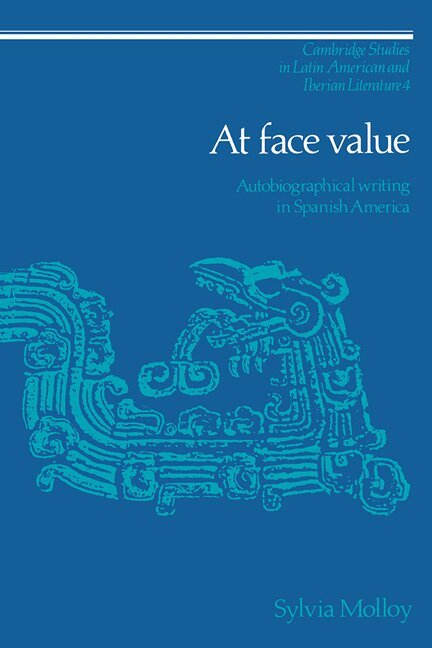
At Face Value
Autobiographical Writing in Spanish America
Inbunden, Engelska, 1991
1 601 kr
Skickas inom 7-10 vardagar
This study of Spanish American autobiography from its beginnings in the post-colonial nineteenth century to the present day concentrates mainly on cultural and historical issues. Spanish American autobiographies are fascinating hybrids, often wielding several discourses at once. They aspire to documentary status while unabashedly exalting the self, and dwell on personal experience while purporting to be exercises in historiography, the founding texts of a national archive. Professor Molloy examines a wide range of texts, from Sarmiento's Recuerdos de provincia to Victoria Ocampo's Autobiografia. She analyses their textual strategies, the generic affiliations they claim, their relationship to the European canon and their dialogue with precursor texts, as well as their problematic use of memory and the ideological implications of their repressive tactics. This method enables her to identify perceptions of self and tensions between self and other, thus shedding light on the fluctuating place of the subject within a community.
910 kr
Skickas
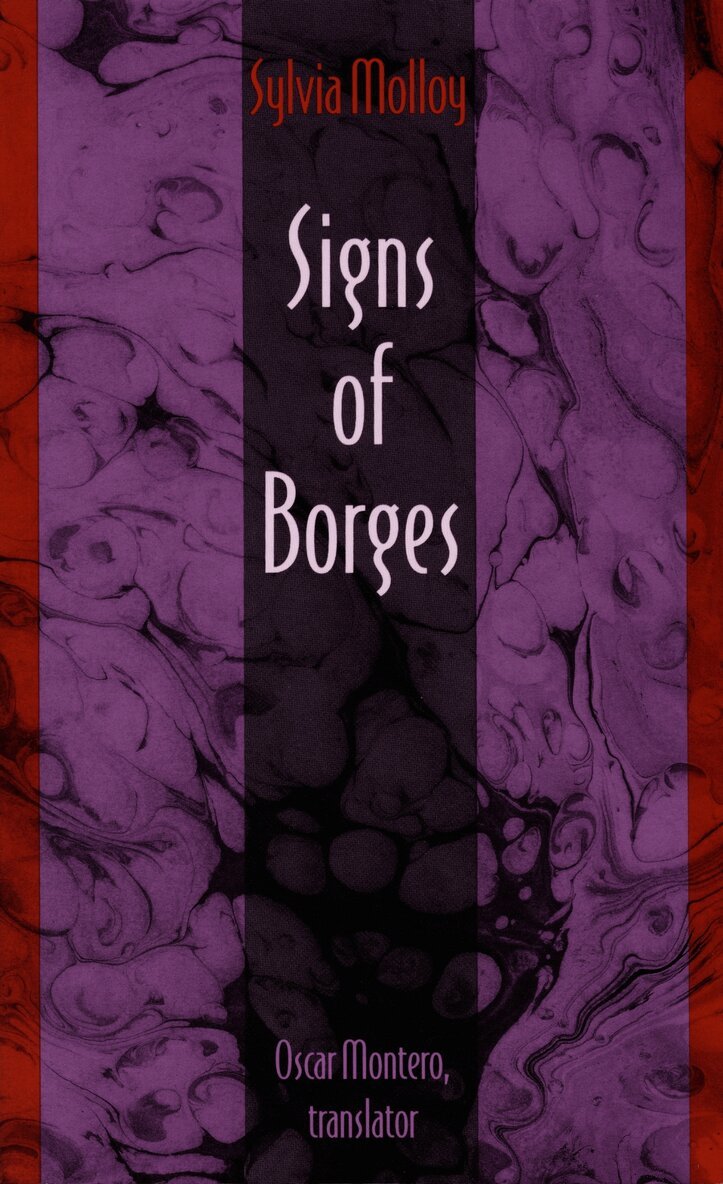
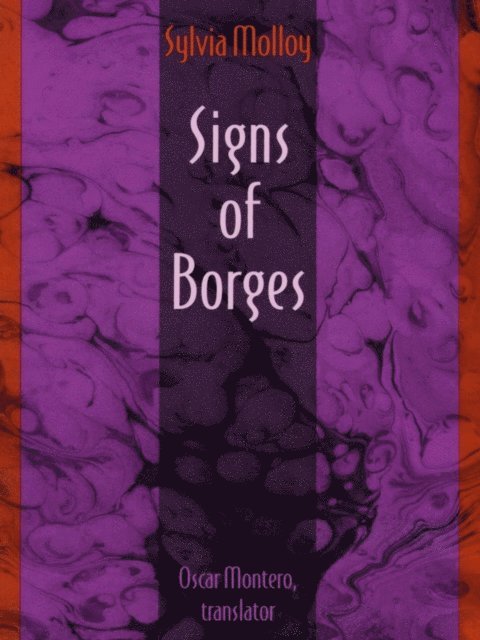
Available for the first time in English, Signs of Borges is widely regarded as the best single book on the work of Jorge Luis Borges. With a critical sensibility informed by Barthes, Lacan, Foucault, Blanchot, and the entire body of Borges scholarship, Sylvia Molloy explores the problem of meaning in Borges's work by remaining true to the uncanniness that is its foundation. Borges's sustained practice of the uncanny gives rise in his texts to endless tensions between illusion and meaning, and to the competing desires for fragmentation, dispersal, and stability. Molloy traces the movement of Borges's own writing by repeatedly spanning the boundaries of genre and cutting across the conventional separations of narrative, lyric and essay, fact and fiction. Rather than seeking to resolve the tensions and conflicts, she preserves and develops them, thereby maintaining the potential of these texts to disturb. At the site of these tensions, Molloy locates the play between meaning and meaninglessness that occurs in Borges's texts. From this vantage point his strategies of deception, recourse to simulacra, inquisitorial urge to unsettle binarism, and distrust of the permanent--all that makes Borges Borges--are examined with unmatched skill and acuity. Elegantly written and translated, Signs of Borges presents a remarkable and dynamic view of one of the most international and compelling writers of this century. It will be of great interest to all students of twentieth-century literature, particularly to students of Latin American literature.
356 kr
Skickas inom 7-10 vardagar
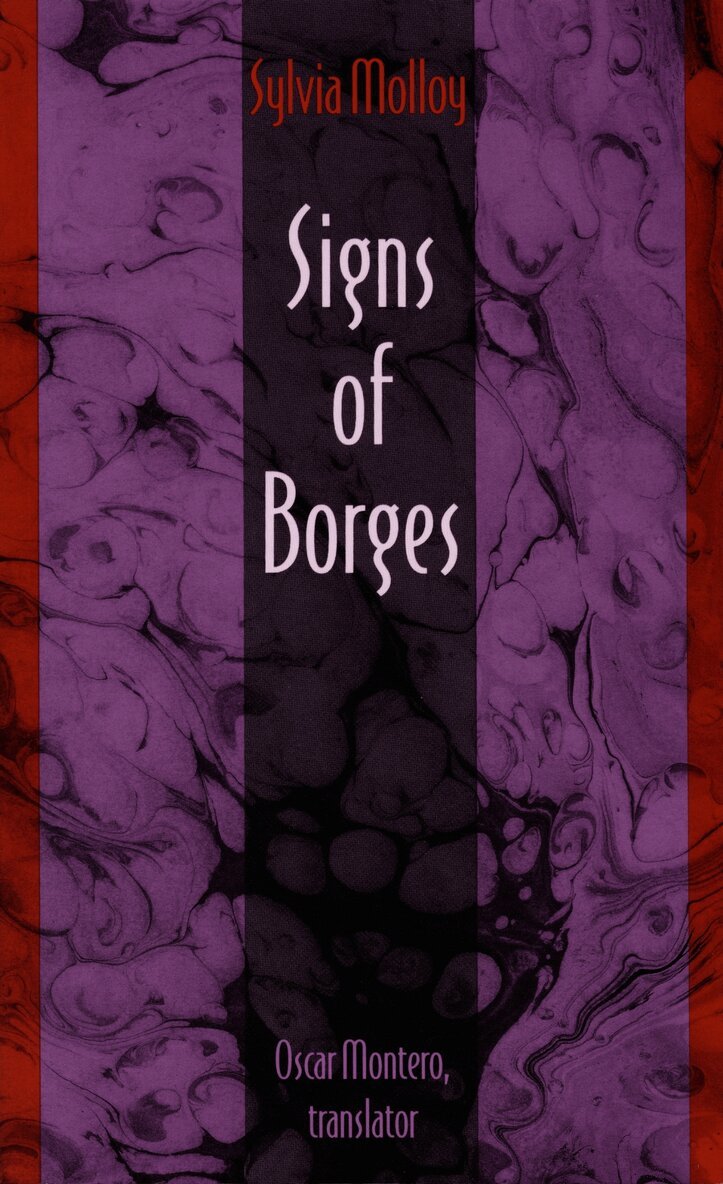
Available for the first time in English, Signs of Borges is widely regarded as the best single book on the work of Jorge Luis Borges. With a critical sensibility informed by Barthes, Lacan, Foucault, Blanchot, and the entire body of Borges scholarship, Sylvia Molloy explores the problem of meaning in Borges's work by remaining true to the uncanniness that is its foundation. Borges's sustained practice of the uncanny gives rise in his texts to endless tensions between illusion and meaning, and to the competing desires for fragmentation, dispersal, and stability. Molloy traces the movement of Borges's own writing by repeatedly spanning the boundaries of genre and cutting across the conventional separations of narrative, lyric and essay, fact and fiction. Rather than seeking to resolve the tensions and conflicts, she preserves and develops them, thereby maintaining the potential of these texts to disturb. At the site of these tensions, Molloy locates the play between meaning and meaninglessness that occurs in Borges's texts. From this vantage point his strategies of deception, recourse to simulacra, inquisitorial urge to unsettle binarism, and distrust of the permanent--all that makes Borges Borges--are examined with unmatched skill and acuity. Elegantly written and translated, Signs of Borges presents a remarkable and dynamic view of one of the most international and compelling writers of this century. It will be of great interest to all students of twentieth-century literature, particularly to students of Latin American literature.
621 kr
Skickas inom 3-6 vardagar
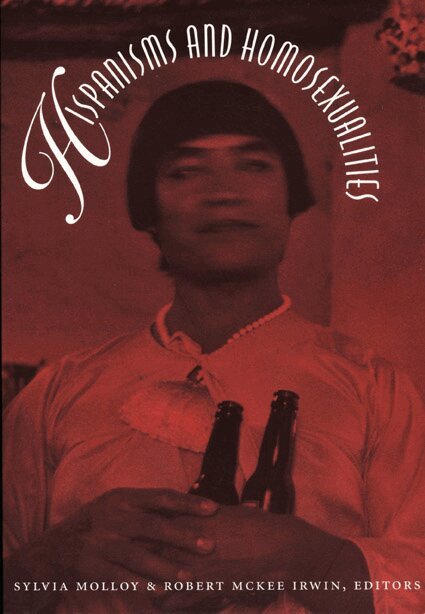
A man masquerading as a lesbian in Spain’s Golden Age fiction. A hermaphrodite’s encounters with the Spanish Inquisition. Debates about virility in the national literature of postrevolutionary Mexico. The work of contemporary artists Reinaldo Arenas, Severo Sarduy, and MarÍa Luisa Bemberg. The public persona of Pedro Zamora, former star of MTV’s The Real World. Despite an enduring queer presence in Hispanic literatures and cultures, most scholars have avoided the specter of sexual dissidence in the Spanish-speaking world. In Hispanisms and Homosexualities, editors Sylvia Molloy and Robert Irwin bring together a group of essays that advance Hispanic studies and gay and lesbian studies by calling into question what is meant by the words Hispanic and homosexual. The fourteen contributors to this volume not only offer queer readings of Spanish and Latin American texts and performances, they also undermine a univocal sense of homosexual identities and practices. Taking on formations of national identity and sexuality; the politics of visibility and outing; the intersections of race, sexuality, and imperial discourse; the status of transvestism and posing; and a postmodern aesthetic of camp and kitsch, these essays from both established and emerging scholars provide a more complex and nuanced view of related issues involving nationality, ethnicity, and sexuality in the Hispanic world.Hispanisms and Homosexualities offers the most sophisticated critical and theoretical work to date in Hispanic and queer studies. It will be an essential text for all those engaged with the complexities of ethnic, cultural, and sexual subjectivities.Contributors. Daniel Balderston, Emilie Bergmann, Israel Burshatin, Brad Epps, Mary S. Gossy, Robert Irwin, Agnes I. Lugo-Ortiz, Sylvia Molloy, Oscar Montero, JosÉ Esteban MuÑoz, JosÉ Quiroga, RubÉn RÍos Avila, B. Sifuentes JÁuregui, Paul Julian Smith
910 kr
Skickas inom 7-10 vardagar
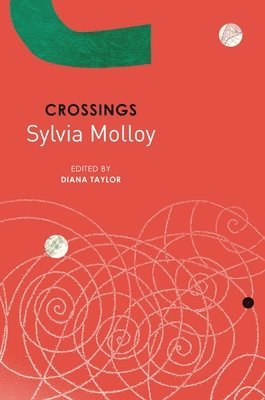
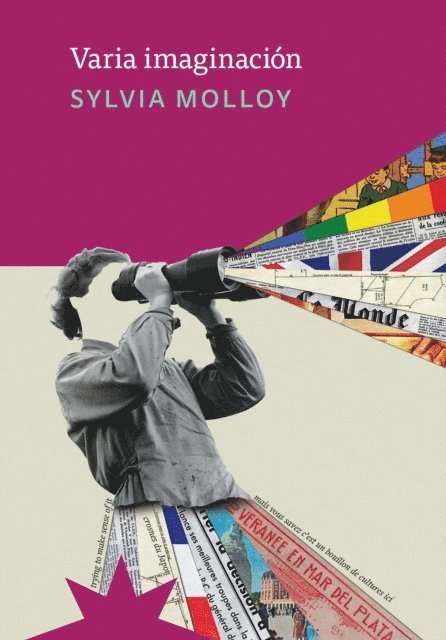
A captivating exploration of identity, language, and memory, weaving together whimsical and profound vignettes that challenge our understanding of home and self in a multicultural world.In Crossings, Sylvia Molloy embarks on an evocative exploration of the intricate and profound experience of living between languages, cultures, and geographies. A pioneering Argentine writer, fluent in Spanish, English, and French, Molloy inhabited all three languages, shuttling back, forth, and between, aware that each place and each language bring forth a different self.The short entries that make up “Varied Imagination” and “Living Between Languages”—the two collections gathered in this volume for the first time—revolve around an interrelated set of questions. What makes “home”? Does language make or destabilize a sense of home? How does speaking a language or switching between languages perform one’s place in the world? These vignettes capture the realization that the most seemingly natural things in life—such as home, language, and identity—depend entirely on performance. Each act, each word communicates something, means something, does something to their specific audience; another audience might react quite differently. Molloy wrote, rewrote, edited, and reworked to find the right mix to express the estar entre or “between” that was her life.In this compelling volume, Molloy’s reflections on the fluidity of identity and the transient nature of home resonate deeply, prompting readers to contemplate the profound connections between language, place, memory, and lived experience.
196 kr
Skickas inom 7-10 vardagar
A captivating exploration of identity, language, and memory, weaving together whimsical and profound vignettes that challenge our understanding of home and self in a multicultural world.In Crossings, Sylvia Molloy embarks on an evocative exploration of the intricate and profound experience of living between languages, cultures, and geographies. A pioneering Argentine writer, fluent in Spanish, English, and French, Molloy inhabited all three languages, shuttling back, forth, and between, aware that each place and each language bring forth a different self.The short entries that make up “Varied Imagination” and “Living Between Languages”—the two collections gathered in this volume for the first time—revolve around an interrelated set of questions. What makes “home”? Does language make or destabilize a sense of home? How does speaking a language or switching between languages perform one’s place in the world? These vignettes capture the realization that the most seemingly natural things in life—such as home, language, and identity—depend entirely on performance. Each act, each word communicates something, means something, does something to their specific audience; another audience might react quite differently. Molloy wrote, rewrote, edited, and reworked to find the right mix to express the estar entre or “between” that was her life.In this compelling volume, Molloy’s reflections on the fluidity of identity and the transient nature of home resonate deeply, prompting readers to contemplate the profound connections between language, place, memory, and lived experience.
133 kr
Skickas
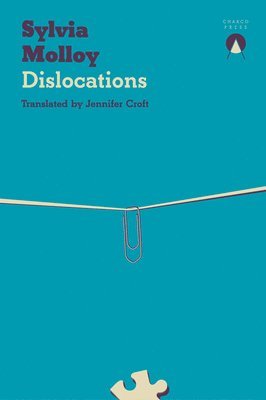
How do you keep a friendship intact, when Alzheimer's has stolen the common ground of language, memory, and experience, that unites you?In brief, sharply drawn moments, Sylvia Molloy’s Dislocations records the gradual loss of a beloved friend, M.L., a disappearance in ways expected (forgotten names, forgotten moments) and painfully surprising (the reversion to a formal, proper Spanish from their previous shared vernacular). There are occasions of wonder, too—M.L. can no longer find the words to say she is dizzy, but can translate that message from Spanish to English, when it's passed along by a friend. This loss holds Molloy’s sense of herself too—the person she is in relation to M.L. fades as her friend’s memory does. But the writer remains: 'I’m not writing to patch up holes and make people (or myself) think that there’s nothing to see here, but rather to bear witness to unintelligibilities and breaches and silences. That is my continuity, that of the scribe.'
133 kr
Skickas
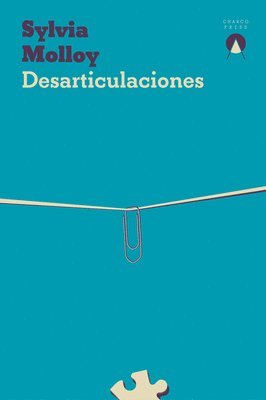
¿Cómo mantener una amistad intacta cuando el Alzheimer se va llevando consigo las bases del lenguaje, la memoria y las experiencias compartidas?La narradora visita casi diariamente a ML., con quien compartió una estrecha amistad y ahora padece mal de Alzheimer. A partir de esos encuentros y los fragmentos de memoria de ML. va construyendo un relato poderosamente conmovedor sobre la desarticulación de una mente que progresivamente va borrando todo de una manera peculiar.Un intento, a través de la escritura, de “hacer durar una relación que continúa pese a la ruina, que subsiste aunque apenas queden palabras”. “¿Cómo dice yo el que no recuerda…?”, se pregunta la narradora frente a esa mujer que le muestra la casa como si la visitara por primera vez o que es incapaz de decir que ha sufrido un mareo, pero puede traducir al inglés perfectamente un mensaje donde se dice que ella ha sufrido un mareo.Pasajes de un pasado y un presente compartidos que se transforman en ficción frente a un olvido que no puede contradecirlos. Un libro que opone al derrumbe una prosa precisa y vital y la sensibilidad única de una de las mejores escritoras latinoamericanas.In brief, sharply drawn moments, Sylvia Molloy’s Dislocations records the gradual loss of a beloved friend, M.L., a disappearance in ways expected (forgotten names, forgotten moments) and painfully surprising (the reversion to a formal, proper Spanish from their previous shared vernacular). There are occasions of wonder, too—M.L. can no longer find the words to say she is dizzy, but can translate that message from Spanish to English, when it's passed along by a friend.This loss holds Molloy’s sense of herself too—the person she is in relation to M.L. fades as her friend’s memory does. But the writer remains: 'I’m not writing to patch up holes and make people (or myself) think that there’s nothing to see here, but rather to bear witness to unintelligibilities and breaches and silences. That is my continuity, that of the scribe.'How do you keep a friendship intact, when Alzheimer's has stolen the common ground of language, memory, and experience, that unites you?In brief, sharply drawn moments, Sylvia Molloy’s Dislocations records the gradual loss of a beloved friend, M.L., a disappearance in ways expected (forgotten names, forgotten moments) and painfully surprising (the reversion to a formal, proper Spanish from their previous shared vernacular). There are occasions of wonder, too—M.L. can no longer find the words to say she is dizzy, but can translate that message from Spanish to English, when it's passed along by a friend. This loss holds Molloy’s sense of herself too—the person she is in relation to M.L. fades as her friend’s memory does. But the writer remains: 'I’m not writing to patch up holes and make people (or myself) think that there’s nothing to see here, but rather to bear witness to unintelligibilities and breaches and silences. That is my continuity, that of the scribe.'