T. Grumme – författare
Visar alla böcker från författaren T. Grumme. Handla med fri frakt och snabb leverans.
10 produkter
Schädelhirnverletzungen im Computertomogramm
Av W. Lanksch, T. Grumme m. fl.
Häftad, 1978
582 kr
Lägg i varukorg
Die außergewöhnlich große Bedeutung, welche die axiale Computertomo graphie in der Diagnostik der raumfordernden intracraniellen Prozesse innerhalb weniger Jahre erlangte, hat sich naturgemäß auch auf die Neuro-Traumatologie ausgewirkt. So ist nicht nur das Ausmaß traumati scher Hirnschäden in …
Computed Tomography in Head Injuries
Av E. Kazner, T. Grumme m. fl.
E-bok, 2012
1502 kr
Lägg i varukorg
The introduction of computed tomography in the diagnosis of pathological intracranial conditions has had considerable significance in cases of cranio cerebral injury. The decisive diagnostic advantage lies in the possibility of demonstrating both gross pathological change directly as well as …
Computed Tomography in Head Injuries
Av W. Lanksch, T. Grumme m. fl.
Häftad, 2011
1129 kr
Lägg i varukorg
The introduction of computed tomography in the diagnosis of pathological intracranial conditions has had considerable significance in cases of cranio cerebral injury. The decisive diagnostic advantage lies in the possibility of demonstrating both gross pathological change directly as well as …
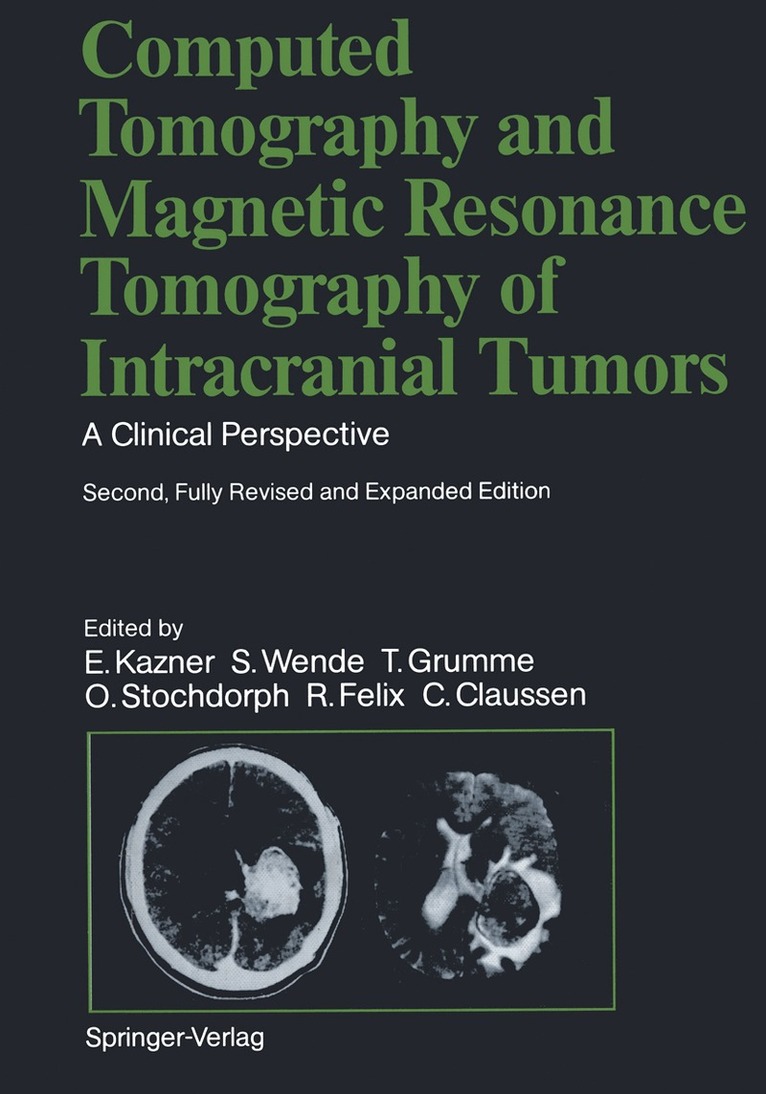
Computed Tomography and Magnetic Resonance Tomography of Intracranial Tumors
A Clinical Perspective
E-bok, 2012
1502 kr
Lägg i varukorg
This book represents the second, fully revised edition of the original volume published in 1982. Experience in neuroradiology has confirmed the outstanding value of computed tomography (CT) for the diagnosis of space-occupying lesions within the skull and orbit. It might be assumed, then, that the …
Computed Tomography and Magnetic Resonance Tomography of Intracranial Tumors
A Clinical Perspective
Av C. Claussen, R. Fahlbusch m. fl.
Häftad, 2011
1129 kr
Lägg i varukorg
This book represents the second, fully revised edition of the original volume published in 1982. Experience in neuroradiology has confirmed the outstanding value of computed tomography (CT) for the diagnosis of space-occupying lesions within the skull and orbit. It might be assumed, then, that the …
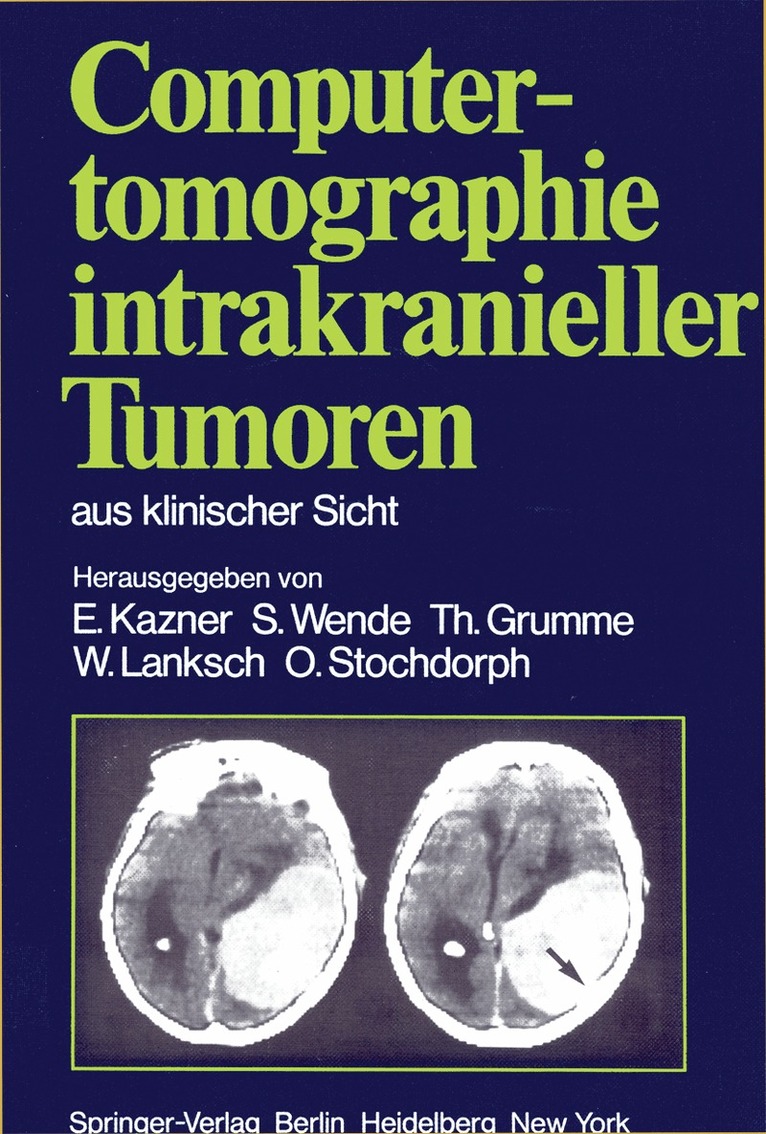
Computertomographie intrakranieller Tumoren aus klinischer Sicht
Av O. Stochdorph, W. Lanksch m. fl.
E-bok, 2013
608 kr
Lägg i varukorg
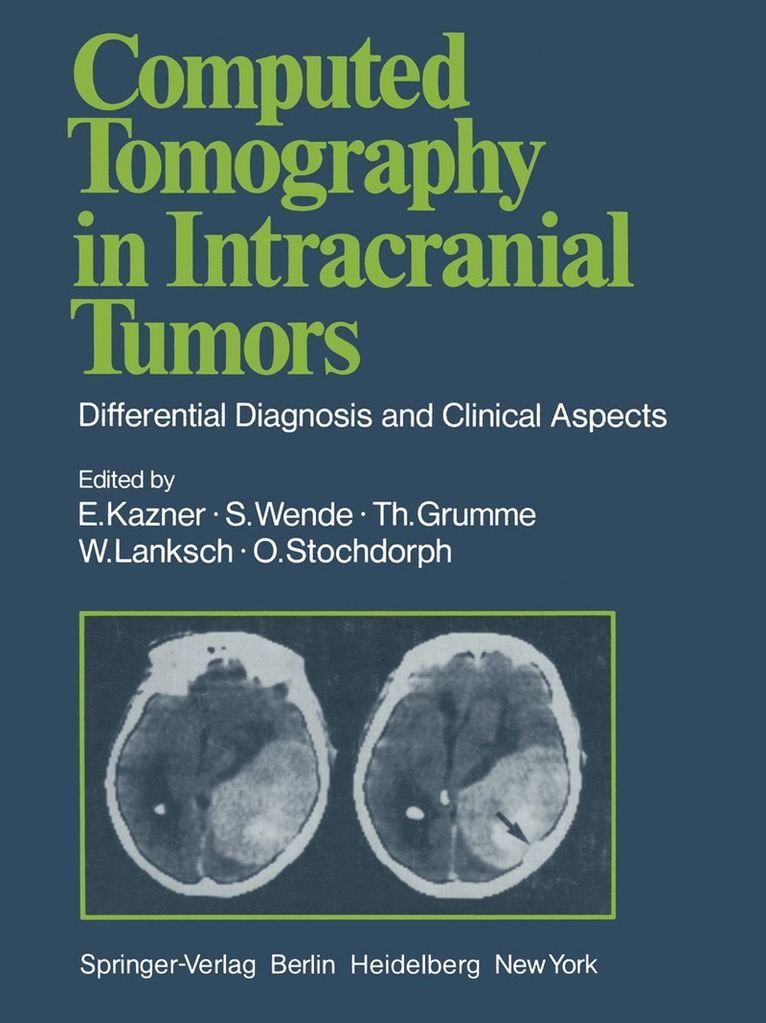
Computed Tomography in Intracranial Tumors
Differential Diagnosis and Clinical Aspects
Av S. Wende, O. Stochdorph m. fl.
E-bok, 2012
1502 kr
Lägg i varukorg
The current book represents a distillation of the experience gained in diagnosis of intracranial tumors with computed X-ray tomography at the University Hos pitals of Berlin, Mainz, and Miinchen. To what purpose? Standard radiological techniques such as pneumoencephalography with lumbar puncture …
Schädelhirnverletzungen im Computertomogramm
Av E. Kazner, T. Grumme m. fl.
E-bok, 2013
604 kr
Lägg i varukorg
Die außergewöhnlich große Bedeutung, welche die axiale Computertomo graphie in der Diagnostik der raumfordernden intracraniellen Prozesse innerhalb weniger Jahre erlangte, hat sich naturgemäß auch auf die Neuro-Traumatologie ausgewirkt. So ist nicht nur das Ausmaß traumati scher Hirnschäden in …
Computed Tomography in Intracranial Tumors
Differential Diagnosis and Clinical Aspects
Av G.B. Bradac, U. Büll m. fl.
Häftad, 2012
1525 kr
Tillfälligt slut
The current book represents a distillation of the experience gained in diagnosis of intracranial tumors with computed X-ray tomography at the University Hos pitals of Berlin, Mainz, and Miinchen. To what purpose? Standard radiological techniques such as pneumoencephalography with lumbar puncture …