T. N. Krishnamurti – författare
Visar alla böcker från författaren T. N. Krishnamurti. Handla med fri frakt och snabb leverans.
3 produkter
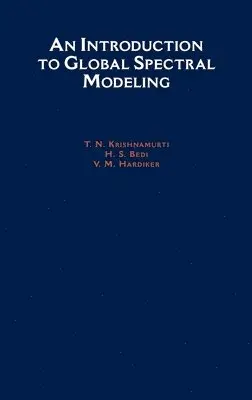
An Introduction to Global Spectral Modeling
Av T. N. Krishnamurti, H. S. Bedi m. fl.
Inbunden, 1998
1225 kr
Lägg i varukorg
This is an introductory text on numerical weather prediction (numerically modelling the general circulation of the atmosphere), utilizing the spectral transform method. The book covers finite difference methods and time-differencing schemes; the theoretical development of the spectral transform …
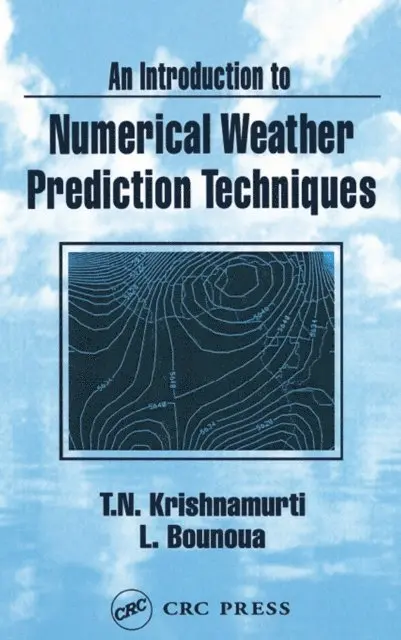
Introduction to Numerical Weather Prediction Techniques
Av T. N. Krishnamurti, Lahouari Bounoua
Inbunden, 1995
5331 kr
Lägg i varukorg
An Introduction to Numerical Weather Prediction Techniques is unique in the meteorological field as it presents for the first time theories and software of complex dynamical and physical processes required for numerical modeling. It was first prepared as a manual for the training of the World …
Introduction to Numerical Weather Prediction Techniques
Av Lahouari Bounoua, T. N. Krishnamurti
E-bok, 2018
4913 kr
Lägg i varukorg
An Introduction to Numerical Weather Prediction Techniques is unique in the meteorological field as it presents for the first time theories and software of complex dynamical and physical processes required for numerical modeling. It was first prepared as a manual for the training of the World …