Taiyi Sun – författare
Visar alla böcker från författaren Taiyi Sun. Handla med fri frakt och snabb leverans.
7 produkter
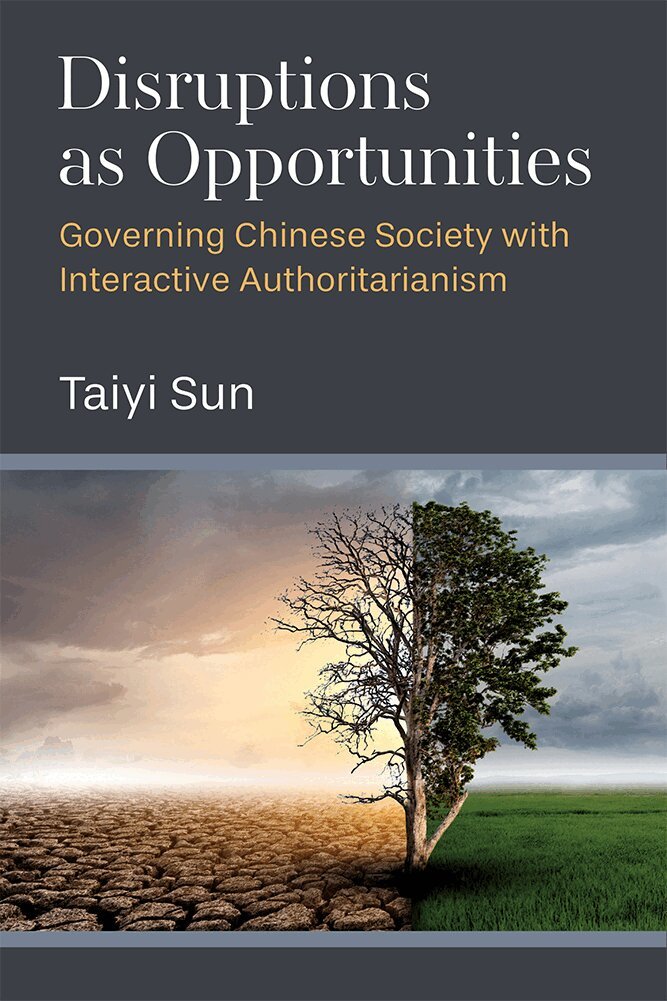
Disruptions as Opportunities
Governing Chinese Society with Interactive Authoritarianism
Av Taiyi Sun
Häftad, 2023
395 kr
Lägg i varukorg
Disruptions as Opportunities: Governing Chinese Society with Interactive Authoritarianism addresses the long-standing puzzle of why China outlived other one-party authoritarian regimes with particular attention to how the state manages an emerging civil society. Drawing upon over 1,200 survey …
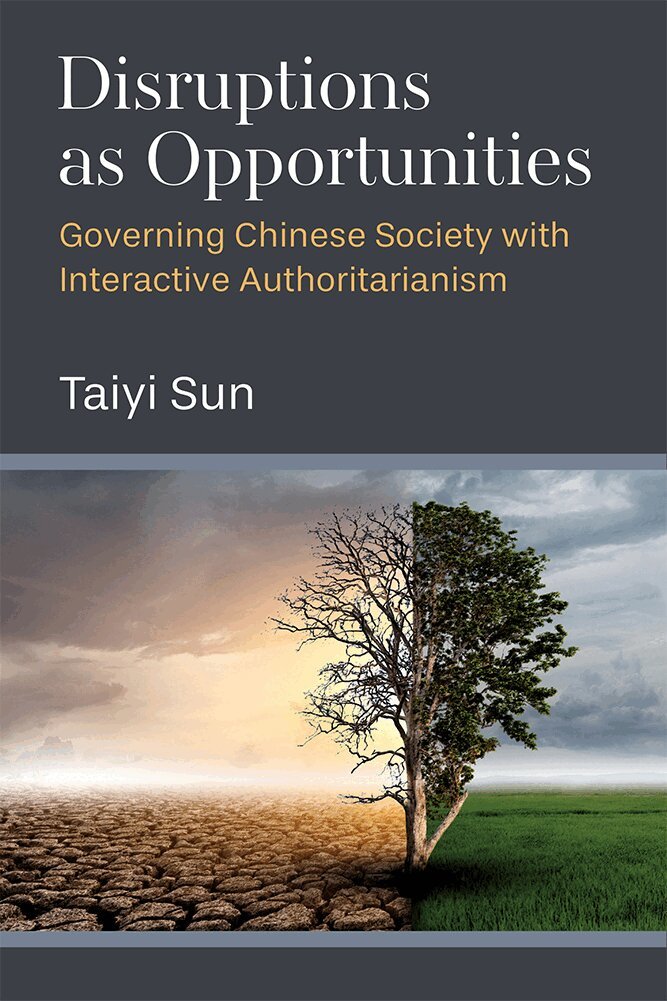
Disruptions as Opportunities
Governing Chinese Society with Interactive Authoritarianism
Av Taiyi Sun
Inbunden, 2023
1160 kr
Lägg i varukorg
Disruptions as Opportunities: Governing Chinese Society with Interactive Authoritarianism addresses the long-standing puzzle of why China outlived other one-party authoritarian regimes with particular attention to how the state manages an emerging civil society. Drawing upon over 1,200 survey …
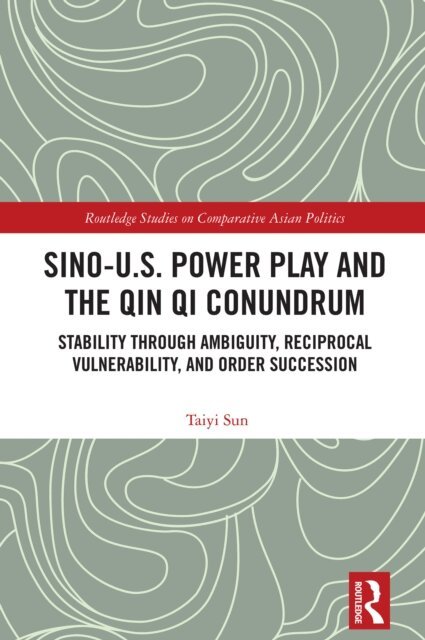
Sino-U.S. Power Play and the Qin Qi Conundrum
Stability through Ambiguity, Reciprocal Vulnerability, and Order Succession
Av Taiyi Sun
E-bok, 2026
813 kr
Lägg i varukorg
This book combines process tracing with original quantitative and qualitative analysis of U.S. and Chinese official discourse, legislation, and elite perspectives in order to trace the key turning points in Sino-U.S. relations since the 1970s.Challenging the Thucydides Trap and Power Transition …
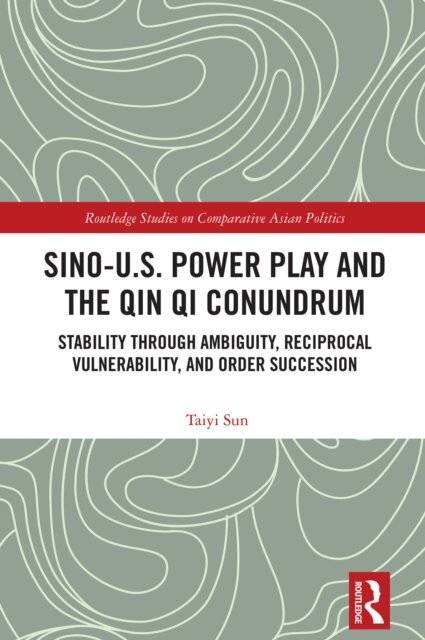
Sino-U.S. Power Play and the Qin Qi Conundrum
Stability through Ambiguity, Reciprocal Vulnerability, and Order Succession
Av Taiyi Sun
E-bok, 2026
813 kr
Lägg i varukorg
This book combines process tracing with original quantitative and qualitative analysis of U.S. and Chinese official discourse, legislation, and elite perspectives in order to trace the key turning points in Sino-U.S. relations since the 1970s.Challenging the Thucydides Trap and Power Transition …
Sino-U.S. Power Play and the Qin Qi Conundrum
Stability through Ambiguity, Reciprocal Vulnerability, and Order Succession
Av Taiyi Sun
Inbunden, 2026
2510 kr
Lägg i varukorg
This book combines process tracing with original quantitative and qualitative analysis of U.S. and Chinese official discourse, legislation, and elite perspectives in order to trace the key turning points in Sino–U.S. relations since the 1970s.Challenging the Thucydides Trap and Power Transition …
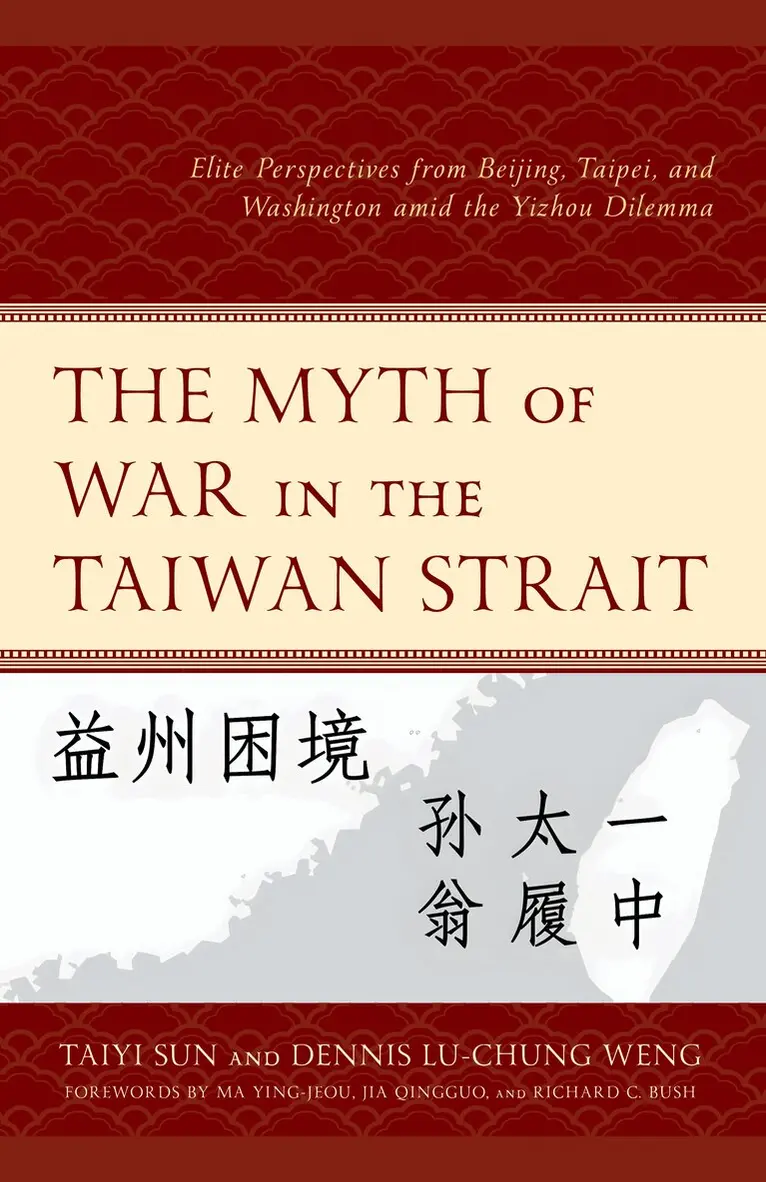
Myth of War in the Taiwan Strait
Elite Perspectives from Beijing, Taipei, and Washington amid the Yizhou Dilemma
Av Taiyi Sun, Dennis Lu-Chung Weng
Inbunden, 2024
1151 kr
Lägg i varukorg
The Myth of War in the Taiwan Strait: Elite Perspectives from Beijing, Taipei, and Washington amid the Yizhou Dilemma proposes a new framework of the “Yizhou dilemma” to capture the conundrum faced by a hegemony (the U.S.), a rising power (Mainland China), and the weaker third entity (Taiwan) …
Myth of War in the Taiwan Strait
Elite Perspectives from Beijing, Taipei, and Washington amid the Yizhou Dilemma
Av Taiyi Sun, Dennis Lu-Chung Weng
Häftad, 2027
413 kr
Kommande
The Myth of War in the Taiwan Strait: Elite Perspectives from Beijing, Taipei, and Washington amid the Yizhou Dilemma proposes a new framework of the “Yizhou dilemma” to capture the conundrum faced by a hegemony (the U.S.), a rising power (Mainland China), and the weaker third entity (Taiwan) …