Tanja Bosch – författare
Visar alla böcker från författaren Tanja Bosch. Handla med fri frakt och snabb leverans.
10 produkter
Routledge Companion to Social Media and Politics
Av Axel Bruns, Gunn Enli m. fl.
Inbunden, 2026
3799 kr
Lägg i varukorg
This updated and expanded second edition brings together cutting-edge research across six continents to provide a comprehensive, global, up-to-date review of political uses of social media.In its 32 chapters, this second edition of The Routledge Companion to Social Media and Politics covers the …
Routledge Companion to Social Media and Politics
Av Kateryna Kasianenko, Tanja Bosch m. fl.
E-bok, 2026
935 kr
Lägg i varukorg
This updated and expanded second edition brings together cutting-edge research across six continents to provide a comprehensive, global, up-to-date review of political uses of social media.In its 32 chapters, this second edition of The Routledge Companion to Social Media and Politics covers the …
Routledge Companion to Social Media and Politics
Av Kateryna Kasianenko, Tanja Bosch m. fl.
E-bok, 2026
915 kr
Lägg i varukorg
This updated and expanded second edition brings together cutting-edge research across six continents to provide a comprehensive, global, up-to-date review of political uses of social media.In its 32 chapters, this second edition of The Routledge Companion to Social Media and Politics covers the …
Digital Citizenship in Africa
Technologies of Agency and Repression
Häftad, 2023
312 kr
Lägg i varukorg
Since the so-called Arab Spring, citizens of African countries have continued to use digital tools in creative ways to ensure that marginalised voices are heard, and to demand for the rights they are entitled to in law: to freely associate, to form opinions, and to express them online without fear …
Digital Citizenship in Africa
Technologies of Agency and Repression
Inbunden, 2023
998 kr
Lägg i varukorg
Since the so-called Arab Spring, citizens of African countries have continued to use digital tools in creative ways to ensure that marginalised voices are heard, and to demand for the rights they are entitled to in law: to freely associate, to form opinions, and to express them online without fear …
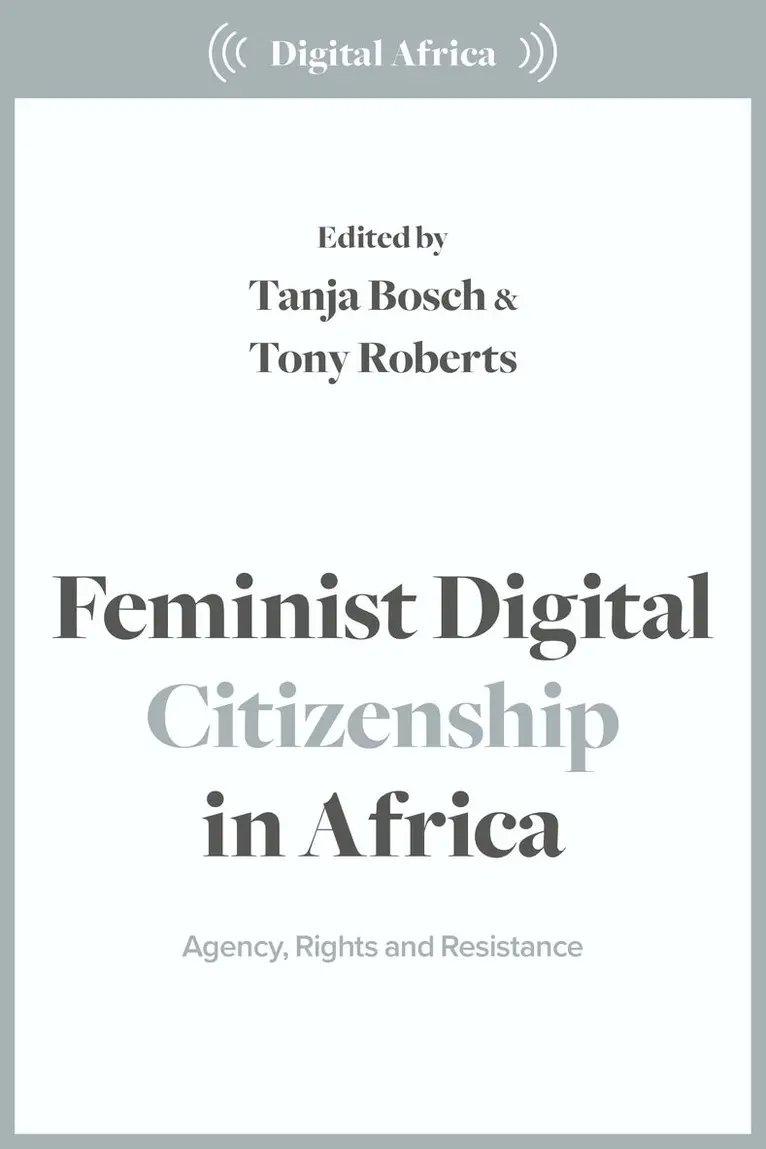
Feminist Digital Citizenship in Africa
Agency, Rights and Resistance
Häftad, 2025
315 kr
Lägg i varukorg
This open access edited collection offers the first-ever book-length volume on feminist digital citizenship in Africa. It offers multiple, theoretically grounded case studies by African researchers covering countries across the length and breadth of the continent, including non-majority-English …
Feminist Digital Citizenship in Africa
Agency, Rights and Resistance
Inbunden, 2025
927 kr
Lägg i varukorg
This open access edited collection offers the first-ever book-length volume on feminist digital citizenship in Africa. It offers multiple, theoretically grounded case studies by African researchers covering countries across the length and breadth of the continent, including non-majority-English …
Queer Digital Citizenship in Africa
Spaces of Agency, Resistance and Care
Av Tanja Bosch, Nyx McLean m. fl.
Häftad, 2027
313 kr
Kommande
This first book-length scholarly investigation of queer digital citizenship in Africa foregrounds agency, resistance, and worldmaking in online spaces.Here contributors from the length and breadth of Africa offer in-depth case studies on diverse issues such as WhatsApp activism, visual archives, …
Queer Digital Citizenship in Africa
Spaces of Agency, Resistance and Care
Av Tanja Bosch, Nyx McLean m. fl.
Inbunden, 2027
924 kr
Kommande
This first book-length scholarly investigation of queer digital citizenship in Africa foregrounds agency, resistance, and worldmaking in online spaces.Here contributors from the length and breadth of Africa offer in-depth case studies on diverse issues such as WhatsApp activism, visual archives, …
Calibrated Intimacies
Algorithms, Emotion, and the Soft Power of Apps
Av Tanja Bosch
Inbunden, 2026
341 kr
Kommande
This open access Palgrave Pivot examines how mobile apps organise emotional life, digital intimacy and everyday forms of platform power. Bringing platform studies and app studies into dialogue with digital sociology, feminist theory and the sociology of emotions, Tanja Bosch develops four connected …