Tanya M. Peres - Böcker
Visar alla böcker från författaren Tanya M. Peres. Handla med fri frakt och snabb leverans.
8 produkter
8 produkter
872 kr
Skickas inom 7-10 vardagar
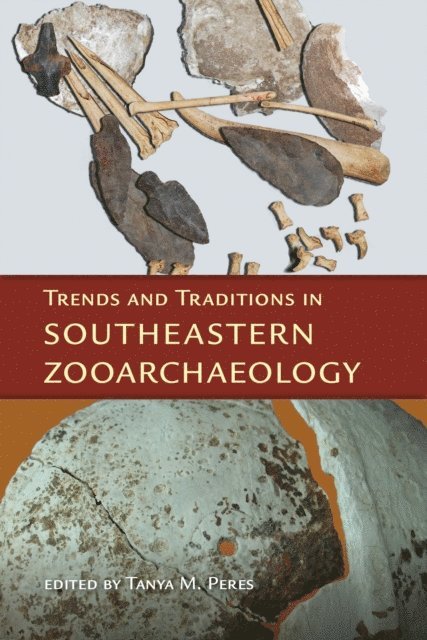
These essays highlight the differences between the archaeological focus on animals as the food source of their time and the belief among zooarchaeologists that animals represent a far more complex ecology. With broad methodological and interpretive analysis of sites throughout the region, the essays range in topic from the enduring symbolism of shells over more than 5,000 years to the domesticated dog cemeteries of Spirit Hill in Jackson County, Alabama.
Baking, Bourbon, and Black Drink
Foodways Archaeology in the American Southeast
Inbunden, Engelska, 2018
710 kr
Skickas inom 7-10 vardagar
Archaeological case studies that explore the rituals and cultural significance of foods in the southeastern United States. Understanding and explaining societal rules surrounding food and foodways have been the foci of anthropological studies since the early days of the discipline. Baking, Bourbon, and Black Drink: Foodways Archaeology in the American Southeast, however, is the first collection devoted exclusively to southeastern foodways analyzed through archaeological perspectives. These essays examine which foods were eaten and move the discussion of foodstuffs into the sociocultural realm of why, how, and when they were eaten. Editors Tanya M. Peres and Aaron Deter-Wolf present a volume that moves beyond basic understandings, applying new methods or focusing on subjects not widely discussed in the Southeast to date. Chapters are arranged using the dominant research themes of feasting, social and political status, food security and persistent places, and foodways histories. Contributors provide in-depth examination of specific food topics such as bone marrow, turkey, Black Drink, bourbon, earth ovens, and hominy. Contributors bring a broad range of expertise to the collection, resulting in an expansive look at all of the steps taken from field to table, including procurement, production, cooking, and consumption, all of which have embedded cultural meanings and traditions. The scope of the volume includes the diversity of research specialties brought to bear on the topic of foodways as well as the temporal and regional breadth and depth, the integration of multiple lines of evidence, and, in some cases, the reinvestigation of well-known sites with new questions and new data.
197 kr
Skickas inom 5-8 vardagar
Was Nashville once home to a giant race of humans?No, but in 1845, you could have paid a quarter to see the remains of one who allegedly lived here before The Flood. That summer Middle Tennessee well diggers had unearthed the skeleton of an American mastodon. Before it went on display, it was modified and augmented with wooden "bones" to make it look more like a human being and passed off as an antediluvian giant. Then, like so many Nashvillians, after a little success here, it went on tour and disappeared from history.But this fake history of a race of Pre-Nashville Giants isn't the only bad history of what, and who, was here before Nashville. Sources written for schoolchildren and the public lead us to believe that the first Euro-Americans arrived in Nashville to find a pristine landscape inhabited only by the buffalo and boundless nature, entirely untouched by human hands. Instead, the roots of our city extend some 14,000 years before Illinois lieutenant-governor-turned-fur-trader Timothy Demonbreun set foot at Sulphur Dell. During the period between about AD 1000 and 1425, a thriving Native American culture known to archaeologists as the Middle Cumberland Mississipian lived along the Cumberland River and its tributaries in today's Davidson County. Earthen mounds built to hold the houses or burials of the upper class overlooked both banks of the Cumberland near what is now downtown Nashville. Surrounding densely packed village areas including family homes, cemeteries, and public spaces stretched for several miles through Shelby Bottoms, and the McFerrin Park, Bicentennial Mall, and Germantown neighborhoods. Other villages were scattered across the Nashville landscape, including in the modern neighborhoods of Richland, Sylvan Park, Lipscomb, Duncan Wood, Centennial Park, Belle Meade, White Bridge, and Cherokee Park. The book is the first effort by legitimate archaeologists to articulate the history of what happened here before Nashville happened.
Integrating Zooarchaeology and Paleoethnobotany
A Consideration of Issues, Methods, and Cases
Inbunden, Engelska, 2010
552 kr
Skickas inom 10-15 vardagar
The differences in data management in these two disciplines have so far prevented systematic integration of their data sets. This book tackles the problem by proposing new methods and highlighting case studies that successfully employ these methods.
Integrating Zooarchaeology and Paleoethnobotany
A Consideration of Issues, Methods, and Cases
Häftad, Engelska, 2014
552 kr
Skickas inom 10-15 vardagar
The differences in data management in these two disciplines have so far prevented systematic integration of their data sets. This book tackles the problem by proposing new methods and highlighting case studies that successfully employ these methods.
994 kr
Skickas inom 10-15 vardagar
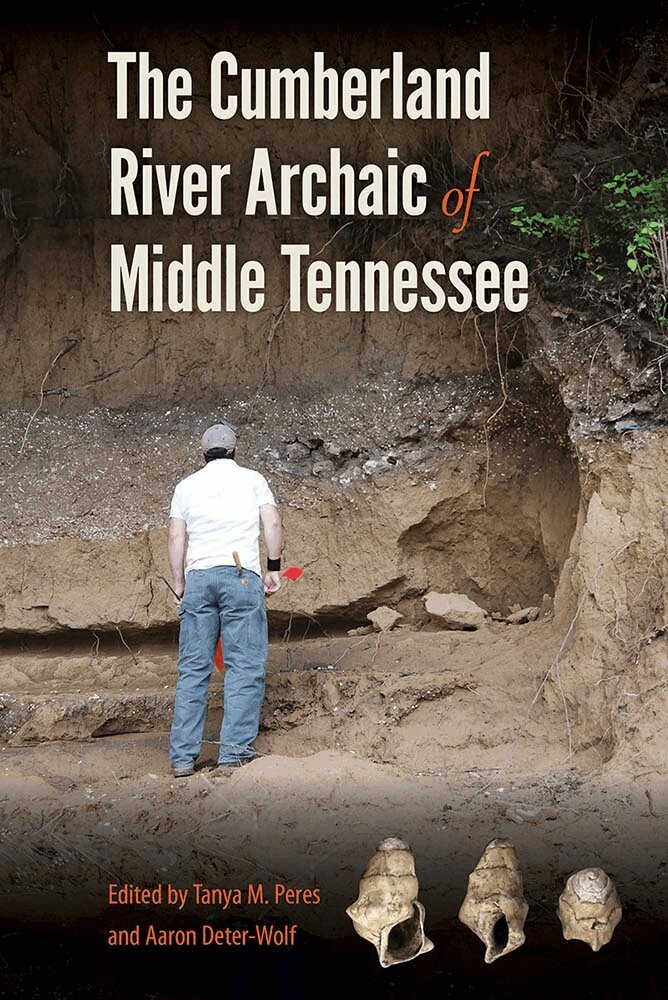
For thousands of years, the inhabitants of the Middle Cumberland River Valley harvested shellfish for food and raw materials then deposited the remains in dense concentrations along the river. Very little research has been published on the Archaic period shell mounds in this region. Demonstrating that nearly forty such sites exist, this volume presents the results of recent surveys, excavations, and laboratory work as well as fresh examinations of past investigations that have been difficult for scholars to access. In these essays, contributors describe an emergency riverbank survey of shell-bearing sites that were discovered, reopened, or damaged in the aftermath of recent flooding. Their studies of these sites feature stratigraphic analysis, radiocarbon dating, zooarchaeological data, and other interpretive methods. Other essays in the volume provide the first widely accessible summary of previous work on sites that have long been known. Contributors also address larger topics such as GIS analysis of settlement patterns, research biases, and current debates about the purpose of shell mounds. This volume provides an enormous amount of valuable data from the abundant material record of a fascinating people, place, and time. It is a landmark synthesis that will improve our understanding of the individual communities and broader cultures that created shell mounds across the southeastern United States.A volume in the Florida Museum of Natural History: Ripley P. Bullen Series.
994 kr
Skickas inom 10-15 vardagar
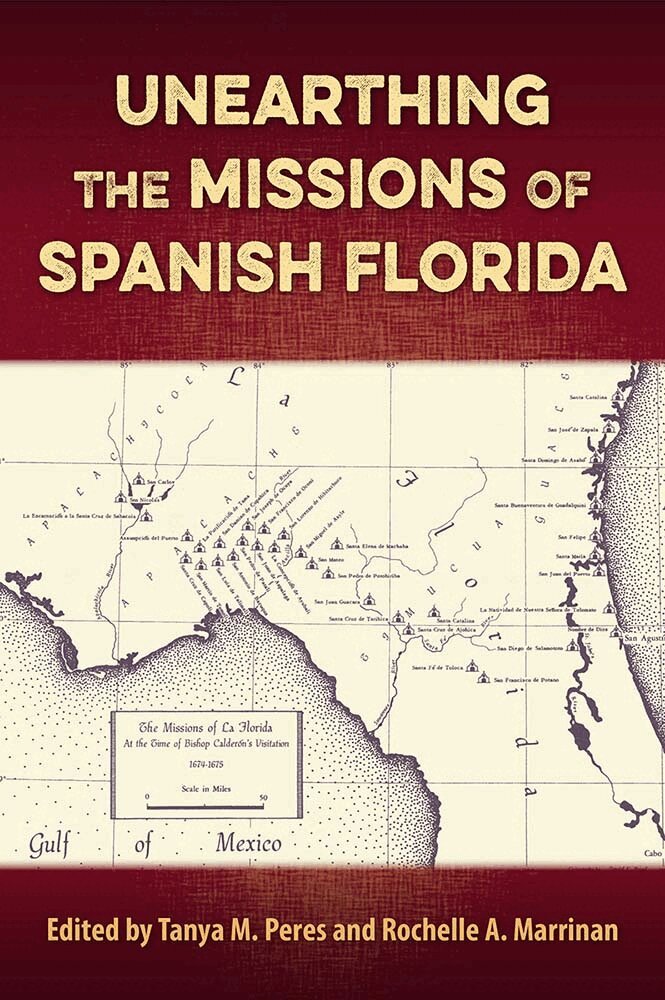
This volume presents new data and interpretations from research at Florida's Spanish missions, outposts established in the sixteenth and seventeenth centuries to strengthen the colonizing empire and convert Indigenous groups to Christianity. In these chapters, archaeologists, historians, and ethnomusicologists draw on the past thirty years of work at sites from St. Augustine to the panhandle.Contributors explore the lived experiences of the Indigenous people, Franciscan friars, and Spanish laypeople who lived in La Florida's mission communities. In the process, they address missionization, ethnogenesis, settlement, foodways, conflict, and warfare. One study reconstructs the sonic history of Mission San Luis with soundscape compositions. The volume also sheds light on the destruction of the Apalachee-Spanish Missions by the English.The recent investigations highlighted here significantly change earlier understandings by emphasizing the kind and degree of social, economic, and ideological relationships that existed between Apalachee and Timucuan communities and the Spanish. Unearthing the Missions of Spanish Florida updates and rewrites the history of the Spanish mission effort in the region.
606 kr
Skickas inom 7-10 vardagar
This volume presents an overview of methodologies to identify and study foodways in the archaeological record. Foodways Archaeology is devoted specifically to the archaeological study of the intersection of food, culture, history, and traditions as viewed in the archaeological record.