Tanya Ogilvie-White - Böcker
Visar alla böcker från författaren Tanya Ogilvie-White. Handla med fri frakt och snabb leverans.
4 produkter
4 produkter
341 kr
Skickas inom 10-15 vardagar
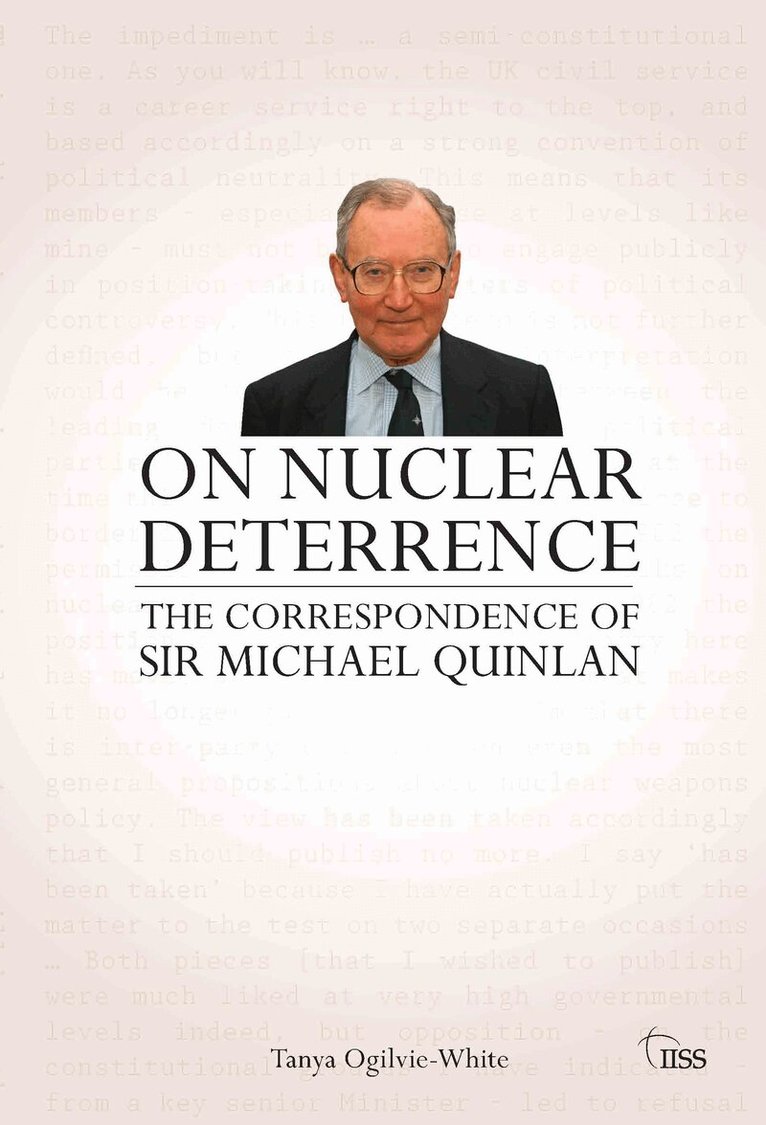
This timely book, published in the lead up to the 2012-14 decision on Trident renewal, makes available for the first time the late Sir Michael Quinlan’s private correspondence on nuclear deterrence. It shows why Sir Michael, as Policy Director and then Permanent Secretary at the Ministry of Defence during the last years of the Cold War, became known as the ‘high priest of deterrence’: his unparalleled grasp of nuclear strategy, contribution to nuclear doctrine in the UK and NATO, and deep and genuine concern with defence ethics earned him respect and admiration around the world. Even those who challenged him on fundamental questions of strategy and morality (and many of his correspondents fell into this category, as this volume will reveal) recognised his sincere devotion to his cause: the creation of a stable system of east–west nuclear deterrence for the prevention of major war. Before he died in 2009, Sir Michael made it known that he wished for his private correspondence to be published. This book helps fulfil that wish. It presents a selection of the most compelling letters among the many thousands in the Quinlan files. It is intended as a memorial to a brilliant man, an important historical record of British nuclear thinking during the cold war, and a contribution to contemporary debates over the future of nuclear deterrence.
1 059 kr
Skickas inom 7-10 vardagar
This timely book, published in the lead up to the 2012-14 decision on Trident renewal, makes available for the first time the late Sir Michael Quinlan’s private correspondence on nuclear deterrence. It shows why Sir Michael, as Policy Director and then Permanent Secretary at the Ministry of Defence during the last years of the Cold War, became known as the ‘high priest of deterrence’: his unparalleled grasp of nuclear strategy, contribution to nuclear doctrine in the UK and NATO, and deep and genuine concern with defence ethics earned him respect and admiration around the world. Even those who challenged him on fundamental questions of strategy and morality (and many of his correspondents fell into this category, as this volume will reveal) recognised his sincere devotion to his cause: the creation of a stable system of east–west nuclear deterrence for the prevention of major war. Before he died in 2009, Sir Michael made it known that he wished for his private correspondence to be published. This book helps fulfil that wish. It presents a selection of the most compelling letters among the many thousands in the Quinlan files. It is intended as a memorial to a brilliant man, an important historical record of British nuclear thinking during the cold war, and a contribution to contemporary debates over the future of nuclear deterrence.
1 236 kr
Skickas inom 5-8 vardagar
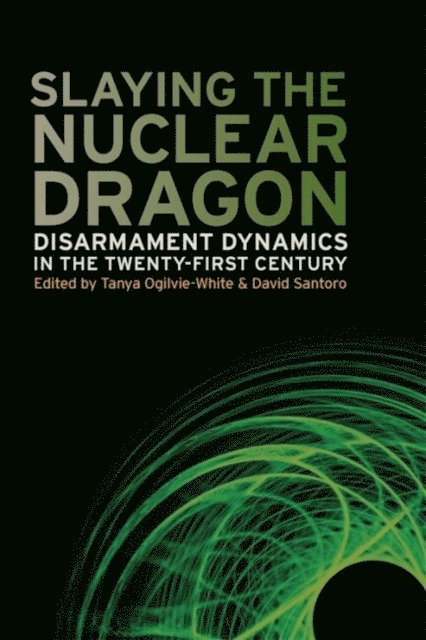
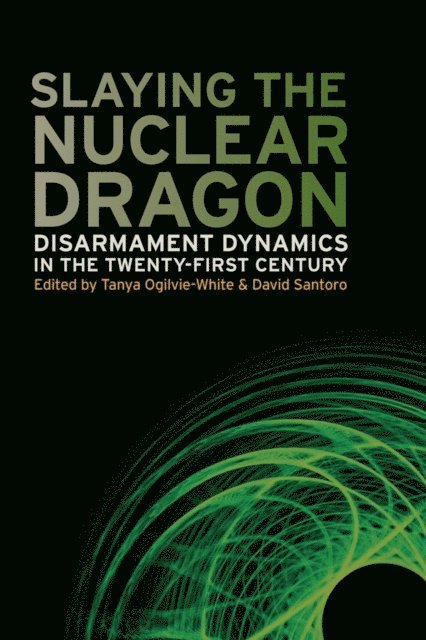
In recent decades the debate on nuclear weapons has focused overwhelmingly on proliferation and nonproliferation dynamics. In a series of Wall Street Journal articles, however, George Shultz, William Perry, Henry Kissinger, and Sam Nunn called on governments to rid the world of nuclear weapons, helping to put disarmament back into international security discussions. More recently, U.S. president Barack Obama, prominent U.S. congressional members of both political parties, and a number of influential foreign leaders have espoused the idea of a world free of nuclear weapons.Turning this vision into reality requires an understanding of the forces driving disarmament forward and those holding it back. Slaying the Nuclear Dragon provides in-depth, objective analysis of current nuclear disarmament dynamics. Examining the political, state-level factors that drive and stall progress, contributors highlight the challenges and opportunities faced by proponents of disarmament. These essays show that although conditions are favorable for significant reductions, numerous hurdles still exist. Contributors look at three categories of states: those that generate momentum for disarmament; those with policies that are problematic for disarmament; and those that actively hinder progress—whether openly, secretly, deliberately, or inadvertently.Nuclear deterrence was long credited with preventing war between the two major Cold War powers, but with the spread of nuclear technology, threats have shifted to other state powers and to nonstate groups. Slaying the Nuclear Dragon addresses an urgent need to examine nuclear disarmament in a realistic, nonideological manner.
502 kr
Skickas inom 5-8 vardagar
In recent decades the debate on nuclear weapons has focused overwhelmingly on proliferation and nonproliferation dynamics. In a series of Wall Street Journal articles, however, George Shultz, William Perry, Henry Kissinger, and Sam Nunn called on governments to rid the world of nuclear weapons, helping to put disarmament back into international security discussions. More recently, U.S. president Barack Obama, prominent U.S. congressional members of both political parties, and a number of influential foreign leaders have espoused the idea of a world free of nuclear weapons.Turning this vision into reality requires an understanding of the forces driving disarmament forward and those holding it back. Slaying the Nuclear Dragon provides in-depth, objective analysis of current nuclear disarmament dynamics. Examining the political, state-level factors that drive and stall progress, contributors highlight the challenges and opportunities faced by proponents of disarmament. These essays show that although conditions are favorable for significant reductions, numerous hurdles still exist. Contributors look at three categories of states: those that generate momentum for disarmament; those with policies that are problematic for disarmament; and those that actively hinder progress—whether openly, secretly, deliberately, or inadvertently.Nuclear deterrence was long credited with preventing war between the two major Cold War powers, but with the spread of nuclear technology, threats have shifted to other state powers and to nonstate groups. Slaying the Nuclear Dragon addresses an urgent need to examine nuclear disarmament in a realistic, nonideological manner.