Tapan Sarker – författare
2 083 kr
Skickas inom 5-8 vardagar
445 kr
Läs direkt efter köp
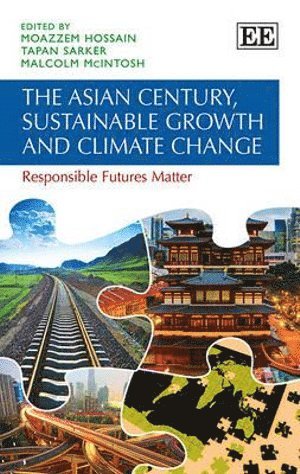
This insightful volume is presented in three parts: Part I identifies the major socio-economic factors which are likely to take away the opportunities in realizing the Asian century by 2050; Part II presents the responsible policy issues which would be needed to overcome the hurdles such as public finance, natural resources, public health and sanitation, intra-Asia migration and decentralized governance; and Part III articulates major challenges in realizing Asian prosperity including sustainable international business and sustainable growth. The topics examined range from demographic conditions and tax reform to responsible use of natural resources in the years to come.
The Asian Century, Sustainable Growth and Climate Change will appeal to academics in the fields of Asian studies and environment ecology. Both practitioners and policymakers will find this detailed analysis of the major challenges for South Asian growth an invaluable resource.
Contributors: R. Chakrabarty, S.L. Chakravarty, L.-H. Chan, M. Hossain, M.I. Hossain, S. Hossain, P. Howard, R.C. Keith, M.A. Khan, M. McIntosh, V.P. Murthy, T. Sarker, V. Sharma, P. Short, C. Tisdell, Y. Tjoe
1 880 kr
Skickas inom 5-8 vardagar
1 515 kr
Skickas inom 10-15 vardagar
1 891 kr
Läs direkt efter köp
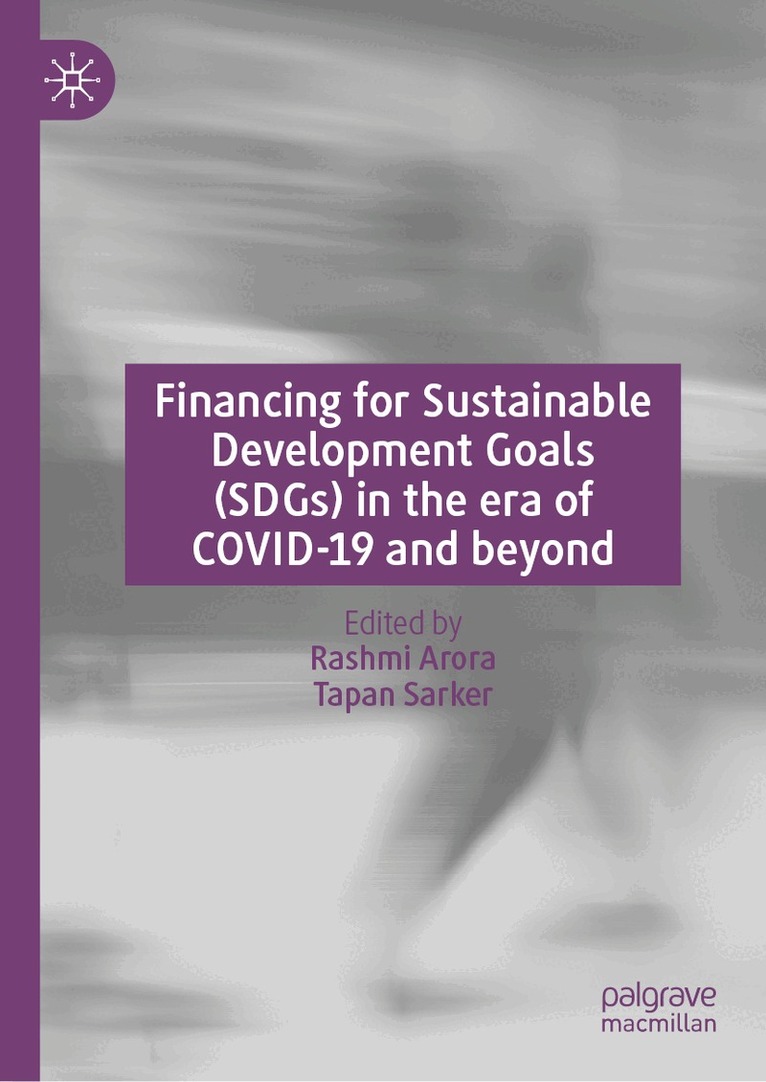
The economic and social impact of Covid-19 pandemic both on developing and developed countries has been significant. In addition to the impact of the pandemic, the current Ukraine war has also led to severe supply chain disruptions leading to a sharp increase in food and commodity prices globally. Due to a combination of external shocks and the impact of the pandemic, global economic growth slowed down and is projected to continue to decline. The above factors have led to a sharp increase in government expenditure constraining both developed and developing countries'' fiscal capacity. This has further implications for the achievement of SDGs, especially for low-income countries. The challenge for developing countries in the current scenario is to mobilize adequate resources both from domestic and international sources, not just for the achievement of SDGs as such, but also to sustain the livelihoods, health, and welfare of people. This book aims to examine some of these issues in the context of developing countries.
Foreword to Financing of the Sustainable Development Goals (SDGs): Challenges and Opportunities
Saleem H. Ali
As we approach the 2030 milestone that was set forth by the United Nations to attain seventeen key development goals, financing remains the ultimate challenge to their attainment. International conflicts have further stretched public sector discretionary spending on development and global uncertainty on economic growth has stymied private sector investment in a range of key infrastructure projects. At this pivotal moment, Arora and Sarker have assembled a timely anthology of leading experts from both the Global North and South to both evaluate past performance as well as project possible solutions to address the financing gap.
The twelve contributing chapters span a range of geographies as well as themes around the SDGs. An impressive feature of this volume is its willingness to engage with multidimensional aspects of the SDG agenda beyond just the usual multilateral donor’s space. They also cover key aspects of development from climate financing to fintech and methodologies for evaluating impact. This panoramic coverage makes the book particularly well suited for courses on sustainable development as well as for practitioners to educate themselves about ways to mobilize finance.
Having served on the Scientific and Technical Advisory Panel (STAP) of the Global Environment Facility (GEF) for four years I had a chance to review a range of large proposals with multiple financing sources submitted to the GEF Trust Fund administered by the World Bank. I had a chance to observe the ways in which financing was patched together for many projects to allow for upscaling. Yet often there were still major gaps or synergies could not be realized across sectors because of the way the funding was delineated.
This book will help to address many of these challenges with fresh ideas from experienced academics and practitioners. It has the potential for making a lasting impact on the global development agenda.
Saleem H. Ali
Member of the United Nations International Resource Panel
Chair and Distinguished Professor, Department of Geography, University of Delaware, USA
1 515 kr
Skickas inom 10-15 vardagar
1 961 kr
Läs direkt efter köp
The De Gruyter Handbook of Sustainable Development and Finance explores the difficult and challenging issues confronting society and the environment, in the contexts of unprecedented climate change, bio-diversity loss and the global pandemic.
In this seminal text exploring a wide range of topics, and in the devastating wake of COVID-19, scholars and practitioners analyse the effectiveness of current and proposed actions to build a sustainable future, and the public and private finance necessary to prevent an impending planetary catastrophe.
The first section of the handbook introduces readers to the origins and evolution of sustainable development. An examination of public and private finance follows in the next two sections, presented from the perspectives of authors from both ‘developed’ and ‘developing’ countries. Climate change, one of the largest sectors of finance for sustainable development, is investigated in detail, as is the new and emerging development frontier, the ‘blue’ economy of the world’s oceans.
Suitable for students, policymakers and the public at large, the handbook highlights the lessons learned and points the way forward for sustainable development and finance in the wake of the global pandemic, and the challenges to come.
1 961 kr
Läs direkt efter köp
The De Gruyter Handbook of Sustainable Development and Finance explores the difficult and challenging issues confronting society and the environment, in the contexts of unprecedented climate change, bio-diversity loss and the global pandemic.
In this seminal text exploring a wide range of topics, and in the devastating wake of COVID-19, scholars and practitioners analyse the effectiveness of current and proposed actions to build a sustainable future, and the public and private finance necessary to prevent an impending planetary catastrophe.
The first section of the handbook introduces readers to the origins and evolution of sustainable development. An examination of public and private finance follows in the next two sections, presented from the perspectives of authors from both ‘developed’ and ‘developing’ countries. Climate change, one of the largest sectors of finance for sustainable development, is investigated in detail, as is the new and emerging development frontier, the ‘blue’ economy of the world’s oceans.
Suitable for students, policymakers and the public at large, the handbook highlights the lessons learned and points the way forward for sustainable development and finance in the wake of the global pandemic, and the challenges to come.
1 938 kr
Skickas inom 5-8 vardagar
383 kr
Skickas
1 192 kr
Skickas inom 10-15 vardagar
1 575 kr
Läs direkt efter köp
The focus of this edited volume is to identify challenges facing organizations in achieving zero greenhouse gas emissions by 2050 and a new energy economy, and to explore solutions from various sectors of the economy to enable the transition to a zero emissions future. Research presented here is divided into three parts, with an introductory statement on growth and sustainability. Part one discusses strategies towards a sustainable economy under a zero emissions goal. Part two contains industry specific case studies focusing on construction and related activities. Part three is devoted to country specific case studies from the Asia-Pacific region.
Each of the chapters address one or more of the following issues: restoration, mitigation, adaptation and/or promoting resilience in the face of climate change as part of achieving a sustainable economy.
The volume is multi-disciplinary in nature, drawing on various disciplines in social science, business, environment and policy, and will be of interest to UN development agencies, academic institutions, government policy makers, NGOs and business leaders.
1 192 kr
Skickas inom 10-15 vardagar