Moazzem Hossain – författare
Visar alla böcker från författaren Moazzem Hossain. Handla med fri frakt och snabb leverans.
16 produkter
16 produkter
Häftad, Engelska, 2020
629 kr
Skickas inom 10-15 vardagar
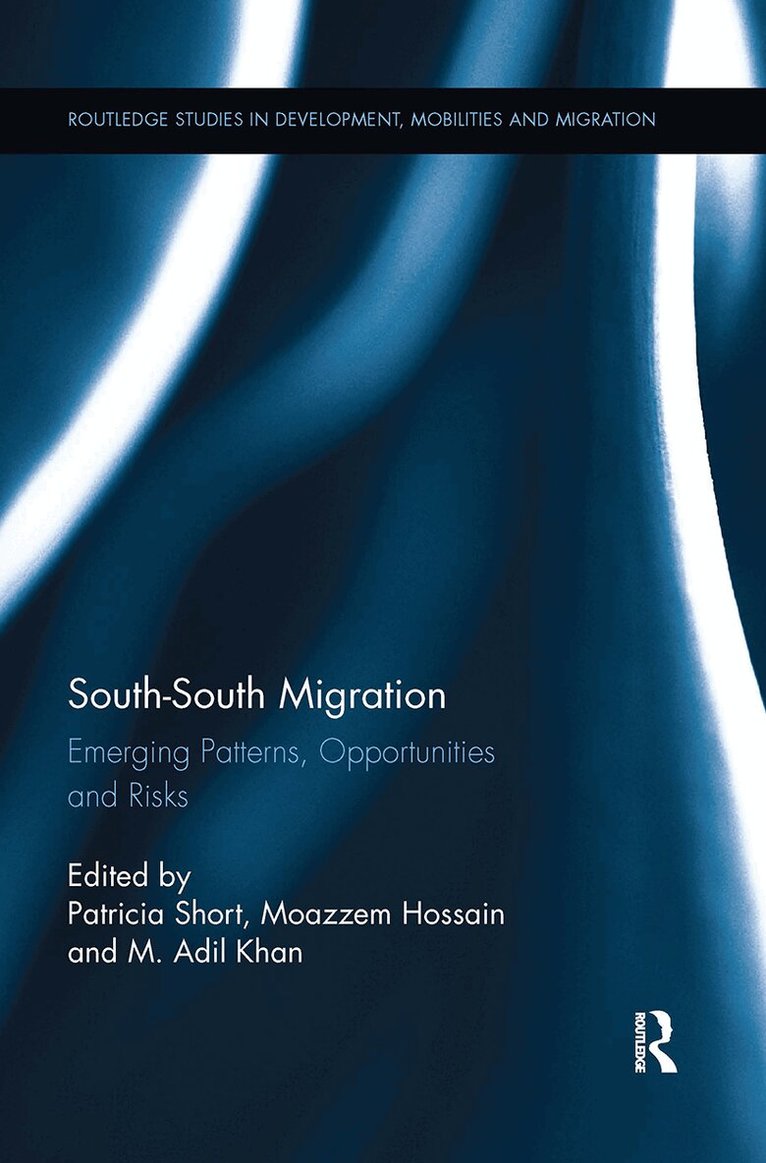
South-South migration contributes significantly to the development of the emerging economies, the migration of receiving countries and, at the same time, generates a major share of remittance income flowing into the sending countries. By capturing field experience and observations from a number of research studies, this book provides a robust catalogue of data, practical experience and analysis focused on the significant issues, risks and challenges that are associated with this evolving phenomenon in international migration. The book also critically explores new theoretical perspectives by highlighting new policy directions for both sending and receiving countries relevant to making South-South migration more efficient, attractive and mutually beneficial.
Inbunden, Engelska, 1998
2 429 kr
Skickas inom 10-15 vardagar
This edited collection examines the impact of privatisation and the lessons to be learnt from it for the purpose of regulatory reform. The contributors analyse the benefits and losses of privatisation in a variety of countries from economic, legal and consumer perspectives and address fundamental questions such as whether private ownership necessarily leads to better incentives for management and productivity.The book contains illustrative case studies of the Australian telecommunications industry, the deregulation of the Swedish taxi and postal industries, Californian telecommunications industries as well as discussing consumer responses to the privatisation of key utilities in the UK. The impact of privatisation in developing nations is also addressed, with particular reference to India and Malaysia.
Inbunden, Engelska, 2022
1 931 kr
Skickas inom 10-15 vardagar
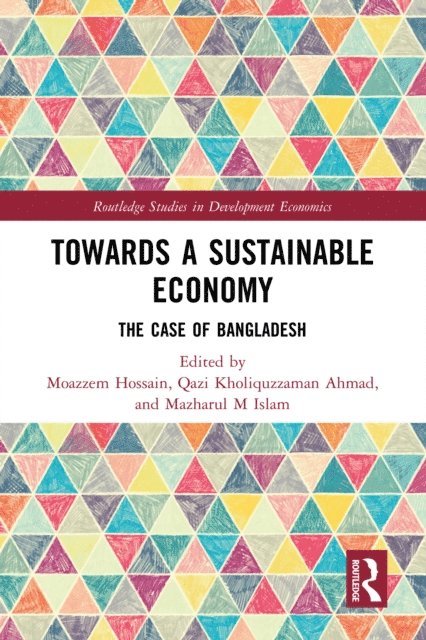
The Sustainable Development Goals (SDGs) were introduced by the United Nations (UN) for all member nations with a total of 17 goals and 169 targets to be achieved between 2016 and 2030. The recent pandemic has presented more challenges to achieving the UN’s SDGs. This book examines Bangladesh’s ascendancy in socio-economic terms and the prospects of Bangladesh overcoming the challenges to become a higher-middle-income nation by 2030.This book traces the transformation of Bangladesh from 1996 through 2020 and examines various factors contributing to its success from rural economy, external support, manufacturing, and structural transformation to energy consumption. This book also looks at the challenges and opportunities for Bangladesh as the Fourth Industrial Revolution unfolds and as climate change, to which Bangladesh is highly vulnerable, escalates.This book will be a useful reference document for those who are interested in gaining more insights into inclusive growth and sustainable development from the case study of Bangladesh.
Häftad, Engelska, 2024
570 kr
Skickas inom 10-15 vardagar
The Sustainable Development Goals (SDGs) were introduced by the United Nations (UN) for all member nations with a total of 17 goals and 169 targets to be achieved between 2016 and 2030. The recent pandemic has presented more challenges to achieving the UN’s SDGs. This book examines Bangladesh’s ascendancy in socio-economic terms and the prospects of Bangladesh overcoming the challenges to become a higher-middle-income nation by 2030.This book traces the transformation of Bangladesh from 1996 through 2020 and examines various factors contributing to its success from rural economy, external support, manufacturing, and structural transformation to energy consumption. This book also looks at the challenges and opportunities for Bangladesh as the Fourth Industrial Revolution unfolds and as climate change, to which Bangladesh is highly vulnerable, escalates.This book will be a useful reference document for those who are interested in gaining more insights into inclusive growth and sustainable development from the case study of Bangladesh.
Häftad, Engelska, 2025
605 kr
Skickas inom 10-15 vardagar
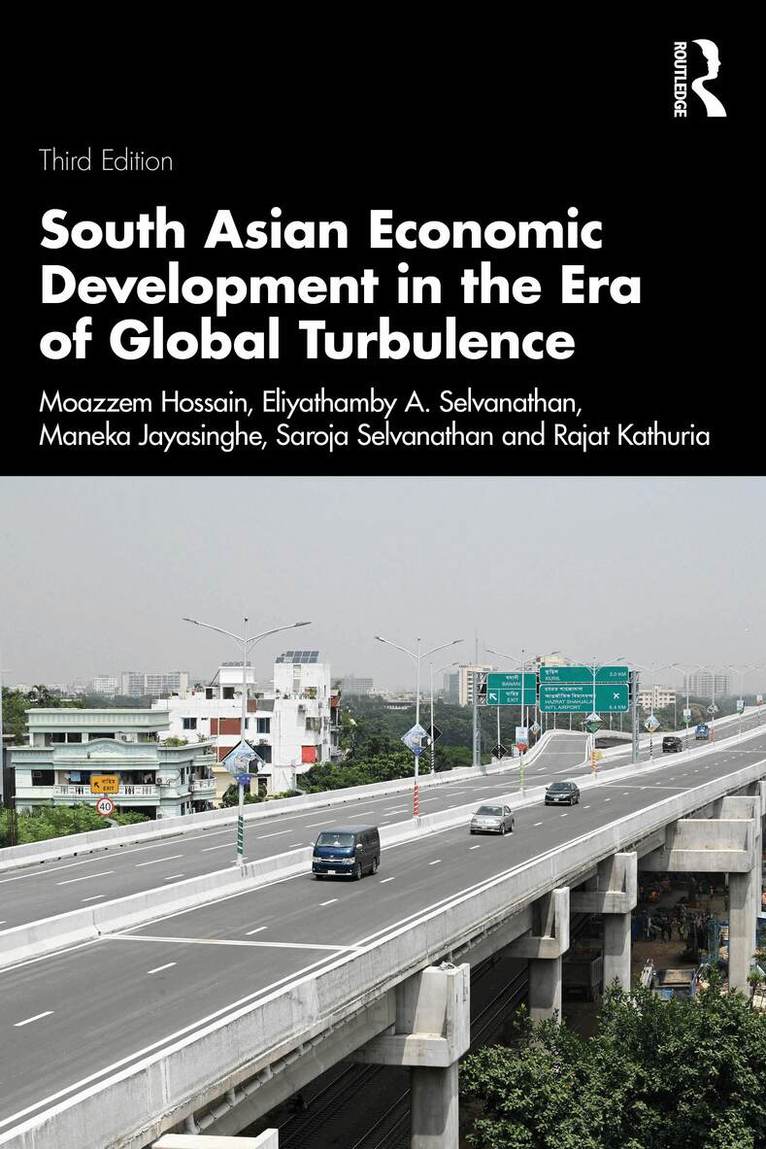
South Asia’s developing nations have been enjoying moderate to high growth over the past decade before the global pandemic of 2020 began. This new edition provides an up-to-date guide to the growing markets in South Asia in the post-COVID-19 period. It offers an analysis of the changes and consequences of high sustainable growth, investigating what has been achieved in the region over the last 2001-2023 from a macroeconomic viewpoint, identifying new challenges to 2030, and the end of the UNSDGs period.Part I of the textbook presents an analysis of how South Asia is rated against Southeast and East Asia in recent decades in economic and social terms.Part II focuses on South Asia’s economic development over 2000 and the bearly 2020s. It demonstrates that globalization enhanced global trade and that trade further increased the region’s prosperity up to 2020.Part III identifies major governance issues that were responsible for South Asia’s social and economic underperformance due to the COVID-19 pandemic. This new edition includes a new chapter about AI and South Asia in the future. The textbook advocates for a shift in focus from policy reform per se to the more challenging task of implementing institutional reform that will invigorate the capability of the political leadership to bring about rapid, sustained and poverty-reducing growth in South Asia in post-Covid era. The book also considers climate change and the environment, and it analyses the impact of these changes and developments on the economic health and social conditions in South Asia. The concluding chapter demonstrates current political unrest in three South Asian nations, Sri Lanka, Pakistan, and Bangladesh, termed the South Asian Spring.Offering an analysis of the changes and consequences of high sustainable growth in South Asia, this textbook will be useful for students and researchers in Development Economics, Business Economics, Development Studies, and Asian Studies.
Inbunden, Engelska, 2025
2 215 kr
Skickas inom 10-15 vardagar
South Asia’s developing nations have been enjoying moderate to high growth over the past decade before the global pandemic of 2020 began. This new edition provides an up-to-date guide to the growing markets in South Asia in the post-COVID-19 period. It offers an analysis of the changes and consequences of high sustainable growth, investigating what has been achieved in the region over the last 2001-2023 from a macroeconomic viewpoint, identifying new challenges to 2030, and the end of the UNSDGs period.Part I of the textbook presents an analysis of how South Asia is rated against Southeast and East Asia in recent decades in economic and social terms.Part II focuses on South Asia’s economic development over 2000 and the bearly 2020s. It demonstrates that globalization enhanced global trade and that trade further increased the region’s prosperity up to 2020.Part III identifies major governance issues that were responsible for South Asia’s social and economic underperformance due to the COVID-19 pandemic. This new edition includes a new chapter about AI and South Asia in the future. The textbook advocates for a shift in focus from policy reform per se to the more challenging task of implementing institutional reform that will invigorate the capability of the political leadership to bring about rapid, sustained and poverty-reducing growth in South Asia in post-Covid era. The book also considers climate change and the environment, and it analyses the impact of these changes and developments on the economic health and social conditions in South Asia. The concluding chapter demonstrates current political unrest in three South Asian nations, Sri Lanka, Pakistan, and Bangladesh, termed the South Asian Spring.Offering an analysis of the changes and consequences of high sustainable growth in South Asia, this textbook will be useful for students and researchers in Development Economics, Business Economics, Development Studies, and Asian Studies.
Inbunden, Engelska, 2017
2 151 kr
Skickas inom 10-15 vardagar
South-South migration contributes significantly to the development of the emerging economies, the migration of receiving countries and, at the same time, generates a major share of remittance income flowing into the sending countries. By capturing field experience and observations from a number of research studies, this book provides a robust catalogue of data, practical experience and analysis focused on the significant issues, risks and challenges that are associated with this evolving phenomenon in international migration. The book also critically explores new theoretical perspectives by highlighting new policy directions for both sending and receiving countries relevant to making South-South migration more efficient, attractive and mutually beneficial.
Inbunden, Engelska, 2013
2 039 kr
Skickas inom 5-8 vardagar
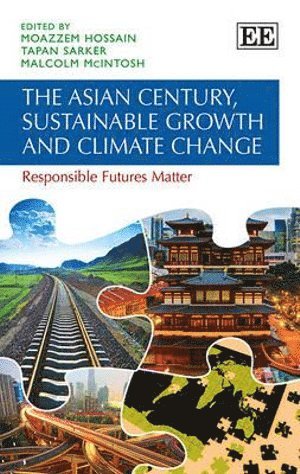
This path-breaking book investigates the challenges of realizing the Asian century. Prosperity in Asia does not only mean economic growth; the issues of public health, sanitation, income equality, the social safety net and efficient use of natural resources are also important. It argues for new policy initiatives in social, environmental and natural resource areas of South, Southeast and East Asia.This insightful volume is presented in three parts: Part I identifies the major socio-economic factors which are likely to take away the opportunities in realizing the Asian century by 2050; Part II presents the responsible policy issues which would be needed to overcome the hurdles such as public finance, natural resources, public health and sanitation, intra-Asia migration and decentralized governance; and Part III articulates major challenges in realizing Asian prosperity including sustainable international business and sustainable growth. The topics examined range from demographic conditions and tax reform to responsible use of natural resources in the years to come.The Asian Century, Sustainable Growth and Climate Change will appeal to academics in the fields of Asian studies and environment ecology. Both practitioners and policymakers will find this detailed analysis of the major challenges for South Asian growth an invaluable resource.Contributors: R. Chakrabarty, S.L. Chakravarty, L.-H. Chan, M. Hossain, M.I. Hossain, S. Hossain, P. Howard, R.C. Keith, M.A. Khan, M. McIntosh, V.P. Murthy, T. Sarker, V. Sharma, P. Short, C. Tisdell, Y. Tjoe
Inbunden, Engelska, 2005
2 099 kr
Skickas inom 5-8 vardagar
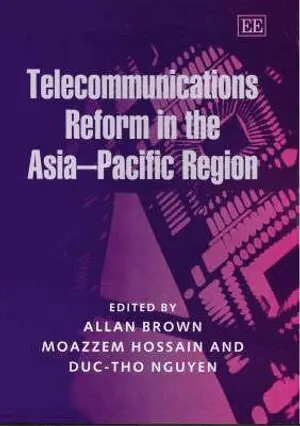
This book attempts to draw lessons from the experiences of developed as well as developing countries in carrying out telecommunications reform. Contributors come from academia, as well as from stakeholders in telecommunications policy in a dozen countries, mostly in the Asia-Pacific region.Globally, the telecommunications industry is undergoing major changes: technological advances in the form of a vast number of new digitised services, ownership shifts as state-owned carriers in many countries become fully or partly privatized, and a general transition from monopolistic to more competitive market environments. The economic and regulatory experiences derived from these changes are explored and analyzed using the USA, the UK, Australia and Singapore to represent developed and newly industrialized countries, and China, India, Indonesia, Malaysia, the Philippines, Sri Lanka, Thailand and Vietnam as examples of developing countries. The conclusions outlined in this timely volume hold important lessons for these as well as for other countries. This book will be of great interest to telecommunications policymakers, public and private stakeholders in the industry, along with those - especially academics and researchers - with an interest in the progress of telecommunications in developing countries.
Inbunden, Engelska, 2006
1 895 kr
Skickas inom 5-8 vardagar
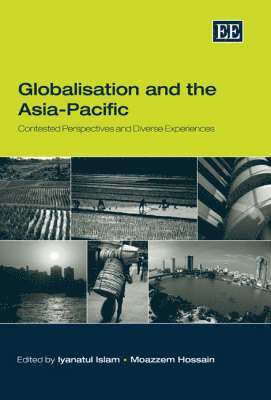
This book illustrates contested perspectives on globalisation represented by the diverse experiences of selected economies within the Asia-Pacific region, namely Australia, China, India and Sri Lanka as case studies. Academics and practitioners from national governments and international organisations have contributed their unique experiences and skill-sets to a volume written in a non-technical but rigorous fashion, enabling the reader to follow complex and technical debates pertaining to globalisation. The book begins by studying the nature of disagreements among economists on the benefits and costs of globalisation, highlighting ways in which one can consolidate the gains from globalisation while mitigating its costs, offering a critique of macroeconomic conservatism and discussing the promises, pitfalls and perils of foreign direct investment. The contributors then go on to anchor global debates in regional and country specific circumstances. The issues discussed range from broad political economy perspectives to industry case studies but all are united by concerns about socio-economic disparities in an age of globalisation.Scholars and researchers at many levels and in many fields of study including Asian studies and international economics will find this readable volume of great interest and value, as will policymakers.
Inbunden, Engelska, 2011
1 923 kr
Skickas inom 5-8 vardagar
Climate Change and Growth in Asia is a comprehensive analysis of the major issues of climate change and global warming and their possible impacts on the growth of major Asian economies. The book addresses the climate change crisis in Asia within the context of three major challenges to growth: population, poverty and greenhouse gas emissions.The contributors of the book argue that, like globalisation, the effects of climate change are all-encompassing and recognise no national boundaries. Therefore, the issues emanating from this looming challenge must also be examined beyond the national boundaries and debated at global, regional and national levels simultaneously. The authors investigate the opportunities created by globalisation via trade, knowledge and the information economy, but climate change – induced by increased greenhouse gas emissions – risks restricting the opportunities created thereof. For those who follow Asian economies – especially graduate students of Asian studies, international business, the environment and economic development of Asia – this book is an invaluable resource. Furthermore, with its multidimensional focus and cross-cultural practical examples, it is an essential read for policymakers, including the Asian governments and international agencies such as the United Nations.
Inbunden, Engelska, 2017
1 189 kr
Skickas inom 10-15 vardagar
The focus of this edited volume is to identify challenges facing organizations in achieving zero greenhouse gas emissions by 2050 and a new energy economy, and to explore solutions from various sectors of the economy to enable the transition to a zero emissions future. Research presented here is divided into three parts, with an introductory statement on growth and sustainability. Part one discusses strategies towards a sustainable economy under a zero emissions goal. Part two contains industry specific case studies focusing on construction and related activities. Part three is devoted to country specific case studies from the Asia-Pacific region.Each of the chapters address one or more of the following issues: restoration, mitigation, adaptation and/or promoting resilience in the face of climate change as part of achieving a sustainable economy.The volume is multi-disciplinary in nature, drawing on various disciplines in social science, business, environment and policy, and will be of interest to UN development agencies, academic institutions, government policy makers, NGOs and business leaders.
Häftad, Engelska, 2018
1 189 kr
Skickas inom 10-15 vardagar
The focus of this edited volume is to identify challenges facing organizations in achieving zero greenhouse gas emissions by 2050 and a new energy economy, and to explore solutions from various sectors of the economy to enable the transition to a zero emissions future.
Häftad, Engelska, 1999
713 kr
Tillfälligt slut
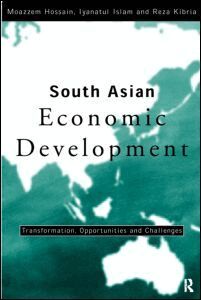
The notion that South Asian economies have tended to be less successful than those of East Asia is critically examined and the reasons why discussed. Countries covered include Pakistan, India, Bangladesh and Sri Lanka. Key issues examined:* agriculture and rural development* labour market and human resource development* trade and industry policies* foreign investment and technological capabilities* foreign aid and economic development* financial development and economic performance* poverty, inequality and economic development* regional economic co-operation* 'green' development.
Inbunden, Engelska, 2009
1 503 kr
Tillfälligt slut
South Asia's developing nations have been enjoying moderate to high growth over the past decade before the global recession began. This new edition provides an up-to-date guide to the growing markets in South Asia. It offers an analysis of the changes and consequences of high sustainable growth, investigating what has been achieved in the region during the last ten years from a macroeconomic viewpoint, identifying new challenges and clearly defining what has driven the boom. The first part of the textbook presents an analysis of how South Asia is rated against Southeast and East Asia in recent decades in economic and social terms. The second part of the text focuses on South Asia's economic development over 1990s and mid-2000s, and the third and final part identifies those major governance issues, which were responsible for South Asia's underperformance both socially and economically. It is widely recognised that globalisation enhanced global trade, and that trade further increased the region’s prosperity. Embracing the view that economists can no longer regard themselves as technocratic guardians of neutral policy advice, the book advocates for a shift in focus from policy reform per se to the more challenging task of implementing institutional reform that will invigorate the capability of the political leadership to bring about rapid, sustained and poverty-reducing growth in South Asia. The central task would be to re-direct the focus of governments in South Asia in order to ensure that the core functions of the state stable, non-distortionary policy climate, a secure foundation of law, investment in basic education, health and infrastructure, protection of the vulnerable and adapting with the climate change are efficiently provided. At the same time, the reform agenda must be sensitive to the goal of ensuring that durable democratic institutions, traditions and values are preserved. This is a fundamental challenge, but one that must be met in order to secure the emergence of a prosperous South Asia in the early part of the twenty-first century. This textbook will be useful for students and researchers in Development Economics, Business Economics, Development Studies and Asian Studies.
Häftad, Engelska, 2009
514 kr
Tillfälligt slut
South Asia's developing nations have been enjoying moderate to high growth over the past decade before the global recession began. This new edition provides an up-to-date guide to the growing markets in South Asia. It offers an analysis of the changes and consequences of high sustainable growth, investigating what has been achieved in the region during the last ten years from a macroeconomic viewpoint, identifying new challenges and clearly defining what has driven the boom. The first part of the textbook presents an analysis of how South Asia is rated against Southeast and East Asia in recent decades in economic and social terms. The second part of the text focuses on South Asia's economic development over 1990s and mid-2000s, and the third and final part identifies those major governance issues, which were responsible for South Asia's underperformance both socially and economically. It is widely recognised that globalisation enhanced global trade, and that trade further increased the region’s prosperity. Embracing the view that economists can no longer regard themselves as technocratic guardians of neutral policy advice, the book advocates for a shift in focus from policy reform per se to the more challenging task of implementing institutional reform that will invigorate the capability of the political leadership to bring about rapid, sustained and poverty-reducing growth in South Asia. The central task would be to re-direct the focus of governments in South Asia in order to ensure that the core functions of the state stable, non-distortionary policy climate, a secure foundation of law, investment in basic education, health and infrastructure, protection of the vulnerable and adapting with the climate change are efficiently provided. At the same time, the reform agenda must be sensitive to the goal of ensuring that durable democratic institutions, traditions and values are preserved. This is a fundamental challenge, but one that must be met in order to secure the emergence of a prosperous South Asia in the early part of the twenty-first century. This textbook will be useful for students and researchers in Development Economics, Business Economics, Development Studies and Asian Studies.