Rajat Kathuria - Böcker
Visar alla böcker från författaren Rajat Kathuria. Handla med fri frakt och snabb leverans.
10 produkter
10 produkter
1 503 kr
Tillfälligt slut
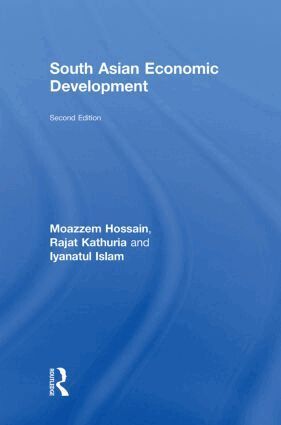
South Asia's developing nations have been enjoying moderate to high growth over the past decade before the global recession began. This new edition provides an up-to-date guide to the growing markets in South Asia. It offers an analysis of the changes and consequences of high sustainable growth, investigating what has been achieved in the region during the last ten years from a macroeconomic viewpoint, identifying new challenges and clearly defining what has driven the boom. The first part of the textbook presents an analysis of how South Asia is rated against Southeast and East Asia in recent decades in economic and social terms. The second part of the text focuses on South Asia's economic development over 1990s and mid-2000s, and the third and final part identifies those major governance issues, which were responsible for South Asia's underperformance both socially and economically. It is widely recognised that globalisation enhanced global trade, and that trade further increased the region’s prosperity. Embracing the view that economists can no longer regard themselves as technocratic guardians of neutral policy advice, the book advocates for a shift in focus from policy reform per se to the more challenging task of implementing institutional reform that will invigorate the capability of the political leadership to bring about rapid, sustained and poverty-reducing growth in South Asia. The central task would be to re-direct the focus of governments in South Asia in order to ensure that the core functions of the state stable, non-distortionary policy climate, a secure foundation of law, investment in basic education, health and infrastructure, protection of the vulnerable and adapting with the climate change are efficiently provided. At the same time, the reform agenda must be sensitive to the goal of ensuring that durable democratic institutions, traditions and values are preserved. This is a fundamental challenge, but one that must be met in order to secure the emergence of a prosperous South Asia in the early part of the twenty-first century. This textbook will be useful for students and researchers in Development Economics, Business Economics, Development Studies and Asian Studies.
514 kr
Tillfälligt slut
South Asia's developing nations have been enjoying moderate to high growth over the past decade before the global recession began. This new edition provides an up-to-date guide to the growing markets in South Asia. It offers an analysis of the changes and consequences of high sustainable growth, investigating what has been achieved in the region during the last ten years from a macroeconomic viewpoint, identifying new challenges and clearly defining what has driven the boom. The first part of the textbook presents an analysis of how South Asia is rated against Southeast and East Asia in recent decades in economic and social terms. The second part of the text focuses on South Asia's economic development over 1990s and mid-2000s, and the third and final part identifies those major governance issues, which were responsible for South Asia's underperformance both socially and economically. It is widely recognised that globalisation enhanced global trade, and that trade further increased the region’s prosperity. Embracing the view that economists can no longer regard themselves as technocratic guardians of neutral policy advice, the book advocates for a shift in focus from policy reform per se to the more challenging task of implementing institutional reform that will invigorate the capability of the political leadership to bring about rapid, sustained and poverty-reducing growth in South Asia. The central task would be to re-direct the focus of governments in South Asia in order to ensure that the core functions of the state stable, non-distortionary policy climate, a secure foundation of law, investment in basic education, health and infrastructure, protection of the vulnerable and adapting with the climate change are efficiently provided. At the same time, the reform agenda must be sensitive to the goal of ensuring that durable democratic institutions, traditions and values are preserved. This is a fundamental challenge, but one that must be met in order to secure the emergence of a prosperous South Asia in the early part of the twenty-first century. This textbook will be useful for students and researchers in Development Economics, Business Economics, Development Studies and Asian Studies.
592 kr
Skickas inom 10-15 vardagar
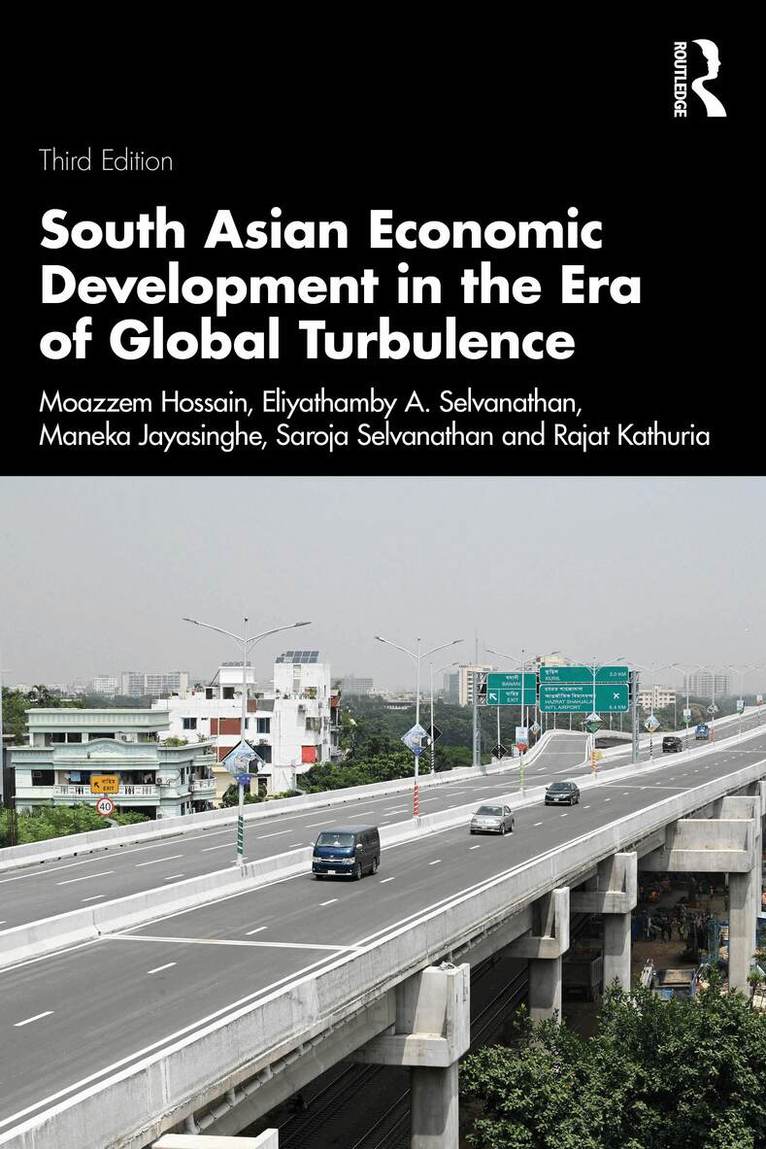
South Asia’s developing nations have been enjoying moderate to high growth over the past decade before the global pandemic of 2020 began. This new edition provides an up-to-date guide to the growing markets in South Asia in the post-COVID-19 period. It offers an analysis of the changes and consequences of high sustainable growth, investigating what has been achieved in the region over the last 2001-2023 from a macroeconomic viewpoint, identifying new challenges to 2030, and the end of the UNSDGs period.Part I of the textbook presents an analysis of how South Asia is rated against Southeast and East Asia in recent decades in economic and social terms.Part II focuses on South Asia’s economic development over 2000 and the bearly 2020s. It demonstrates that globalization enhanced global trade and that trade further increased the region’s prosperity up to 2020.Part III identifies major governance issues that were responsible for South Asia’s social and economic underperformance due to the COVID-19 pandemic. This new edition includes a new chapter about AI and South Asia in the future. The textbook advocates for a shift in focus from policy reform per se to the more challenging task of implementing institutional reform that will invigorate the capability of the political leadership to bring about rapid, sustained and poverty-reducing growth in South Asia in post-Covid era. The book also considers climate change and the environment, and it analyses the impact of these changes and developments on the economic health and social conditions in South Asia. The concluding chapter demonstrates current political unrest in three South Asian nations, Sri Lanka, Pakistan, and Bangladesh, termed the South Asian Spring.Offering an analysis of the changes and consequences of high sustainable growth in South Asia, this textbook will be useful for students and researchers in Development Economics, Business Economics, Development Studies, and Asian Studies.
2 166 kr
Skickas inom 10-15 vardagar
South Asia’s developing nations have been enjoying moderate to high growth over the past decade before the global pandemic of 2020 began. This new edition provides an up-to-date guide to the growing markets in South Asia in the post-COVID-19 period. It offers an analysis of the changes and consequences of high sustainable growth, investigating what has been achieved in the region over the last 2001-2023 from a macroeconomic viewpoint, identifying new challenges to 2030, and the end of the UNSDGs period.Part I of the textbook presents an analysis of how South Asia is rated against Southeast and East Asia in recent decades in economic and social terms.Part II focuses on South Asia’s economic development over 2000 and the bearly 2020s. It demonstrates that globalization enhanced global trade and that trade further increased the region’s prosperity up to 2020.Part III identifies major governance issues that were responsible for South Asia’s social and economic underperformance due to the COVID-19 pandemic. This new edition includes a new chapter about AI and South Asia in the future. The textbook advocates for a shift in focus from policy reform per se to the more challenging task of implementing institutional reform that will invigorate the capability of the political leadership to bring about rapid, sustained and poverty-reducing growth in South Asia in post-Covid era. The book also considers climate change and the environment, and it analyses the impact of these changes and developments on the economic health and social conditions in South Asia. The concluding chapter demonstrates current political unrest in three South Asian nations, Sri Lanka, Pakistan, and Bangladesh, termed the South Asian Spring.Offering an analysis of the changes and consequences of high sustainable growth in South Asia, this textbook will be useful for students and researchers in Development Economics, Business Economics, Development Studies, and Asian Studies.
1 096 kr
Skickas inom 10-15 vardagar
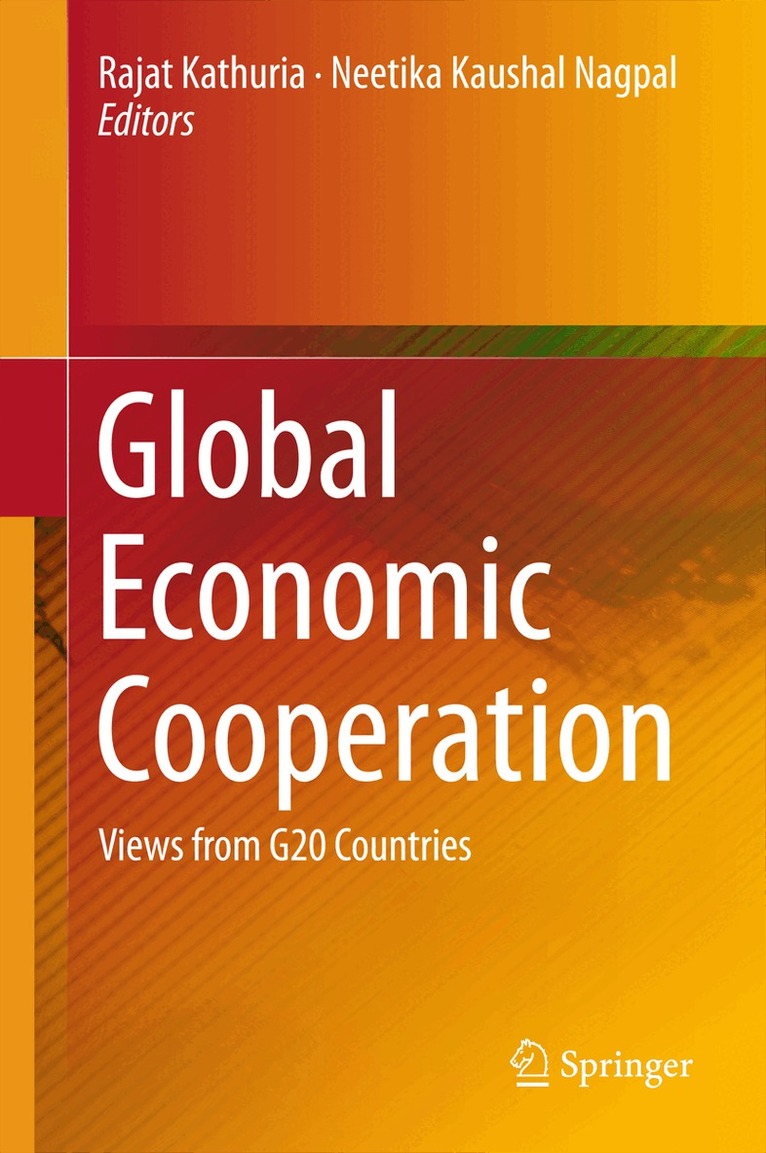
This book discusses issues such as global financial crisis and global governance, food security, energy sustainability, the global financial system, trade and protectionism, and growth and employment. Since the outbreak of the financial as well as national debt crises in the Euro zone, the focus of the G20 has shifted back to addressing short-term issues. These issues range from the dynamic effects of global imbalances and the appropriate degree of financial sector regulation to questions of austerity versus growth and the lack of a comprehensive framework for managing the international monetary system. A further issue is the relevance of the G20 agenda for emerging market economies. Global economic recovery still remains fragile and downside risks to global growth remain. Additionally, much of the agenda of the Seoul Development Consensus for shared growth launched in 2010 has yet to be fulfilled. A key discussion point in the book, therefore, is how to make a tangible and significant difference in peoples’ lives by implementing an agenda of inclusive growth.
1 064 kr
Skickas inom 10-15 vardagar
This book discusses issues such as global financial crisis and global governance, food security, energy sustainability, the global financial system, trade and protectionism, and growth and employment. Since the outbreak of the financial as well as national debt crises in the Euro zone, the focus of the G20 has shifted back to addressing short-term issues. These issues range from the dynamic effects of global imbalances and the appropriate degree of financial sector regulation to questions of austerity versus growth and the lack of a comprehensive framework for managing the international monetary system. A further issue is the relevance of the G20 agenda for emerging market economies. Global economic recovery still remains fragile and downside risks to global growth remain. Additionally, much of the agenda of the Seoul Development Consensus for shared growth launched in 2010 has yet to be fulfilled. A key discussion point in the book, therefore, is how to make a tangible and significant difference in peoples’ lives by implementing an agenda of inclusive growth.
1 170 kr
Skickas inom 10-15 vardagar
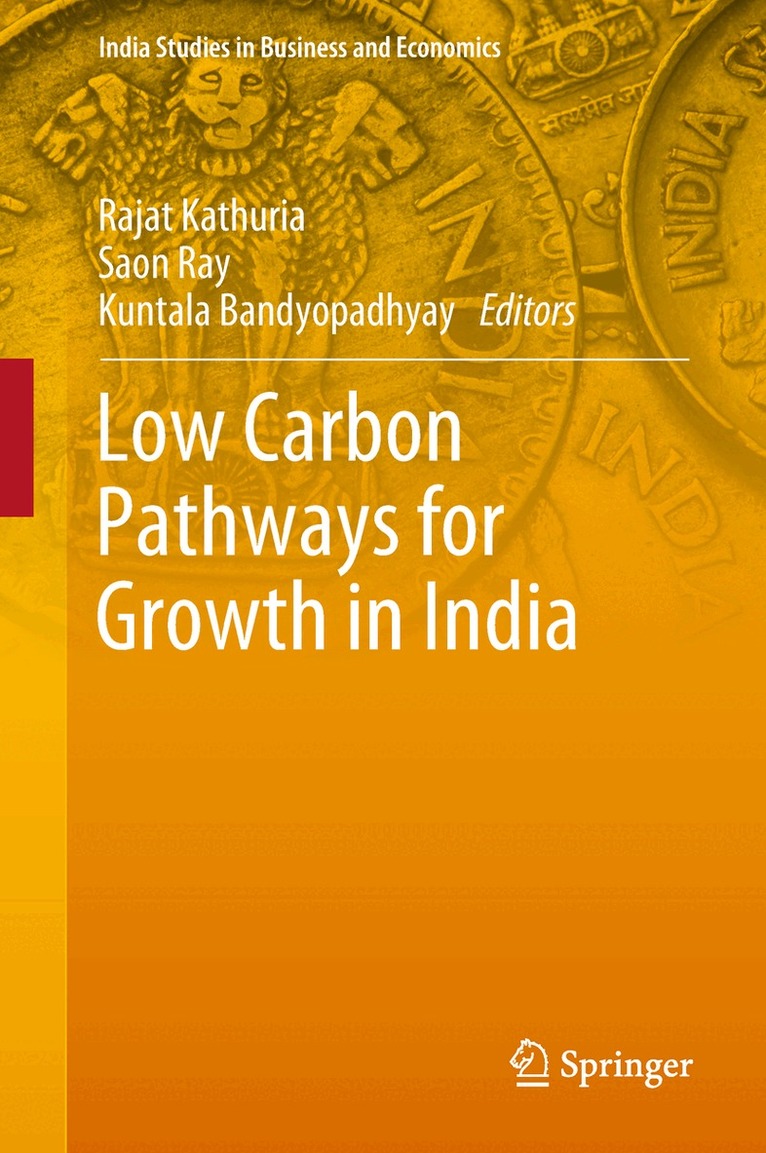
This book explores ways in which India can negotiate the low carbon path up until 2030, when it is expected to be the largest economy after the US and China.
1 170 kr
Skickas inom 10-15 vardagar
This book explores ways in which India can negotiate the low carbon path up until 2030, when it is expected to be the largest economy after the US and China.
1 531 kr
Skickas inom 10-15 vardagar
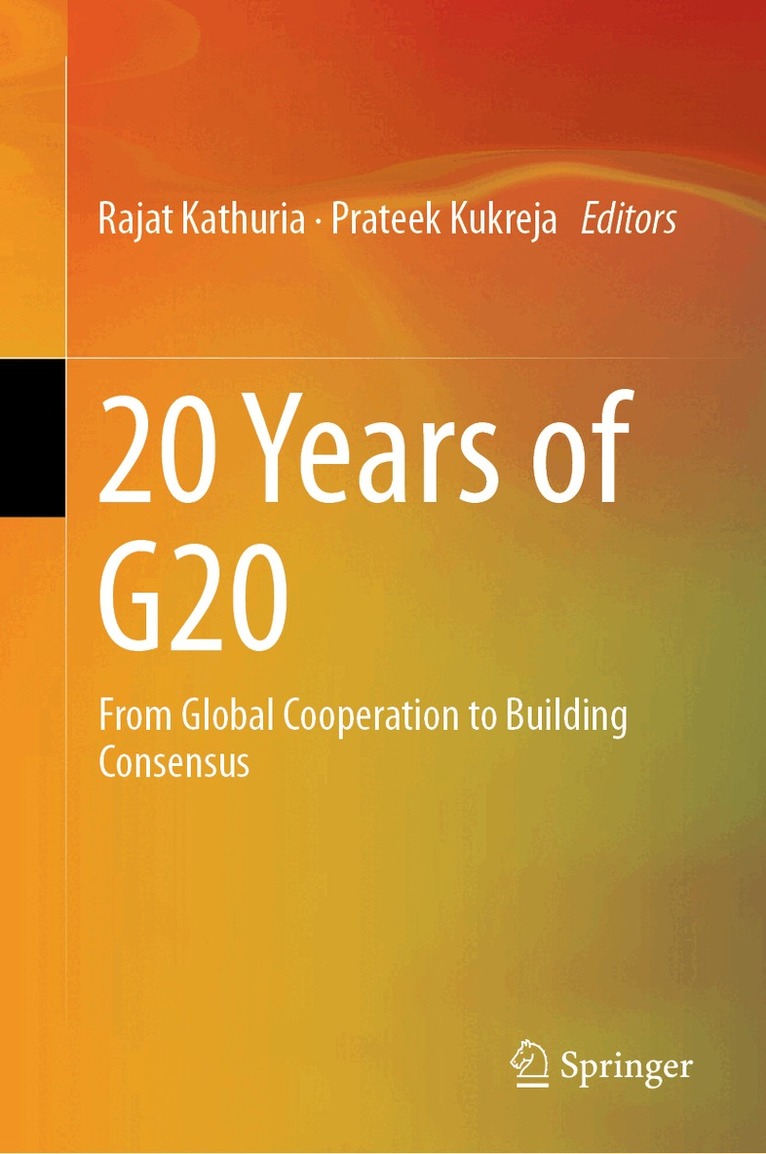
The book discusses contemporary issues such as global financial architecture and regulatory practices, trade, investment and the multilateral process, the future of work, the role of technology for adaptation and mitigation of climate change, and financing infrastructure for sustainable development.With increasing global connectivity, events in one part of the world immediately affect or spread to the other parts. In this context, G20 has proved to be an effective forum, particularly after the Asian financial crises. Furthermore, over recent decades, G20 has been instrumental in managing financial crises and international conflicts by deploying global cooperation as a functional tool. As a body responding to crises, the G20 has played a central role in providing the political momentum for the strong international cooperation that ensured greater policy coherence and helped ease situations that could otherwise have been decidedly worse. The G20’s agendas have encompassed short-term but critical issues of economic recovery, the sovereign crisis of Europe, high unemployment and financial sector regulation. But since moderate stabilization in the global economic environment, the focus of the group has also embraced long-term areas of governance and development. For emerging economies, such as India, the G20 has been an important platform framework to promote an inclusive global economic architecture that seeks to achieve equitable outcomes.This book reviews the past 20 years of the G20, since it was conceptualized as a replacement for the G-7. While issues such as global financial order have been a constant area of discussion, one of the failures has been not recognizing and acknowledging the importance of issues like trade, climate change and future of work. Featuring academic papers by experts in the area, this book provides a platform for the necessary discourse on these issues.
1 531 kr
Skickas inom 10-15 vardagar
The book discusses contemporary issues such as global financial architecture and regulatory practices, trade, investment and the multilateral process, the future of work, the role of technology for adaptation and mitigation of climate change, and financing infrastructure for sustainable development.With increasing global connectivity, events in one part of the world immediately affect or spread to the other parts. In this context, G20 has proved to be an effective forum, particularly after the Asian financial crises. Furthermore, over recent decades, G20 has been instrumental in managing financial crises and international conflicts by deploying global cooperation as a functional tool. As a body responding to crises, the G20 has played a central role in providing the political momentum for the strong international cooperation that ensured greater policy coherence and helped ease situations that could otherwise have been decidedly worse. The G20’s agendas have encompassed short-term but critical issues of economic recovery, the sovereign crisis of Europe, high unemployment and financial sector regulation. But since moderate stabilization in the global economic environment, the focus of the group has also embraced long-term areas of governance and development. For emerging economies, such as India, the G20 has been an important platform framework to promote an inclusive global economic architecture that seeks to achieve equitable outcomes.This book reviews the past 20 years of the G20, since it was conceptualized as a replacement for the G-7. While issues such as global financial order have been a constant area of discussion, one of the failures has been not recognizing and acknowledging the importance of issues like trade, climate change and future of work. Featuring academic papers by experts in the area, this book provides a platform for the necessary discourse on these issues.