
Tarek I. Zohdi – författare
Visar alla böcker från författaren Tarek I. Zohdi. Handla med fri frakt och snabb leverans.
10 produkter
10 produkter
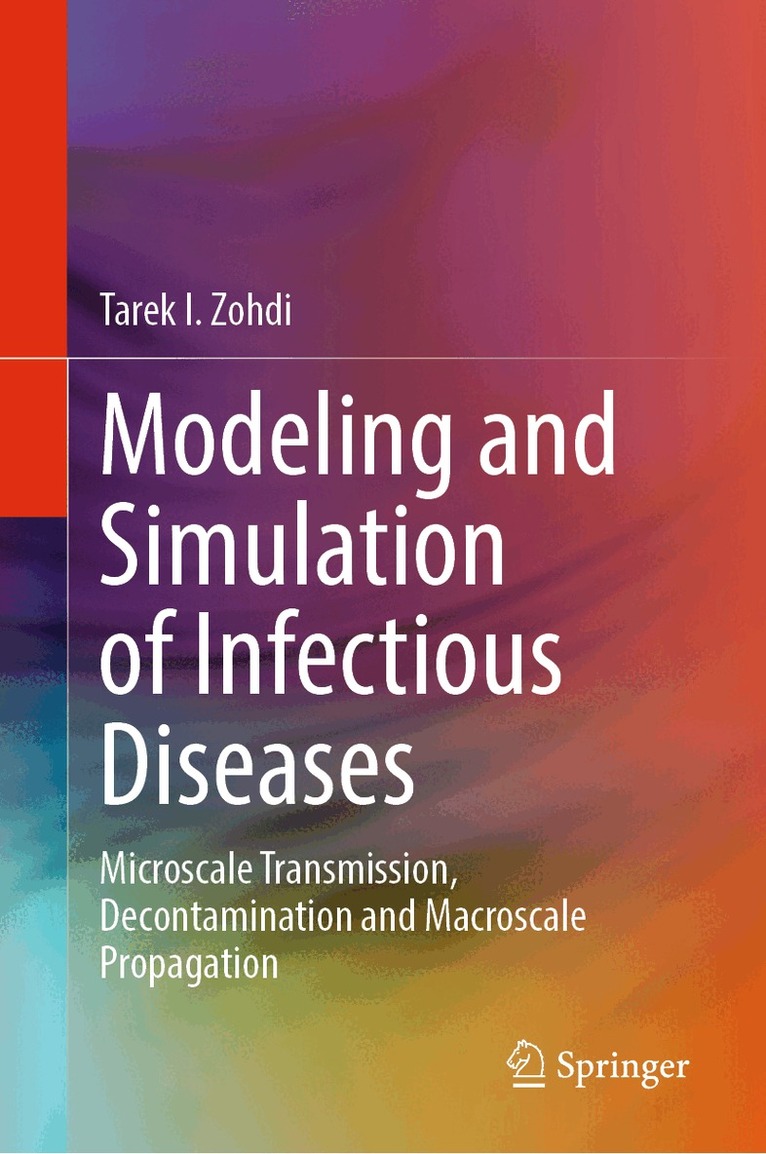
Modeling and Simulation of Infectious Diseases
Microscale Transmission, Decontamination and Macroscale Propagation
Inbunden, Engelska, 2023
1 530 kr
Skickas inom 10-15 vardagar
The COVID-19 pandemic that started in 2019-2020 has led to a gigantic increase in modeling and simulation of infectious diseases. There are numerous topics associated with this epoch-changing event, such as (a) disease propagation, (b) transmission, (c) decontamination, and (d) vaccines. This is an evolving field. The targeted objective of this book is to expose researchers to key topics in this area, in a very concise manner. The topics selected for discussion have evolved with the progression of the pandemic. Beyond the introductory chapter on basic mathematics, optimization, and machine learning, the book covers four themes in modeling and simulation infectious diseases, specifically: Part 1: Macroscale disease propagation,Part 2: Microscale disease transmission and ventilation system design,Part 3: Ultraviolet viral decontamination, andPart 4: Vaccine design and immune response. It is important to emphasize that the rapidspeed at which the simulations operate makes the presented computational tools easily deployable as digital twins, i.e., digital replicas of complex systems that can be inexpensively and safely optimized in a virtual setting and then used in the physical world afterward, thus reducing the costs of experiments and also accelerating development of new technologies.

Modeling and Simulation of Infectious Diseases : Microscale Transmission, Decontamination and Macroscale Propagation
Engelska, 2023
650 kr
Skickas inom 5-8 vardagar
Modeling and Simulation of Infectious Diseases
Microscale Transmission, Decontamination and Macroscale Propagation
Häftad, Engelska, 2024
1 530 kr
Skickas inom 10-15 vardagar
The COVID-19 pandemic that started in 2019-2020 has led to a gigantic increase in modeling and simulation of infectious diseases. There are numerous topics associated with this epoch-changing event, such as (a) disease propagation, (b) transmission, (c) decontamination, and (d) vaccines. This is an evolving field. The targeted objective of this book is to expose researchers to key topics in this area, in a very concise manner. The topics selected for discussion have evolved with the progression of the pandemic. Beyond the introductory chapter on basic mathematics, optimization, and machine learning, the book covers four themes in modeling and simulation infectious diseases, specifically: Part 1: Macroscale disease propagation,Part 2: Microscale disease transmission and ventilation system design,Part 3: Ultraviolet viral decontamination, andPart 4: Vaccine design and immune response. It is important to emphasize that the rapidspeed at which the simulations operate makes the presented computational tools easily deployable as digital twins, i.e., digital replicas of complex systems that can be inexpensively and safely optimized in a virtual setting and then used in the physical world afterward, thus reducing the costs of experiments and also accelerating development of new technologies.
799 kr
Skickas inom 10-15 vardagar
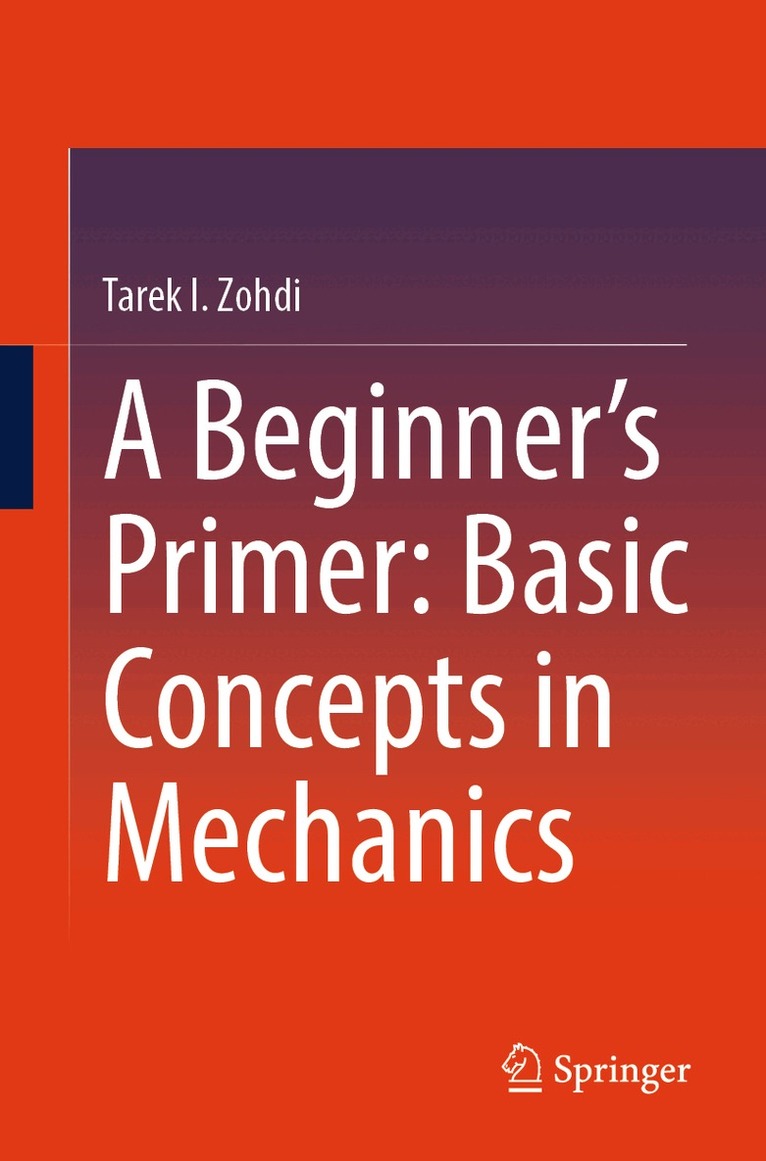
As we enter an exciting new era in industrial design, simulation, and manufacturing, a clear understanding of mechanics of solids is needed now more than ever. This primer is a condensed synopsis of basic undergraduate mechanics and is designed to supplement classical textbooks in this area. The focus is on the essentials of mechanics, specifically:• The concept of stress.• Stress-strain relationships.• Failure theory.• Axial loading of a rod.• Transverse (bending) loading of a beam.• Industrial application: modeling of 3D printing.• Transverse shear stresses.• Torsional loading of a rod.• Pressure vessels.• Buckling of columns.• The basics of finite element methods.• A unifying concept: continuum mechanics.
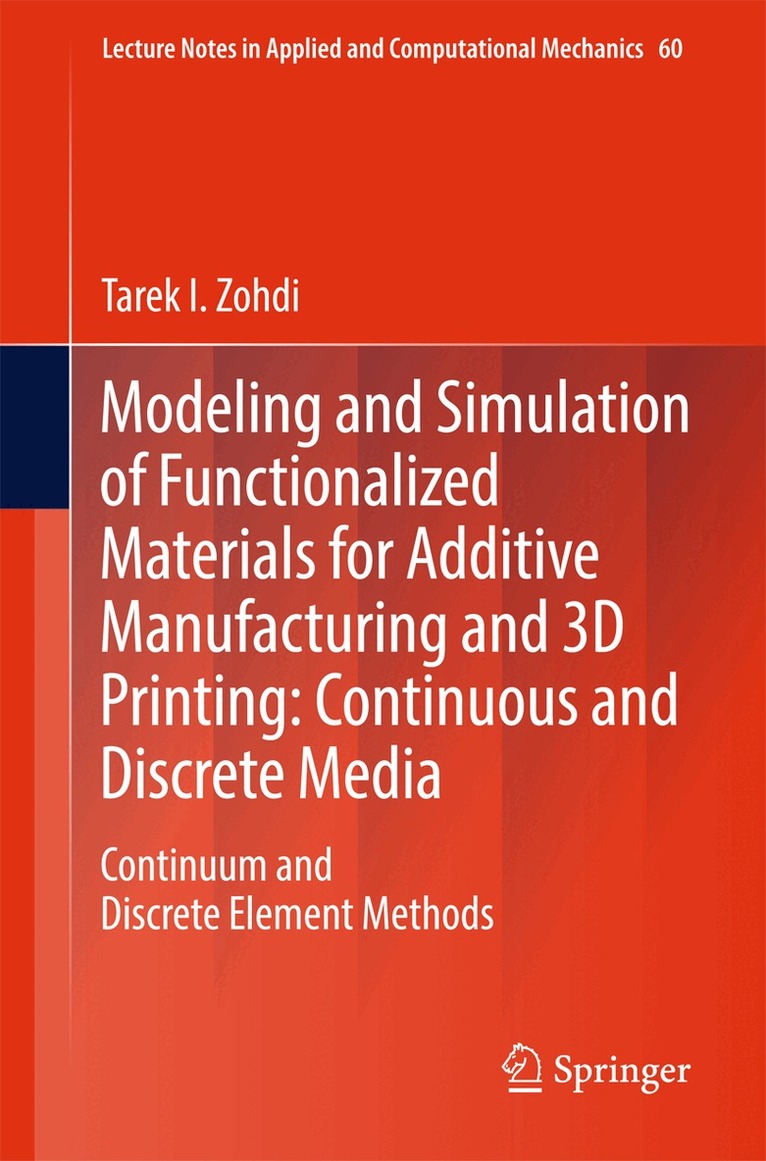
Del 60 - Lecture Notes in Applied and Computational Mechanics
Modeling and Simulation of Functionalized Materials for Additive Manufacturing and 3D Printing: Continuous and Discrete Media
Continuum and Discrete Element Methods
Häftad, Engelska, 2017
1 803 kr
Skickas inom 10-15 vardagar
Within the last decade, several industrialized countries have stressed the importance of advanced manufacturing to their economies. Many of these plans have highlighted the development of additive manufacturing techniques, such as 3D printing which, as of 2018, are still in their infancy. The objective is to develop superior products, produced at lower overall operational costs. For these goals to be realized, a deep understanding of the essential ingredients comprising the materials involved in additive manufacturing is needed. The combination of rigorous material modeling theories, coupled with the dramatic increase of computational power can potentially play a significant role in the analysis, control, and design of many emerging additive manufacturing processes. Specialized materials and the precise design of their properties are key factors in the processes. Specifically, particle-functionalized materials play a central role in this field, in three main regimes:(1) toenhance overall filament-based material properties, by embedding particles within a binder, which is then passed through a heating element and the deposited onto a surface,(2) to “functionalize” inks by adding particles to freely flowing solvents forming a mixture, which is then deposited onto a surface and(3) to directly deposit particles, as dry powders, onto surfaces and then to heat them with a laser, e-beam or other external source, in order to fuse them into place.The goal of these processes is primarily to build surface structures which are extremely difficult to construct using classical manufacturing methods. The objective of this monograph is introduce the readers to basic techniques which can allow them to rapidly develop and analyze particulate-based materials needed in such additive manufacturing processes. This monograph is broken into two main parts: “Continuum Method” (CM) approaches and “Discrete Element Method” (DEM) approaches. The materials associated with methods (1) and (2) are closely related types of continua (particles embedded in a continuous binder) and are treated using continuum approaches. The materials in method (3), which are of a discrete particulate character, are analyzed using discrete element methods.
958 kr
Skickas inom 10-15 vardagar
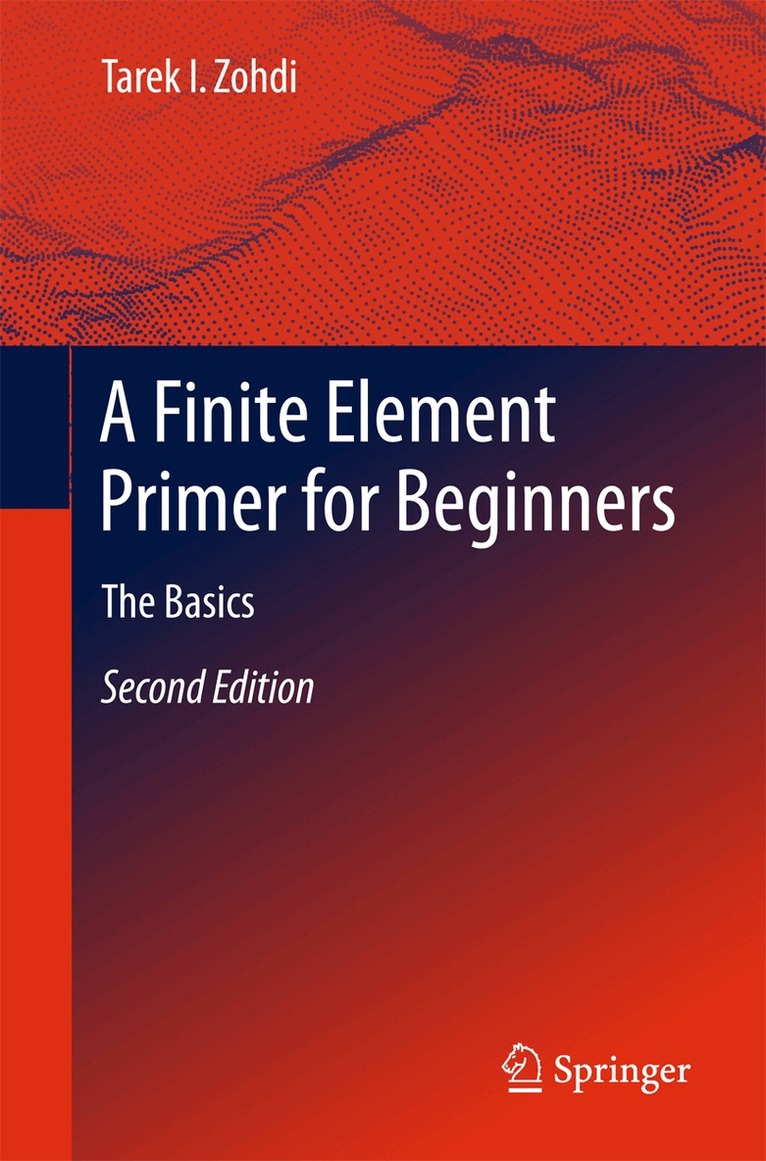
The purpose of this primer is to provide the basics of the Finite Element Method, primarily illustrated through a classical model problem, linearized elasticity. The topics covered are: • Weighted residual methods and Galerkin approximations,• A model problem for one-dimensional linear elastostatics,• Weak formulations in one dimension,• Minimum principles in one dimension,• Error estimation in one dimension,• Construction of Finite Element basis functions in one dimension,• Gaussian Quadrature,• Iterative solvers and element by element data structures,• A model problem for three-dimensional linear elastostatics,• Weak formulations in three dimensions,• Basic rules for element construction in three-dimensions,• Assembly of the system and solution schemes,• An introduction to time-dependent problems and• An introduction to rapid computation based on domain decompositionand basic parallel processing. The approach is to introduce the basic concepts first in one-dimension, then move on to three-dimensions. A relatively informal style is adopted. This primer is intended to be a “starting point”, which can be later augmented by the large array of rigorous, detailed, books in the area of Finite Element analysis. In addition to overall improvements to the first edition, this second edition also adds several carefully selected in-class exam problems from exams given over the last 15 years at UC Berkeley, as well as a large number of take-home computer projects. These problems and projects are designed to be aligned to the theory provided in the main text of this primer.
Del 20 - Lecture Notes in Applied and Computational Mechanics
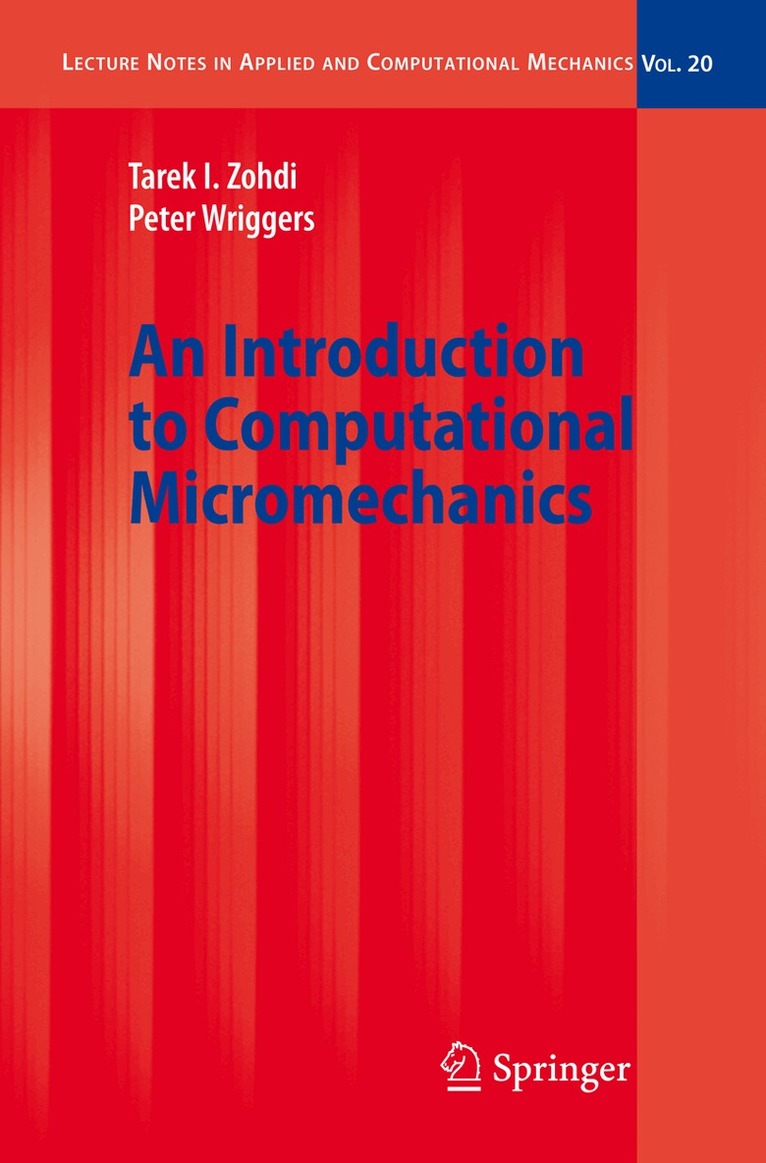
Introduction to Computational Micromechanics
Häftad, Engelska, 2008
1 380 kr
Skickas inom 10-15 vardagar
In this, its second corrected printing, Zohdi and Wriggers' illuminating text presents a comprehensive introduction to the subject. The authors include in their scope basic homogenization theory, microstructural optimization and multifield analysis of heterogeneous materials. This volume is ideal for researchers and engineers, and can be used in a first-year course for graduate students with an interest in the computational micromechanical analysis of new materials.
Del 64 - Lecture Notes in Applied and Computational Mechanics
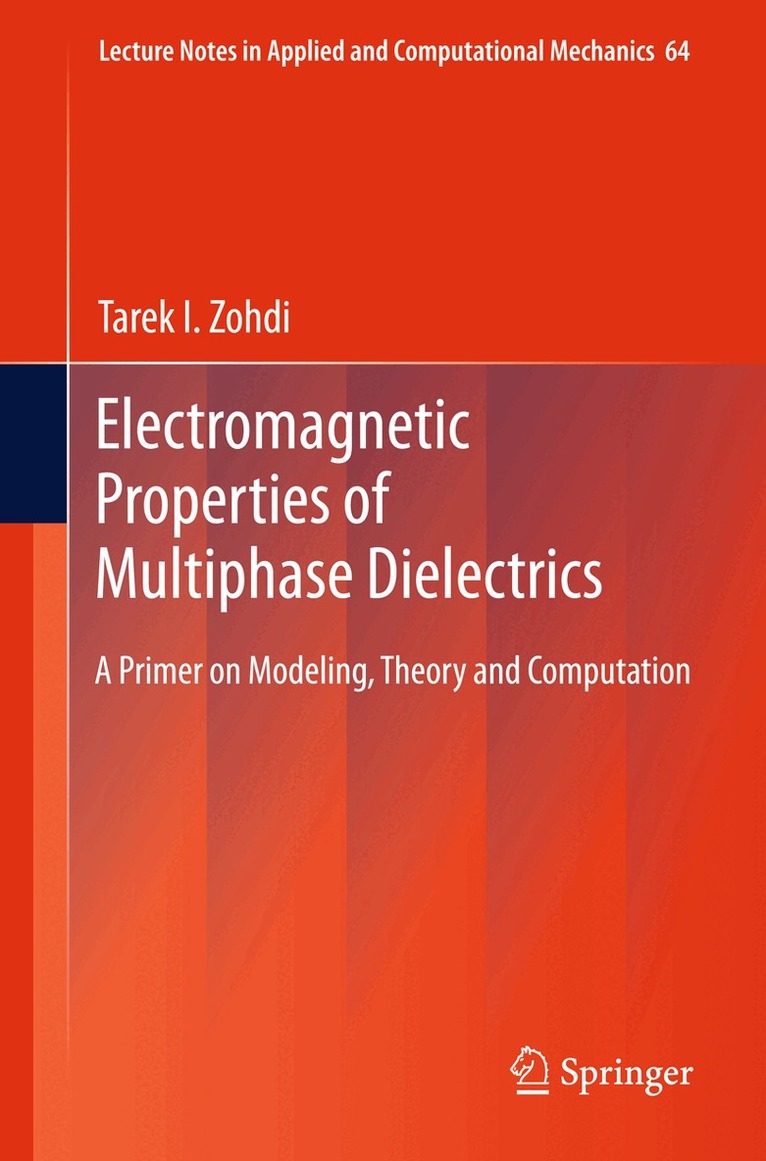
Electromagnetic Properties of Multiphase Dielectrics
A Primer on Modeling, Theory and Computation
Inbunden, Engelska, 2012
1 486 kr
Skickas inom 10-15 vardagar
This book offers models and numerical solution strategies for analyzing the coupled response of materials with tailored dielectric properties by direct simulation using standard laptop/desktop equipment. Covers coupled systems, homogenization theory and more.
535 kr
Skickas inom 10-15 vardagar
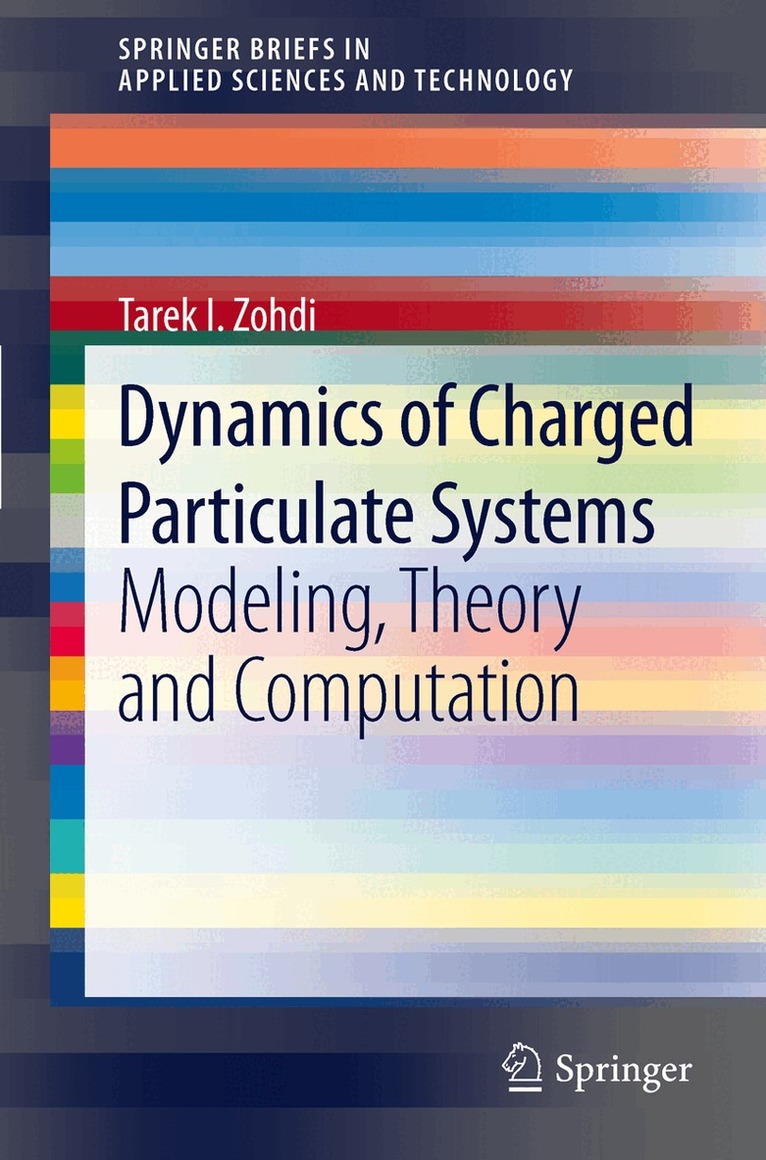
The objective of this monograph is to provide a concise introduction to the dynamics of systems comprised of charged small-scale particles. Flowing, small-scale, particles ("particulates'') are ubiquitous in industrial processes and in the natural sciences. Applications include electrostatic copiers, inkjet printers, powder coating machines, etc., and a variety of manufacturing processes. Due to their small-scale size, external electromagnetic fields can be utilized to manipulate and control charged particulates in industrial processes in order to achieve results that are not possible by purely mechanical means alone. A unique feature of small-scale particulate flows is that they exhibit a strong sensitivity to interparticle near-field forces, leading to nonstandard particulate dynamics, agglomeration and cluster formation, which can strongly affect manufactured product quality. This monograph also provides an introduction to the mathematically-related topic of the dynamics of swarms of interacting objects, which has gained the attention of a number of scientific communities. In summary, the following topics are discussed in detail:(1) Dynamics of an individual charged particle, (2) Dynamics of rigid clusters of charged particles,(3) Dynamics of flowing charged particles,(4) Dynamics of charged particle impact with electrified surfaces and (5) An introduction to the mechanistic modeling of swarms.The text can be viewed as a research monograph suitable for use in an upper division undergraduate or first year graduate course geared towards students in the applied sciences, mechanics and mathematics that have an interest in the analysis of particulate materials.
Del 64 - Lecture Notes in Applied and Computational Mechanics
Electromagnetic Properties of Multiphase Dielectrics
A Primer on Modeling, Theory and Computation
Häftad, Engelska, 2014
1 064 kr
Skickas inom 10-15 vardagar
Recently, several applications, primarily driven by microtechnology, have emerged where the use of materials with tailored electromagnetic (dielectric) properties are necessary for a successful overall design. The ``tailored'' aggregate properties are achieved by combining an easily moldable base matrix with particles having dielectric properties that are chosen to deliver (desired) effective properties. In many cases, the analysis of such materials requires the simulation of the macroscopic and microscopic electromagnetic response, as well as its resulting coupled thermal response, which can be important to determine possible failures in ``hot spots.'' This necessitates a stress analysis. Furthermore, because, oftentimes, such processes initiate degratory chemical processes, it can be necessary to also include models for these processes as well. A central objective of this work is to provide basic models and numerical solution strategies to analyze the coupled response of such materials by direct simulation using standard laptop/desktop equipment. Accordingly, this monograph covers: (1) The foundations of Maxwell's equations, (2) Basic homogenization theory,(3) Coupled systems (electromagnetic, thermal, mechanical and chemical),(4) Numerical methods and(5) An introduction to select biological problems.The text can be viewed as a research monograph suitable for use in an upper-division undergraduate or first year graduate course geared towards students in the applied sciences, mechanics and mathematics that have an interest in the analysis of particulate materials.