Tarik Jusić – författare
Visar alla böcker från författaren Tarik Jusić. Handla med fri frakt och snabb leverans.
5 produkter
Media Law in Bosnia & Herzegovina
E-bok, 2021
847 kr
Lägg i varukorg
Derived from the renowned multi-volume International Encyclopaedia of Laws , this analysis of media law in Bosnia & Herzegovina surveys the massively altered and enlarged legal landscape traditionally encompassed in laws pertaining to freedom of expression and regulation of communications. …
Media Law in Bosnia & Herzegovina
E-bok, 2021
866 kr
Lägg i varukorg
Derived from the renowned multi-volume International Encyclopaedia of Laws , this analysis of media law in Bosnia & Herzegovina surveys the massively altered and enlarged legal landscape traditionally encompassed in laws pertaining to freedom of expression and regulation of communications. …
Media Constrained by Context
International Assistance and Democratic Media Transition in the Western Balkans
Av Tarik Jusic, Kristina Irion
Inbunden, 2018
1947 kr
Lägg i varukorg
This books draws a comparative balance of twenty years' international media assistance in the five countries of the Western Balkans. The central question was what happens to imported models when they are transposed onto the newly evolving media systems of transitional societies. Albania, …
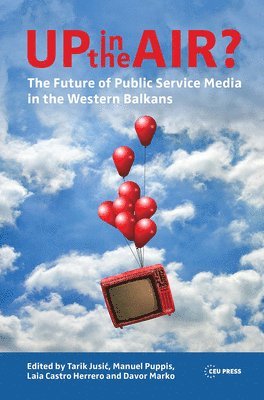
Up in the Air?
The Future of Public Service Media in the Western Balkans
Av Tarik Jusic, Manuel Puppis m. fl.
Inbunden, 2021
1787 kr
Lägg i varukorg
The agenda for transition after the demise of communism in the Western Balkans made the conversion of state radio and television into public service broadcasters a priority, converting mouthpieces of the regime into public forums in which various interests and standpoints could be shared and …