Tariq Jazeel - Böcker
Visar alla böcker från författaren Tariq Jazeel. Handla med fri frakt och snabb leverans.
7 produkter
7 produkter
1 728 kr
Skickas inom 3-6 vardagar
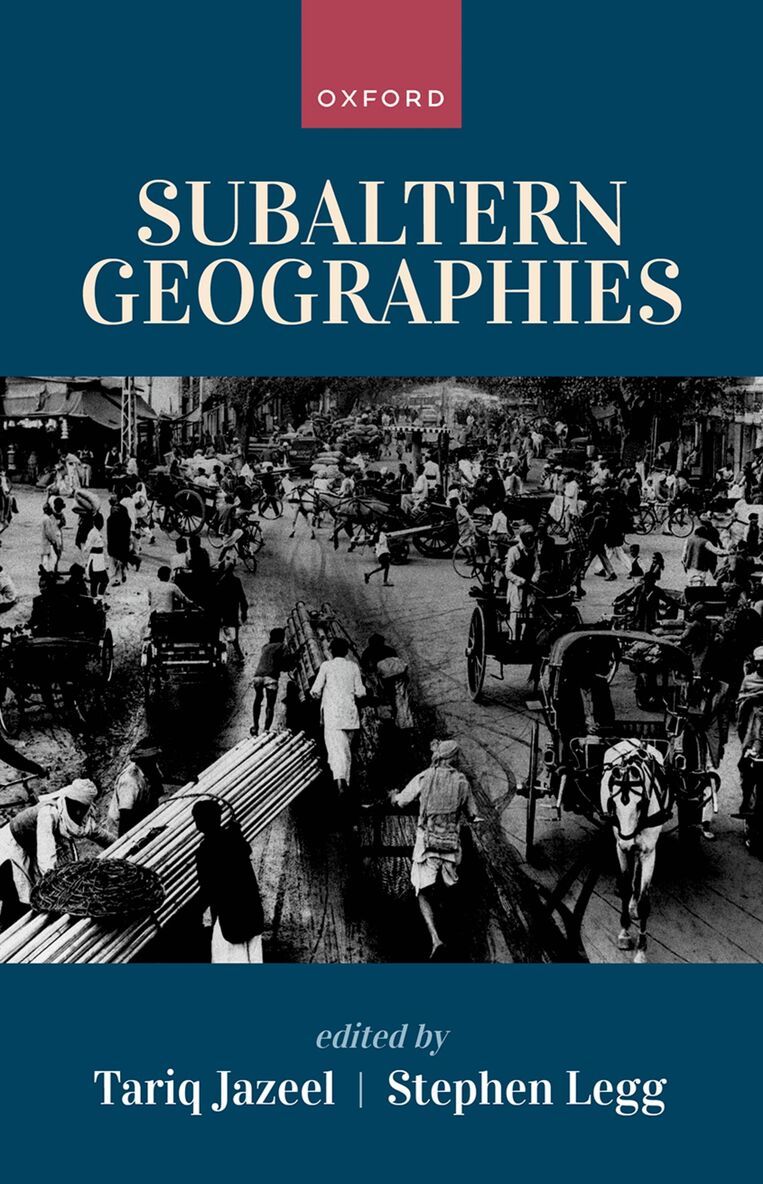
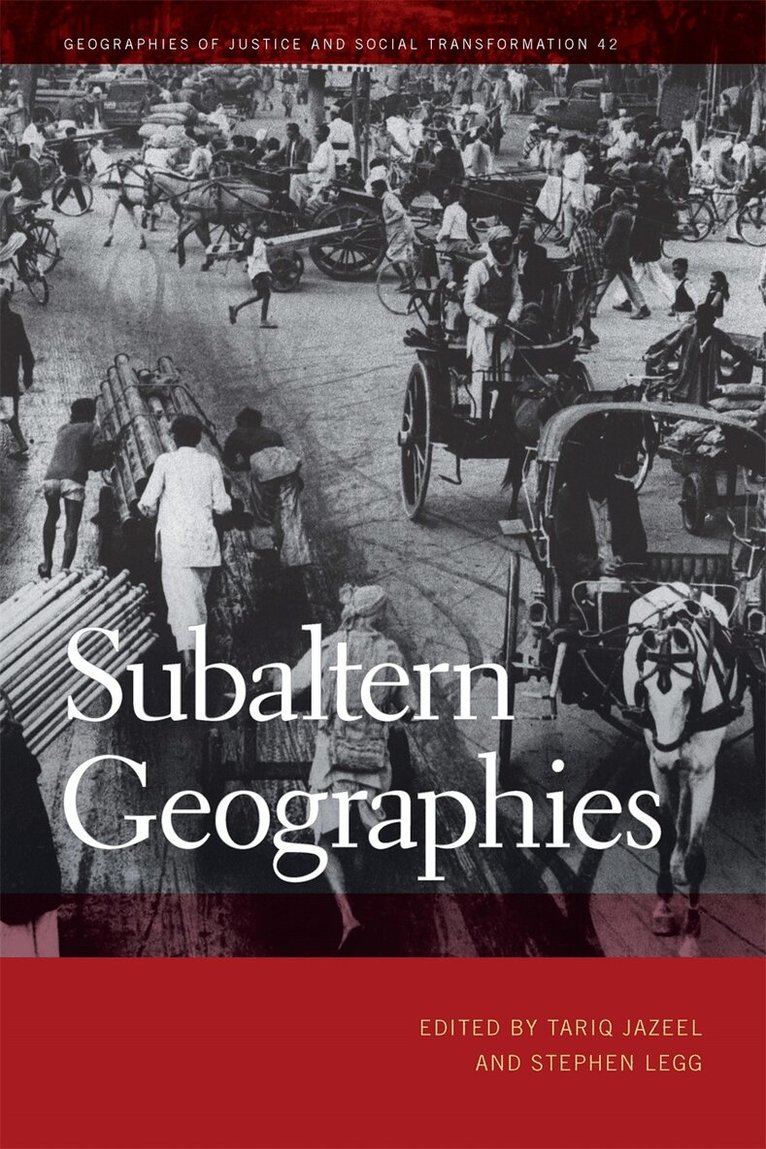
Subaltern Geographies stands as the inaugural comprehensiveexploration into the intersection of subaltern studies’ historicalbreakthroughs and the critical methodologies of cultural, urban,historical, and political geography. Editors Tariq Jazeel and StephenLegg embark on an intellectual journey to scrutinize the relationshipbetween space and spatial categorizations, posing pivotal questionsabout the methodological-philosophical potential that a geographicallygrounded engagement with the concept of subalternity offers in bothhistorical and contemporary contexts. This edited volume seeks tounravel the implications and impact of subaltern studies scholarshipon geographical thought, while navigating beyond methodologicalnationalism and Eurocentrism. The book’s contributors, comprisinghistorians, geographers, urban theorists, and a social activist, presentdiverse studies spanning colonial India, post-colonial Tanzania, AndeanEcuador, Delhi’s recycling centres, Bolivian protest sites, the IndianOcean, and urban fragments. The volume contends that politicointellectualskills are vital for conceiving and representing subalterngeographies. This craft involves grappling with the complexities oftranslation, mistranslation, and the untranslatability inherent inradically different geographical descriptions. The book further exploresthe challenges of retrieving notionally subaltern space from archives orthrough ethnographic and textual research. Lastly, it addresses therepresentational hurdles posed by ordinariness and everyday spatialityin contrast to conventional geographical descriptions.
1 738 kr
Skickas inom 3-6 vardagar
Subaltern Geographies is the first book-length discussion addressing the relationship between the historical innovations of subaltern studies and the critical intellectual practices and methodologies of cultural, urban, historical, and political geography. This edited volume explores this relationship by attempting to think critically about space and spatial categorizations.Editors Tariq Jazeel and Stephen Legg ask, What methodological-philosophical potential does a rigorously geographical engagement with the concept of subalternity pose for geographical thought, whether in historical or contemporary contexts? And what types of craft are necessary for us to seek out subaltern perspectives both from the past and in the present? In so doing, Subaltern Geographies engages with the implications for and impact on disciplinary geographical thought of subaltern studies scholarship, as well as the potential for such thought. In the process, it probes new spatial ideas and forms of learning in an attempt to bypass the spatial categorizations of methodological nationalism and Eurocentrism.
Del 42 - Geographies of Justice and Social Transformation
Subaltern Geographies
Häftad, Engelska, 2019
584 kr
Skickas inom 3-6 vardagar
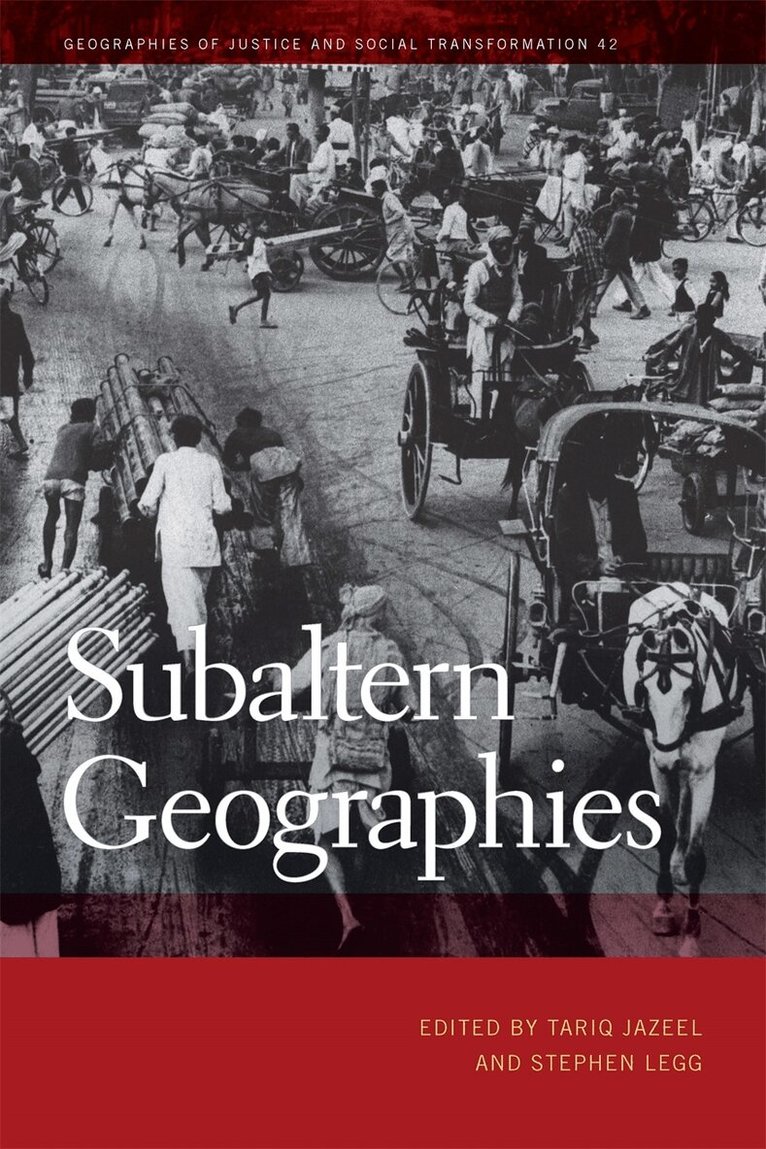
Subaltern Geographies is the first book-length discussion addressing the relationship between the historical innovations of subaltern studies and the critical intellectual practices and methodologies of cultural, urban, historical, and political geography. This edited volume explores this relationship by attempting to think critically about space and spatial categorizations.Editors Tariq Jazeel and Stephen Legg ask, What methodological-philosophical potential does a rigorously geographical engagement with the concept of subalternity pose for geographical thought, whether in historical or contemporary contexts? And what types of craft are necessary for us to seek out subaltern perspectives both from the past and in the present? In so doing, Subaltern Geographies engages with the implications for and impact on disciplinary geographical thought of subaltern studies scholarship, as well as the potential for such thought. In the process, it probes new spatial ideas and forms of learning in an attempt to bypass the spatial categorizations of methodological nationalism and Eurocentrism.
2 401 kr
Skickas inom 10-15 vardagar
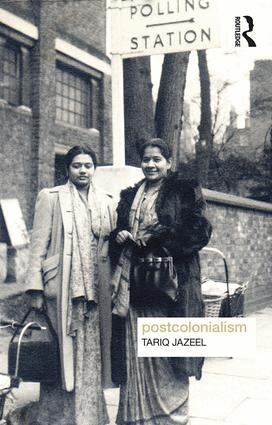
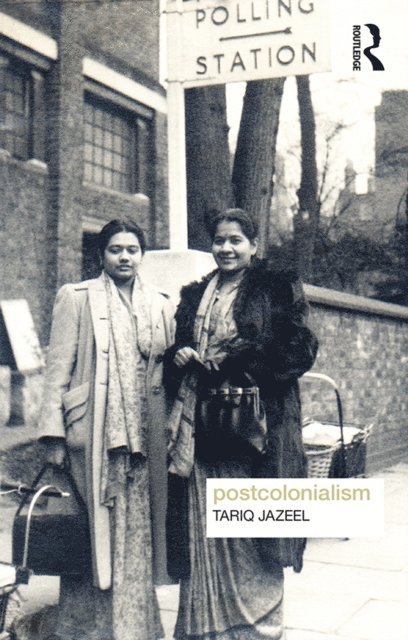
Postcolonialism is a book that examines the influence of postcolonial theory in critical geographical thought and scholarship. Aimed at advanced-level students and researchers, the book is a lively, stimulating and relevant introduction to ‘postcolonial geography’ that elaborates on the critical interventions in social, cultural and political life this important subfield is poised to make.The book is structured around three intersecting parts – Spaces, 'Identity'/hybridity, Knowledge – that broadly follow the trajectory of postcolonial studies since the late 1970s. It comprises ten main chapters, each of which is situated at the intersections of postcolonialism and critical human geography. In doing so, Postcolonialism develops three key arguments. First, that postcolonialism is best conceived as an intellectually creative and practical set of methodologies or approaches for critically engaging existing manifestations of power and exclusion in everyday life and in taken-as-given spaces. Second, that postcolonialism is, at its core, concerned with the politics of representation, both in terms of how people and space are represented, but also the politics surrounding who is able to represent themselves and on what/whose terms. Third, the book argues that postcolonialism itself is an inherently geographical intellectual enterprise, despite its origins in literary theory. In developing these arguments and addressing a series of relevant and international case studies and examples throughout, Postcolonialism not only demonstrates the importance of postcolonial theory to the contemporary critical geographical imagination. It also argues that geographers have much to offer to continued theorizations and workings of postcolonial theory, politics and intellectual debates going forward. This is a book that brings critical analyses of the continued and omnipresent legacies of colonialism and imperialism to the heart of human geography, but also one that returns an avowedly critical geographical disposition to the core of interdisciplinary postcolonial studies.
631 kr
Skickas inom 10-15 vardagar
Postcolonialism is a book that examines the influence of postcolonial theory in critical geographical thought and scholarship. Aimed at advanced-level students and researchers, the book is a lively, stimulating and relevant introduction to ‘postcolonial geography’ that elaborates on the critical interventions in social, cultural and political life this important subfield is poised to make.The book is structured around three intersecting parts – Spaces, 'Identity'/hybridity, Knowledge – that broadly follow the trajectory of postcolonial studies since the late 1970s. It comprises ten main chapters, each of which is situated at the intersections of postcolonialism and critical human geography. In doing so, Postcolonialism develops three key arguments. First, that postcolonialism is best conceived as an intellectually creative and practical set of methodologies or approaches for critically engaging existing manifestations of power and exclusion in everyday life and in taken-as-given spaces. Second, that postcolonialism is, at its core, concerned with the politics of representation, both in terms of how people and space are represented, but also the politics surrounding who is able to represent themselves and on what/whose terms. Third, the book argues that postcolonialism itself is an inherently geographical intellectual enterprise, despite its origins in literary theory. In developing these arguments and addressing a series of relevant and international case studies and examples throughout, Postcolonialism not only demonstrates the importance of postcolonial theory to the contemporary critical geographical imagination. It also argues that geographers have much to offer to continued theorizations and workings of postcolonial theory, politics and intellectual debates going forward. This is a book that brings critical analyses of the continued and omnipresent legacies of colonialism and imperialism to the heart of human geography, but also one that returns an avowedly critical geographical disposition to the core of interdisciplinary postcolonial studies.
156 kr
Skickas inom 7-10 vardagar
Topics covered include a framework for analyzing the relationships between space and sound; British Asian dance music as a reflection on the politics of genre and multiculture; Caribbean radio and Black technologies as the sound of Britain’s dying colonialism; Black music as folk music in England; and sonic third worldism in the Eastern Mediterranean. The contributors examine how sound carries creative ways of being and knowing across geographies, histories, and disciplines.Contributors. Les Back, Stevie Back, Tao Leigh Goffe, Tariq Jazeel, Sara Salem, Tom Western
Del 12 - Postcolonialism Across the Disciplines
Sacred Modernity
Nature, Environment and the Postcolonial Geographies of Sri Lankan Nationhood
Inbunden, Engelska, 2013
444 kr
Skickas inom 7-10 vardagar
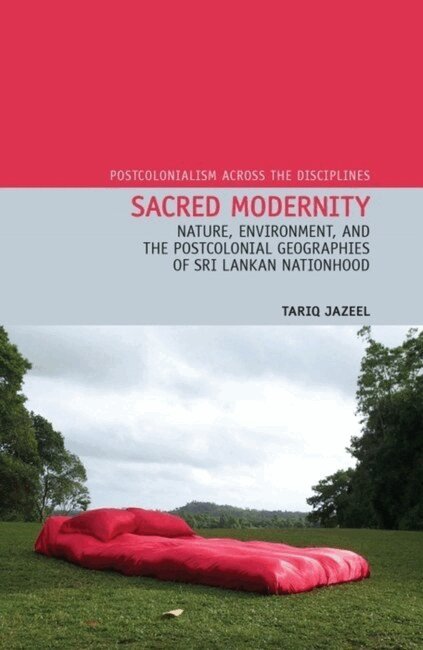
Sacred Modernity argues how everyday non-secular experiences of the natural world in Sri Lanka perpetuate ethno-religious identitarian narratives. It demonstrates the relationships between spaces of nature and environment and an ongoing aesthetic and spatial constitution of power and the political in which Theravada Buddhism is centrally implicated. To do this, the book works consecutively through two in-depth case studies, both of which are prominent sites through which Sri Lankan nature and environment are commodified: first, the country’s most famous national park, Ruhuna (Yala), and second, its post-1950s modernist environmental architecture, ‘tropical modernism’. By engaging these sites, the book reveals how commonplace historical understandings as well as commonplace material negotiations of the seductions of Sri Lankan nature are never far from the continued production of a post-independent national identity marked ethnically as Sinhalese and religiously as Buddhist. In the Sri Lankan context this minoritizes Tamil, Muslim and Christian non-Sinhala difference in the nation-state's natural, environmental and historical order of things.To make this argument, the book writes against the grain of Eurocentric social scientific understandings of the concepts 'nature' and 'religion'. It argues that these concepts and their implicit binary mobilizations of nature/culture and the sacred/secular respectively, struggle to make visible the pervasive ways that Buddhism – thought instead as a ‘structure of feeling’ or aesthetics – simultaneously naturalizes and ethnicizes the fabric of the national in contemporary Sri Lanka.Sacred Modernity shows the care and postcolonial methodological sensitivity required to understand how ‘nature’ and ‘religion’ might be thought through non-EuroAmerican field contexts, especially those in South Asia.