Taro Tsurumi – författare
Visar alla böcker från författaren Taro Tsurumi. Handla med fri frakt och snabb leverans.
6 produkter
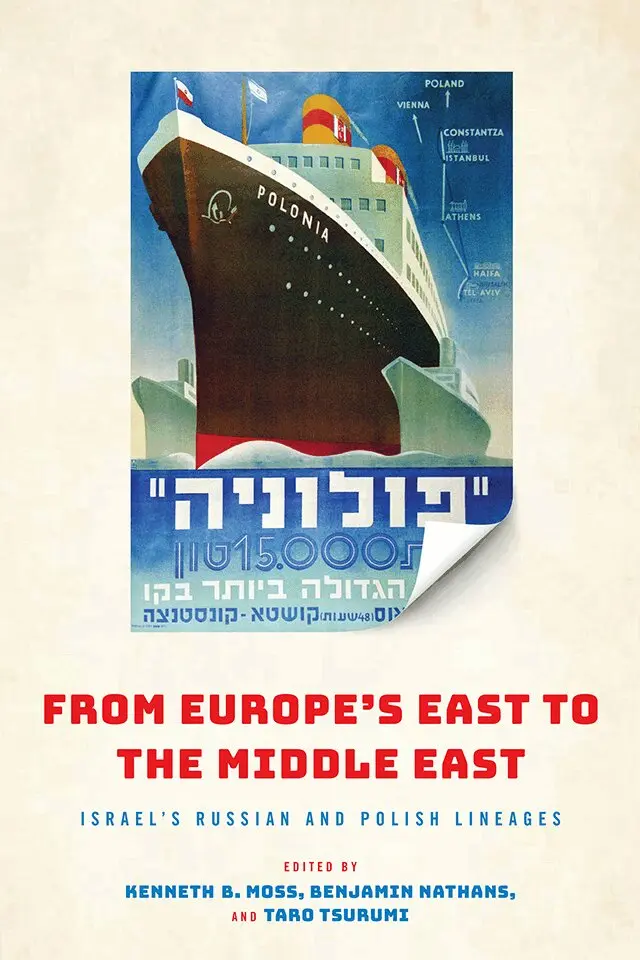
From Europe's East to the Middle East
Israel's Russian and Polish Lineages
Av Kenneth Moss, Benjamin Nathans m. fl.
Inbunden, 2022
874 kr
Lägg i varukorg
The overwhelming majority of Jews who laid the foundations of the Israeli state during the first half of the twentieth century came from the Polish lands and the Russian Empire. This is a fact widely known, yet its implications for the history of Israel and the Middle East and, reciprocally, for …
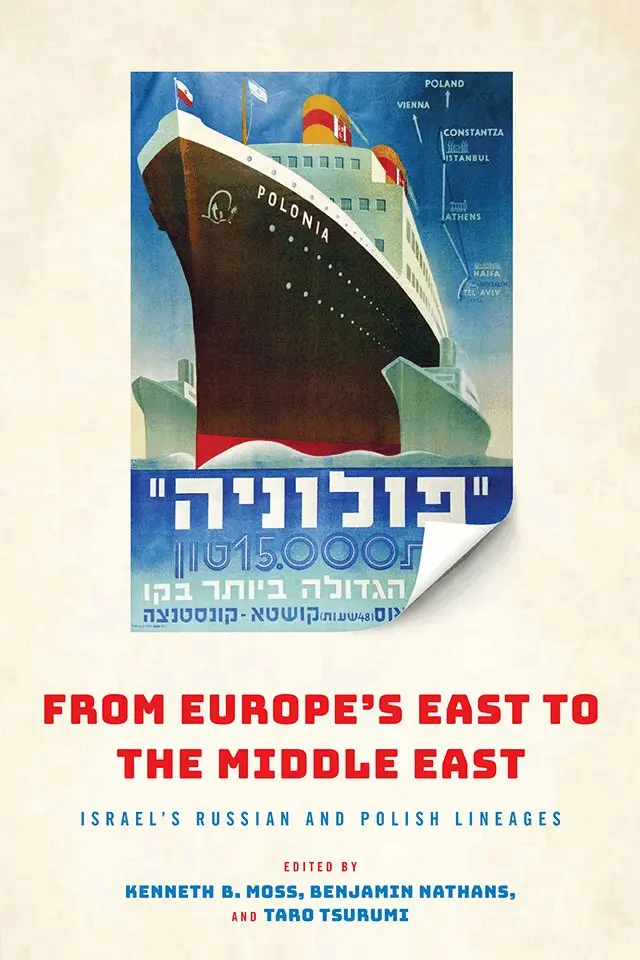
From Europe's East to the Middle East
Israel's Russian and Polish Lineages
Av Kenneth Moss, Benjamin Nathans m. fl.
E-bok, 2022
1058 kr
Lägg i varukorg
The overwhelming majority of Jews who laid the foundations of the Israeli state during the first half of the twentieth century came from the Polish lands and the Russian Empire. This is a fact widely known, yet its implications for the history of Israel and the Middle East and, reciprocally, for …
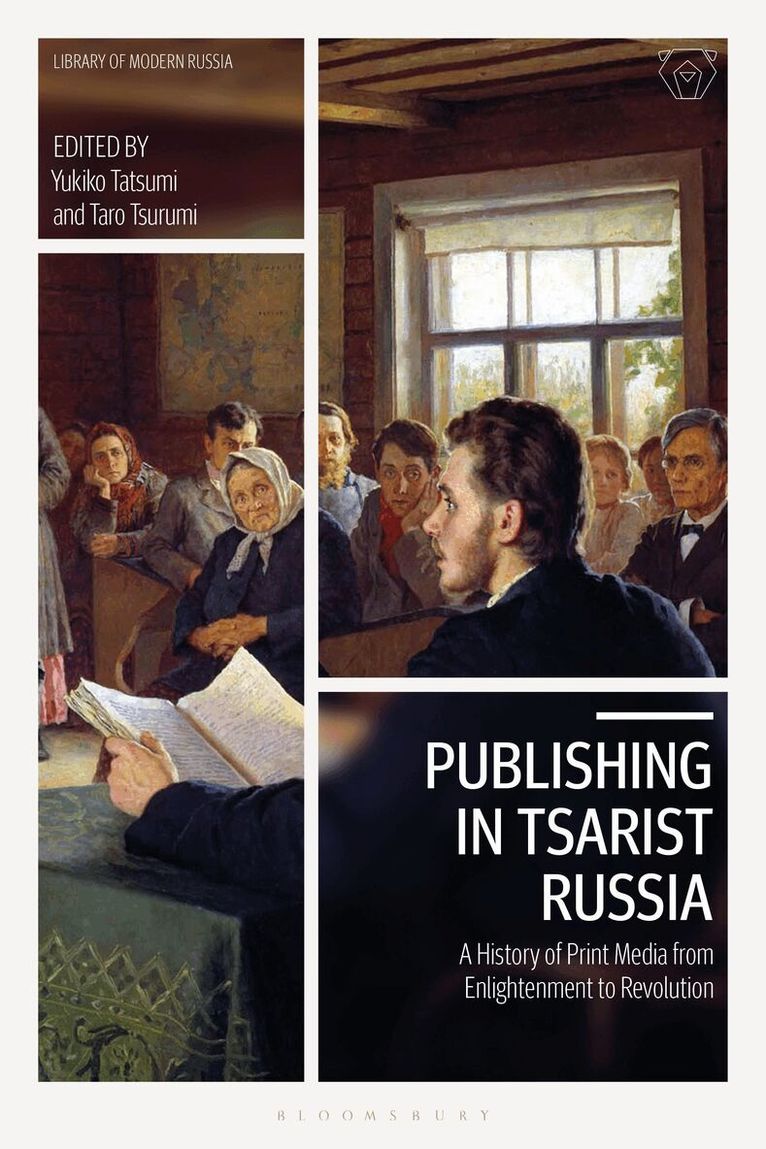
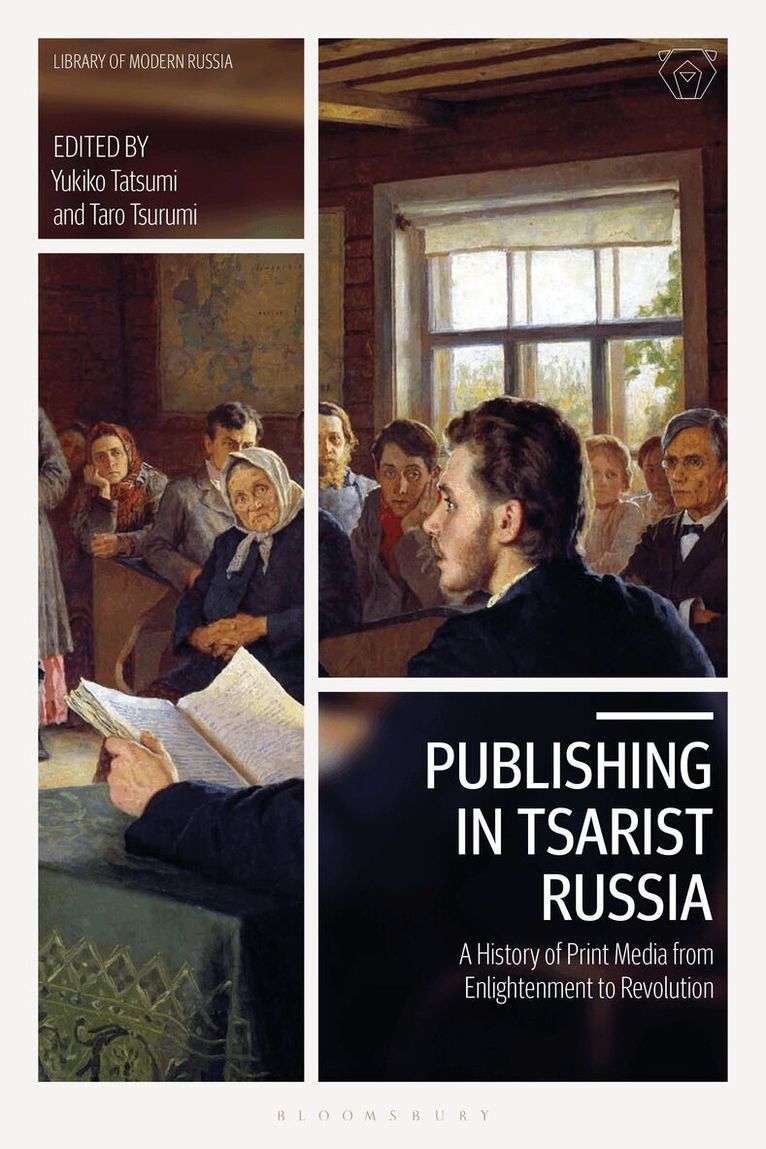
Publishing in Tsarist Russia
A History of Print Media from Enlightenment to Revolution
Av Yukiko Tatsumi, Taro Tsurumi
Inbunden, 2020
1612 kr
Lägg i varukorg
According to Benedict Anderson, the rapid expansion of print media during the late-1700s popularised national history and standardised national languages, thus helping create nation-states and national identities at the expense of the old empires. Publishing in Tsarist Russia challenges this theory …
Publishing in Tsarist Russia
A History of Print Media from Enlightenment to Revolution
Av Yukiko Tatsumi, Taro Tsurumi
E-bok, 2020
530 kr
Lägg i varukorg
According to Benedict Anderson, the rapid expansion of print media during the late-1700s popularised national history and standardised national languages, thus helping create nation-states and national identities at the expense of the old empires. Publishing in Tsarist Russia challenges this theory …
Publishing in Tsarist Russia
A History of Print Media from Enlightenment to Revolution
Av Yukiko Tatsumi, Taro Tsurumi
E-bok, 2020
530 kr
Lägg i varukorg
According to Benedict Anderson, the rapid expansion of print media during the late-1700s popularised national history and standardised national languages, thus helping create nation-states and national identities at the expense of the old empires. Publishing in Tsarist Russia challenges this theory …
Publishing in Tsarist Russia
A History of Print Media from Enlightenment to Revolution
Av Yukiko Tatsumi, Taro Tsurumi
Häftad, 2021
489 kr
Lägg i varukorg
According to Benedict Anderson, the rapid expansion of print media during the late-1700s popularised national history and standardised national languages, thus helping create nation-states and national identities at the expense of the old empires. Publishing in Tsarist Russia challenges this theory …