Taru Salmenkari – författare
Visar alla böcker från författaren Taru Salmenkari. Handla med fri frakt och snabb leverans.
6 produkter
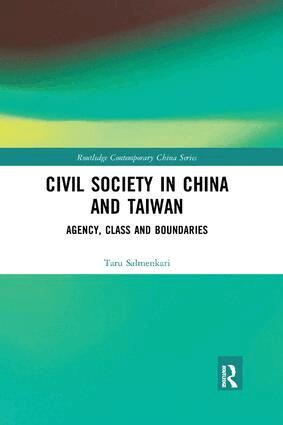
Civil Society in China and Taiwan
Agency, Class and Boundaries
Häftad, 2019
747 kr
Lägg i varukorg
The concept of 'civil society' has often been used as a devise for differentiating China from other cultures. Though sometimes portrayed as a growing phenomenon, Chinese civil society is frequently said to be non-existent. Definitional deficiencies have, therefore, led to both a simplification and …
Global Ideas, Local Adaptations
Chinese Activism and the Will to Make Civil Society
Inbunden, 2025
1982 kr
Lägg i varukorg
Exploring the boundaries, fringes, and inner workings of civil society, Taru Salmenkari investigates local forms of political agency in China in light of the globalization of political values, practices, and institutions. She provides a theoretical framework for globalization, examining new forms …
Global Ideas, Local Adaptations
Chinese Activism and the Will to Make Civil Society
E-bok, 2025
444 kr
Lägg i varukorg
Exploring the boundaries, fringes, and inner workings of civil society, Taru Salmenkari investigates local forms of political agency in China in light of the globalization of political values, practices, and institutions. She provides a theoretical framework for globalization, examining new forms …
Global Ideas, Local Adaptations
Chinese Activism and the Will to Make Civil Society
E-bok, 2025
444 kr
Lägg i varukorg
Exploring the boundaries, fringes, and inner workings of civil society, Taru Salmenkari investigates local forms of political agency in China in light of the globalization of political values, practices, and institutions. She provides a theoretical framework for globalization, examining new forms …
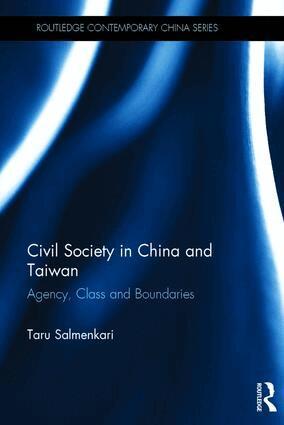
Civil Society in China and Taiwan
Agency, Class and Boundaries
Inbunden, 2017
2736 kr
Lägg i varukorg
The concept of 'civil society' has often been used as a devise for differentiating China from other cultures. Though sometimes portrayed as a growing phenomenon, Chinese civil society is frequently said to be non-existent. Definitional deficiencies have, therefore, led to both a simplification and …
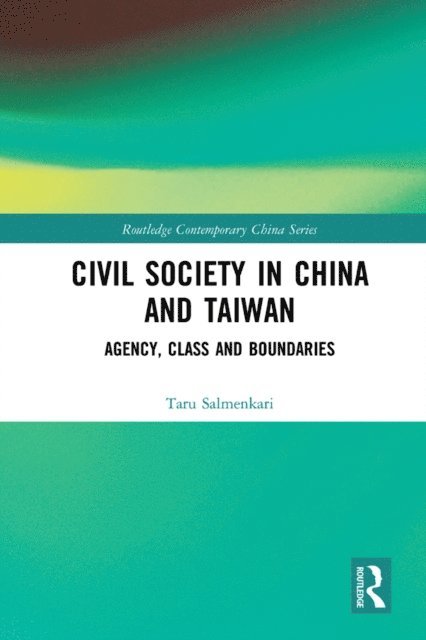
Civil Society in China and Taiwan
Agency, Class and Boundaries
E-bok, 2017
883 kr
Lägg i varukorg
The concept of ''civil society'' has often been used as a devise for differentiating China from other cultures. Though sometimes portrayed as a growing phenomenon, Chinese civil society is frequently said to be non-existent. Definitional deficiencies have, therefore, led to both a simplification …