Taylor B. Seybolt - Böcker
Visar alla böcker från författaren Taylor B. Seybolt. Handla med fri frakt och snabb leverans.
5 produkter
5 produkter
Counting Civilian Casualties
An Introduction to Recording and Estimating Nonmilitary Deaths in Conflict
Inbunden, Engelska, 2013
1 989 kr
Skickas inom 5-8 vardagar
A popular myth emerged in the late 1990s: in 1900, wars killed one civilian for every eight soldiers, while contemporary wars were killing eight civilians for every one soldier. The neat reversal of numbers was memorable, and academic publications and UN documents regularly cited it. The more it was cited, the more trusted it became. In fact, however, subsequent research found no empirical evidence for the idea that the ratio of civilians to soldiers killed in war has changed dramatically. But while the ratios may not have changed, the political significance of civilian casualties has risen tremendously.Over the past century, civilians in war have gone from having no particular rights to having legal protections and rights that begin to rival those accorded to states. The concern for civilians in conflict has become so strong that governments occasionally undertake humanitarian interventions, at great risk and substantial cost, to protect strangers in distant lands. I n the early 1990s, the UN Security Council authorized military interventions to help feed and protect civilians in the Kurdish area of Iraq, Somalia, and Bosnia. And in May 2011 , Barack Obama 's National Security Advisor explained the United States' decision to support NATO's military intervention in these terms "When the president made this decision, there was an immediate threat to 700,000 Libyan civilians in the town of Benghazi. We've had a success here in terms of being able to protect those civilians."Counting Civilian Casualties aims to promote open scientific dialogue by high lighting the strengths and weaknesses of the most commonly used casualty recording and estimation techniques in an understandable format. Its thirteen chapters, each authoritative but accessible to nonspecialists, explore a variety of approaches, from direct recording to statistical estimation and sampling, to collecting data on civilian deaths caused by conflict. The contributors also discuss their respective advantages and disadvantages, and analyze how figures are used (and misused) by governments, rebels, human rights advocates, war crimes tribunals, and others. In addition to providing analysts with a broad range of tools to produce accurate data, this will be an in valuable resource for policymakers, military officials, jou rnalists, human rights activists, courts, and ordinary people who want to be more informed--and skeptical--consumers of casualty counts.
Counting Civilian Casualties
An Introduction to Recording and Estimating Nonmilitary Deaths in Conflict
Häftad, Engelska, 2013
534 kr
Skickas inom 5-8 vardagar
A popular myth emerged in the late 1990s: in 1900, wars killed one civilian for every eight soldiers, while contemporary wars were killing eight civilians for every one soldier. The neat reversal of numbers was memorable, and academic publications and UN documents regularly cited it. The more it was cited, the more trusted it became. In fact, however, subsequent research found no empirical evidence for the idea that the ratio of civilians to soldiers killed in war has changed dramatically. But while the ratios may not have changed, the political significance of civilian casualties has risen tremendously.Over the past century, civilians in war have gone from having no particular rights to having legal protections and rights that begin to rival those accorded to states. The concern for civilians in conflict has become so strong that governments occasionally undertake humanitarian interventions, at great risk and substantial cost, to protect strangers in distant lands. I n the early 1990s, the UN Security Council authorized military interventions to help feed and protect civilians in the Kurdish area of Iraq, Somalia, and Bosnia. And in May 2011 , Barack Obama 's National Security Advisor explained the United States' decision to support NATO's military intervention in these terms "When the president made this decision, there was an immediate threat to 700,000 Libyan civilians in the town of Benghazi. We've had a success here in terms of being able to protect those civilians."Counting Civilian Casualties aims to promote open scientific dialogue by high lighting the strengths and weaknesses of the most commonly used casualty recording and estimation techniques in an understandable format. Its thirteen chapters, each authoritative but accessible to nonspecialists, explore a variety of approaches, from direct recording to statistical estimation and sampling, to collecting data on civilian deaths caused by conflict. The contributors also discuss their respective advantages and disadvantages, and analyze how figures are used (and misused) by governments, rebels, human rights advocates, war crimes tribunals, and others. In addition to providing analysts with a broad range of tools to produce accurate data, this will be an in valuable resource for policymakers, military officials, jou rnalists, human rights activists, courts, and ordinary people who want to be more informed--and skeptical--consumers of casualty counts.
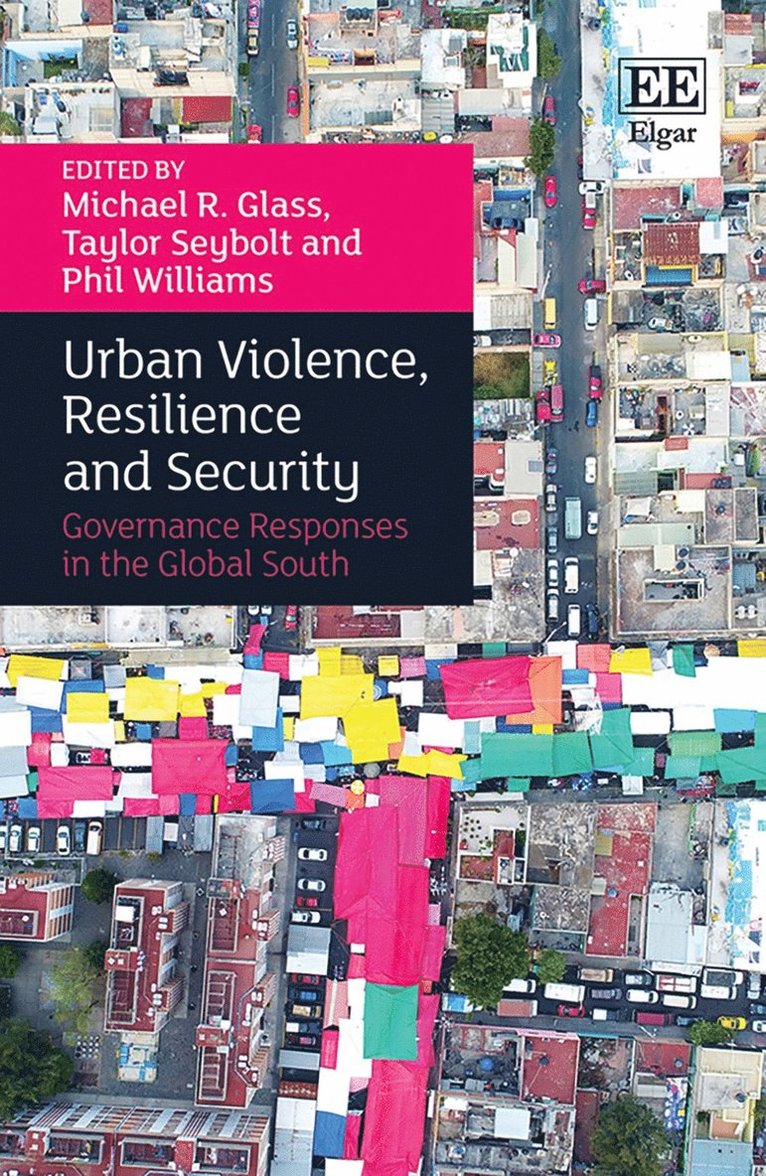
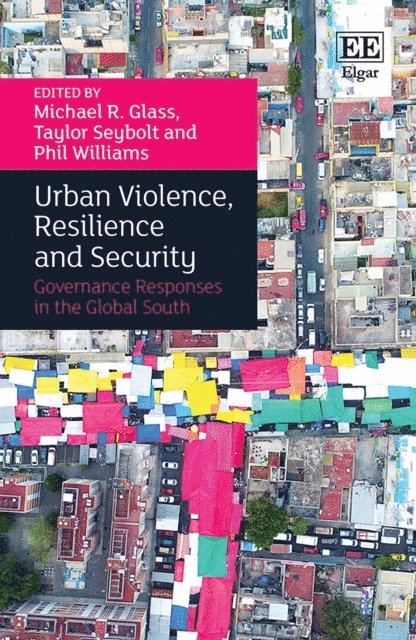
Urban Violence, Resilience and Security
Governance Responses in the Global South
Häftad, Engelska, 2023
445 kr
Skickas inom 7-10 vardagar
Written in a comprehensive yet accessible style, Urban Violence, Resilience and Security investigates the diverse nature of urban violence within Latin America, Asia and Africa. It further analyzes how regular and irregular governing mechanisms can provide human security, despite the presence of chronic violence. The empirically rich and conceptually grounded contributions of established and emerging scholars evaluate the current state and future trajectory of urban development. They also question common explanations of the drivers of violence in urban areas and also provide measured recommendations for improved policy and future governance. Chapters thoroughly examine the opportunities and hazards of focusing on resilience as the only method to improve security and identify governance and policy practices that can move beyond the rhetoric of resilience to evaluate diverse approaches to attaining human security in urban areas of the Global South.This invigorating book will be an excellent resource for academic researchers interested in urban dynamics in the Global South as well as scholars embarking on geography, human security, political science and policy studies. Based on a set of original case studies, policymakers will also benefit from the questions and challenges to the conventional approaches to urban planning and governance that it raises.
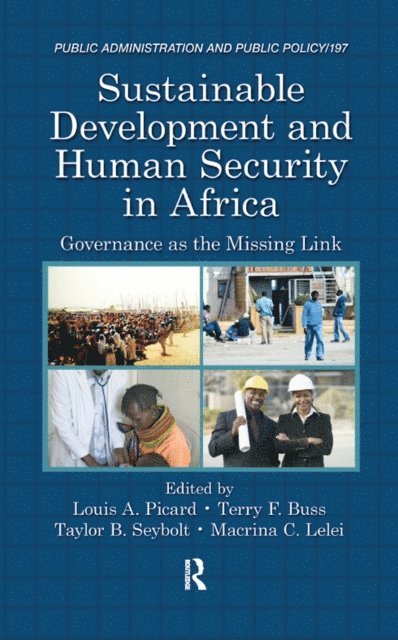
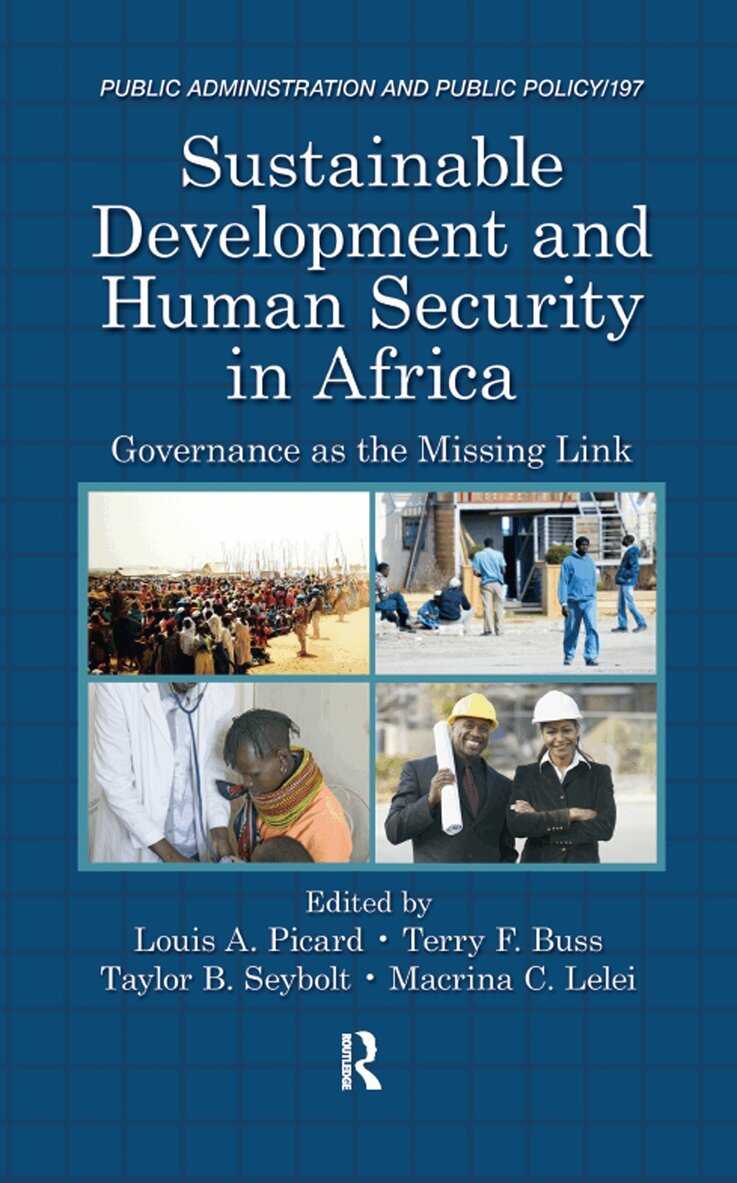
Sustainable Development and Human Security in Africa
Governance as the Missing Link
Inbunden, Engelska, 2015
1 828 kr
Skickas inom 7-10 vardagar
Many new development initiatives have been introduced in Africa over the past few decades. Each of these has been heralded as marking a new era in the continent’s development. However, many of these initiatives have failed to produce sustained results due to numerous challenges, including, most importantly, the lack of good governance. The Africa Progress Panel stated in 2011 that good governance is the key enabling factor for sustainable development. This book discusses the role good governance plays in achieving sustainable development and eradicating extreme poverty in Africa.The contributed chapters in this book seek to broaden the policy debate and provide conversations about the sustainable development challenges facing African countries from multiple viewpoints and interdisciplinary perspectives—from academics, researchers, policymakers, and practitioners in the field. The book focuses on the governance perspectives of practitioners who deal with day-to-day realities on the ground, with the goal to use evidence-based information to make informed policies, programs, and strategies to move the continent toward achieving sustainable development.This book tries to strike a balance between recognizing the need to bring politics back into development programs and understanding the limitations of political institutions in weak states. To that end, it looks at the challenges of development from the perspective of human security, with a focus on strengthening the human resource component of African economies in order to achieve better governance as part of a sustainable development process.
Urban Violence, Resilience and Security
Governance Responses in the Global South
Inbunden, Engelska, 2022
1 626 kr
Skickas inom 7-10 vardagar
Written in a comprehensive yet accessible style, Urban Violence, Resilience and Security investigates the diverse nature of urban violence within Latin America, Asia and Africa. It further analyzes how regular and irregular governing mechanisms can provide human security, despite the presence of chronic violence. The empirically rich and conceptually grounded contributions of established and emerging scholars evaluate the current state and future trajectory of urban development. They also question common explanations of the drivers of violence in urban areas and also provide measured recommendations for improved policy and future governance. Chapters thoroughly examine the opportunities and hazards of focusing on resilience as the only method to improve security and identify governance and policy practices that can move beyond the rhetoric of resilience to evaluate diverse approaches to attaining human security in urban areas of the Global South.This invigorating book will be an excellent resource for academic researchers interested in urban dynamics in the Global South as well as scholars embarking on geography, human security, political science and policy studies. Based on a set of original case studies, policymakers will also benefit from the questions and challenges to the conventional approaches to urban planning and governance that it raises.