Themistius - Böcker
Visar alla böcker från författaren Themistius. Handla med fri frakt och snabb leverans.
19 produkter
19 produkter
2 333 kr
Skickas inom 5-8 vardagar
"On the Soul" was the most widely read of all the Aristotle commentaries in the Renaissance. The best-known of Themistius's discussions is that concerned with Aristotle's active intellect, which leads to his wider musings on the nature of the self. The 15,000 pages of the ancient Greek commentators on Aristotle, written mainly between 200 and 500 AD, constitute the largest corpus of extant Greek philosophical writing not translated into English or other European languages. This new series of translations, planned in 60 volumes, fills an important gap in the history of European thought.
2 333 kr
Skickas inom 5-8 vardagar
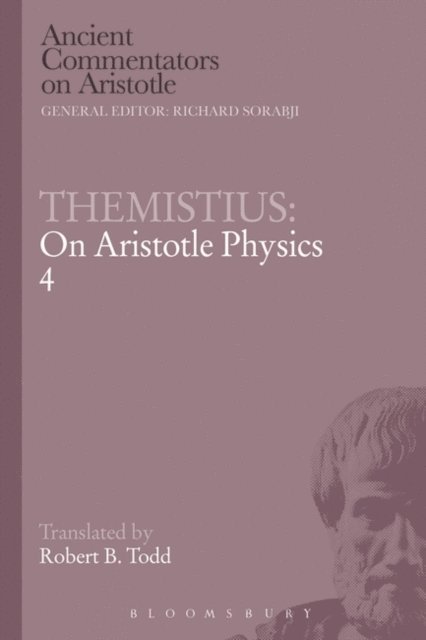
"Physics Book 4" is one of Aristotle's most interesting works, discussing place, time and vacuum. Themistius was a fourth-century AD orator and essayist, not only a philosopher, and he thought that only paraphrases of Aristotle were needed, because there were already such comprehensive commentaries. Nonetheless, his paraphrastic commentaries are full of innovative comment. According to Aristotle, there is no such thing as 3-dimensional space. A thing's exactly-fitting place is a surface, the inner surface of its immediate surroundings. One problem that this created was that the outermost stars, on Aristotle's view, have no surroundings, and so no place. Themistius suggests that we might think instead of the neighbouring bodies which they surround as providing their place. Aristotle time as something countable, and concluded that it depends for its existence on that of conscious beings to do the counting. Themistius is in the minority among commentators in disagreeing. Themistius concurs with Aristotle in denying the existence of vacuum. We cannot think that a space formerly empty of body penetrates right through a body inserted into it.If one extension could penetrate another, says Themistius, a body could penetrate a body, because bodies occupy places solely in virtue of being extended.
2 338 kr
Skickas inom 5-8 vardagar
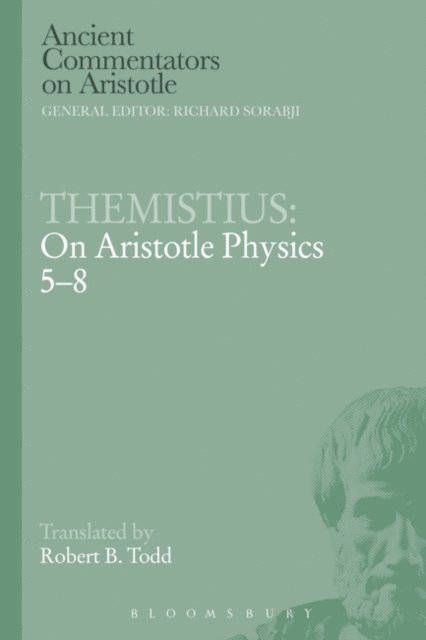
Themistius' treatment of "Books 5-8" of Aristotle's "Physics" shows this commentator's capacity to identify, isolate and discuss the core ideas in Aristotle's account of change, his theory of the continuum, and his doctrine of the unmoved mover. His paraphrase offered his ancient students, as they will now offer his modern readers, an opportunity to encounter central features of Aristotle's physical theory, synthesized and epitomized in a manner that has always marked Aristotelian exegesis but was raised to a new level by the innovative method of paraphrase pioneered by Themistius. Taking selective but telling account of the earlier Peripatetic tradition (notably Theophrastus and Alexander of Aphrodisias), this commentator creates a framework that can still be profitably used by Aristotlian scholars today.
2 338 kr
Skickas inom 5-8 vardagar
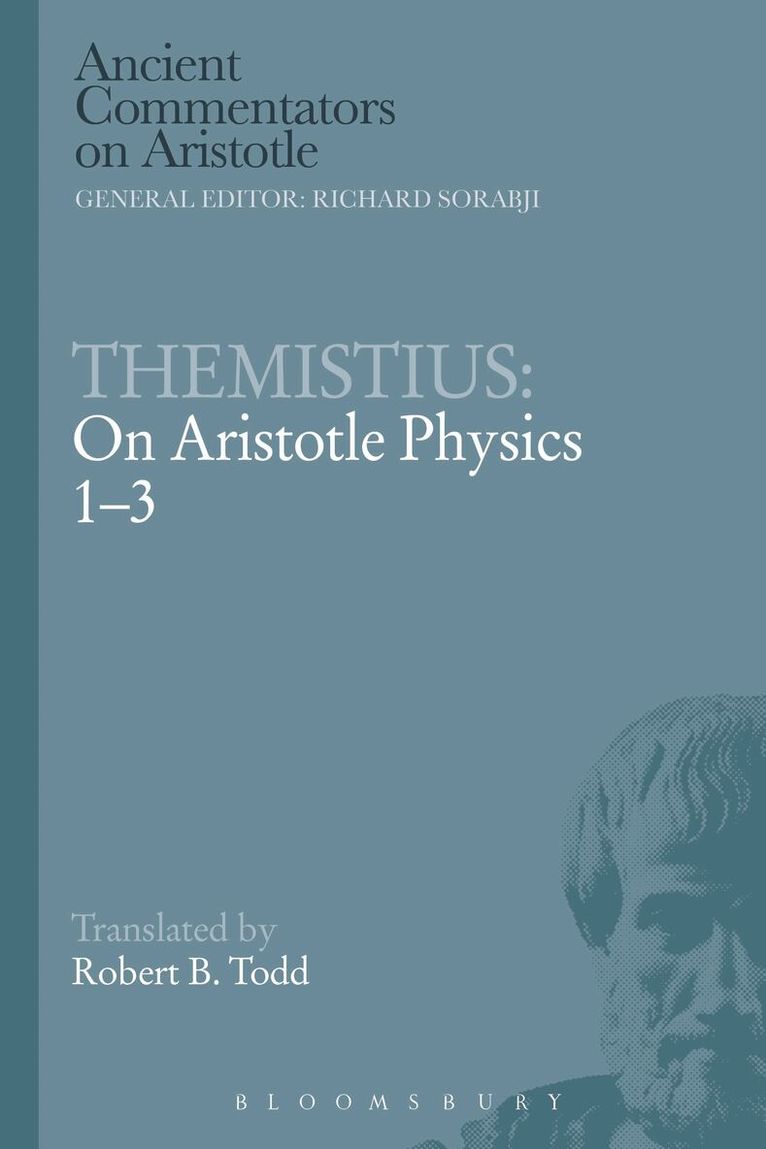
Themistius' treatment of Books 1-3 of Aristotle's Physics presents central features of Aristotle's thought about principles, causation, change and infinity. The tradition of synthesising and epitomising exegesis is here raised to a new level by the innovative method of paraphrase pioneered by Themistius. Taking a selective, but telling, account of the earlier Peripatetic and Presocratic tradition, Themistius creates a framework that can still be profitably used in the study of Aristotle. This volume contains the first English translation of Themistius' commentary, accompanied by a detailed introduction, extensive explanatory notes and a bibliography.
406 kr
Skickas inom 5-8 vardagar
234 kr
Skickas inom 5-8 vardagar
573 kr
Skickas inom 5-8 vardagar
447 kr
Skickas inom 5-8 vardagar
437 kr
Skickas inom 5-8 vardagar
312 kr
Skickas inom 5-8 vardagar
339 kr
Skickas inom 5-8 vardagar
421 kr
Skickas inom 5-8 vardagar
177 kr
Skickas inom 5-8 vardagar
299 kr
Skickas inom 5-8 vardagar
528 kr
Skickas inom 10-15 vardagar
Physics Book 4 is one of Aristotle's most interesting works, discussing place, time and vacuum. Themistius was a fourth-century AD orator and essayist, not only a philosopher, and he thought that only paraphrases of Aristotle were needed, because there were already such comprehensive commentaries. Nonetheless, his paraphrastic commentaries are full of innovative comment. According to Aristotle, there is no such thing as 3-dimensional space. A thing's exactly-fitting place is a surface, the inner surface of its immediate surroundings. One problem that this created was that the outermost stars, in Aristotle's view, have no surroundings, and so no place. Themistius suggests that we might think instead of the neighbouring bodies which they surround as providing their place. Aristotle saw time as something countable, and concluded that it depends for its existence on that of conscious beings to do the counting. Themistius is in the minority among commentators in disagreeing. Themistius concurs with Aristotle in denying the existence of vacuum. We cannot think that a space formerly empty of body penetrates right through a body inserted into it. If one extension could penetrate another, says Themistius, a body could penetrate a body, because bodies occupy places solely in virtue of being extended.
528 kr
Skickas inom 10-15 vardagar
Themistius' treatment of Books 1-3 of Aristotle's Physics presents central features of Aristotle's thought about principles, causation, change and infinity. The tradition of synthesising and epitomising exegesis is here raised to a new level by the innovative method of paraphrase pioneered by Themistius. Taking a selective, but telling, account of the earlier Peripatetic and Presocratic tradition, Themistius creates a framework that can still be profitably used in the study of Aristotle. This volume contains the first English translation of Themistius' commentary, accompanied by a detailed introduction, extensive explanatory notes and a bibliography.
528 kr
Skickas inom 10-15 vardagar
Themistius' treatment of Books 5-8 of Aristotle's Physics shows this commentator's capacity to identify, isolate and discuss the core ideas in Aristotle's account of change, his theory of the continuum, and his doctrine of the unmoved mover. His paraphrase offered his ancient students, as they will now offer his modern readers, an opportunity to encounter central features of Aristotle's physical theory, synthesized and epitomized in a manner that has always marked Aristotelian exegesis but was raised to a new level by the innovative method of paraphrase pioneered by Themistius. Taking selective but telling accounts of the earlier Peripatetic tradition (notably Theophrastus and Alexander of Aphrodisias), this commentator creates a framework that can still be profitably used by Aristotelian scholars today.
Pars V: Themistii in Aristotelis Metaphysicorum librum L paraphrasis hebraice et latine. Pars VI: Themastii (Saphoniae) in Parva naturalia commentarium
Inbunden, Klassisk grekiska, 1903
1 564 kr
Skickas inom 5-8 vardagar
No detailed description available for "Pars V: Themistii in Aristotelis Metaphysicorum librum L paraphrasis hebraice et latine. Pars VI: Themastii (Saphoniae) in Parva naturalia commentarium".
2 431 kr
Skickas inom 3-6 vardagar
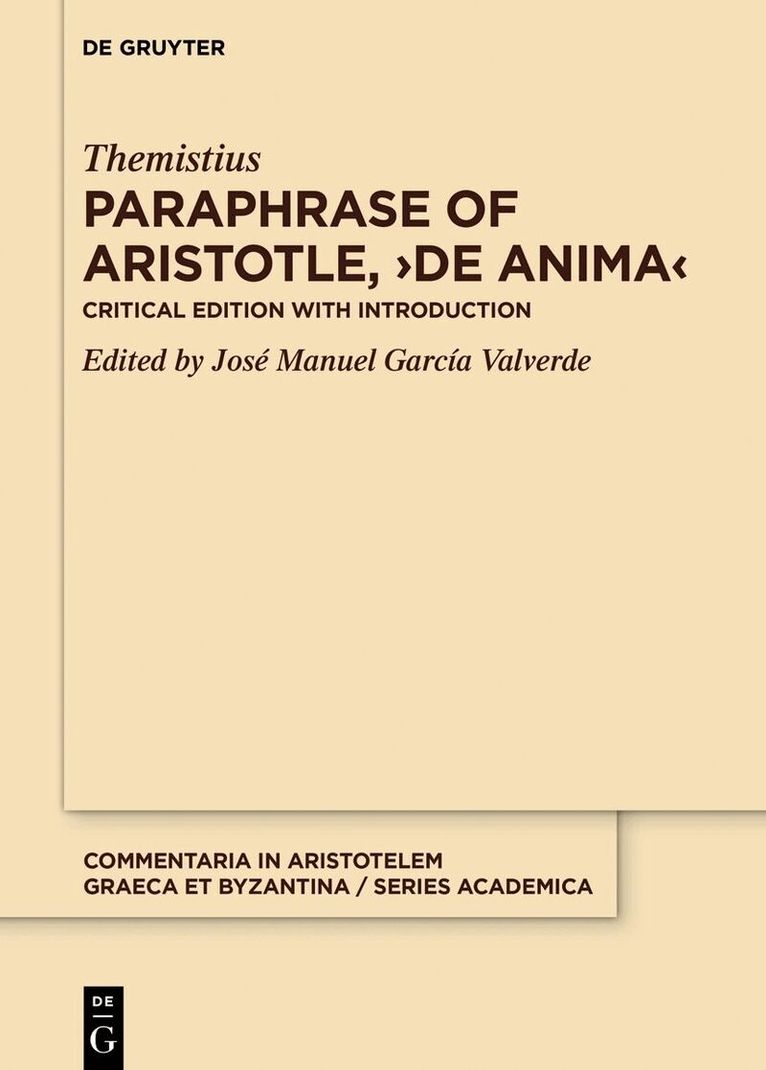
The enormous influence of Aristotle's psychology has been always related to the reception and interpretation of his De Anima. The Paraphrase by Themistius, who ran his own philosophical school in Constantinople in the mid-fourth century, has been one of the most important texts in the Aristotelian tradition. This is mainly due to the influence of his interpretation of Aristotle’s noetic on the great medieval thinkers, especially Averroes and Thomas Aquinas. That influence was also prominent on Renaissance Aristotelians and on later scholasticism. Themistius offered an interpretation of the account of the so called active intellect in the De Anima III.5 that rejected the identification of that intellect with God previously proposed by Alexander of Aphrodisias. But he also discussed other philosophical problems. His method was largely pedagogical. Themistius aimed to provide a clear restatement of Aristotle’s textual basis which would be accessible as an elementary exegesis. To do so, he executed an interpretation of Aristotle’s psychology that was faithful to the original text. But he was also aware of the need for some reconstruction and reformulation of those ideas that were far from being perfectly delimited by Aristotle himself in his text. This new critical edition is based on a thorough analysis of the manuscript tradition, which has been arranged and schematized by means of a stemma codicum. Medieval translations have also been considered, as well as the various printed versions of the text from the Aldine edition to the 19th century.