Théo Bourgeron - Böcker
Visar alla böcker från författaren Théo Bourgeron. Handla med fri frakt och snabb leverans.
6 produkter
6 produkter
1 349 kr
Skickas inom 5-8 vardagar
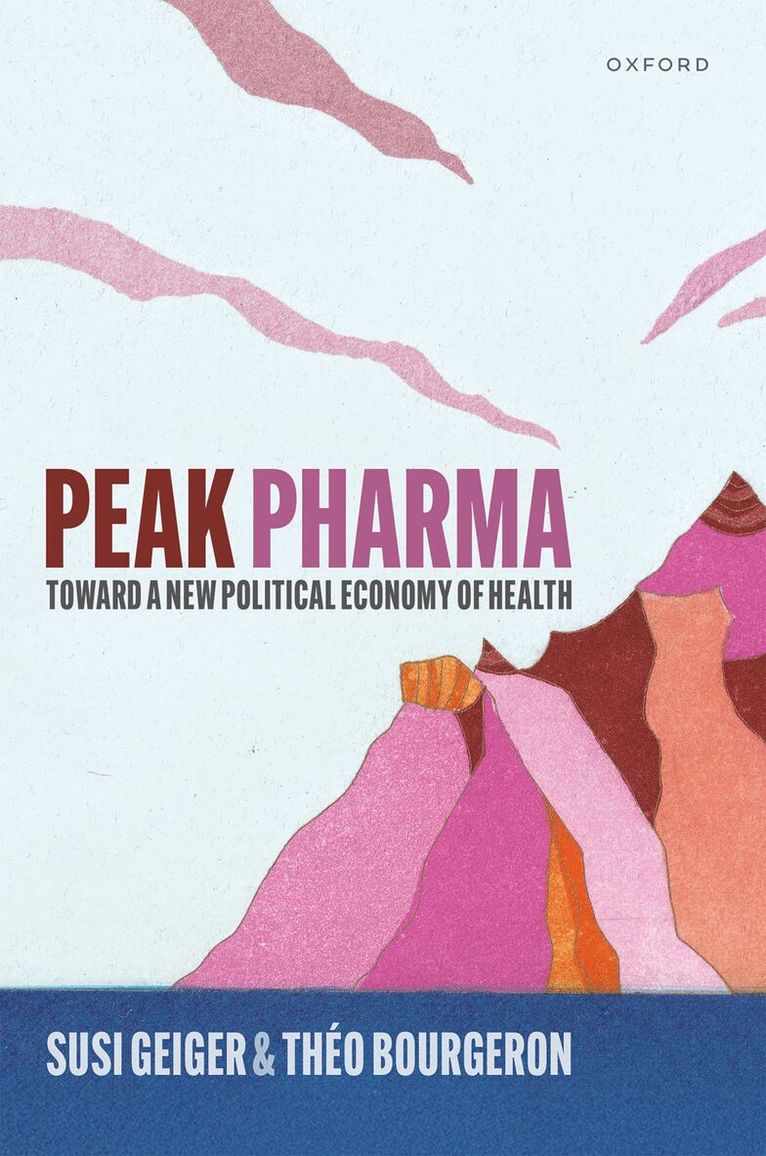
This book argues that we have reached the 'peak' of a particular model for pharmaceutical production - the neoliberal value model that has been in place since the early 1980s. 'Peak' designates a state where a value model's contradictions become exacerbated to a point where the system cannot but change: it is a point where an industry's products become too expensive and its resources exhausted, and where the coalitions that have held up that particular value model disintegrate. In other words, it is the point where an industry collapses under its own greed, of having captured too much value for itself, leaving too little to the other actors in the system.Peak Pharma argues that the neoliberal pharmaceutical system is reaching its 'peak' in several vital respects - peak pricing, peak concentration, peak financialization, and peak expansion. It uses the term to signal the crisis and possible end of an era-defining business model in the pharmaceutical sector. The book presents a synthesis of the authors' decade-long empirical investigations into social movements contesting the pharmaceutical market. It brings together a large body of knowledge that is currently spread across political economy, sociology, STS, organization studies, and the history of medicine, to follow the neoliberal dynamics that have engendered an acceleration toward 'peak' over the span of the last 40 years. It traces the emergence of different voices and groups that have contested this evolution, particularly around specific crisis points and revelatory moments, including the fight for access to HIV/AIDS medicines, the global health era, pharmaceutical corporate social responsibility, the advent of personalized medicine and digital health, Covid-19, and others. The authors trace the shifting coalitions between the pharmaceutical industry, patient organisations, and governments that kept propping up the neoliberal value system throughout this evolution. They show that the recent acceleration toward peak has led many centrist voices from patient organizations, academia and politics to start changing course from market repair to imagining alternative pharmaceutical economies, prominently including imaginaries around the pharmaceutical commons. The book closes with a set of recommendations for policy makers and civil society actors interested in fostering an alternative political economy of health.This is an open access title available under the terms of a [CC BY-NC-ND 4.0 International] licence. It is free to read at Oxford Scholarship Online and offered as a free PDF download from OUP and selected open access locations.
414 kr
Skickas inom 5-8 vardagar
This book argues that we have reached the 'peak' of a particular model for pharmaceutical production - the neoliberal value model that has been in place since the early 1980s. 'Peak' designates a state where a value model's contradictions become exacerbated to a point where the system cannot but change: it is a point where an industry's products become too expensive and its resources exhausted, and where the coalitions that have held up that particular value model disintegrate. In other words, it is the point where an industry collapses under its own greed, of having captured too much value for itself, leaving too little to the other actors in the system.Peak Pharma argues that the neoliberal pharmaceutical system is reaching its 'peak' in several vital respects - peak pricing, peak concentration, peak financialization, and peak expansion. It uses the term to signal the crisis and possible end of an era-defining business model in the pharmaceutical sector. The book presents a synthesis of the authors' decade-long empirical investigations into social movements contesting the pharmaceutical market. It brings together a large body of knowledge that is currently spread across political economy, sociology, STS, organization studies, and the history of medicine, to follow the neoliberal dynamics that have engendered an acceleration toward 'peak' over the span of the last 40 years. It traces the emergence of different voices and groups that have contested this evolution, particularly around specific crisis points and revelatory moments, including the fight for access to HIV/AIDS medicines, the global health era, pharmaceutical corporate social responsibility, the advent of personalized medicine and digital health, Covid-19, and others. The authors trace the shifting coalitions between the pharmaceutical industry, patient organisations, and governments that kept propping up the neoliberal value system throughout this evolution. They show that the recent acceleration toward peak has led many centrist voices from patient organizations, academia and politics to start changing course from market repair to imagining alternative pharmaceutical economies, prominently including imaginaries around the pharmaceutical commons. The book closes with a set of recommendations for policy makers and civil society actors interested in fostering an alternative political economy of health.This is an open access title available under the terms of a [CC BY-NC-ND 4.0 International] licence. It is free to read at Oxford Scholarship Online and offered as a free PDF download from OUP and selected open access locations.
Accumulating Capital Today
Contemporary Strategies of Profit and Dispossessive Policies
Inbunden, Engelska, 2020
2 088 kr
Skickas inom 10-15 vardagar
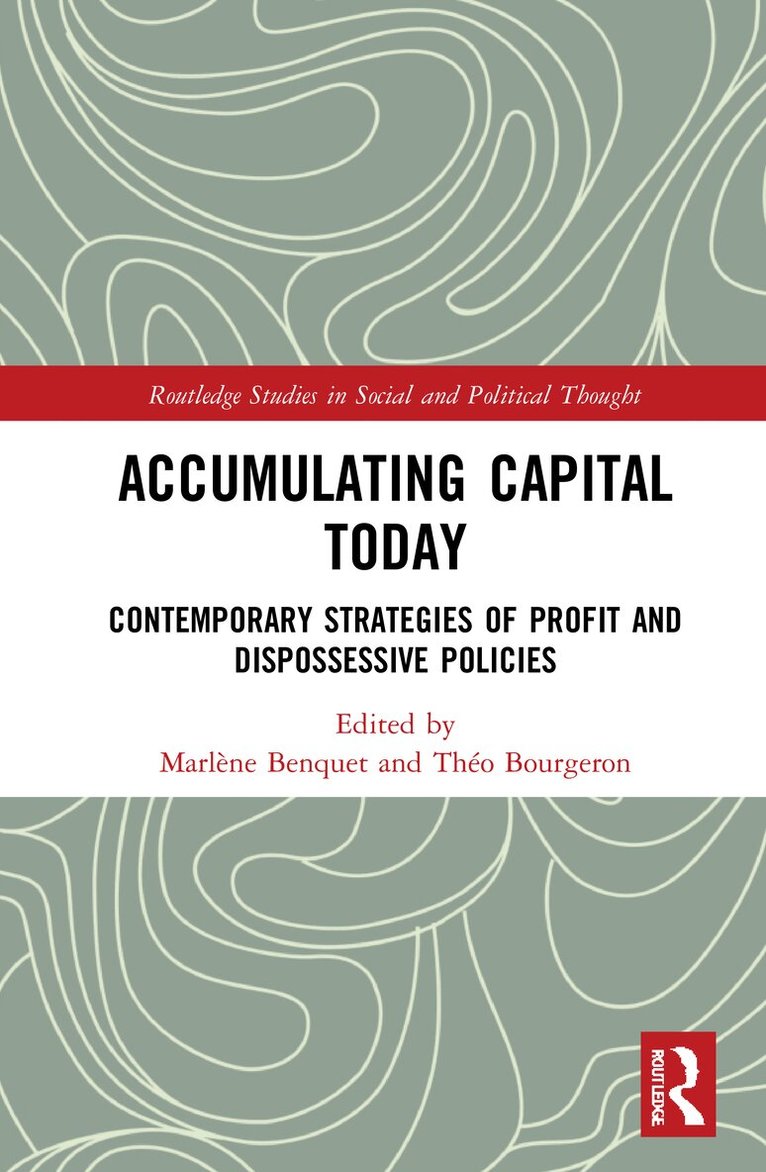
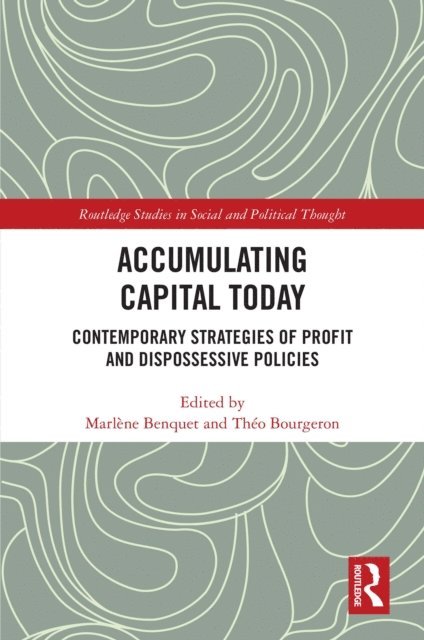
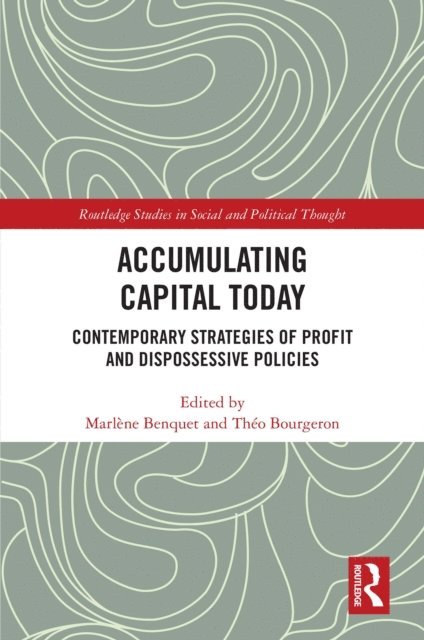
This book explores the renewal of forms of capital accumulation and the institutions that shape it. It focuses on three main sources of accumulation: the extraction of profit through labor and the commodification of nature, financial speculation and the ways in which profit is converted into wealth. It thus offers a new understanding of the economic and political logics of capital accumulation within capitalism in the 21st century. It shows the recomposition of the sources of profit, from the traditional mechanisms of labor exploitation to the contemporary logics of speculation and dispossession. Bringing together the work of scholars who study the social fabric of capitalist accumulation, Accumulating Capital Today goes beyond disciplinary frontiers to describe how capital is accumulating in a world threatened by social and environmental collapse. This book heralds the emergence of "accumulation studies" and will be of interest to researchers in sociology, anthropology, politics, political economy, geography and economics.
Accumulating Capital Today
Contemporary Strategies of Profit and Dispossessive Policies
Häftad, Engelska, 2022
617 kr
Skickas inom 10-15 vardagar
This book explores the renewal of forms of capital accumulation and the institutions that shape it. It focuses on three main sources of accumulation: the extraction of profit through labor and the commodification of nature, financial speculation and the ways in which profit is converted into wealth. It thus offers a new understanding of the economic and political logics of capital accumulation within capitalism in the 21st century. It shows the recomposition of the sources of profit, from the traditional mechanisms of labor exploitation to the contemporary logics of speculation and dispossession. Bringing together the work of scholars who study the social fabric of capitalist accumulation, Accumulating Capital Today goes beyond disciplinary frontiers to describe how capital is accumulating in a world threatened by social and environmental collapse. This book heralds the emergence of "accumulation studies" and will be of interest to researchers in sociology, anthropology, politics, political economy, geography and economics.
156 kr
Skickas inom 7-10 vardagar
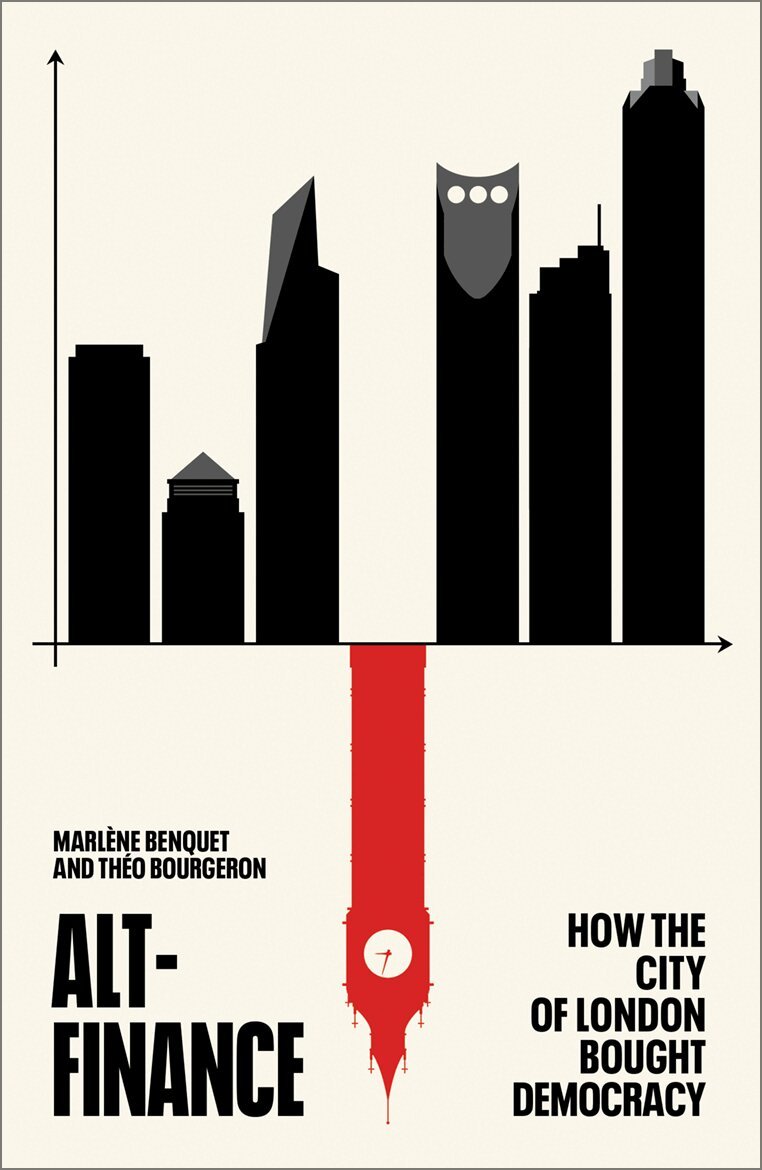
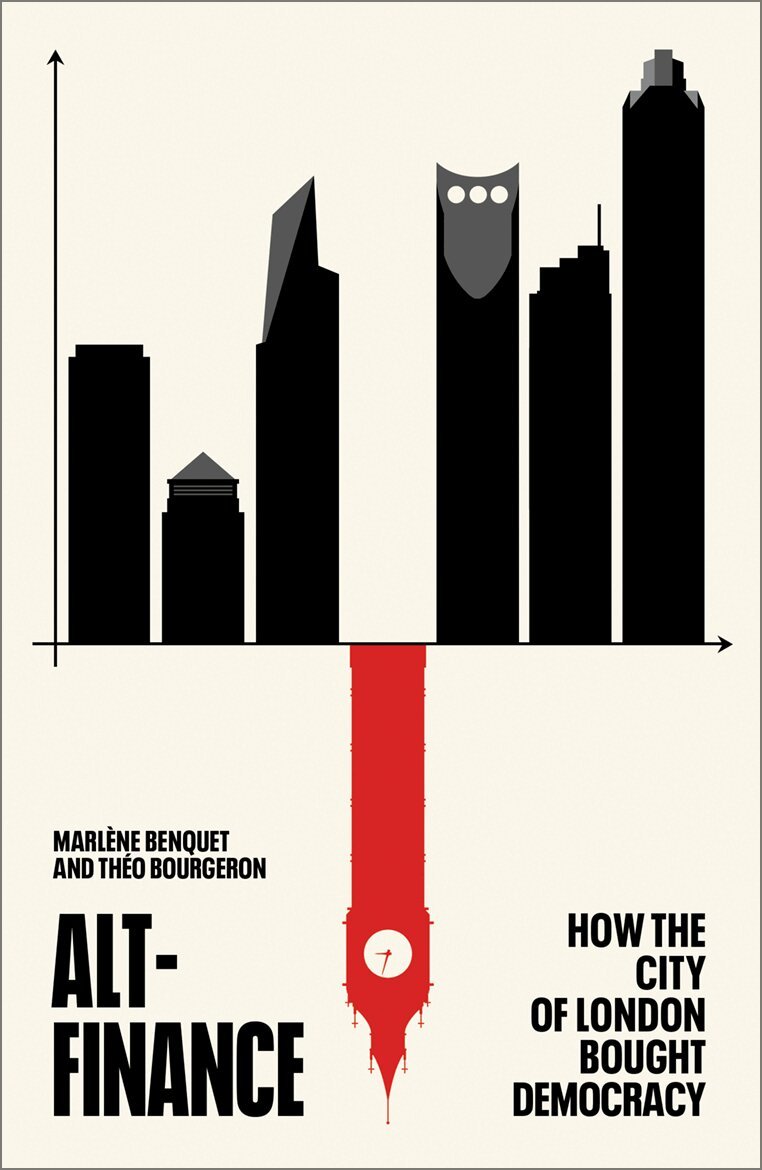
Powerful financial forces have supported the neoliberal project since the 1980s to advance their interests; but there are now signs that these forces have a new face and a new strategy. The majority of the British finance sector threw its support behind Britain leaving the European Union, a flagship institution of neoliberalism. Beyond this counterintuitive move, what was really happening and why? Alt-Finance examines a new authoritarian turn in financialised democracies, focusing on the City of London, revealing a dangerous alternative political project in the making. In a clash with traditional finance, the new behemoths of financial capital - hedge funds, private equity firms and real estate funds - have started to cohere around a set of political beliefs, promoting libertarian, authoritarian, climate-denying and Eurosceptic views. Protecting investments, supressing social dissent and reducing state interference are at the core of their mission for a new world order. By following the money, the authors provide indisputable evidence of these worrying developments. Through a clear analysis of the international dealings of this new authoritarian-libertarian regime, not just in Britain but in the US and Brazil, we can understand how our world is being shaped against our will by struggles between dominant groups.
867 kr
Skickas inom 7-10 vardagar
Powerful financial forces have supported the neoliberal project since the 1980s to advance their interests; but there are now signs that these forces have a new face and a new strategy. The majority of the British finance sector threw its support behind Britain leaving the European Union, a flagship institution of neoliberalism. Beyond this counterintuitive move, what was really happening and why? Alt-Finance examines a new authoritarian turn in financialised democracies, focusing on the City of London, revealing a dangerous alternative political project in the making. In a clash with traditional finance, the new behemoths of financial capital - hedge funds, private equity firms and real estate funds - have started to cohere around a set of political beliefs, promoting libertarian, authoritarian, climate-denying and Eurosceptic views. Protecting investments, supressing social dissent and reducing state interference are at the core of their mission for a new world order. By following the money, the authors provide indisputable evidence of these worrying developments. Through a clear analysis of the international dealings of this new authoritarian-libertarian regime, not just in Britain but in the US and Brazil, we can understand how our world is being shaped against our will by struggles between dominant groups.