Theodore D. Kemper - Böcker
Visar alla böcker från författaren Theodore D. Kemper. Handla med fri frakt och snabb leverans.
5 produkter
5 produkter
673 kr
Skickas inom 10-15 vardagar
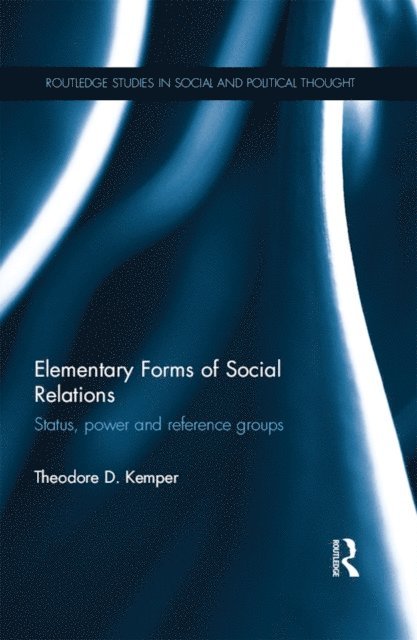
Elementary Forms of Social Relations introduces the reader to social life as a perpetual quest by individuals to gain attention, respect and regard (status) accompanied by an effort to marshal defensive and offensive means (power) to overcome the reluctance of others to grant status. This work is based on empirical evidence from many research settings showing that status and power are the main relational modes and that to understand our own and others' social behaviour, we need to understand how status and power operate in relational conduct.The status-power and reference group approach is applied to enumerate the relatively few ways in which social interaction can occur. Chapters compare the analytic value of the concept of the self with the value of reference groups that create the self. Threads of investigation include: considering the fallacy of abandoning reference groups as sources of cultural information in favour of approaches derived from cognitive neuroscience; examining a multi-person conversation from a status-power-and-reference-group stance as against a view of the same conversation based on principles of Conversation Analysis; and asserting the universality of personal status-power interests even among national leaders to name a few. By applying the author’s main theory to a range of specific cases, the author reaffirms the importance of the social to our understanding of a variety of phenomena, including the self, cultural transmission, the conduct of leaders and economic activity.This book provides readers with transparent instances of the theory in action and thus will appeal to scholars across the social sciences with interests in theory and social interaction.
Status, Power and Ritual Interaction
A Relational Reading of Durkheim, Goffman and Collins
Häftad, Engelska, 2020
618 kr
Skickas inom 10-15 vardagar
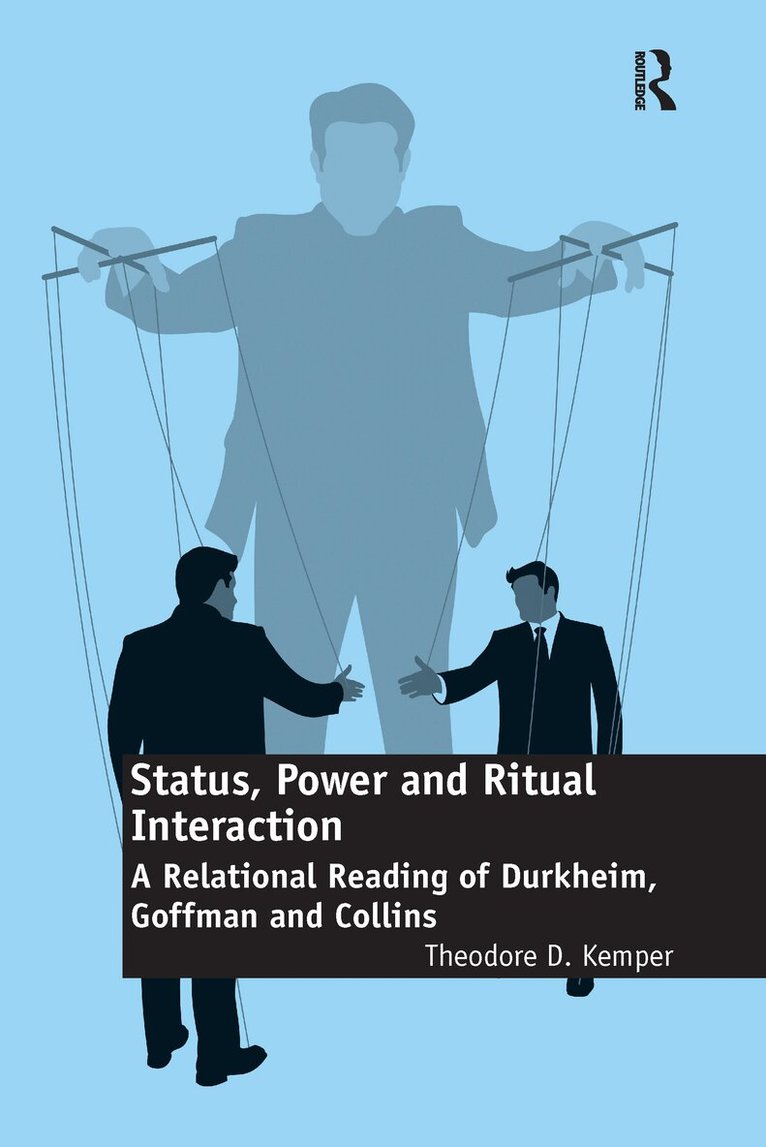
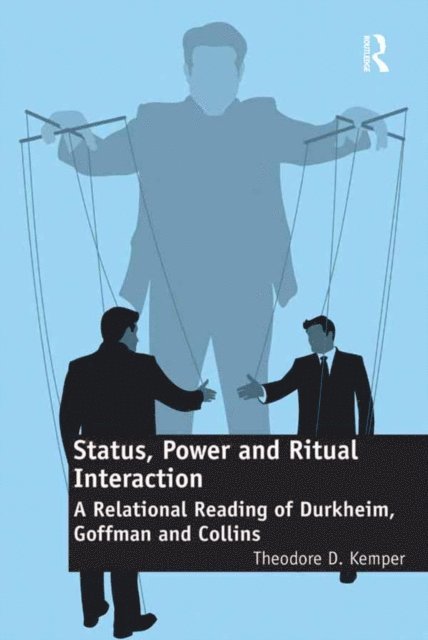
Sociologists Émile Durkheim, Erving Goffman and Randall Collins broadly suppose that ritual is foundational for social life. By contrast, this book argues that ritual is merely surface, beneath which lie status and power, the behavioral dimensions that drive all social interaction. Status, Power and Ritual Interaction identifies status and power as the twin forces that structure social relations, determine emotions and link individuals to the reference groups that deliver culture and administer preferences, actions, beliefs and ideas. An especially important contention is that allegiance to ideas, even those as fundamental as the belief that 1 + 1 = 2, is primarily faithfulness to the reference groups that foster the ideas and not to the ideas themselves. This triggers the counter-intuitive deduction that the self, a concept many sociologists, social psychologists and therapists prize so highly, is feckless and irrelevant. Status-power theory leads also to derivations about motivation, play, humor, sacred symbols, social bonding, creative thought, love and sex and other social involvements now either obscure or misunderstood. Engaging with Durkheim (on collective effervescence), Goffman (on ritual-cum-public order) and Collins (on interaction ritual), this book is richly illustrated with instances of how to examine many central questions about society and social interaction from the status-power perspective. It speaks not only to sociologists, but also to anthropologists, behavioral economists and social and clinical psychologists - to all disciplines that examine or treat of social life.
391 kr
Tillfälligt slut
In this book leading sociologists of emotions present their research agendas for work that promises to shape the study of emotions well into the next decade. The essays represent the full range of ideas, issues, and directions in the field.From diverse theoretical positions - symbolic interactionist, social constructionist, feminist, positivist, linguistic, phenomenologist, Marxist, and evolutionist - the authors set forth their current understandings, as well as the directions of future work, with a discussion of the most significant problems in emotions research.
2 113 kr
Skickas inom 10-15 vardagar
Elementary Forms of Social Relations introduces the reader to social life as a perpetual quest by individuals to gain attention, respect and regard (status) accompanied by an effort to marshal defensive and offensive means (power) to overcome the reluctance of others to grant status. This work is based on empirical evidence from many research settings showing that status and power are the main relational modes and that to understand our own and others' social behaviour, we need to understand how status and power operate in relational conduct.The status-power and reference group approach is applied to enumerate the relatively few ways in which social interaction can occur. Chapters compare the analytic value of the concept of the self with the value of reference groups that create the self. Threads of investigation include: considering the fallacy of abandoning reference groups as sources of cultural information in favour of approaches derived from cognitive neuroscience; examining a multi-person conversation from a status-power-and-reference-group stance as against a view of the same conversation based on principles of Conversation Analysis; and asserting the universality of personal status-power interests even among national leaders to name a few. By applying the author’s main theory to a range of specific cases, the author reaffirms the importance of the social to our understanding of a variety of phenomena, including the self, cultural transmission, the conduct of leaders and economic activity.This book provides readers with transparent instances of the theory in action and thus will appeal to scholars across the social sciences with interests in theory and social interaction.
Status, Power and Ritual Interaction
A Relational Reading of Durkheim, Goffman and Collins
Inbunden, Engelska, 2011
2 181 kr
Skickas inom 10-15 vardagar
Sociologists Émile Durkheim, Erving Goffman and Randall Collins broadly suppose that ritual is foundational for social life. By contrast, this book argues that ritual is merely surface, beneath which lie status and power, the behavioral dimensions that drive all social interaction. Status, Power and Ritual Interaction identifies status and power as the twin forces that structure social relations, determine emotions and link individuals to the reference groups that deliver culture and administer preferences, actions, beliefs and ideas. An especially important contention is that allegiance to ideas, even those as fundamental as the belief that 1 + 1 = 2, is primarily faithfulness to the reference groups that foster the ideas and not to the ideas themselves. This triggers the counter-intuitive deduction that the self, a concept many sociologists, social psychologists and therapists prize so highly, is feckless and irrelevant. Status-power theory leads also to derivations about motivation, play, humor, sacred symbols, social bonding, creative thought, love and sex and other social involvements now either obscure or misunderstood. Engaging with Durkheim (on collective effervescence), Goffman (on ritual-cum-public order) and Collins (on interaction ritual), this book is richly illustrated with instances of how to examine many central questions about society and social interaction from the status-power perspective. It speaks not only to sociologists, but also to anthropologists, behavioral economists and social and clinical psychologists - to all disciplines that examine or treat of social life.