Theodore G. Ammon - Böcker
Visar alla böcker från författaren Theodore G. Ammon. Handla med fri frakt och snabb leverans.
3 produkter
3 produkter
292 kr
Skickas inom 3-6 vardagar
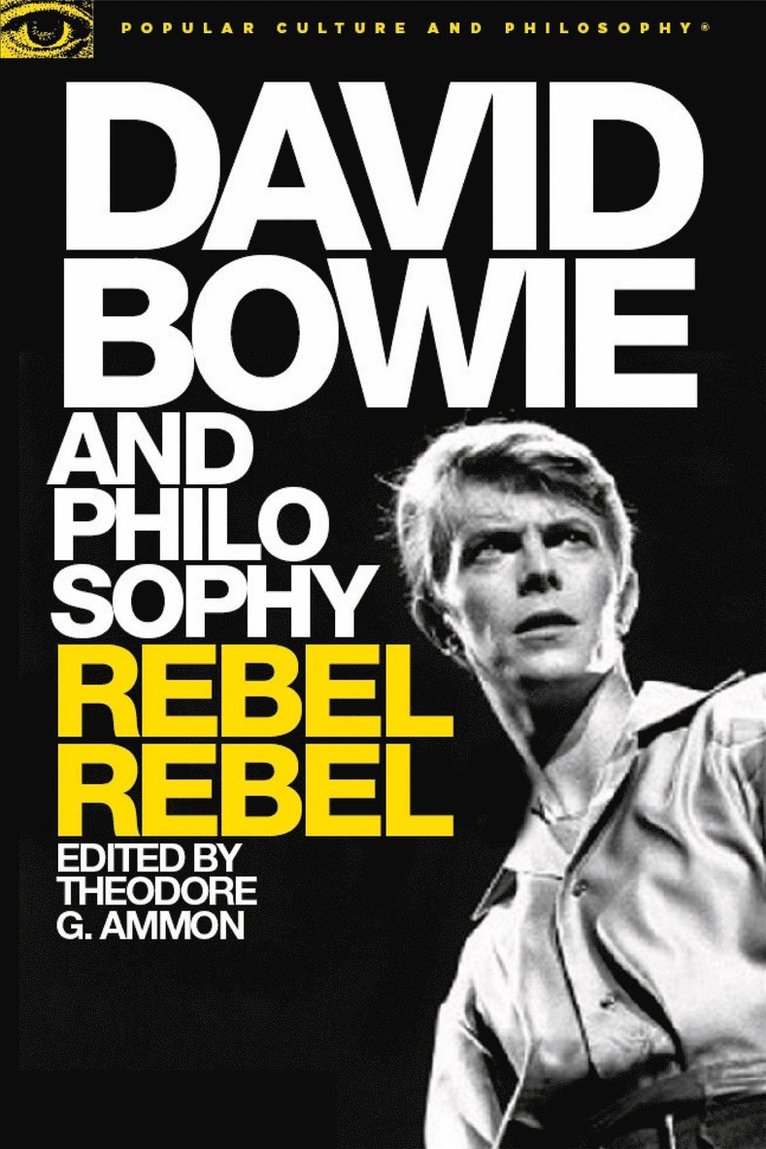
The philosophically rich David Bowie is an artist of wide and continuing influence. The theatrical antics of Bowie ushered in a new rock aesthetic, but there is much more to Bowie than mere spectacle. The visual belies the increasing depths of his concerns, even at his lowest personal moments. We never know what lies in store in a Bowie song, for there is no point in his nearly 30 albums at which one can say, "That's typical Bowie!" Who else has combined techno and hard rock, switched to R&B love songs (with accompanying gospel) to funk to jazz-rock fusion and back again? Among the topics explored in David Bowie and Philosophy are the nature of Bowie as an institution and a cult; Bowie's work in many platforms, including movies and TV; Bowie's spanning of low and high art; his relation to Andy Warhol; the influence of Buddhism and Kabuki theater; the recurring theme of Bowie as a space alien; the dystopian element in Bowie's thinking; the role of fashion in Bowie's creativity; the aesthetics of theatrical rock and glam rock; and Bowie's public identification with bisexuality and his influence within the LGBTQ community.
250 kr
Skickas inom 3-6 vardagar
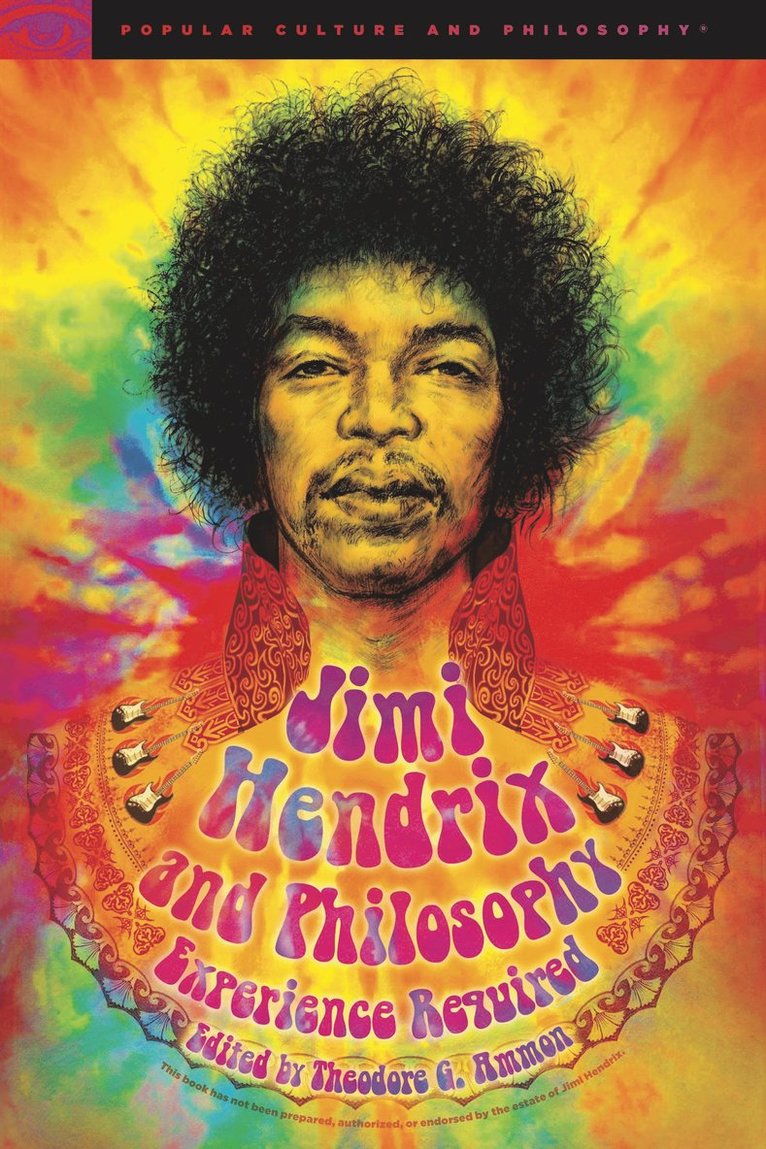
In his brief career Jimi Hendrix transformed rock music, established himself as the greatest guitarist of all time, and left a rich legacy of original songs and dazzling recordings. In Jimi Hendrix and Philosophy, philosophers come to terms with the experience and the phenomenon of Hendrix, uncovering some surprising implications of Hendrix’s life and work.Much of this book is concerned with the restless polarities and dualities that reveal themselves through Hendrix. His compositions display a preoccupation with the tragic nature of life, moving between the polarities of Schopenhauer’s The World as Will and Idea and and Platonic philosophy. Jimi’s “guitar-being” has surprising implications for the philosophical relation between mind and body.There is in Hendrix a duality between innovation and tradition—innovation in psychedelic sonic adventures and tradition in the form of the blues. Hendrix exemplifies the interaction of technology and art, as seen in his use of feedback, varieties of noise, and backwards reel-to-reel playing. How much of the Hendrix phenomenon can be explained by the technological situation and how much by his own unique genius?Everyone knows about Hendrix’s use of feedback in the narrow sense, but feedback can also be viewed as a general phenomenon that arises in complex dynamical systems and emerges at the border of chaos and order.Although critics associate Hendrix’s lifestyle and early death with self-destructive patterns of the Sixties, his actual thoughts as revealed in his songs and writings show a more positive and constructive concern with authentic freedom. What did Hendrix mean when he spoke of “the realities” of conflict conveyed in “Machine Gun”? What is a “Voodoo Chile”? When does noise become music? These and other questions are addressed in Jimi Hendrix and Philosophy.Hendrix’s undying popularity following his death in 1970 has led to the release over the years of a large body of material which Hendrix would never have chosen to make public, raising serious questions about what we owe to the dead and how we view the construction of the artist’s public persona.
327 kr
Skickas inom 7-10 vardagar
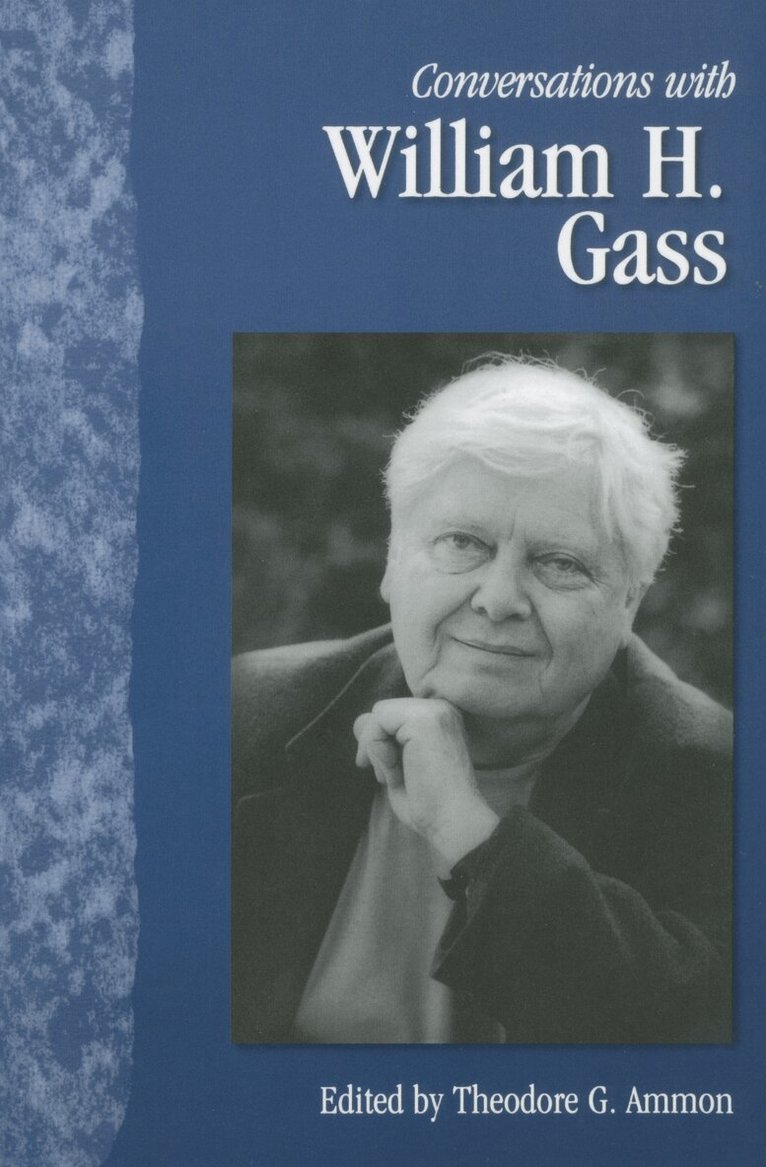
Conversations with William H. Gass captures the imagination and philosophical acumen of one of America's most important aestheticians, critical theorists, fiction writers, and essayists.From his first major novel, Omensetter's Luck (1966), to his numerous collections of essays and philosophical inquiries, to his controversial novel The Tunnel (1995), Gass (b. 1924) has proved himself a meticulous craftsman. Throughout these interviews, he reveals an aesthetic that combines ideas from sources as disparate as Ludwig Wittgenstein, Rainer Maria Rilke, Gertrude Stein, and Plato.The interviews make clear the unity behind Gass's views is by his own design. Conversations retrace his undergraduate years at Kenyon College and his subsequent philosophical investigation of metaphor at Cornell University.Gass has never strayed from his belief that metaphor is central and fundamental to thought and to aesthetics. In these interviews he reiterates time and again his belief that the ultimate understanding of the relationship of language to the world pivots on one's understanding of metaphor.n interviews, in profiles, and in his own essays, Gass does not hide from questions about his art and personal motivations, no matter how frequently they are asked, nor does he toy with his interviewers. Revealing how he never shies from an intellectual joust, this collection includes a rousing, contentious debate with John Gardner, fellow literary pundit and fiction writer.The distinction of Gass's prose is matched by the clarity and brilliance of the mind behind it. These talks allow an unobstructed view. Anyone interested in Gass's writing will delight in hearing the brutally honest voice of the mind that produced it.