Thies Staack - Böcker
Visar alla böcker från författaren Thies Staack. Handla med fri frakt och snabb leverans.
2 produkter
2 produkter
1 761 kr
Skickas inom 3-6 vardagar
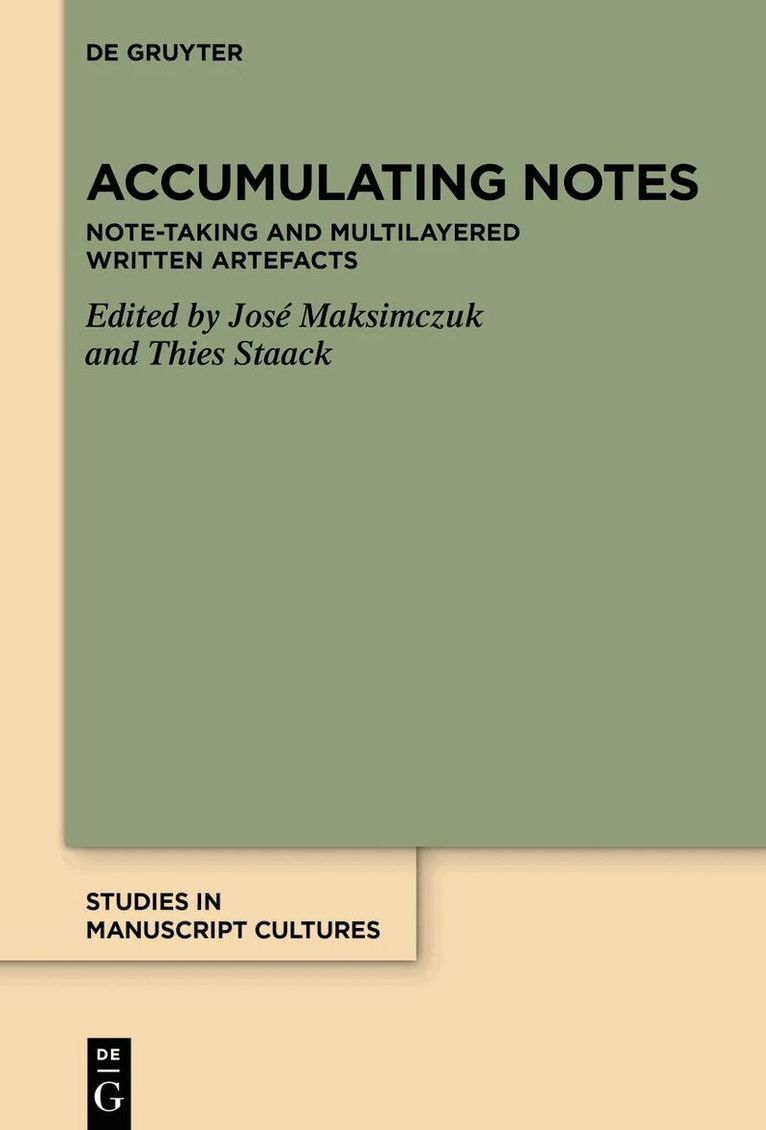
People take notes in different contexts of their daily lives and for various purposes. While brief handwritten notes can occur individually, for example, as a Post-it note, they are also collected over the course of time in notebooks, diaries, or logs. Recent scholarship has proposed to approach written artefacts as ‘evolving entities’ and suggested frameworks to analyse the layers of material and/or content that they acquire over time. Such a stratigraphic analysis has been fruitfully applied to many types of written artefacts, especially those produced during a clearly identifiable and planned project. However, the potential of this approach remained largely untapped for written artefacts whose production does not follow a predefined plan or necessarily proceed in an orderly fashion. Focusing on the multifarious manifestations of notes as material tools for the visualisation, organisation, and transmission of knowledge, this volume aims to fill this gap. The present volume sheds light on how practices of note-taking and knowledge organisation (re)shape written artefacts and vice-versa by dissecting the processes in which notes accumulate in a variety of multilayered written artefacts from different cultures and periods.
Del 130 - Sinica Leidensia
Legal Practice in the Formative Stages of the Chinese Empire
An Annotated Translation of the Exemplary Qin Criminal Cases from the Yuelu Academy Collection
Inbunden, Engelska, 2016
2 593 kr
Skickas inom 5-8 vardagar
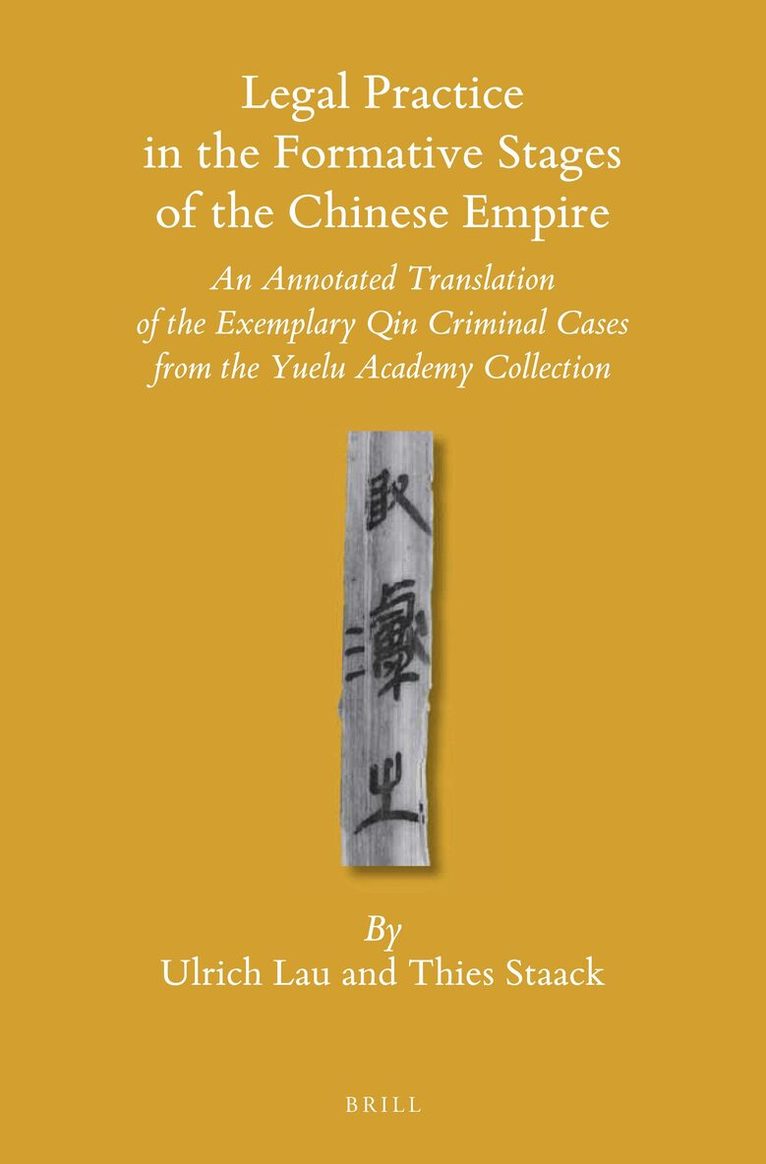
In Legal Practice in the Formative Stages of the Chinese Empire, Ulrich Lau and Thies Staack offer a richly annotated English translation of the Wei yu deng zhuang si zhong 爲獄等狀四種, a collection of criminal case records from the pre-imperial state of Qin (dating from 246 BC–222 BC) that is part of the manuscripts in the possession of Yuelu Academy. Through an analysis of the collection and a comparison with similar manuscript finds from the Qin and Han periods, the authors shed new light on many aspects of the Qin administration of justice, e.g. criminal investigation, stages of criminal procedure, principles for determining punishment, and interaction of judicial officials on different administrative levels.