
Thomas A. Lewis – författare
Visar alla böcker från författaren Thomas A. Lewis. Handla med fri frakt och snabb leverans.
8 produkter
8 produkter
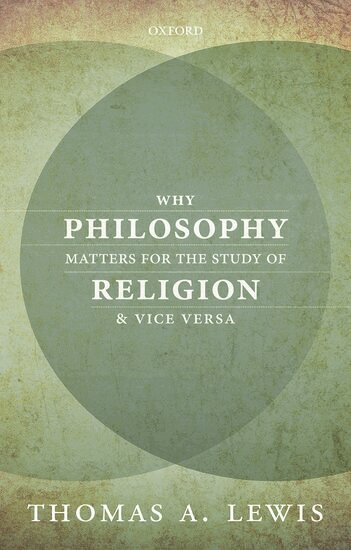
Inbunden, Engelska, 2015
477 kr
Skickas inom 7-10 vardagar
Work in philosophy of religion is still strongly marked by an excessive focus on Christianity and, to a lesser extent, Judaism -- almost to the exclusion of other religious traditions. Moreover, in many cases it has been confined to a narrow set of intellectual problems, without embedding these in their larger social, historical, and practical contexts. Why Philosophy Matters for the Study of Religion--and Vice Versa addresses this situation through a series of interventions intended to work against the gap that exists between much scholarship in philosophy of religion and important recent developments that speak to religious studies as a whole.This volume takes up what, in recent years, has often been seen as a fundamental reason for excluding religious ethics and philosophy of religion from religious studies: their explicit normativity. Against this presupposition, Thomas A. Lewis argues that normativity is pervasive--not unique to ethics and philosophy of religion--and therefore not a reason to exclude them from religious studies. Lewis bridges more philosophical and historical subfields by arguing for the importance of history to the philosophy of religion. He considers the future of religious ethics, explaining that the field as whole should learn from the methodological developments associated with recent work in comparative religious ethics and 'comparative religious ethics' should no longer be conceived as a distinct subfield. The concluding chapter engages broader, post-9/11 arguments about the importance of studying religion arguing, that prominent contemporary notions of 'religious literacy' actually hinder our ability to grasp religion's significance and impact in the world today.
Häftad, Engelska, 2017
294 kr
Skickas inom 7-10 vardagar
Work in philosophy of religion is still strongly marked by an excessive focus on Christianity and, to a lesser extent, Judaism -- almost to the exclusion of other religious traditions. Moreover, in many cases it has been confined to a narrow set of intellectual problems, without embedding these in their larger social, historical, and practical contexts. Why Philosophy Matters for the Study of Religion--and Vice Versa addresses this situation through a series of interventions intended to work against the gap that exists between much scholarship in philosophy of religion and important recent developments that speak to religious studies as a whole.This volume takes up what, in recent years, has often been seen as a fundamental reason for excluding religious ethics and philosophy of religion from religious studies: their explicit normativity. Against this presupposition, Thomas A. Lewis argues that normativity is pervasive—not unique to ethics and philosophy of religion—and therefore not a reason to exclude them from religious studies. Lewis bridges more philosophical and historical subfields by arguing for the importance of history to the philosophy of religion. He considers the future of religious ethics, explaining that the field as whole should learn from the methodological developments associated with recent work in comparative religious ethics and 'comparative religious ethics' should no longer be conceived as a distinct subfield. The concluding chapter engages broader, post-9/11 arguments about the importance of studying religion arguing, that prominent contemporary notions of 'religious literacy' actually hinder our ability to grasp religion's significance and impact in the world today.
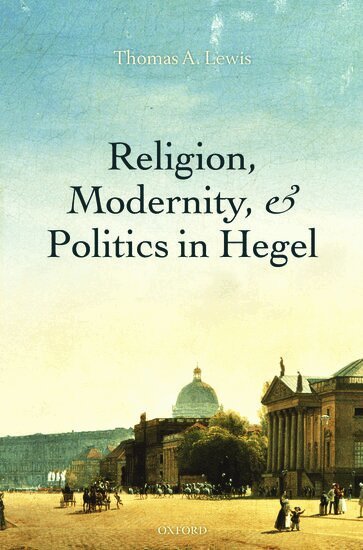
Inbunden, Engelska, 2011
1 775 kr
Skickas inom 5-8 vardagar
Religion, Modernity, and Politics in Hegel analyzes Hegel's philosophy of religion and develops its significance for ongoing debates about the relation between religion and politics as well as the history of the conceptualization of religion. One of the most vital currents in contemporary Hegel scholarship argues that Hegel radicalizes, rather than reneges upon, Kant's critique of metaphysics. Critics have claimed that this new scholarship cannot account for Hegel's treatment of religion. Addressing an important lacuna in the scholarship, Lewis argues that reading Hegel's philosophy of religion in relation to these non-traditional interpretations of his intellectual project as a whole generates a new understanding of Hegel as well as a new perspective on religion, politics, and modernity. In relation to the conceptualization of religion, Hegel's complex and multi-faceted account of religion reconciles common contrasts, presenting religion as both personal and social, both emotional and cognitive, both theoretical and practical. In relation to politics, it is public without being theocratic and gives a decisive importance to individual conscience. Attending closely to Hegel's social, political, and intellectual context, the book begins with Hegel's early concerns with a modern civil religion in the tumultuous 1790s. After analyzing Hegel's crucial engagement with post-Kantian idealism, Lewis elaborates Hegel's mature philosophy of religion as presented in his Berlin Lectures on the Philosophy of Religion. This unique engagement between Hegel and the contemporary study of religion thus advances the non-traditionalist interpretation of Hegel's project as a whole and inspires a promising conception of religion that challenges those that have dominated both public discourse and religious studies scholarship.
Häftad, Engelska, 2014
413 kr
Skickas inom 7-10 vardagar
Religion, Modernity, and Politics in Hegel analyzes Hegel's philosophy of religion and develops its significance for ongoing debates about the relation between religion and politics as well as the history of the conceptualization of religion. One of the most vital currents in contemporary Hegel scholarship argues that Hegel radicalizes, rather than reneges upon, Kant's critique of metaphysics. Critics have claimed that this new scholarship cannot account for Hegel's treatment of religion. Addressing an important lacuna in the scholarship, Lewis argues that reading Hegel's philosophy of religion in relation to these non-traditional interpretations of his intellectual project as a whole generates a new understanding of Hegel as well as a new perspective on religion, politics, and modernity. In relation to the conceptualization of religion, Hegel's complex and multi-faceted account of religion reconciles common contrasts, presenting religion as both personal and social, both emotional and cognitive, both theoretical and practical. In relation to politics, it is public without being theocratic and gives a decisive importance to individual conscience. Attending closely to Hegel's social, political, and intellectual context, the book begins with Hegel's early concerns with a modern civil religion in the tumultuous 1790s. After analyzing Hegel's crucial engagement with post-Kantian idealism, Lewis elaborates Hegel's mature philosophy of religion as presented in his Berlin Lectures on the Philosophy of Religion. This unique engagement between Hegel and the contemporary study of religion thus advances the non-traditionalist interpretation of Hegel's project as a whole and inspires a promising conception of religion that challenges those that have dominated both public discourse and religious studies scholarship.
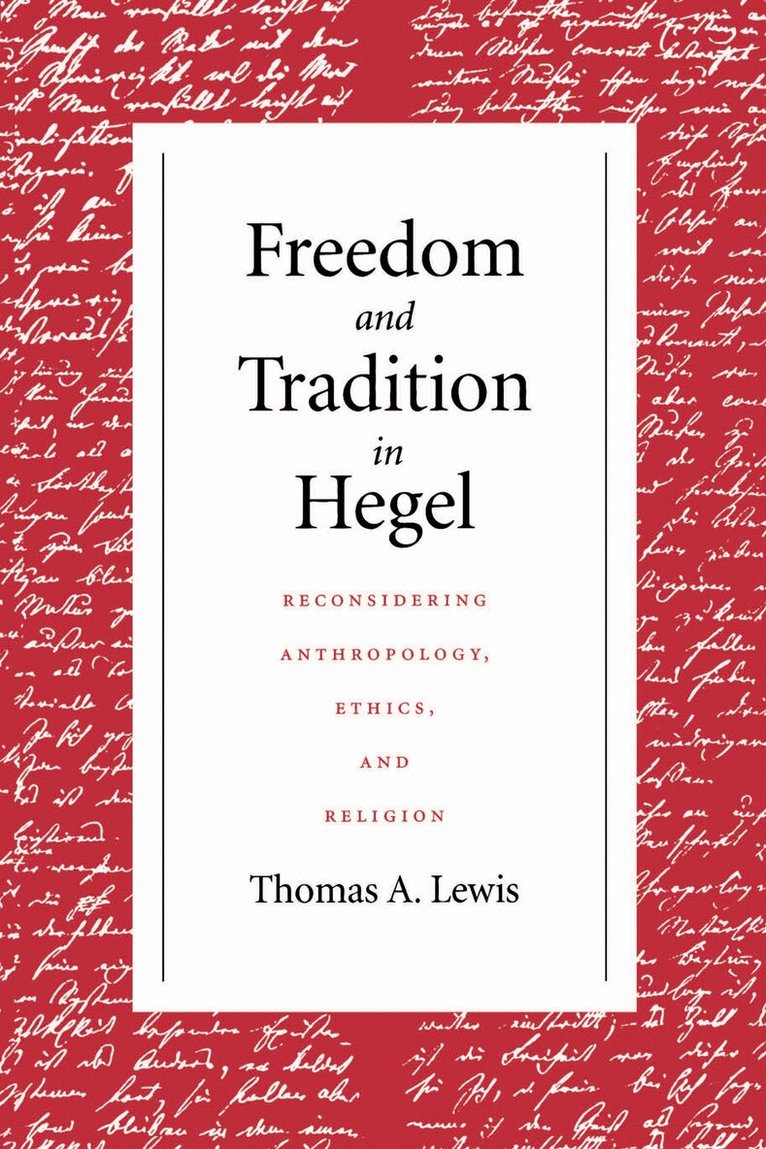
Inbunden, Engelska, 2005
1 095 kr
Skickas inom 10-15 vardagar
Freedom and Tradition in Hegel stands at the intersection of three vital currents in contemporary ethics: debates over philosophical anthropology and its significance for ethics, reevaluations of tradition and modernity, and a resurgence of interest in Hegel. Thomas A. Lewis engages these three streams of thought in light of Hegel's recently published Vorlesungen über die Philosophie des Geistes. Drawing extensively on these lectures, Lewis addresses an important lacuna in Hegelian scholarship by first providing a systematic analysis of Hegel's philosophical anthropology and then examining its fundamental role in Hegel's ethical and religious thought.Lewis contends that Hegel's anthropology seeks to account for both the ongoing significance of the religious and philosophical traditions in which we are raised and our ability to transcend these traditions. Pursuing the implications of the integral role of practice in Hegel's anthropology, Lewis argues for a more progressive interpretation of Hegel's ethics and a "Hegelian" critique of Hegel's most problematic statements on political and social issues. Lewis concludes that Hegel offers a powerful strategy for reconciling freedom and tradition.This fresh interpretation of Hegel's work provides a challenging new perspective on his ethical and religious thought. It will be of significant value to students and scholars in religious studies, philosophy, and political theory.
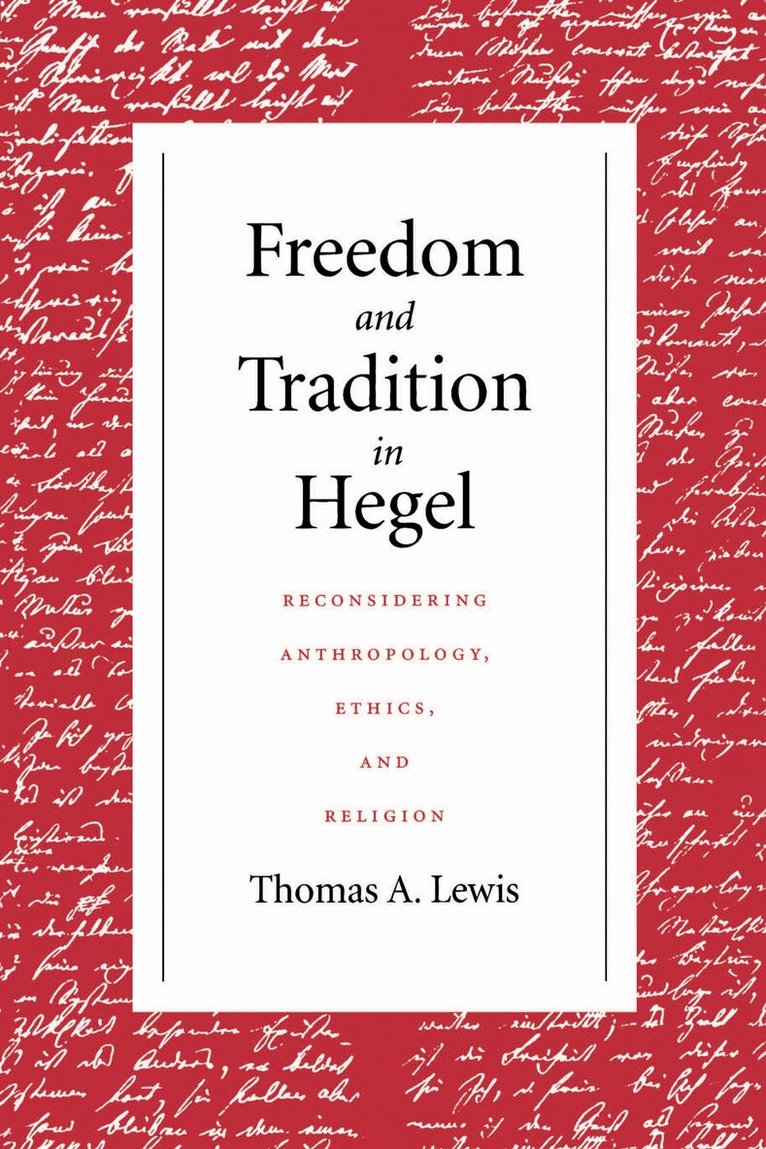
Häftad, Engelska, 2005
374 kr
Skickas inom 10-15 vardagar
Freedom and Tradition in Hegel stands at the intersection of three vital currents in contemporary ethics: debates over philosophical anthropology and its significance for ethics, reevaluations of tradition and modernity, and a resurgence of interest in Hegel. Thomas A. Lewis engages these three streams of thought in light of Hegel's recently published Vorlesungen über die Philosophie des Geistes. Drawing extensively on these lectures, Lewis addresses an important lacuna in Hegelian scholarship by first providing a systematic analysis of Hegel's philosophical anthropology and then examining its fundamental role in Hegel's ethical and religious thought.Lewis contends that Hegel's anthropology seeks to account for both the ongoing significance of the religious and philosophical traditions in which we are raised and our ability to transcend these traditions. Pursuing the implications of the integral role of practice in Hegel's anthropology, Lewis argues for a more progressive interpretation of Hegel's ethics and a "Hegelian" critique of Hegel's most problematic statements on political and social issues. Lewis concludes that Hegel offers a powerful strategy for reconciling freedom and tradition.This fresh interpretation of Hegel's work provides a challenging new perspective on his ethical and religious thought. It will be of significant value to students and scholars in religious studies, philosophy, and political theory.

Häftad, Engelska
187 kr
Skickas inom 3-6 vardagar

Häftad, Engelska, 2011
309 kr
Skickas inom 5-8 vardagar