Thomas Balsley - Böcker
Visar alla böcker från författaren Thomas Balsley. Handla med fri frakt och snabb leverans.
2 produkter
2 produkter
375 kr
Skickas inom 7-10 vardagar
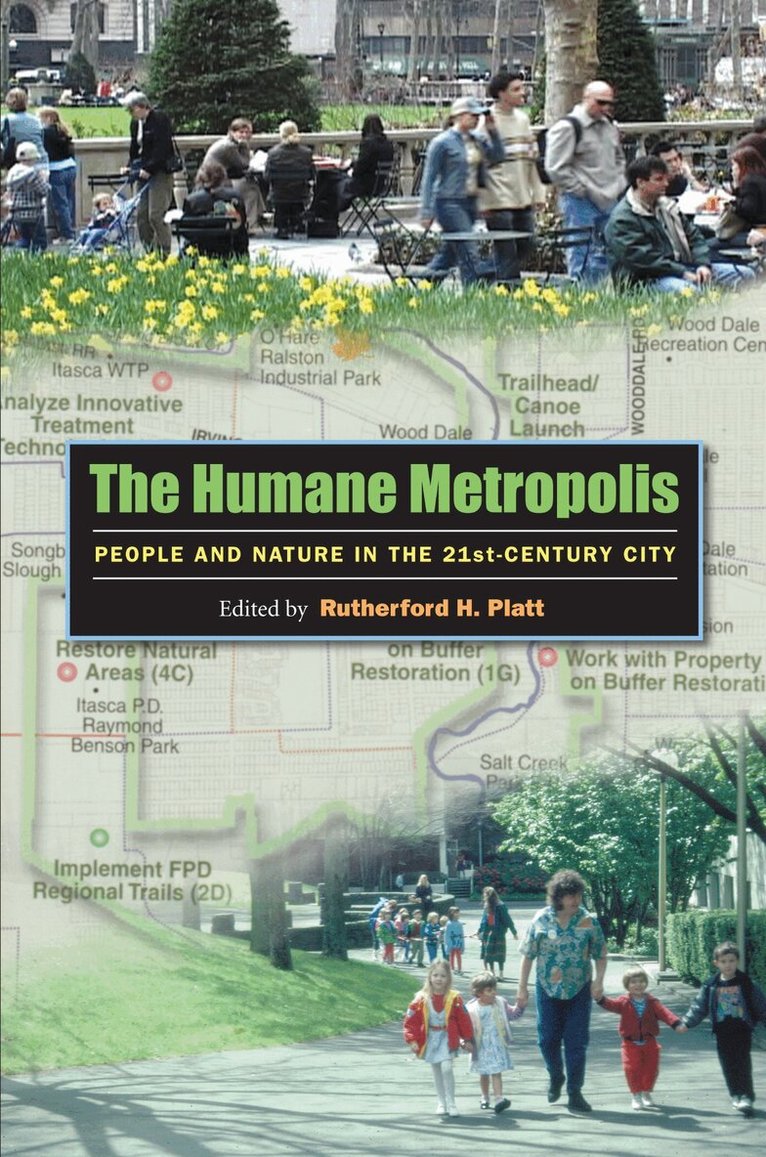
Four-fifths of Americans now live in the nation's sprawling metropolitan areas, and half of the world's population is now classified as ""urban."" As cities become the dominant living environment for humans, there is growing concern about how to make such places more habitable, more healthy and safe, more ecological, and more equitable - in short, more ""humane."" This book explores the prospects for a more humane metropolis through a series of essays and case studies that consider why and how urban places can be made greener and more amenable. Its point of departure is the legacy of William H. Whyte (1917-1999), one of America's most admired urban thinkers. From his eyrie high above Manhattan in the offices of the Rockefeller Brothers Fund, Whyte laid the foundation for today's ""smart growth"" and ""new urbanist"" movements with books, such as ""The Last Landscape"" (1968). His passion for improving the habitability of cities and suburbs is reflected in the diverse grass-roots urban design and regreening strategies discussed in this volume. Topics examined in this book include urban and regional greenspaces, urban ecological restoration, social equity, and green design. Some of the contributors are recognized academic experts, while others offer direct practical knowledge of particular problems and initiatives. The editor's introduction and epilogue set the individual chapters in a broader context and suggest how the strategies described, if widely replicated, may help create more humane urban environments.
374 kr
Tillfälligt slut
Thomas Balsley's work consists of public and private parks, plazas, campuses, and waterfronts and attests to the extraordinary level of design excellence that has defined his international reputation and that of his studio. Working in the margins of the city grid, scraps of land and post-industrial waterfronts, his unique fusion of nature, culture and process have produced vibrant public spaces, urban miracles both large and small, provocative and sublime, and has established himself as a leader in his field and champion of the sustainable and livable urban environment. His award-winning and iconic designs can be found in Dallas Main Street Garden, Cleveland's Perk Park, Tampa's Curtis Hixon Park, Tokyo's Gate City and World Trade Centers in Osaka and Guiyang, China. In NYC alone, his robust portfolio of over one hundred landscapes includes 13 blocks along the Hudson River called Riverside Park South, Gantry Park, Hunter's Point South along the East River across from the United Nations, Peggy Rockefeller Plaza, and Balsley Park on Manhattan's 57th Street, named in his honour.His teaching and speaking engagements at Harvard's GSD, University of Pennsylvania, the National Building Museum, Seoul National University, etc., together with a wealth of media exposure and publications, including Thomas Balsley: The Urban Landscape, have exposed his work to a broader international audience.