Thomas Blackson – författare
Visar alla böcker från författaren Thomas Blackson. Handla med fri frakt och snabb leverans.
3 produkter
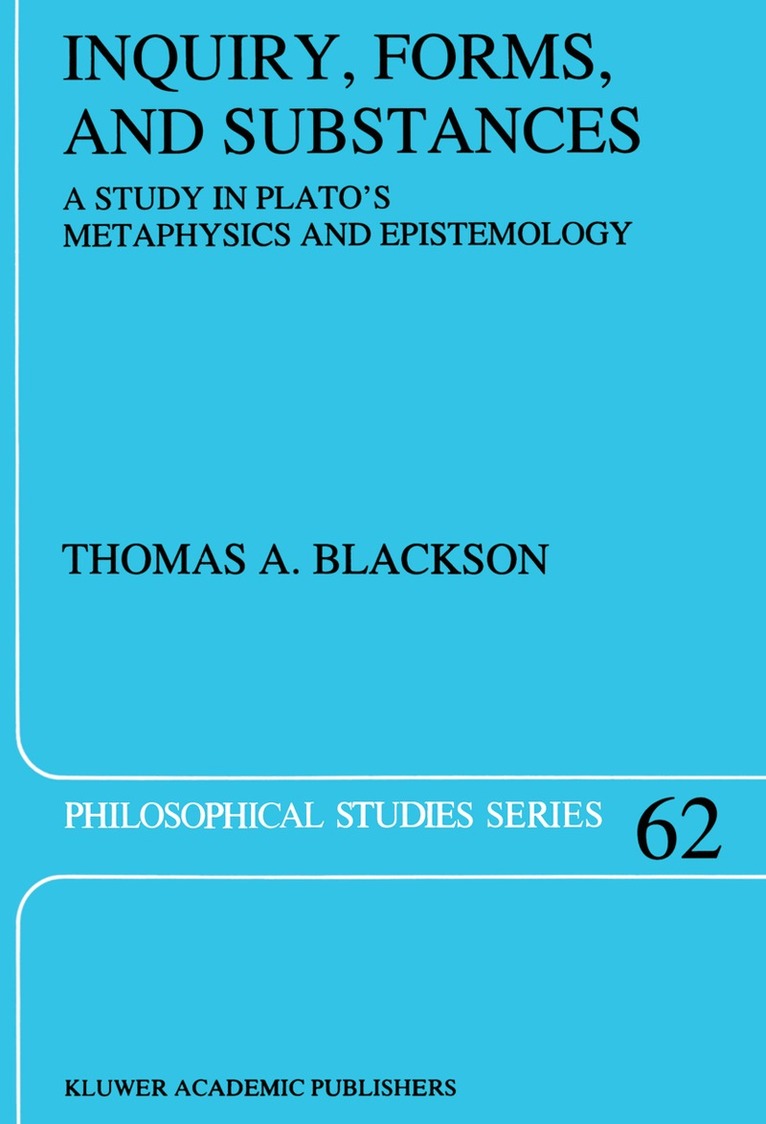
Inquiry, Forms, and Substances
A Study in Plato’s Metaphysics and Epistemology
Inbunden, 1995
1096 kr
Lägg i varukorg
i. Introductory remarks 1 Plato, but not Socrates, concluded that the Forms are substances. Whether the Forms are substances is not an issue that Socrates had in mind. He did not deny it, but neither did he affirm it. If Socrates were asked a series of questions designed to determine whether he …
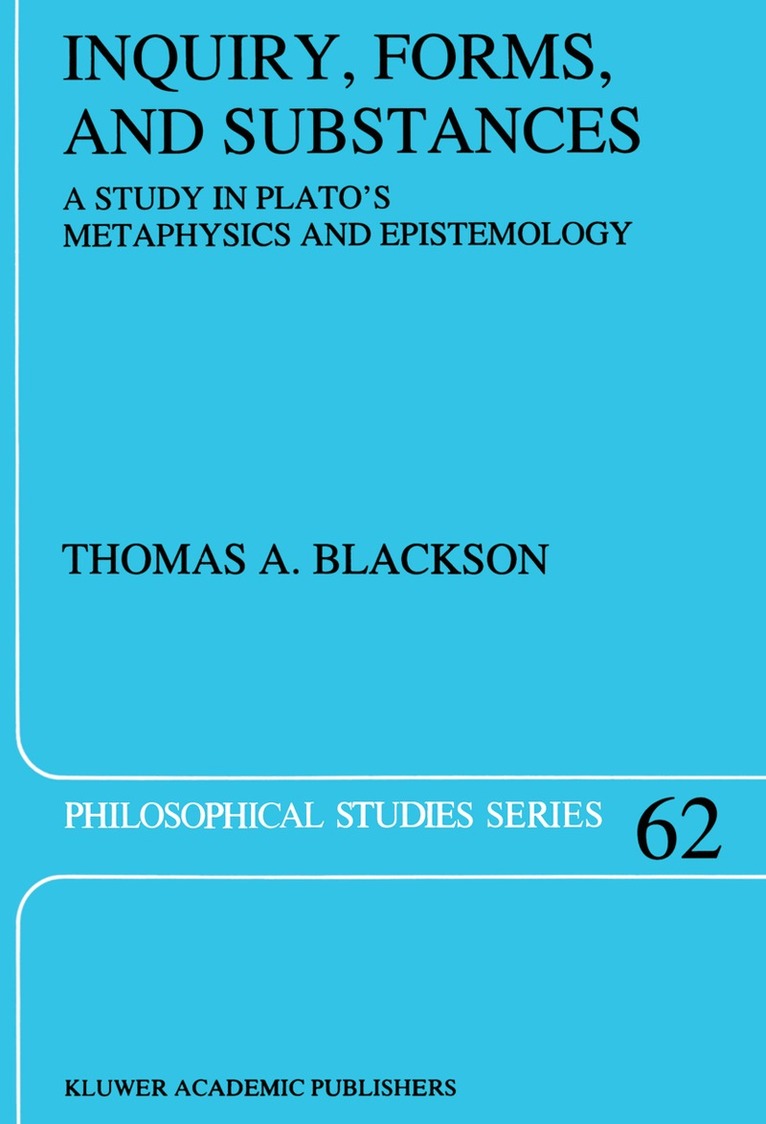
Inquiry, Forms, and Substances
A Study in Plato’s Metaphysics and Epistemology
Häftad, 2012
1096 kr
Lägg i varukorg
i. Introductory remarks 1 Plato, but not Socrates, concluded that the Forms are substances. Whether the Forms are substances is not an issue that Socrates had in mind. He did not deny it, but neither did he affirm it. If Socrates were asked a series of questions designed to determine whether he …
Inquiry, Forms, and Substances
A Study in Plato’s Metaphysics and Epistemology
E-bok, 2012
1459 kr
Lägg i varukorg
i. Introductory remarks 1 Plato, but not Socrates, concluded that the Forms are substances. Whether the Forms are substances is not an issue that Socrates had in mind. He did not deny it, but neither did he affirm it. If Socrates were asked a series of questions designed to determine whether he …