Thomas Daniel Young - Böcker
Visar alla böcker från författaren Thomas Daniel Young. Handla med fri frakt och snabb leverans.
5 produkter
5 produkter
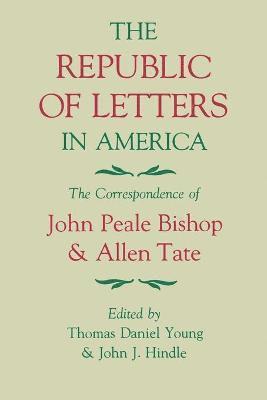
Republic of Letters in America
The Correspondence of John Peale Bishop and Allen Tate
Häftad, Engelska, 2014
492 kr
Skickas inom 3-6 vardagar
The correspondence of John Peale Bishop and Allen Tate, extending from 1929 to the time of Bishop's death in 1944, embraces the period of the Great Depression and the coming of World War II. In that richly eventful period in the development of American literature, these two men of letters were continually exchanging news and comment about the activities, opinions, successes, and misadventures of poets, novelists, critics, publishers, and editors; about expatriate Americans in Europe and the quickening intellectual life of New York; and about the Agrarian movement and what was later to be called the Southern Renascence. Archibald MacLeish, Ernest Hemingway, Robert Penn Warren, John Crowe Ransom, Katherine Anne Porter, Maxwell Perkins, Hart Crane, Malcolm Cowley, Scott Fitzgerald -- all are subjects of comment, both personal and artistic. The respect and affection of both writers for Edmund Wilson survived their vehement political differences with him, and their exchange of literary criticism, advice, and encouragement with Wilson continued unabated.The letters record a warm and steady friendship, as well as a literary relationship in which Tate -- though the younger man -- is clearly the mentor. The freedom with which Tate and Bishop discuss their work in progress, and the care and candor with which they comment on one another's poems and stories, offer the reader of this carefully edited correspondence revealing glimpses of the creative process and the reality of the American "republic of letters" in their time.
436 kr
Skickas inom 5-8 vardagar
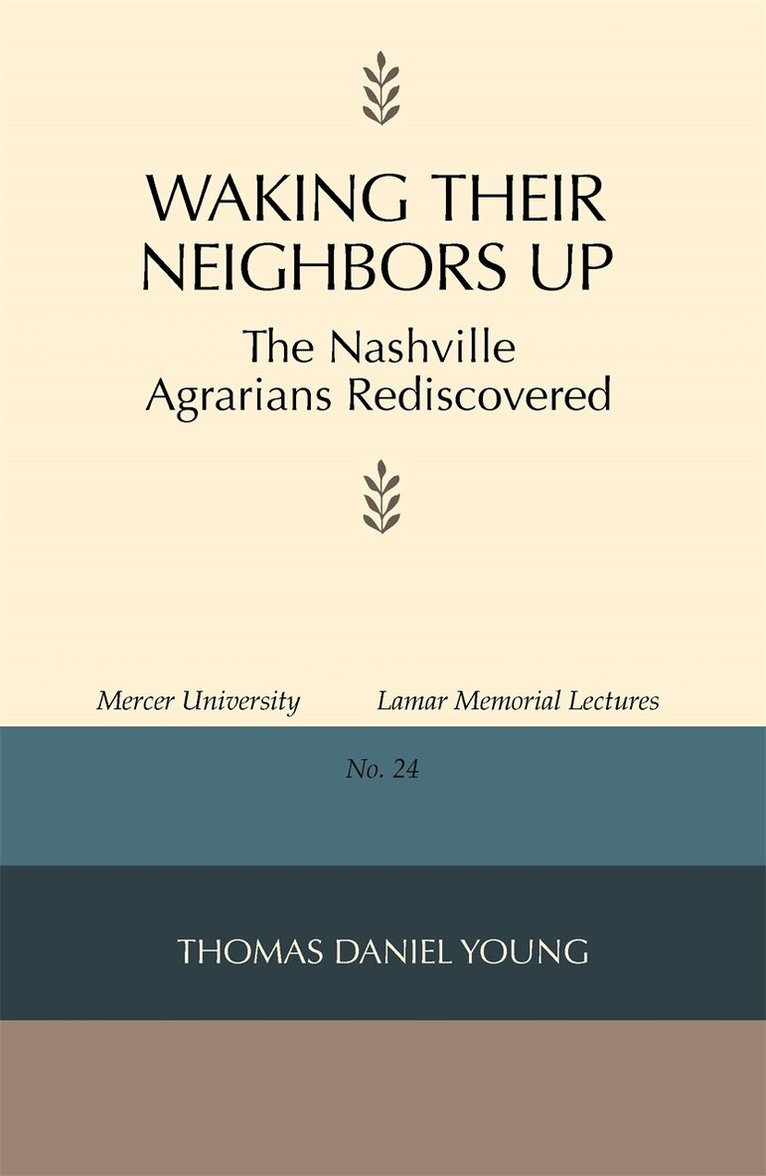
Stung by attacks upon the South following the celebrated Scopes “monkey trial” in the 1920s, some of the poets comprising the Fugitive group at Vanderbilt University—notably John Crowe Ransom, Donald Davidson, Allen Tate, and Robert Penn Warren— conceived the idea of a symposium that would argue for the worth of an ordered, traditional society as an alternative to what they perceived as the increasing materialism of their times. The Fugitives were joined by eight other southerners, and the result was the 1930 Agrarian manifesto I’ll Take My Stand. Published in 1982, this retrospective look at the Nashville Agrarians traces the evolution of I’ll Take My Stand, explains what the men who made it were trying to do, and argues that time has proved them to be prophets.
360 kr
Skickas inom 10-15 vardagar
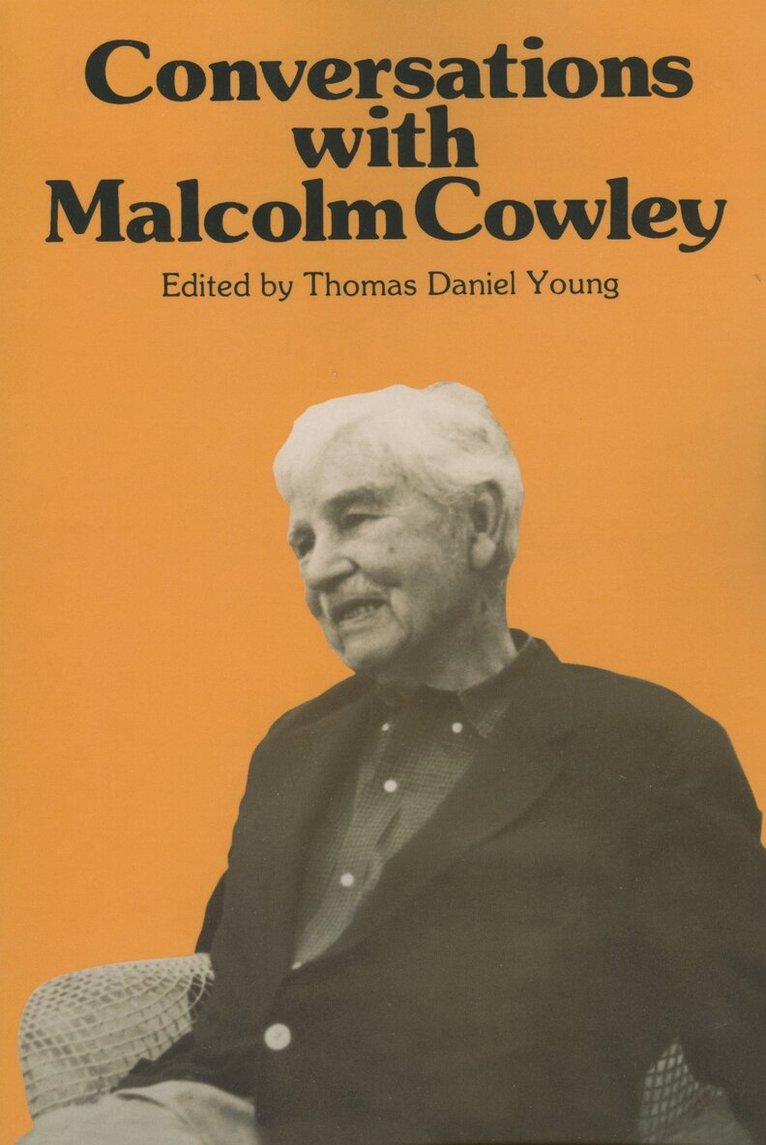
This collection of twenty-one unabridged interviews puts us immediately in the company of one of the presiding literary figures of our times. This revered editor, poet, literary historian, and critic encapsulates seven decades of American literature in these conversations that took place between 1942 and 1985.Full of insights and strong opinions, direct, salty, Cowley converses candidly with his interviewers about himself and about many subjects and personages that have shaped our national literature in the last century.Throughout this volume Cowley gives vivid accounts of his close alliances with such widely diverse and individual authors as William Faulkner, Ernest Hemingway, Hart Crane, John Cheever, Jack Kerouac, and Ken Kesey.From these interviews emerges a literary man who inspires the reader's renewed admiration and gratitude. In the common bond uniting great authors Cowley sees the manifestation of a Republic of Letters with laws, intelligence, and confraternity. These magnificently articulate interviews leave little doubt that Cowley is its elder statesman.
421 kr
Skickas inom 10-15 vardagar
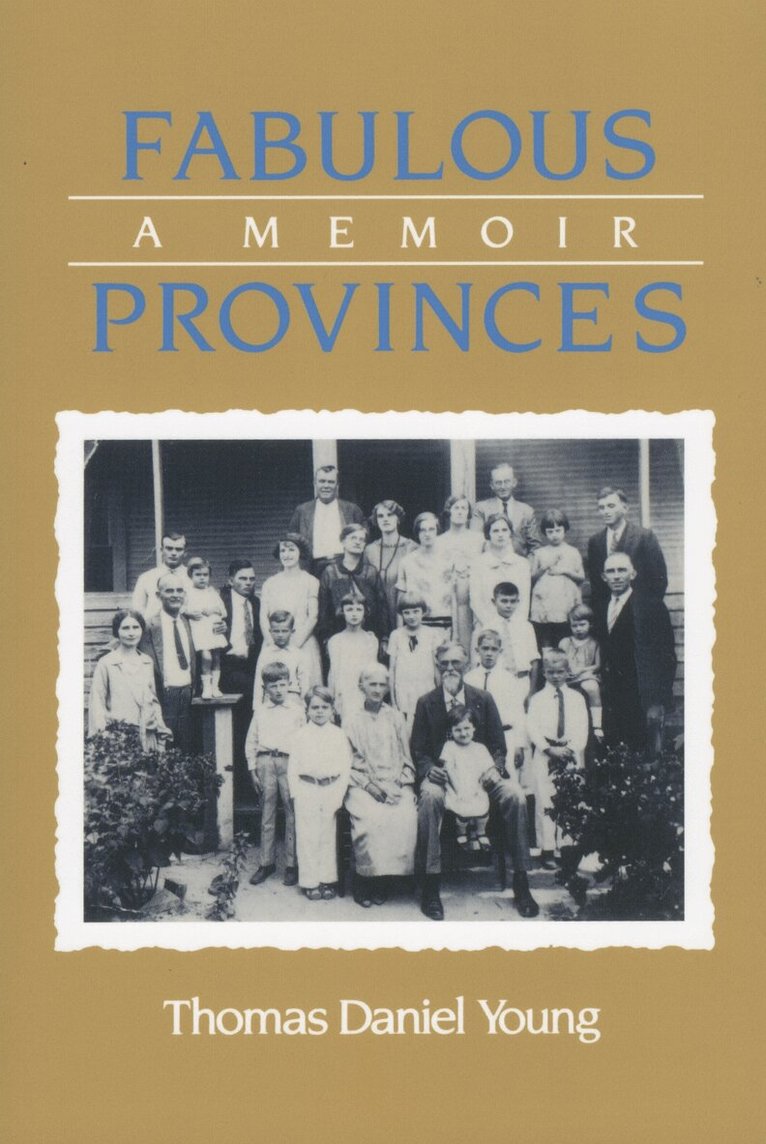
In this affectionate memoir one of the principal scholars of southern literature reflects of his lifelong study and offers his view of how the great writers of the South chanced to emerge during the worst of economic eras in that region. Though he sees this phenomenon through the lens of his own experience in Mississippi, he brings into focus the questions so often asked by literary critics and historians: ""Why did the American literary renaissance between 1920 and 1940 occur in the South?"" Young provides a fresh answer. His own background in a Mississippi hamlet, his growing up as the son of a country doctor, and his awakening to the riches of his heritage in an economically backward region cause him to see in himself parallels throughout the South that produced the remarkable literary outburst. A heritage like his own that arose from deeply felt human qualities rather than from secure economic conditions he feels was principally responsible. Thus, Fabulous Provinces is Young's reflection upon a long career which is filled with representative events, episodes, and persons who, as he feels, ""accurately portray social, economic, and cultural developments during the first seven decades of this century. I have tried to present, from the point of view of a first-person narrator, not always the author, what it was like to grow up and live in Mississippi. By emphasizing that the quality of life in that representative state eclipsed the low plane of living, he suggests why the South became a literary center of America from 1920 to 1950, producing William Faulkner, Eudora Welty, and three of the most significant literary movements of the century--the Fugitives, the Agrarians, and the New Critics. Fabulous Provinces will cast an appeal over many discerning readers wishing to hear a fresh answer to a question that never ceases to arise.
389 kr
Skickas inom 10-15 vardagar
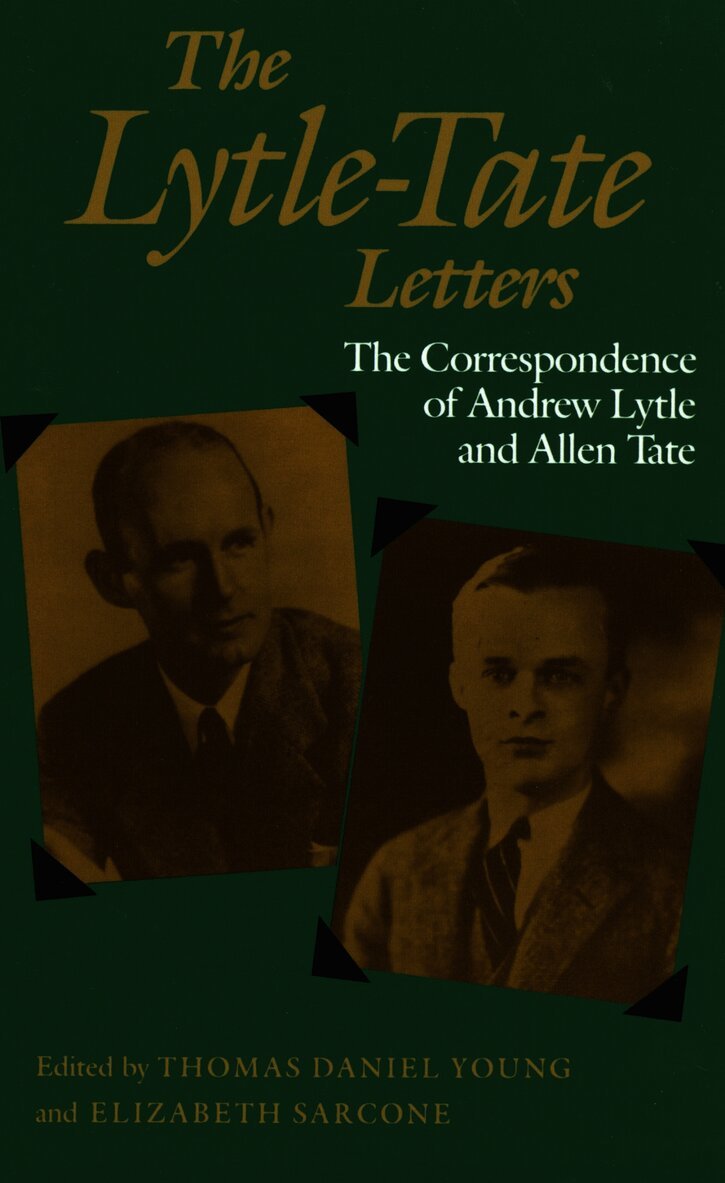
This is a remarkable collection of letters covering nearly four decades of correspondence between two of the South's foremost literary figures. The series began in 1927 when Tate invited Lytle, who was then a student at the Yale School of Drama, to visit him at his apartment at 27 Bank Street in New York. Although they were acquaintances through their involvement with the Fugitives at Vanderbilt, they had never been close friends because Lytle's association with the group occurred after Tate had left Nashville. But after Lytle's visit with Tate and his wife, Caroline Gordon, both the friendship and the correspondence grew. The letters in the long sequence of exchanges took on a different content and character during each of the decades. The early letters, those exchanged between 1927-1939, show the development of Tate and Lytle's relationship because of what they had in common--love for the South. These letters discuss plans for writing their southern biographies the two Agrarian symposia--I'll Take My Stand (1930), and Who Owns America? (1936), as well as Lytle's first novel, The Long Night (1936) and Tate's work on his novel, The Fathers. Although the letters of the forties deal with such basic questions as where each man should live and how he should support himself while he writes, their primary focus is first with Lytle's and then with Tate's editorship of The Sewanee Review. The letters of the fifties are by far the most valuable for literary commentary. In these Lytle reads and critiques many of Tate's essays and poems, and Tate, in turn, reads and responds to Lytle's plans for the novel he was to be so long in writing, The Velvet Horn. Although many letters in the final group--those of the sixties--are devoted to a discussion of Tate's guest editing the special T.S. Eliot issue of The Sewanee Review, these are also the letters which reveal the depth of the Lytle-Tate friendship. In these they share their personal problems and advise each other in the difficulties each is forced to face. Tate supports Lytle during the long illness and subsequent loss of his wife Edna and, later, during Lytle's own bout with cancer. Similarly, Lytle sees Tate through his divorce from his second wife and into his next marriage. After a short time, Lytle brings consolation in the loss of one of the Tates' infant twin sons. The correspondence between Tate and Lytle documents the evolution of a long personal and literary relationship between two men who helped shape a large part of modern southern literature.