Thomas E. Lane - Böcker
Visar alla böcker från författaren Thomas E. Lane. Handla med fri frakt och snabb leverans.
4 produkter
4 produkter
1 624 kr
Skickas inom 10-15 vardagar
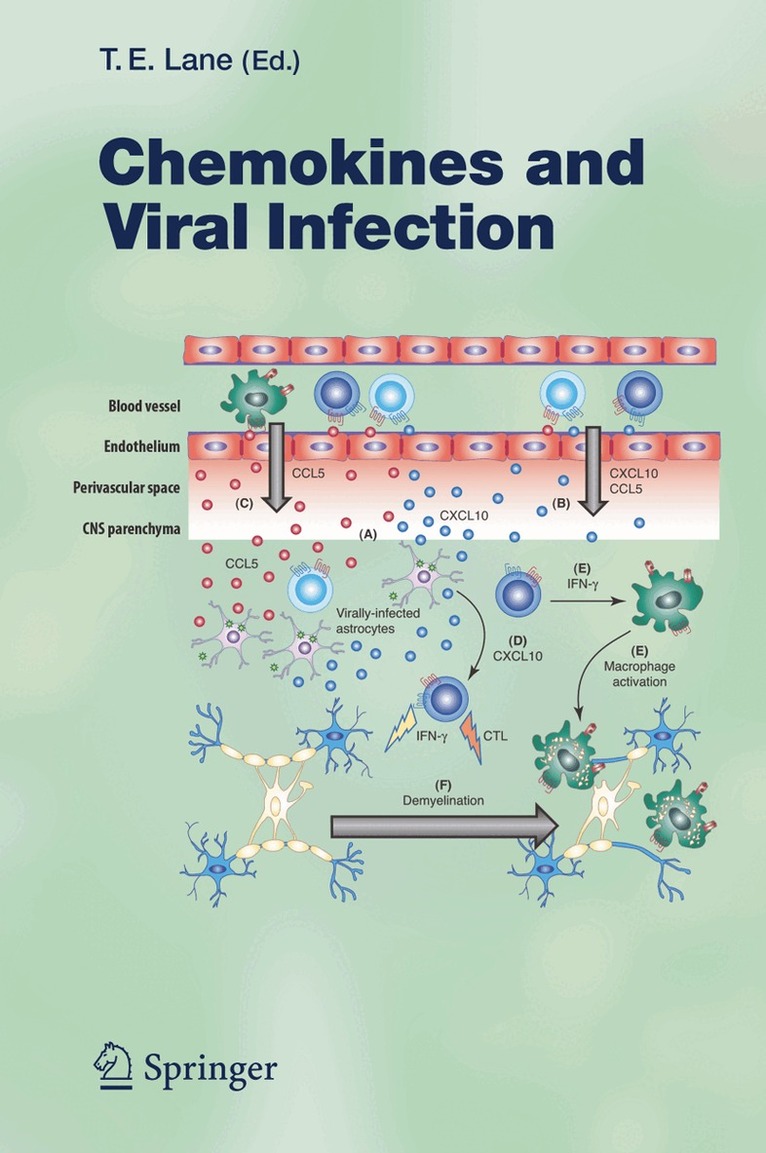
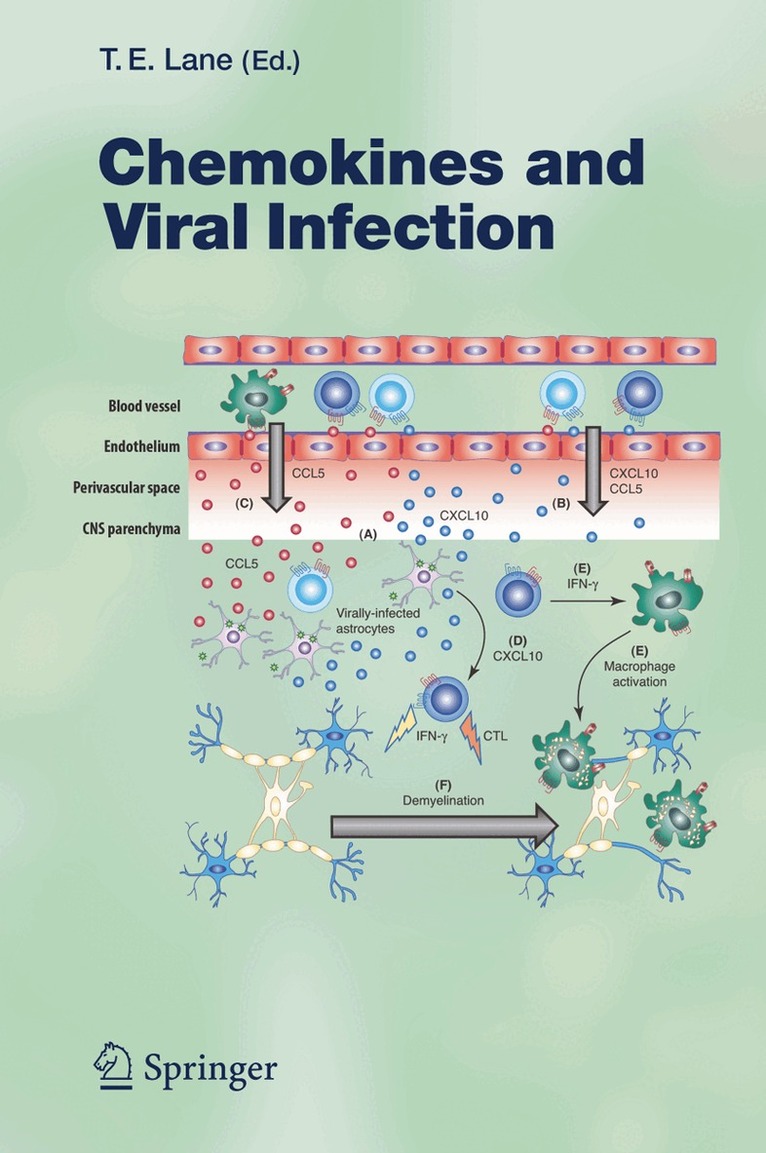
Up until approximately 20 years ago, the idea that the central nervous system (CNS) and components of the immune system were dynamically interactive was considered impossible (or at least highly unlikely) as the CNS was judged an immunosuppressive environment based upon experimental evidence highlighting the survival of tissue grafts within the brain. Additional evidence supporting this viewpoint included (i) the presence of the blood–brain barrier (BBB) which p- vides a physical and physiological obstruction that is difficult for cells and mac- molecules to cross, (ii) the relative absence of MHC class I and II expression on CNS cells like astrocytes and neurons, and (iii) lack of abundant antigen presenting cells (APC) which are required for the generation of an adaptive immune response. However, in spite of these obstacles, it is now well-accepted that the CNS is r- tinely subject to immune surveillance under both normal as well as diseased con- tions. Indeed, activated cells of the immune system such as T and B lymphocytes and monocyte/macrophages readily infiltrate and accumulate within the CNS f- lowing microbial infection, injury, or upon development of autoimmune responses directed toward resident antigens of the CNS.
1 624 kr
Skickas inom 10-15 vardagar
Up until approximately 20 years ago, the idea that the central nervous system (CNS) and components of the immune system were dynamically interactive was considered impossible (or at least highly unlikely) as the CNS was judged an immunosuppressive environment based upon experimental evidence highlighting the survival of tissue grafts within the brain. Additional evidence supporting this viewpoint included (i) the presence of the blood–brain barrier (BBB) which p- vides a physical and physiological obstruction that is difficult for cells and mac- molecules to cross, (ii) the relative absence of MHC class I and II expression on CNS cells like astrocytes and neurons, and (iii) lack of abundant antigen presenting cells (APC) which are required for the generation of an adaptive immune response. However, in spite of these obstacles, it is now well-accepted that the CNS is r- tinely subject to immune surveillance under both normal as well as diseased con- tions. Indeed, activated cells of the immune system such as T and B lymphocytes and monocyte/macrophages readily infiltrate and accumulate within the CNS f- lowing microbial infection, injury, or upon development of autoimmune responses directed toward resident antigens of the CNS.
1 624 kr
Skickas inom 10-15 vardagar
Chemokines represent a family of over 40 small proteins that, for the most part, are secreted into the environment and function by binding to G protein-coupled receptors (GPCRs) that are expressed on numerous different cell types. When initially identified close to 30 years ago, these molecules were associated with various human inflammatory diseases and it was recognized that expression may be integral in leukocyte recruitment to inflamed tissue. Within a relatively short period of time, early participants within the field determined that these proteins displayed distinct and conserved structural features and exerted potent chemotactic effects on defined lymphocyte subsets. There are now four sub-families of chemokines identified based on defined structural criteria relating to the positional location of conserved cysteine residues within the amino-terminus of the protein. Chemokines are now recognized as important in numerous biological processes ranging from maintaining the organizational integrity of secondary lymphoid tissue to participating in various aspects of both innate and adaptive immune responses following microbial infection.
1 624 kr
Skickas inom 10-15 vardagar
Chemokines represent a family of over 40 small proteins that, for the most part, are secreted into the environment and function by binding to G protein-coupled receptors (GPCRs) that are expressed on numerous different cell types. When initially identified close to 30 years ago, these molecules were associated with various human inflammatory diseases and it was recognized that expression may be integral in leukocyte recruitment to inflamed tissue. Within a relatively short period of time, early participants within the field determined that these proteins displayed distinct and conserved structural features and exerted potent chemotactic effects on defined lymphocyte subsets. There are now four sub-families of chemokines identified based on defined structural criteria relating to the positional location of conserved cysteine residues within the amino-terminus of the protein. Chemokines are now recognized as important in numerous biological processes ranging from maintaining the organizational integrity of secondary lymphoid tissue to participating in various aspects of both innate and adaptive immune responses following microbial infection.