Thomas Farole - Böcker
Visar alla böcker från författaren Thomas Farole. Handla med fri frakt och snabb leverans.
6 produkter
6 produkter
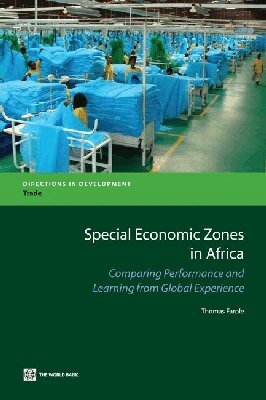
Special Economic Zones in Africa
Comparing Performance and Learning from Global Experiences
Häftad, Engelska, 2011
394 kr
Skickas inom 10-15 vardagar
This book, designed for policymakers, academics and researchers, and SEZ program practitioners, provides the first systematic and comprehensive analysis of SEZ programs in Sub-Saharan Africa. It is the result of detailed surveys and case studies conducted during 2009 in ten developing countries, including six in Sub-Saharan Africa. The book provides quantitative evidence of the performance of SEZs, and of the factors which contribute to that performance, highlighting the critical importance not just of the SEZ itself but of the wider national investment climate in which it functions. It also provides a comprehensive guide to the key policy questions that confront governments establishing SEZ programs, including: if and when to launch an SEZ program, what form of SEZ is most appropriate, and how to go about implementing it. Among the most important findings from the study that is stressed in the book is the shift from traditional enclave models of zones to SEZs that are integrated – with national trade and industrial strategies, with core trade and social infrastructure, with domestic suppliers, and with local labor markets. Although the book focuses primarily on the experience of Sub-Saharan Africa, its lessons will be applicable to developing countries around the world.
394 kr
Skickas inom 10-15 vardagar
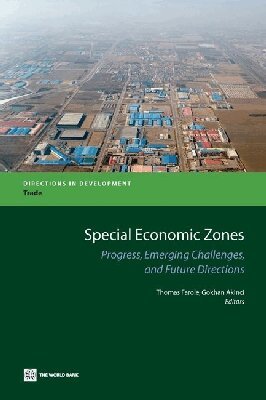
For countries as diverse as China and Mauritius, Special Economic Zones (SEZs) have been a powerful tool to attract foreign investment, promote export-oriented growth, and generate employment; for many others, the results have been less than encouraging. While the benefits and limitations of zones will no doubt continue to be debated, what is clear is that policymakers are increasingly attracted to them as an instrument of trade, investment, industrial, and spatial policy. Since the mid 1980s, the number of newly-established zones has grown rapidly in almost all regions, with dramatic growth in developing countries. In parallel with this growth and in the evolving context of global trade and investment, zones are also undergoing significant change in both their form and function, with traditional export processing zones (EPZs) increasingly giving way to larger and more flexible SEZ models. This new context will bring significant opportunities for developing countries to take advantage of SEZs, but will also raise new challenges to their successful design and implementation.This volume aims to contribute to a better understanding of the role and practice of SEZs in developing countries, in order to better equip policymakers in making effective decisions in planning and implementing SEZ programs. It covers some of the emerging issues and challenges in SEZs - including upgrading, regional integration, WTO compliance, innovation, the environment, and gender issues - with practical case examples from SEZ programs in developing countries.
168 kr
Skickas inom 10-15 vardagar
India has 150GW of renewable energy potential, about half in the form of small hydropower, biomass, and wind and half in solar, cogeneration, and waste-to-energy. Developing renewable energy can help India increase its energy security, reduce the adverse impacts on the local environment, lower its carbon intensity, contribute to more balanced regional development, and realize its aspirations for leadership in high-technology industries. This study aims to answers critical questions on why renewable energy development is relevant in Indian context, on how much development is economically feasible, and on what needs to be done to realize the potential. The Report is based on data from nearly 180 wind, biomass, and small hydropower projects in 20 states, as well as information from the Ministry of New and Renewable Energy (MNRE) and the Central Electricity Regulatory Commission (CERC). The Report suggests that about 3GW of renewable energy - all from small hydropower is conomically feasible, when the avoided cost of coal-based generation of Rs 3.08/kWh is considered. About 59GW of renewable energy in wind, biomass, and small hydropower is available at less than Rs 5/kWh.The entire cumulative capacity of 68GW in these three technologies can be harnessed at less than Rs 6/kWh. About 62GW-90 percent of cumulative renewable capacity in wind, biomass, and small hydropower-is economically feasible when the environmental premiums on coal are brought into consideration. Realizing the need to bridge this gap, the government has set an ambitious target of installing at least 40GW of additional capacity of renewables in the next 10 years. India has made tremendous strides in establishing overarching policy framework and institutions to bring renewable in the mainstream of energy mix, but significant financial, infrastructure and regulatory barriers to renewable energy development remain which the report sheds light on and suggests possible solutions.
450 kr
Skickas inom 10-15 vardagar
This toolkit provides a framework, guidelines, and practical tools for conducting an analysis of a country's trade competitiveness in terms of growth and share performance, diversification, and quality. It aims to facilitate the identification of the main constraints to improved trade competitiveness and the policy responses to overcome these constraints.
339 kr
Skickas inom 10-15 vardagar
Over the past two decades, the rapid integration of many developing countries into global markets has contributed to a convergence of incomes across countries, pulling large economies like China, India, and Indonesia into the middle-income ranks. On the other hand, these same factors have contributed to widening income disparities within countries. One of the principal manifestations of these within country disparities is spatial, with growth accelerating in well located, typically metropolitan regions, while more peripheral regions fall further behind. The resulting pattern of leading and lagging regions matters not just for social and political cohesion, but also because the failure to integrate lagging regions may have a dampening effect on national growth, and contributes to the massive rural-urban shifts that are over whelming the infrastructural, environmental, and institutional capacities of metropolitan regions in many developing countries. Using the World Bank's World Development Report 2009 as its point of departure, this book - designed for policymakers, academics, and researchers - explores the nexus between trade and location to inform policies to address the challenge of lagging regions, with a particular focus on developing countries. The book combines empirical analysis with rich case studies in two of the largest and most dynamic developing countries - India and Indonesia. It provides unique evidence of how location shapes the participation and performance of individual firms in trade, through the business environment, agglomeration, market access, and institutional arrangements. It also provides a summary of decades of diverse (and largely unsuccessful) attempts to close the gap between leading and lagging regions, and sets out a series of policy recommendations to improve the efficacy of these efforts. At the heart of these policies is a focus on interventions targeted at two objectives: building the competitiveness of the region and its firms and improving its connectivity with domestic and international markets.
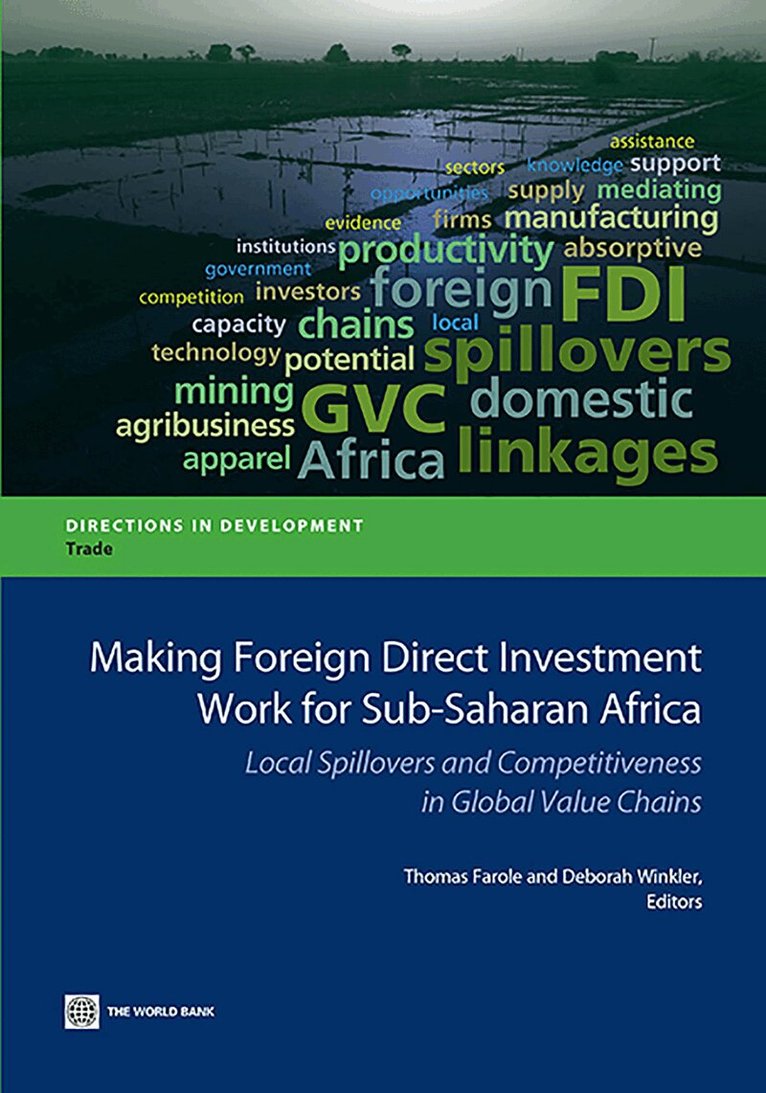
Making Foreign Direct Investment Work for Sub-Saharan Africa
Local Spillovers and Competitiveness in Global Value Chains
Häftad, Engelska, 2014
228 kr
Skickas inom 10-15 vardagar
Foreign direct investment (FDI) is becoming increasingly critical to the economies of developing countries, in part due to a major expansion in the scope of global value chains (GVCs), whereby lead firms outsource parts of their production and services activities across complex international networks. While FDI delivers a number of important contributions in terms of investment, employment and foreign exchange, it is its spillover potential - the productivity gain resulting from the diffusion of knowledge and technology from foreign investors to local firms and workers - that is perhaps the most valuable contribution to long run growth and development.While substantial research has been undertaken on the existence and direction of spillovers from FDI, many questions remain. Moreover, there is a need to understand better the dynamics of spillovers in certain contexts, including: i) in low income countries, especially in Sub-Saharan Africa; ii) outside of manufacturing sectors (especially resource-based sectors); and iii) in the context of GVCs.This book presents the results of a groundbreaking study designed to address these issues drawing on detailed field research in eight countries (including five in Sub-Saharan Africa) over three sectors: agribusiness, apparel and mining. The book presents a summary of the results of this analytical work and discusses their implications for policymakers hoping to harness the power of FDI for greater development outcomes.