Thomas G. Andrews – författare
Visar alla böcker från författaren Thomas G. Andrews. Handla med fri frakt och snabb leverans.
4 produkter
4 produkter
263 kr
Skickas inom 10-15 vardagar
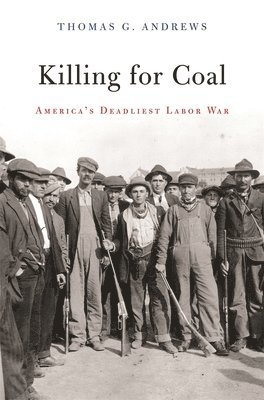
On a spring morning in 1914, in the stark foothills of southern Colorado, members of the United Mine Workers of America clashed with guards employed by the Rockefeller family, and a state militia beholden to Colorado’s industrial barons. When the dust settled, nineteen men, women, and children among the miners’ families lay dead. The strikers had killed at least thirty men, destroyed six mines, and laid waste to two company towns. Killing for Coal offers a bold and original perspective on the 1914 Ludlow Massacre and the “Great Coalfield War.” In a sweeping story of transformation that begins in the coal beds and culminates with the deadliest strike in American history, Thomas Andrews illuminates the causes and consequences of the militancy that erupted in colliers’ strikes over the course of nearly half a century. He reveals a complex world shaped by the connected forces of land, labor, corporate industrialization, and workers’ resistance.Brilliantly conceived and written, this book takes the organic world as its starting point. The resulting elucidation of the coalfield wars goes far beyond traditional labor history. Considering issues of social and environmental justice in the context of an economy dependent on fossil fuel, Andrews makes a powerful case for rethinking the relationships that unite and divide workers, consumers, capitalists, and the natural world.
408 kr
Skickas inom 10-15 vardagar
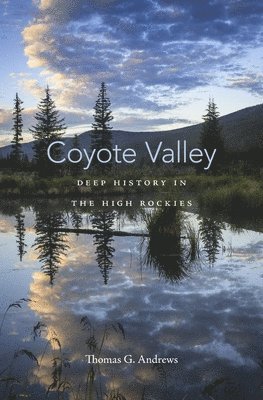
What can we learn from a high-country valley tucked into an isolated corner of Rocky Mountain National Park? In this pathbreaking book, Thomas Andrews offers a meditation on the environmental and historical pressures that have shaped and reshaped one small stretch of North America, from the last ice age to the advent of the Anthropocene and the latest controversies over climate change.Large-scale historical approaches continue to make monumental contributions to our understanding of the past, Andrews writes. But they are incapable of revealing everything we need to know about the interconnected workings of nature and human history. Alongside native peoples, miners, homesteaders, tourists, and conservationists, Andrews considers elk, willows, gold, mountain pine beetles, and the Colorado River as vital historical subjects. Integrating evidence from several historical fields with insights from ecology, archaeology, geology, and wildlife biology, this work simultaneously invites scientists to take history seriously and prevails upon historians to give other ways of knowing the past the attention they deserve.From the emergence and dispossession of the Nuche—“the People”—who for centuries adapted to a stubborn environment, to settlers intent on exploiting the land, to forest-destroying insect invasions and a warming climate that is pushing entire ecosystems to the brink of extinction, Coyote Valley underscores the value of deep drilling into local history for core relationships—to the land, climate, and other species—that complement broader truths. This book brings to the surface the critical lessons that only small and seemingly unimportant places on Earth can teach.
396 kr
Kommande
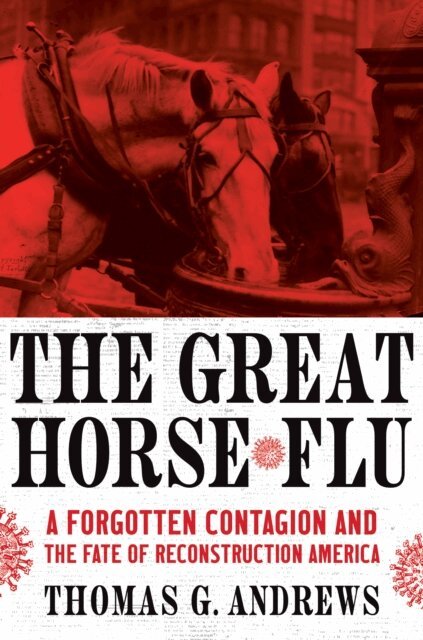
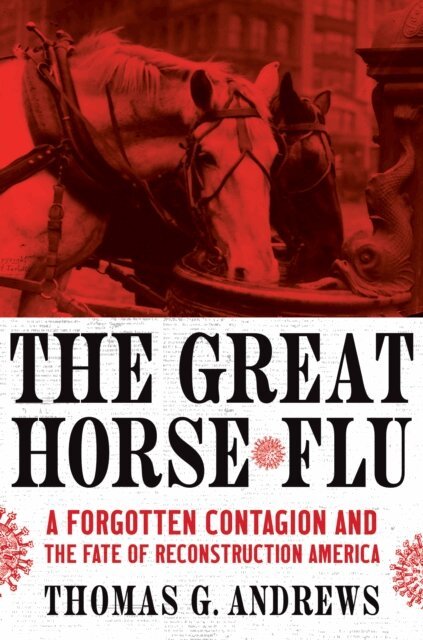
Seven years after the US Civil War and nearly 150 years before COVID, horses near Toronto began falling deathly ill with a sickness soon diagnosed as influenza. It took just a few weeks for this mutant flu variant to spread throughout southeastern Canada and into the northeastern US, infecting more than 90 percent of horses, donkeys, and mules wherever it struck. By the time the outbreak relented more than a year later, the Great Horse Flu of 1872 to 1873 had convulsed nearly every corner of North America and parts of Cuba, Mexico, and Central America. This little-known scourge paralyzed the continent’s horse-powered economy at a critical political moment. As hundreds of thousands of animals died and entire cities ground to a halt, the outbreak exposed the fragility of industrial capitalism and the US’s deep dependence on animal labor. The Great Horse Flu triggered catastrophes including the Great Boston Fire; unleashed seething social and racial conflict; stoked partisan divides; and set the stage for the Panic of 1873. In the hands of Bancroft Prize–winning historian Thomas G. Andrews, the gripping story of this animal plague becomes a revelatory history of American Reconstruction itself—its possibilities, limitations, and demise—while also illuminating the grave perils that novel viral variants pose to animals, humans, and the world we share.
800 kr
Skickas inom 3-6 vardagar