Thomas L. Dublin - Böcker
Visar alla böcker från författaren Thomas L. Dublin. Handla med fri frakt och snabb leverans.
5 produkter
5 produkter
699 kr
Skickas inom 10-15 vardagar
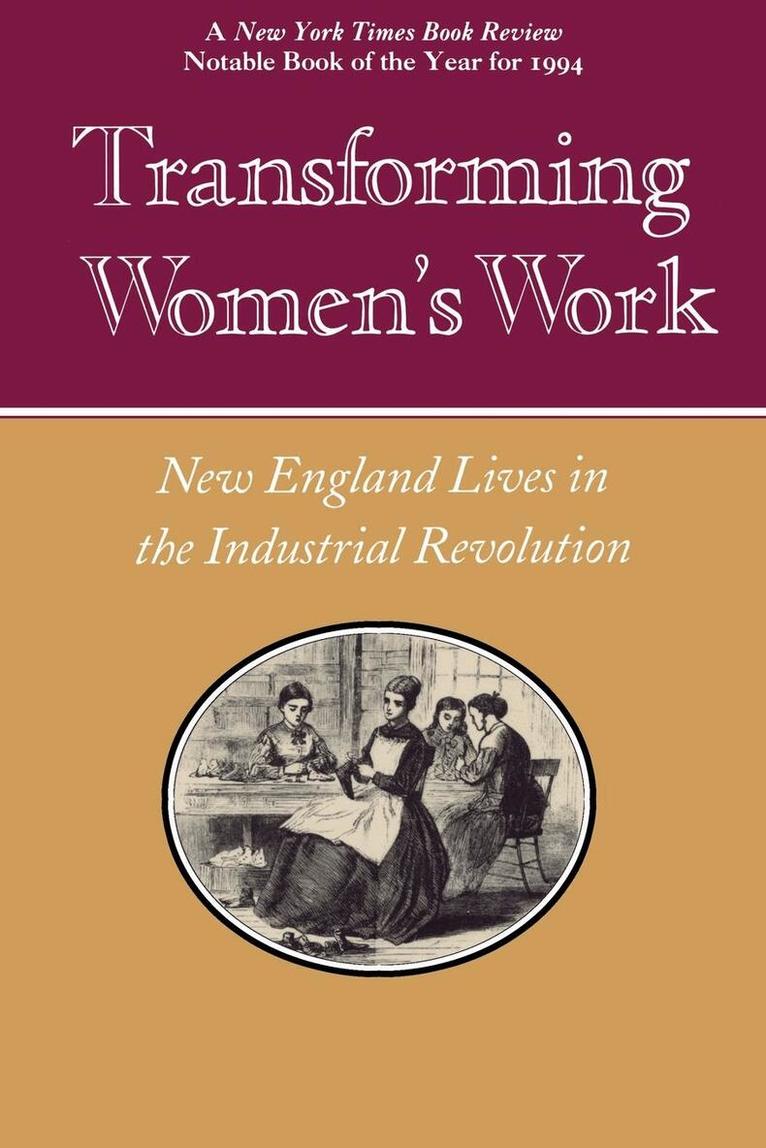
"I am not living upon my friends or doing housework for my board but am a factory girl," asserted Anna Mason in the early 1850s. Although many young women who worked in the textile mills found that the industrial revolution brought greater independence to their lives, most working women in nineteenth-century New England did not, according to Thomas Dublin. Sketching engaging portraits of women's experience in cottage industries, factories, domestic service, and village schools, Dublin demonstrates that the autonomy of working women actually diminished as growing numbers lived with their families and contributed their earnings to the household. From diaries, letters, account books, and censuses, Dublin reconstructs employment patterns across the century as he shows how wage work increasingly came to serve the needs of families, rather than of individual women. He first examines the case of rural women engaged in the cottage industries of weaving and palm-leaf hatmaking between 1820 and 1850. Next, he compares the employment experiences of women in the textile mills of Lowell and the shoe factories of Lynn. Following a discussion of Boston working women in the middle decades of the century-particularly domestic servants and garment workers-Dublin turns his attention to the lives of women teachers in three New Hampshire towns.
1 597 kr
Skickas inom 10-15 vardagar
The anthracite region of northeastern Pennsylvania, five hundred square miles of rugged hills stretching between Tower City and Carbondale, harbored coal deposits that once heated virtually all the homes and businesses in Eastern cities. At its peak during World War I, the coal industry here employed 170,000 miners, and supported almost 1,000,000 people. Today, with coal workers numbering 1,500, only 5,000 people depend on the industry for their livelihood. Between these two points in time lies a story of industrial decline, of working people facing incremental and cataclysmic changes in their world. When the Mines Closed tells this story in the words of men and women who experienced these dramatic changes and in more than eighty photographs of these individuals, their families, and the larger community.Award-winning historian Thomas Dublin interviewed a cross-section of residents and migrants from the region, who gave their own accounts of their work and family lives before and after the mines closed. Most of the narrators, six men and seven women, came of age during the Great Depression and entered area mines or, in the case of the women, garment factories, in their teens. They describe the difficult choices they faced, and the long-standing ethnic, working-class values and traditions they drew upon, when after World War II the mines began to shut down. Some left the region, others commuted to work at a distance, still others struggled to find employment locally.The photographs taken by George Harvan, a lifelong resident of the area and the son of a Slovak-born coal miner, document residents' lives over the course of fifty years. Dublin's introductory essay offers a brief history of anthracite mining and the region and establishes a broader interpretive framework for the narratives and photographs.
446 kr
Skickas inom 10-15 vardagar
"I am not living upon my friends or doing housework for my board but am a factory girl," asserted Anna Mason in the early 1850s. Although many young women who worked in the textile mills found that the industrial revolution brought greater independence to their lives, most working women in nineteenth-century New England did not, according to Thomas Dublin. Sketching engaging portraits of women's experience in cottage industries, factories, domestic service, and village schools, Dublin demonstrates that the autonomy of working women actually diminished as growing numbers lived with their families and contributed their earnings to the household. From diaries, letters, account books, and censuses, Dublin reconstructs employment patterns across the century as he shows how wage work increasingly came to serve the needs of families, rather than of individual women. He first examines the case of rural women engaged in the cottage industries of weaving and palm-leaf hatmaking between 1820 and 1850. Next, he compares the employment experiences of women in the textile mills of Lowell and the shoe factories of Lynn. Following a discussion of Boston working women in the middle decades of the century-particularly domestic servants and garment workers-Dublin turns his attention to the lives of women teachers in three New Hampshire towns.
281 kr
Skickas inom 10-15 vardagar
The anthracite region of northeastern Pennsylvania, five hundred square miles of rugged hills stretching between Tower City and Carbondale, harbored coal deposits that once heated virtually all the homes and businesses in Eastern cities. At its peak during World War I, the coal industry here employed 170,000 miners, and supported almost 1,000,000 people. Today, with coal workers numbering 1,500, only 5,000 people depend on the industry for their livelihood. Between these two points in time lies a story of industrial decline, of working people facing incremental and cataclysmic changes in their world. When the Mines Closed tells this story in the words of men and women who experienced these dramatic changes and in more than eighty photographs of these individuals, their families, and the larger community.Award-winning historian Thomas Dublin interviewed a cross-section of residents and migrants from the region, who gave their own accounts of their work and family lives before and after the mines closed. Most of the narrators, six men and seven women, came of age during the Great Depression and entered area mines or, in the case of the women, garment factories, in their teens. They describe the difficult choices they faced, and the long-standing ethnic, working-class values and traditions they drew upon, when after World War II the mines began to shut down. Some left the region, others commuted to work at a distance, still others struggled to find employment locally.The photographs taken by George Harvan, a lifelong resident of the area and the son of a Slovak-born coal miner, document residents' lives over the course of fifty years. Dublin's introductory essay offers a brief history of anthracite mining and the region and establishes a broader interpretive framework for the narratives and photographs.
277 kr
Skickas inom 7-10 vardagar
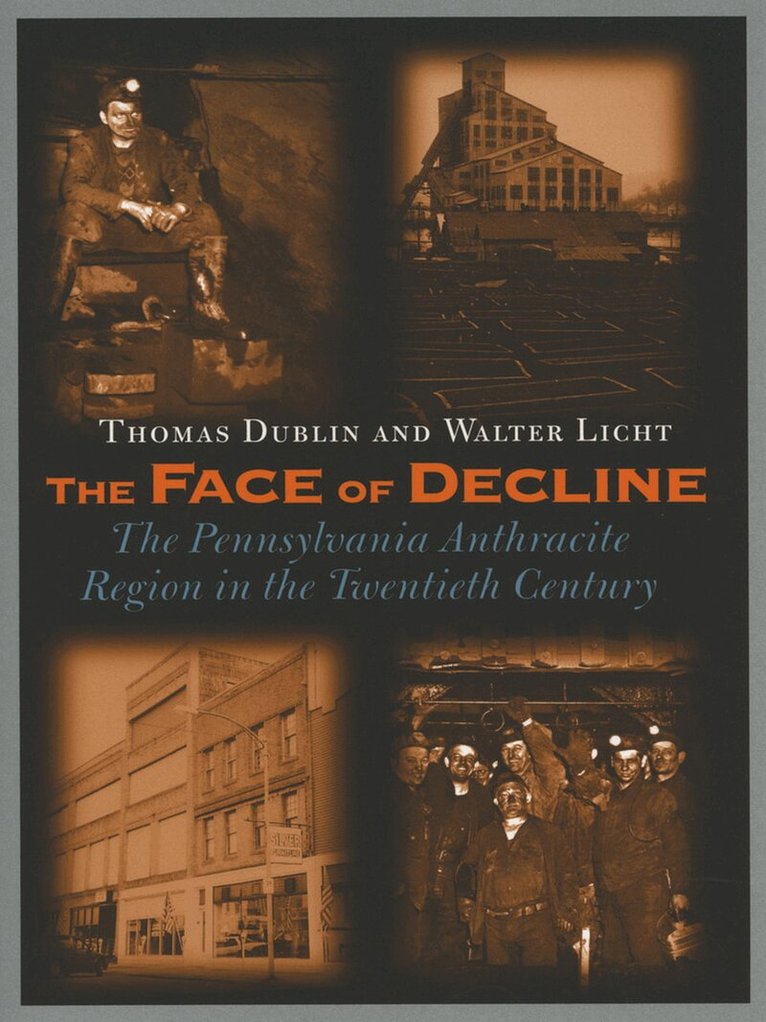
The anthracite coal region of Pennsylvania once prospered. Today, very little mining or industry remains, although residents have made valiant efforts to restore the fabric of their communities. In The Face of Decline, the noted historians Thomas Dublin and Walter Licht offer a sweeping history of this area over the course of the twentieth century. Combining business, labor, social, political, and environmental history, Dublin and Licht delve into coal communities to explore grassroots ethnic life and labor activism, economic revitalization, and the varied impact of economic decline across generations of mining families.The Face of Decline also features the responses to economic crisis of organized capital and labor, local business elites, redevelopment agencies, and state and federal governments. Dublin and Licht draw on a remarkable range of sources: oral histories and survey questionnaires; documentary photographs; the records of coal companies, local governments, and industrial development corporations; federal censuses; and community newspapers. The authors examine the impact of enduring economic decline across a wide region but focus especially on a small group of mining communities in the region's Panther Valley, from Jim Thorpe through Lansford to Tamaqua. The authors also place the anthracite region within a broader conceptual framework, comparing anthracite's decline to parallel developments in European coal basins and Appalachia and to deindustrialization in the United States more generally.