Thomas Malthus – författare
Visar alla böcker från författaren Thomas Malthus. Handla med fri frakt och snabb leverans.
27 produkter
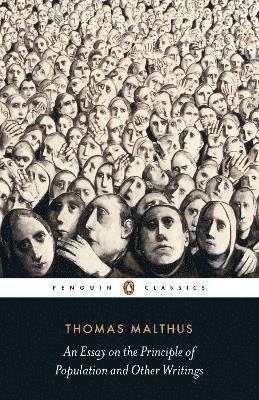
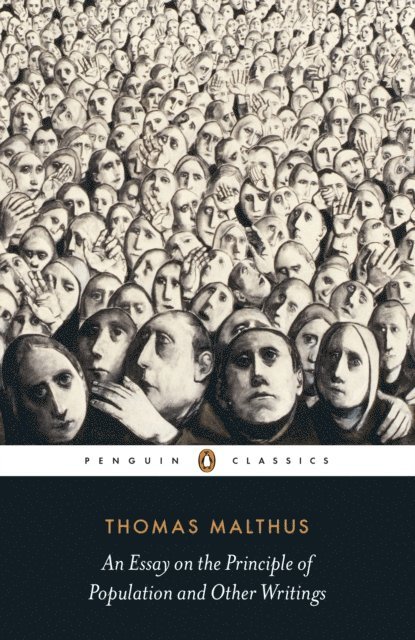
An Essay on the Principle of Population and Other Writings
Av Thomas Malthus, Robert Mayhew
Häftad, 2015
152 kr
Lägg i varukorg
Malthus' life's work on human population and its dependency on food production and the environment was highly controversial on publication in 1798. He predicted what is known as the Malthusian catastrophe, in which humans would disregard the limits of natural resources and the world would be …
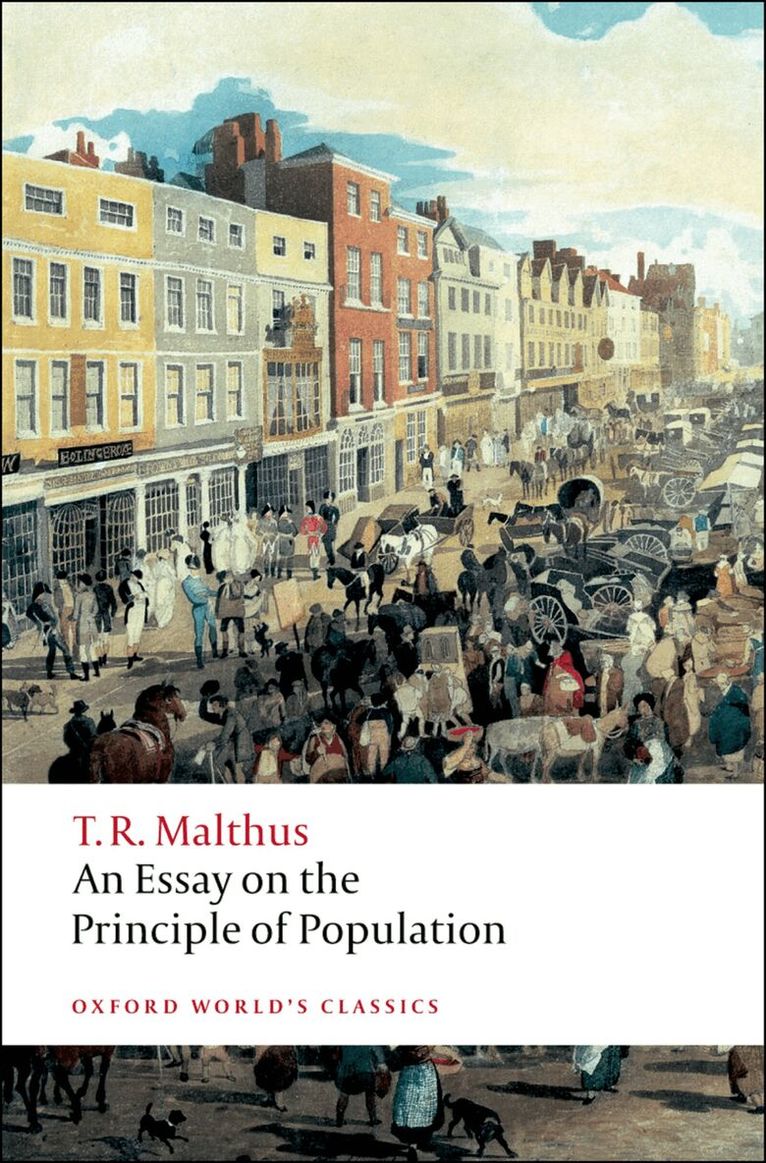
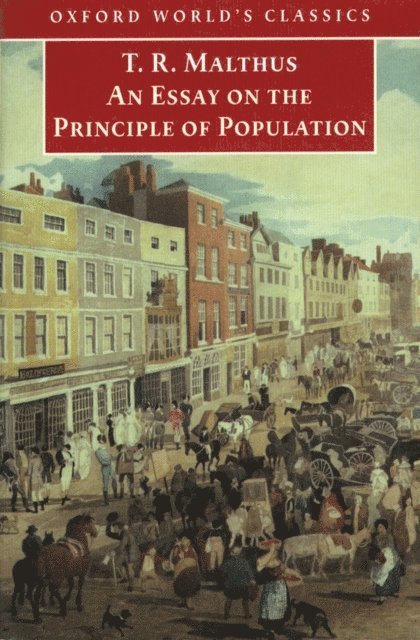
An Essay on the Principle of Population
Av Thomas Malthus, Geoffrey Gilbert
Häftad, 2008
113 kr
Lägg i varukorg
Malthus's Essay looks at the perennial tendency of humans to outstrip their resources: reproduction always exceeds food production. Today Malthus remains a byword for concern about man's demographic and ecological prospects. ABOUT THE SERIES: For over 100 years Oxford World's Classics has made …
An Essay on the Principle of Population and Other Writings
Av Thomas Malthus, Robert Mayhew
E-bok, 2015
108 kr
Lägg i varukorg
Malthus' life's work on human population and its dependency on food production and the environment was highly controversial on publication in 1798. He predicted what is known as the Malthusian catastrophe, in which humans would disregard the limits of natural resources and the world would be …
Essay on the Principle of Population
Av Thomas Malthus, Geoffrey Gilbert
E-bok, 1999
92 kr
Lägg i varukorg
Malthus''s Essay looks at the perennial tendency of humans to outstrip their resources: reproduction always exceeds food production. Today Malthus remains a byword for concern about man''s demographic and ecological prospects. ABOUT THE SERIES: For over 100 years Oxford World''s Classics has made …
An Essay on the Principle of Population: The Future Improvement of Society
Häftad
183 kr
Lägg i varukorg
Essay on the Principle of Population
E-bok, 2018
20 kr
Lägg i varukorg
Thomas Robert Malthus is best known for his work, An Essay on the Principle of Population. His classic inspired numerous political economists and demographists for generations. Heraklion Press has included a linked table of contents.
Essay on the Principle of Population
(Illustrated)
E-bok, 2026
78 kr
Lägg i varukorg
The following Essay owes its origin to a conversation with a friend, on the subject of Mr Godwin's essay on avarice and profusion, in his Enquirer. The discussion started the general question of the future improvement of society, and the Author at first sat down with an intention of merely stating …
Inquiry into the Nature and Progress of Rent, and the Principles by Which It is Regulated
Häftad, 2022
191 kr
Lägg i varukorg
An Essay On The Principle Of Population
Häftad, 2023
149 kr
Lägg i varukorg
An Essay on the Principle of Population was first published in 1798 under an alias, but Thomas Robert Malthus's identity was soon made public. The book foresaw problems in the future because, according to one interpretation, population growth would follow a geometric progression (doubling every 25 …
Essay On The Principle Of Population
E-bok, 2023
14 kr
Lägg i varukorg
An Essay on the Principle of Population was first published in 1798 under an alias, but Thomas Robert Malthus's identity was soon made public. The book foresaw problems in the future because, according to one interpretation, population growth would follow a geometric progression (doubling every 25 …
Essay on the Principle of Population
Easy-to-Read Layout
E-bok, 2022
48 kr
Lägg i varukorg
In 1798 the first ed. of this famous Essay on Population appeared. Its leading proposition, supported by much learning, is that while population increases approximately in a geometrical ratio, the means of subsistence do so in an arithmetical ratio only, which, of course, opened up an appalling …
Malthus' Essay on Population
The Six Editions
Inbunden, 1996
34703 kr
Tillfälligt slut
First published in 1996. Routledge is an imprint of Taylor & Francis, an informa company.