Thomas O. Beebee - Böcker
Visar alla böcker från författaren Thomas O. Beebee. Handla med fri frakt och snabb leverans.
8 produkter
8 produkter
578 kr
Skickas inom 5-8 vardagar
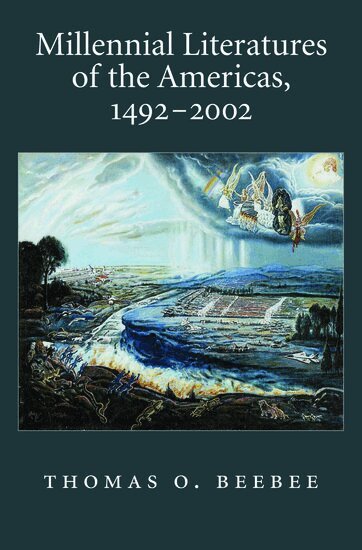
This bracing and far-ranging study compares modern (post-1492) literary treatments of millenarian narratives--"end of the world" stories charting an ultimate battle between good and evil that destroys previous social structures and rings in a lasting new order. While present in many cultures for as long as tales have been told, these accounts take on a profound dramatic resonance in the context of Europe's centuries-long colonization of the American hemisphere. With an impressive interdisciplinary approach that employs insights from history, ethnography, and theology, Thomas O. Beebee provides nuanced readings of the apocalyptic vision in a diverse group of forms and writers, stretching from the letters of Christopher Columbus to the lyrics of Bob Marley and Bob Dylan, the poetry of Ernesto Martínez, and the bestselling novels of the Left Behind franchise, among other works. Throughout, he pointedly illustrates how millennial discourse has been used as a technology of control to further national and imperial agendas while paradoxically, often simultaneously, serving the forces of resistance. Drawing on a wide variety of records, his analysis shows that repeated eruptions of imagined, epochal conflicts reveal native populations fighting against the eradication of traditional ways of life, making sense of unprecedented violence, and searching for sources of origin. It seems that Americans--North, South, Middle, and Caribbean--tend to define themselves by narrating their End. Informed by extensive research and an imaginative marshalling of diverse insights, Beebee presents a comprehensive comparative treatment of millennial themes in works from English, French, Portuguese, and Spanish. In so doing, he illustrates that prophesies of telos, and the literature that imagines them, provide a vital context for understanding the connected yet distinct cultures that have shaped the American hemisphere.
577 kr
Skickas inom 5-8 vardagar
In a series of comparative essays on a range of texts embracing both high and popular culture from the early modern era to the contemporary period, The Ideology of Genre counters both formalists and advocates of the "death of genre," arguing instead for the inevitability of genre as discursive mediation. At the same time, Beebee demonstrates that genres are inherently unstable because they are produced intertextually, by a system of differences without positive terms. In short, genre is the way texts get used. To deny that genres exist is to deny, in a sense, the possibility of reading; if genres exist, on the other hand, then they exist not as essences but as differences, and thus those places within and between texts where genres "collide" reveal the connections between generic status, interpretive strategy, ideology, and the use-value of language.
657 kr
Skickas inom 5-8 vardagar
"Clarissa" on the Continent defines and explores two strategies of literary translation—creative vs. preservative and strong vs. weak—as they transform one of the most influential English novels. Thomas Beebee compares the two opposing strategies as they influence the French translation of Clarissa by the novelist Antione François de Prévost and the German translation by the Göttingen Orientalist Johann David Michaelis, and in doing so he demonstrates that each translator found authority for his procedure within the text itself. Each translation is also examined in light of Richardson's other writings and placed in its literary and cultural context. This study uses translations in order to interpret Clarissa, to show how the basis for the novel's reception on the Continent was laid, and to explore the differences and interactions among three literary and cultural systems of the eighteenth century. The close examination of these two important translations enable the formulation of not only a theory of creative vs. preservative translation but also the interconnections between literary theory and translation theory. Beebee also looks at later translations of Clarissa as products of literary and historical change and at Prévostian strategies of the novel.
584 kr
Skickas inom 7-10 vardagar
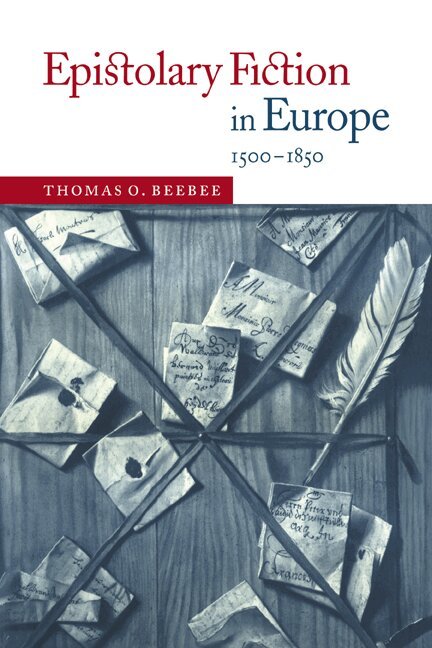
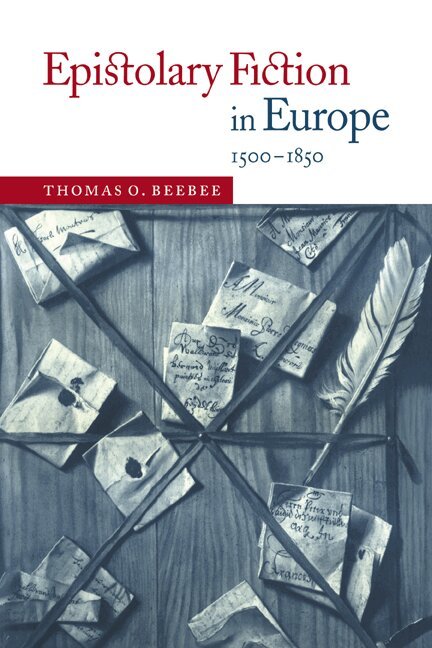
Thomas O. Beebee examines epistolary fiction as a major phenomenon in Europe from the Renaissance to the mid-nineteenth century. His study is the first to consider epistolary fiction as a pan-European form of importance to all major European languages. It demonstrates that such fiction can be found everywhere, not just in texts aimed specifically at aesthetic consumption. Beebee begins with the premise that the letter was a Protean form which crystallized social relationships in a variety of ways, and that fictional uses of the letter appropriated the status and power the letter had already acquired from its established functions within other discursive practices. He discusses the letter-writing manual, self-referential aspects of the letter, news and travel reporting, the relationship between letters and gender, and historically specific use of epistolarity by eighteenth- and nineteenth-century authors including Austen, Balzac and Dostoevsky. The book also offers a bibliography of major European epistolary fiction to 1850.
1 371 kr
Skickas inom 7-10 vardagar
Thomas O. Beebee examines epistolary fiction as a major phenomenon in Europe from the Renaissance to the mid-nineteenth century. His study is the first to consider epistolary fiction as a pan-European form of importance to all major European languages. It demonstrates that such fiction can be found everywhere, not just in texts aimed specifically at aesthetic consumption. Beebee begins with the premise that the letter was a Protean form which crystallized social relationships in a variety of ways, and that fictional uses of the letter appropriated the status and power the letter had already acquired from its established functions within other discursive practices. He discusses the letter-writing manual, self-referential aspects of the letter, news and travel reporting, the relationship between letters and gender, and historically specific use of epistolarity by eighteenth- and nineteenth-century authors including Austen, Balzac and Dostoevsky. The book also offers a bibliography of major European epistolary fiction to 1850.
616 kr
Skickas inom 10-15 vardagar
This study compares modern and contemporary literary works from around the globe that have translation as a central theme, and that treat one of four of said black-box issues: language as embodiment; unknown language; conversion; and postcolonial derivations.
616 kr
Skickas inom 10-15 vardagar
This study compares modern and contemporary literary works from around the globe that have translation as a central theme, and that treat one of four of said black-box issues: language as embodiment; unknown language; conversion; and postcolonial derivations.
370 kr
Skickas inom 11-20 vardagar
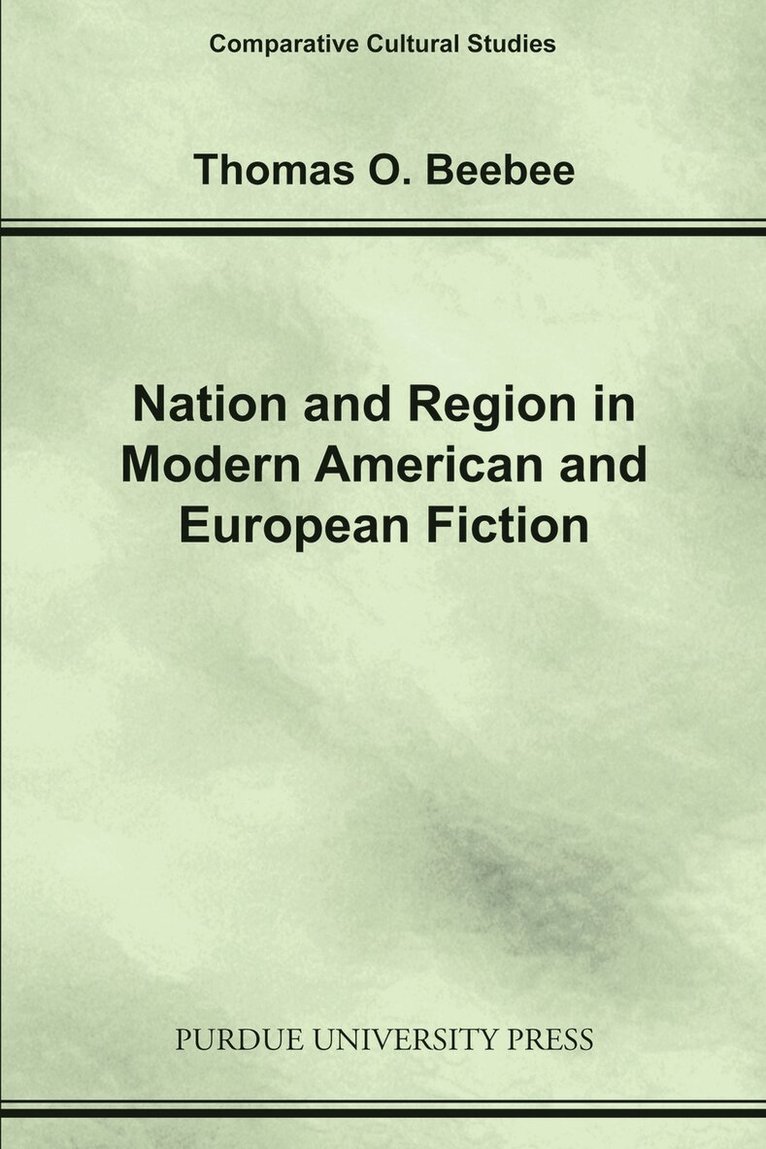
In his book Nation and Region in Modern American and European Fiction, Thomas O. Beebee analyzes fictional texts as a "discursive territoriality" that shape readers' notions of (and ambivalence about) national and regional belonging. Several canonical works of literary fiction have provided their readers with verbal maps that in their depictions of boundary spaces construct indirect images of national territory and geography.Beebee analyzes comparatively in their historical and cultural diversity in Johann Wolfgang von Goethe's, Nikolai Gogol's, and Ivan Turgenev's competing geographies of Russia and its empire, Euclides da Cunha's ambivalent nomination of the sertanejo (backlander) as the ""bedrock of the Brazilian race,"" William Faulkner's and Jose Lin do Rego's cultural memories of the plantation, Jose Maria Arguedas's novelistic ethnogeographies of Andean culture, Juan Benet's construction of region as both metaphor and metonym for Francoist Spain, and the ""u-topian"" North American (US and Canada) desert landscapes of Mary Austin, Nicole Brossard, and Joy Harjo.