Thomas Sattig – författare
Visar alla böcker från författaren Thomas Sattig. Handla med fri frakt och snabb leverans.
9 produkter
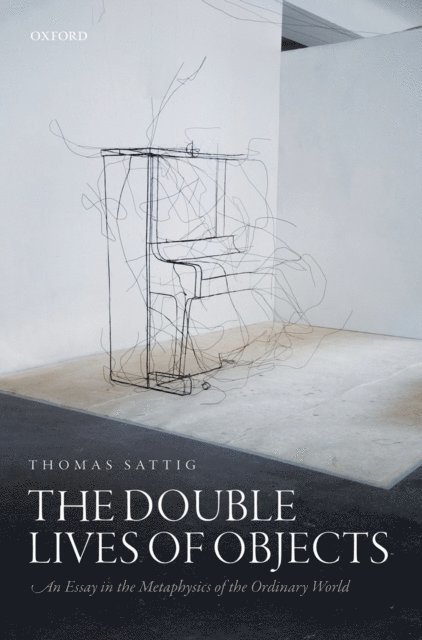
Double Lives of Objects
An Essay in the Metaphysics of the Ordinary World
E-bok, 2015
862 kr
Lägg i varukorg
Thomas Sattig develops and defends a novel philosophical picture of ordinary objects, such as persons, tables, trees, and mountains. His theory carves a middle way between the two accounts that have dominated traditional metaphysics of material objects, namely, classical mereology and Aristotelian …
How Time Passes
Inbunden, 2025
1105 kr
Lägg i varukorg
Time organizes things in a dynamic fashion, whereas space organizes things in a static fashion-so things in time undergo passage, whereas things in space do not. What makes the temporal organization of things dynamic? What is the nature of the passage of time? Traditional discussions of passage …
How Time Passes
E-bok, 2025
990 kr
Lägg i varukorg
Time organizes things in a dynamic fashion, whereas space organizes things in a static fashion-so things in time undergo passage, whereas things in space do not. What makes the temporal organization of things dynamic? What is the nature of the passage of time? Traditional discussions of passage …
How Time Passes
E-bok, 2025
990 kr
Lägg i varukorg
Time organizes things in a dynamic fashion, whereas space organizes things in a static fashion-so things in time undergo passage, whereas things in space do not. What makes the temporal organization of things dynamic? What is the nature of the passage of time? Traditional discussions of passage …
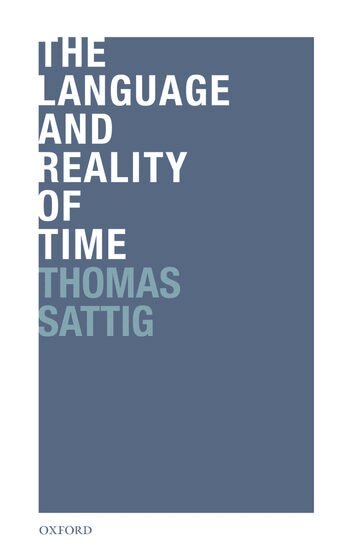
The Language and Reality of Time
Inbunden, 2006
2391 kr
Lägg i varukorg
Thomas Sattig's book develops a comprehensive framework for doing philosophy of time. He brings together a variety of different perspectives, linking our ordinary conception of time with the physicist's conception, and linking questions about time addressed in metaphysics with questions addressed …
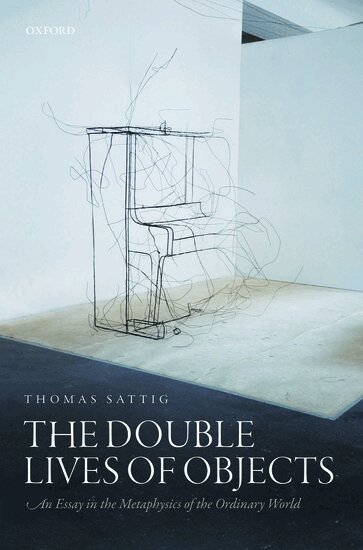
The Double Lives of Objects
An Essay in the Metaphysics of the Ordinary World
Inbunden, 2015
1449 kr
Lägg i varukorg
Thomas Sattig develops and defends a novel philosophical picture of ordinary objects, such as persons, tables, trees, and mountains. His theory carves a middle way between the two accounts that have dominated traditional metaphysics of material objects, namely, classical mereology and Aristotelian …
Material Objects
Häftad, 2021
302 kr
Lägg i varukorg
This Element is a survey of central topics in the metaphysics of material objects. The topics are grouped into four problem spaces. The first concerns how an object's parts are related to the object's existence and to the object's nature, or essence. The second concerns how an object persists …
Material Objects
E-bok, 2021
287 kr
Lägg i varukorg
This Element is a survey of central topics in the metaphysics of material objects. The topics are grouped into four problem spaces. The first concerns how an object''s parts are related to the object''s existence and to the object''s nature, or essence. The second concerns how an object persists …
Material Objects
E-bok, 2021
294 kr
Lägg i varukorg
This Element is a survey of central topics in the metaphysics of material objects. The topics are grouped into four problem spaces. The first concerns how an object''s parts are related to the object''s existence and to the object''s nature, or essence. The second concerns how an object persists …