Thomas T. Allsen - Böcker
Visar alla böcker från författaren Thomas T. Allsen. Handla med fri frakt och snabb leverans.
7 produkter
7 produkter
Technician Transfers in the Mongolian Empire
2002 Dept. of Central Eurasian Studies Series, Lecture 2
Häftad, Engelska, 2021
212 kr
Skickas inom 10-15 vardagar
ABSTRACT Illegal economies and borderlands are intrinsically connected: geographical remoteness, weak state control, and dynamic social texture provide the kind of "grey" zone wherein a shadow economy may thrive. The present article aims to explore one of such middle grounds by focusing on the evolution of market-based crimes in Kalimpong between the mid-1930s and the early 1960s: the timeframe, deliberately limited to the years preceding WWII up to the Sino-Indian war of 1962, embraces the most active period in the history of the Himalayan trade hub. From remote hill station to main centre of the land route connecting Lhasa to Calcutta, Kalimpong was a hotbed of illicit activities – a vital node in several criminal distribution networks as well as a site of local production and consumption of illegal commodities. Availing myself of contemporary sources, such as local newspapers and official and legal documents drafted at government and district levels, I will decode the national and supranational conditions that triggered the emergence first, and the decline later, of Kalimpong as a trans-Himalayan "contact zone" and explore how these affected the lives of those Tibetans who operated across the line – of both state and legality.
Commodity and Exchange in the Mongol Empire
A Cultural History of Islamic Textiles
Inbunden, Engelska, 1997
1 295 kr
Skickas inom 7-10 vardagar
In the thirteenth century the Mongols created a vast, transcontinental empire that intensified commercial and cultural contact throughout Eurasia. From the outset of their expansion, the Mongols identified and mobilized artisans of diverse backgrounds, frequently transporting them from one cultural zone to another. Prominent among those transported were Muslim textile workers, resettled in China, where they made clothes for the imperial court. In a meticulous and fascinating account, the author investigates the significance of cloth and colour in the political and cultural life of the Mongols. Situated within the broader context of the history of the Silk Road, the primary line in East-West cultural communication during the pre-Muslim era, the study promises to be of interest not only to historians of the Middle East and Asia, but also to art historians and textile specialists.
577 kr
Skickas inom 7-10 vardagar
In the thirteenth century, the Mongols created a vast transcontinental empire that functioned as a cultural 'clearing house' for the Old World. Under Mongol auspices various commodities, ideologies and technologies were disseminated across Eurasia. The focus of this path-breaking study is the extensive exchanges between Iran and China. The Mongol rulers of these two ancient civilizations 'shared' the cultural resources of their realms with one another. The result was a lively traffic in specialist personnel and scholarly literature between East and West. These exchanges ranged from cartography to printing, from agriculture to astronomy. The book concludes by asking why the Mongols made such heavy use of sedentary scholars and specialists in the elaboration of their court culture and why they initiated so many exchanges across Eurasia. This is a work of great erudition which crosses new scholarly boundaries in its analysis of communication and culture in the Mongol empire.
1 295 kr
Skickas inom 7-10 vardagar
In the thirteenth century, the Mongols created a vast transcontinental empire that functioned as a cultural 'clearing house' for the Old World. Under Mongol auspices various commodities, ideologies and technologies were disseminated across Eurasia. The focus of this path-breaking study is the extensive exchanges between Iran and China. The Mongol rulers of these two ancient civilizations 'shared' the cultural resources of their realms with one another. The result was a lively traffic in specialist personnel and scholarly literature between East and West. These exchanges ranged from cartography to printing, from agriculture to astronomy. The book concludes by asking why the Mongols made such heavy use of sedentary scholars and specialists in the elaboration of their court culture and why they initiated so many exchanges across Eurasia. This is a work of great erudition which crosses new scholarly boundaries in its analysis of communication and culture in the Mongol empire.
Commodity and Exchange in the Mongol Empire
A Cultural History of Islamic Textiles
Häftad, Engelska, 2002
550 kr
Skickas inom 7-10 vardagar
In the thirteenth century the Mongols created a vast, transcontinental empire that intensified commercial and cultural contact throughout Eurasia. From the outset of their expansion, the Mongols identified and mobilized artisans of diverse backgrounds, frequently transporting them from one cultural zone to another. Prominent among those transported were Muslim textile workers, resettled in China, where they made clothes for the imperial court. In a meticulous and fascinating account, the author investigates the significance of cloth and colour in the political and cultural life of the Mongols. Situated within the broader context of the history of the Silk Road, the primary line in East-West cultural communication during the pre-Muslim era, the study promises to be of interest not only to historians of the Middle East and Asia, but also to art historians and textile specialists.
828 kr
Skickas inom 10-15 vardagar
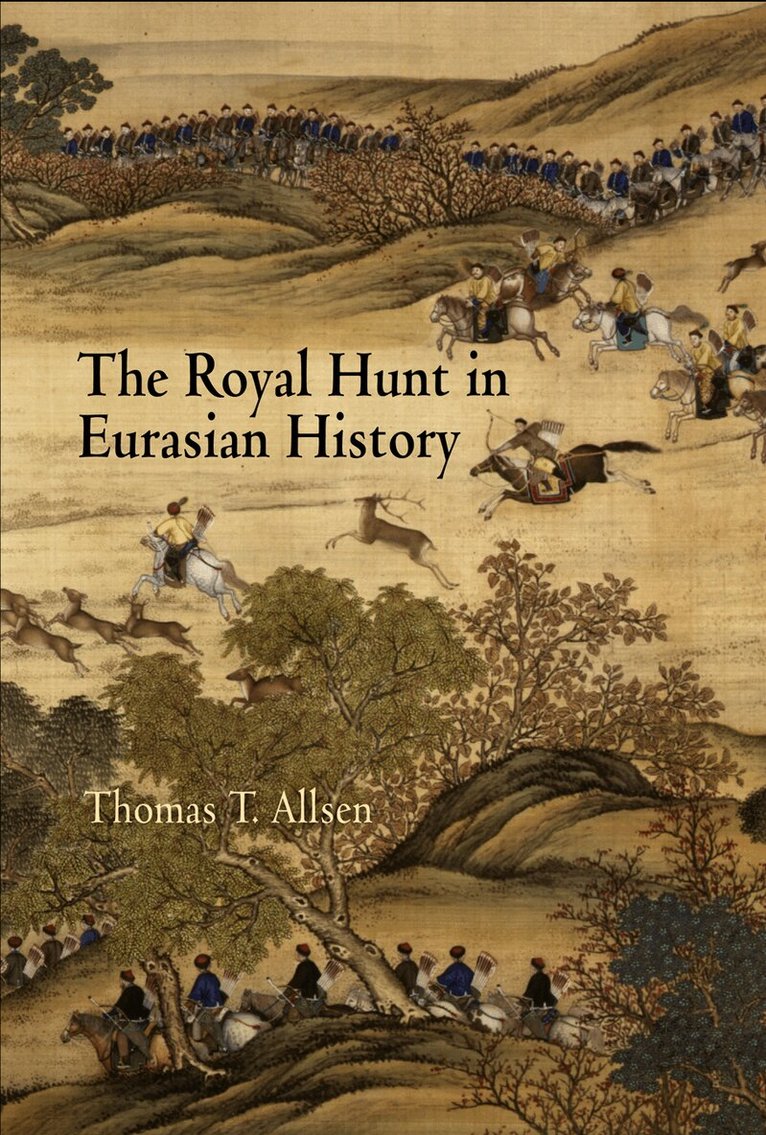
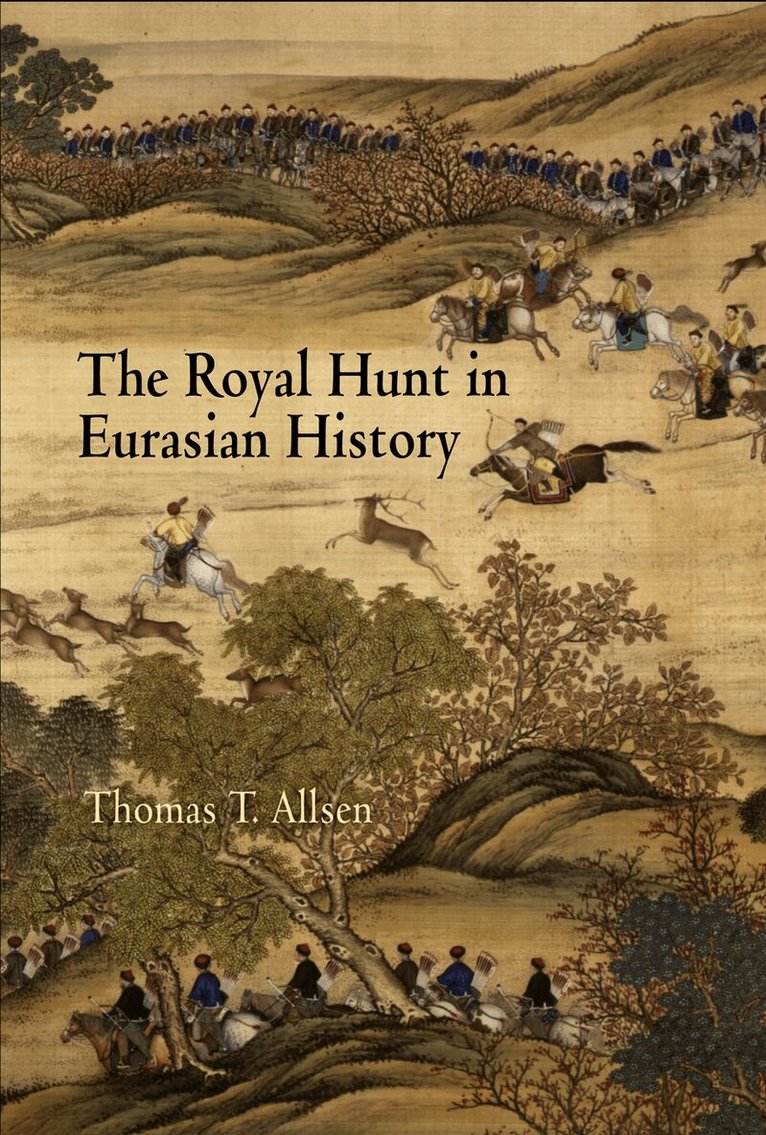
From antiquity to the nineteenth century, the royal hunt was a vital component of the political cultures of the Middle East, India, Central Asia, and China. Besides marking elite status, royal hunts functioned as inspection tours and imperial progresses, a means of asserting kingly authority over the countryside. The hunt was, in fact, the "court out-of-doors," an open-air theater for displays of majesty, the entertainment of guests, and the bestowal of favor on subjects.In the conduct of interstate relations, great hunts were used to train armies, show the flag, and send diplomatic signals. Wars sometimes began as hunts and ended as celebratory chases. Often understood as a kind of covert military training, the royal hunt was subject to the same strict discipline as that applied in war and was also a source of innovation in military organization and tactics.Just as human subjects were to recognize royal power, so was the natural kingdom brought within the power structure by means of the royal hunt. Hunting parks were centers of botanical exchange, military depots, early conservation reserves, and important links in local ecologies. The mastery of the king over nature served an important purpose in official renderings: as a manifestation of his possession of heavenly good fortune he could tame the natural world and keep his kingdom safe from marauding threats, human or animal. The exchanges of hunting partners-cheetahs, elephants, and even birds-became diplomatic tools as well as serving to create an elite hunting culture that transcended political allegiances and ecological frontiers.This sweeping comparative work ranges from ancient Egypt to India under the Raj. With a magisterial command of contemporary sources, literature, material culture, and archaeology, Thomas T. Allsen chronicles the vast range of traditions surrounding this fabled royal occupation.
555 kr
Skickas inom 10-15 vardagar
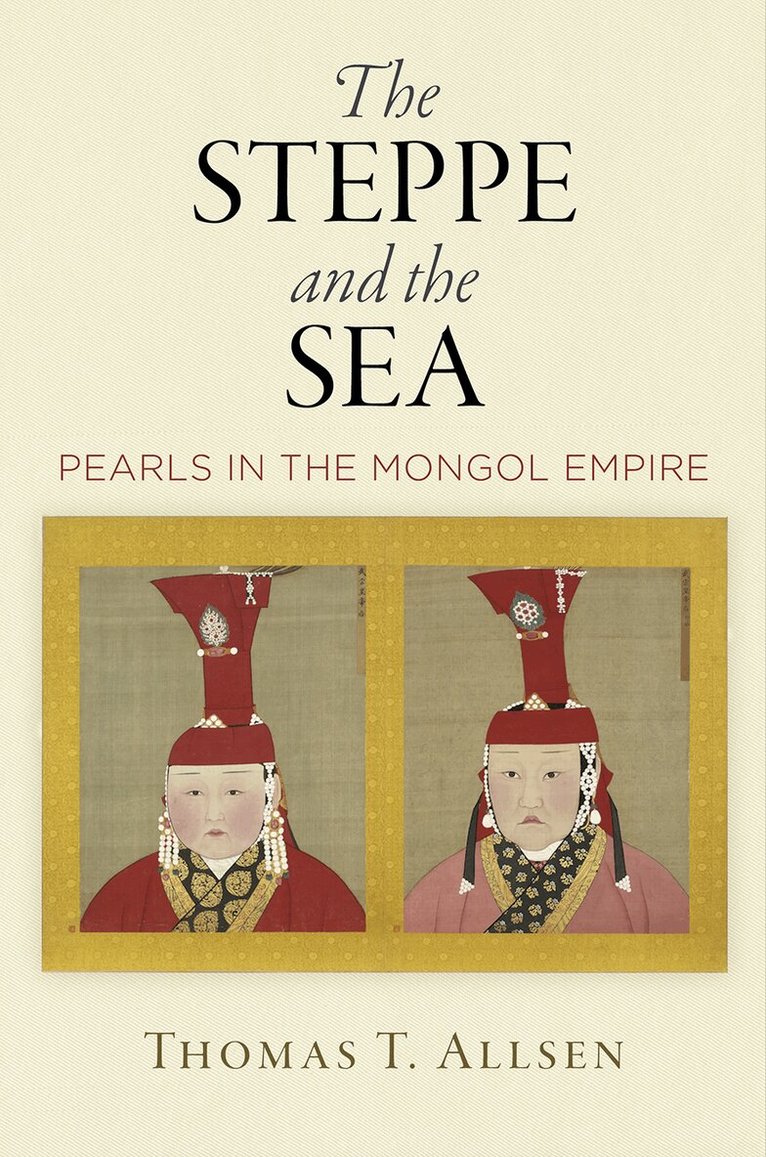
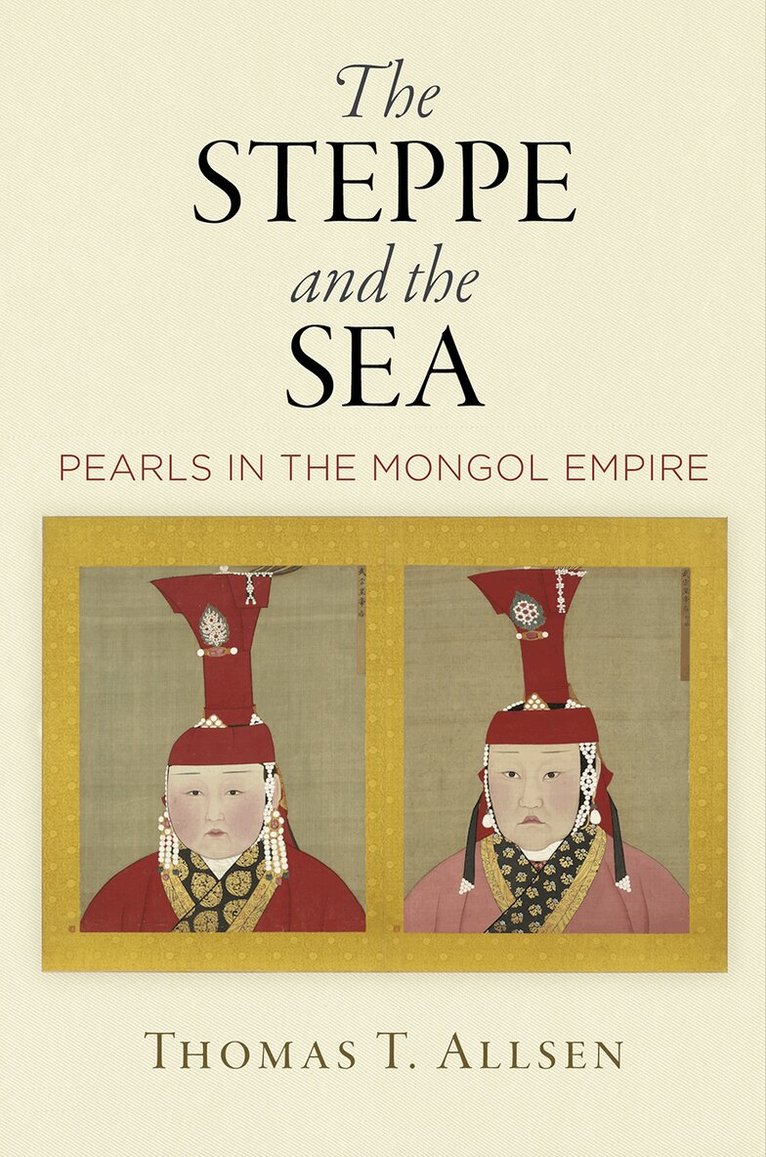
In 1221, in what we now call Turkmenistan, a captive held by Mongol soldiers confessed that she had swallowed her pearls in order to safeguard them. She was immediately executed and eviscerated. On finding several pearls, Chinggis Qan (Genghis Khan) ordered that they cut open every slain person on the battlefield. Pearls, valued for aesthetic, economic, religious, and political reasons, were the ultimate luxury good of the Middle Ages, and the Chingissid imperium, the largest contiguous land empire in history, was their unmatched collector, promoter, and conveyor. Thomas T. Allsen examines the importance of pearls, as luxury good and political investment, in the Mongolian empire-from its origin in 1206, through its unprecedented expansion, to its division and decline in 1370-in order to track the varied cultural and commercial interactions between the northern steppes and the southern seas.Focusing first on the acquisition, display, redistribution, and political significance of pearls, Allsen shows how the very act of forming such a vast nomadic empire required the massive accumulation, management, and movement of prestige goods, and how this process brought into being new regimes of consumption on a continental scale. He argues that overland and seaborne trade flourished simultaneously, forming a dynamic exchange system that moved commodities from east to west and north to south, including an enormous quantity of pearls. Tracking the circulation of pearls across time, he highlights the importance of different modes of exchange-booty-taking, tributary relations, market mechanisms, and reciprocal gift-giving. He also sheds light on the ways in which Mongols' marketing strategies made use of not only myth and folklore but also maritime communications networks created by Indian-Buddhist and Muslim merchants skilled in cross-cultural commerce.In Allsen's analysis, pearls illuminate Mongolian exceptionalism in steppe history, the interconnections between overland and seaborne trade, recurrent patterns in the employment of luxury goods in the political cultures of empires, and the consequences of such goods for local and regional economies.